Total Pageviews

Showing posts with label Ithaca. Scotland. Show all posts

Thursday, 6 January 2011

Έπιφάνεια: the blessing of the waters

It's Epiphany - ἐπιφάνεια. Thanassis Spingos put my picture on the Ano Korakiana website...
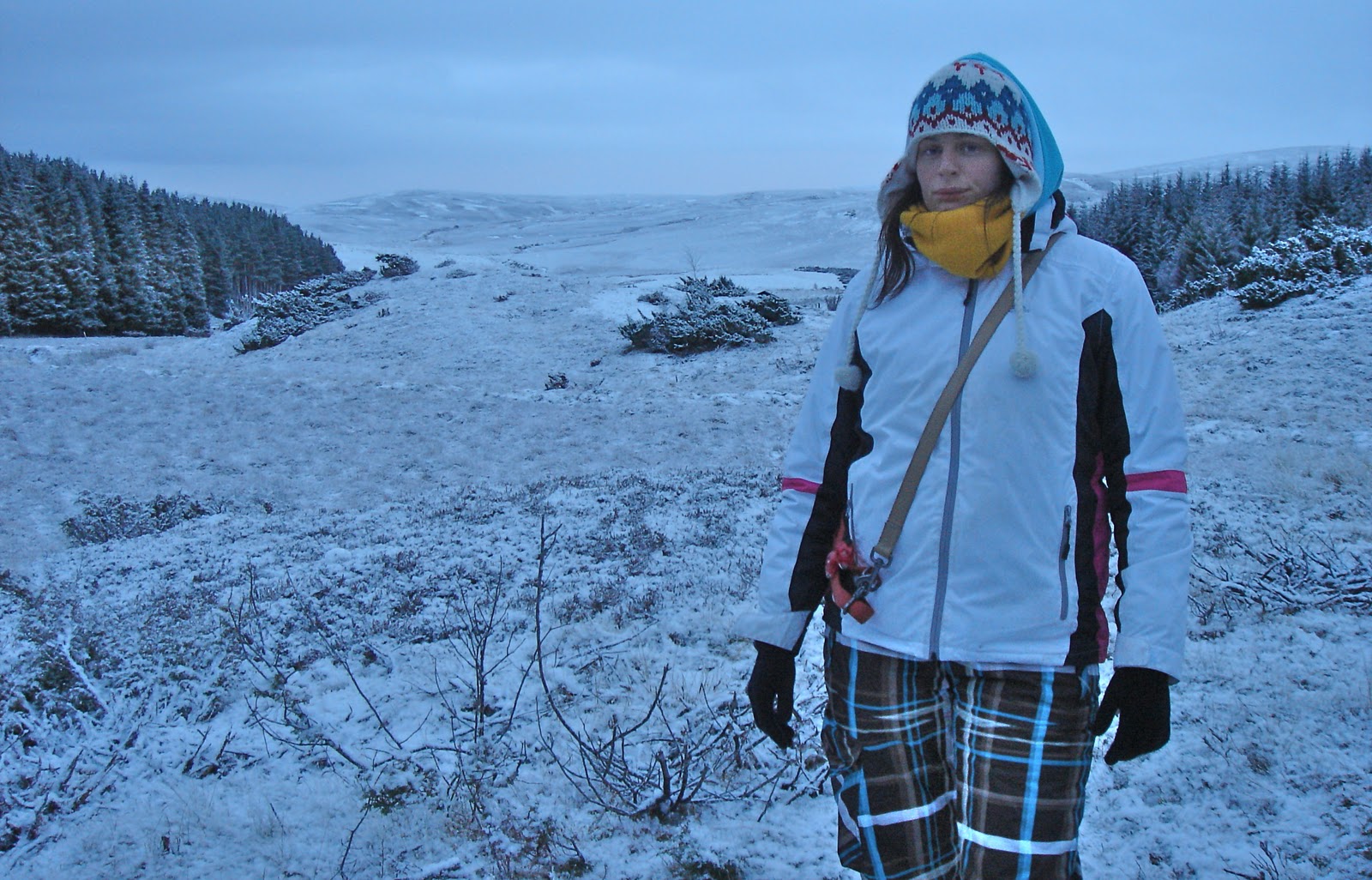
Συννεφιά το πρωί και λιακάδα από το μεσημέρι και μετά, το αντίθετο από το χιονισμένο τοπίο στις Ορεινές περιοχές στη Σκωτία, όπου ο φίλος μας Ο Σάïμον Μπαντελέï απολαμβάνει τον περίπατό του...
Cloudy in the morning sunshine from midday onwards, the opposite of the snowy landscape of the Highlands in Scotland, where our friend Simon Baddeley enjoys a walk ...
I think on impulse that only our part of Greece compares to the Highlands - in any weather any season. What pleasure to be walking with dogs, daughter and son-in-law (his photo of me) amid this sparse landscape, a chill wind and the sound of water where Allt a'Mharcaidh winds down the centre of Glen Kyllachy to meet the Findhorn just past the stone bridge at Garbole. The road from Farr had been icy, piled snow rubbing the underneath of Guy's car, and falling steadily for an hour. On the lower ground the air cleared.
We walked the dogs. Increasingly used to each other they ranged in four, in pairs and separate, ever exploring but never going more than a hundred yards from us as we strolled back towards the deer fence that marched with the burn. "I'm surprised we've seen no deer" said Amy, "they should be on the lower ground in this weather." "I've seen none, but for a glimpse in the woods yesterday - a flash of red." "That may be where they are." Amy put her dog Malo - the Brittany spaniel - on a lead as we came back to the car, though we'd have seen another vehicle a mile away. My dog Oscar picked a quarrel. The two joined in a snarling knot for a seconds. "It's always when you put a dog on a leash that happens!" I said "It doesn't help that both bitches are coming into season." "Yet when they are out here they seem to forget about sex." "Obviously not." The banks of the Findhorn were strewn with sheets of ice thrown off by the river during the thaw of the last few days, but the water level's already down from a day ago; the weather getting colder.
"You know I was listening to a podcast in which Aris Roussinos, who'd rather run an olive oil plantation on ancestral land in Corfu, makes his current crust as a TV development producer - a job my stepfather did as well as actually broadcasting. Aris was speaking about the 'massive crisis' in TV broadcasting (10.14 in the Word podcast 20 May '10 with a reference to Aris' article 'Why do they commission this rubbish' here, and the removed YouTube 'Monkey Tennis' episode here) and the struggle to invent programmes that would keep up viewing. "It starts with a catchy title", he'd said. You need that to catch a commissioning editor's short attention scanning hundreds of ideas ... I don't think Amy or Guy were listening to me. "Aris spoke about an idea for a film about gay Taliban - (from 16.50 in the podcast) "not that new so... " Was our TV always moving wallpaper; the idiot's lantern - with some magnificent exceptions? I suppose anyone my age has had to watch Reithian principles consumed by market society. That BBC TV should endure as a public service was always unlikely. It's so-called elitism was what I liked. Most of the public are paying for and not listening to the only broadcasting (as distinct from narrowcasting - the small mammal that is replacing it) I want to hear - Radio 4. I wonder why I can't buy a radio set that reads no other channel so uninterested am I in any other wavelength...but my solace is the thought of the hundreds and thousands who have better things to do and do them. *** Getting bewildered and vexed by radical Islam, I read Pankaj Mishra and about Europe and the Eurozone read through this series in't Guardian. There's nowt so queer as folk and life's more complicated than that...and please may I discover a Greek version of these phrases. And from Dan McQuillan - 'geek - social issue mash-up - bringing those tribes together' - co-founder of Internet.Artizans - linked on this blog - I come across discussion - under the uninviting term digital reverse development - which suggests way of diffusing ideas and practices of self-help and localism from poor to rich, third to first world - 'new organisational design, mass involvement; from waves of superficial on-line engagement to lasting social change without building another bureaucracy. What's run out of steam? What's emerging?' Warmth woke a butterfly that settled on my bedside table - a tortoise shell from the buddleia my mother planted earlier in the year. I let it out indoors hoping it'll find a cooler spot to return to winter sleep.
** ** ** And on 6th January Guy and Amy said "Come with us to see the waterfall above Contin." They took me through a light snow storm over Kessock Bridge into Ross-shire. The sky cleared just off the road to Dingwall. We came to a small parking area; path that led through snow down a steep bank between rimed birches to The Falls of Rogie - first the sound and then the river tumbling over glistening rocks. "We came here in summer and saw salmon leaping" said Amy as we gazed from a small suspension bridge, whose swinging so worried dog Lulu that Guy had to carry her over.
 ***
It's not Sunday but it is cloudy and I want an excuse to hear Greek - sung and spoken. Συννεφιασμένη Κυριακή, μοιάζεις με την καρδιά μου που έχει πάντα συννεφιά, Χριστέ και Παναγιά μου. Όταν σε βλέπω βροχερή, στιγμή δεν ησυχάζω. μαύρη μου κάνεις τη ζωή, και βαριαναστενάζω. Είσαι μια μέρα σαν κι αυτή, που χασα την χαρά μου. συννεφιασμένη Κυριακή, ματώνεις την καρδιά μου. Impossible to translate; literal OK, but to capture the intention and emotion requires talent....αλλά ακριβώς έτσι μπορώ να ακούσω την αγαπημένη Έλληνες μίλησαν και τραγούδησαν - Σωτηρία Μπέλλου - a singer, especially of rebetiko, daughter of a priest, died in 1997. 

Thursday, 5 August 2010

Local history


Tea with village historians at 208 Democracy Street
I was pondering my interest in history, realising that I'm drawn to the fascination of events close in time and place and their connection to the larger flow; our local park that gave identity to the new Birmingham suburb of Handsworth at the end of the 19th century; Black Patch Park which, with friends, we've sought to save from being built over, helped by descendants of the Gypsies once displaced to make it; the life of a family friend, long dead, who fought at sea and taught me to sail a small boat in the ocean.
Thumb Island, Peloponnese 1962
Our local church, whose tower I can see above the canopy of trees between us, holds the remains of the founders of the industrial revolution; my stepfather who so influenced my childhood and thus my life; my mum and dad who fell in love amid war - and made me in the Savoy; my grandpa Henry, who with help from Paul Savage, I'm learning things I hardly suspected; my dad and his Greek wife Maria who married in Panaghia Kapnikarea - Παναγίας Καπνικαρέας - in busy Hermou Street in central Athens in 1949 and gave me Greek half-sisters and half-brother and my proud connection to beloved Ελλάδα; my great great grandfather brilliant author of Ancient Law who analysed the frailties of popular government and wrote 'except the blind forces of nature, nothing moves in this world that is not Greek in origin'. Especially, and more recently, I've tried to learn about the Greek Civil War - ο Eμφύλιος - the source of national trauma worse in its ravaging of the national psyche than Nazi Occupation - Η Κατοχή - leaving tensions still unresolved; histories almost impossible to write. And only lately have I learned - see Richard Pine's discussion of it last November - about Pantelis Voulgaris' 2009 film Soul Deep - Ψυχή Βαθιά - about the Greek Civil, just as I was reading the book and seeing the film of Ashes and Diamonds based in Poland in May 1945, and regretting not seeing something similar about the human side of those historical events in Greece! Voulgaris' film shows the last stage of the war on the slopes of Grammos from the perspectives of brothers on different sides. Richard from near Kassiopi writes:
...in the village where I live today, the events of 60 years ago are still fresh. One man is totally ostracised because he gave the authorities the names of three young communists who were then “disappeared”. Every year, the Greek communist party (KKE) organises a pilgrimage of remembrance to the Lazareto islet in Corfu bay, where most of the executions of prisoners took place.

'Execution Island' where we sailed to have a picnic with friends
Encouraged by the scholar and journalist Richard Pine at the Durrell School, met in 2009, I have been learning more about the British Protectorate of the Ionian Islands. He invited me to give a talk last February about what I'd learned about that period in Corfu's and the other Ionian islands' history. My study of the Septinsular had begun a little earlier when Ano Korakiana's historian, Kostas Apergis, and the authors of the village website, Thanassis and Katya Spingos - neighbours - had asked if we could dig out 'a letter' that they had so far been unable to find in Greek archives. I've failed to find this 'letter' in the British Library, the National Archives or the Institute for Historical Research, but on my 'voyage' I've made many visits and learned much from lettered men - and women, especially Eleni Calligas.
...σε πόλεις Αιγυπτιακές πολλές να πας,
να μάθεις και να μάθεις απ' τους σπουδασμένους.
* **
Less wind; more animals and insects about yesterday. A hatch of Scots Argus - ranged above every patch of grass, clustering on tansy ragwort. The air was full of insects revealed then hidden again as the sun went in and out. No midges though. Over a plantation of deciduous saplings east from Brin Croft three buzzards circled mewing, a red deer hind grazing shoots, flushed by the terriers, leapt the low fence I was skirting and disappeared into the dark of the larch enclosure. I came across fresh Chanterelle, picked and fried them in butter with salt and pepper to share with mum as hors d'œuvres in the evening

Descending into the alder edges of the Farnack still strewn with the remains of winter spate I saw the feeding pens I'd passed in the depth of winter - haven for sheep huddled against the wind. Here were foxgloves, harebells, Anne's lace, vetch, flowerless buttercup, rich grass and sedge and a path that gave like a sprung floor through which I'd last waded thigh deep in snow.
Having tea in the conservatory, chatting with my mother. The maiden heifers in the field below us began bulling and there appeared a white Charolais bull. A burst of crackling momentarily deafening sound disturbed this conversation as the big silhouette of a low flying Tornado out of Lossiemouth disappeared trailing sound.

I spend my time in a sort of daze, doing occasional errands for mum when she can't help herself and Sharon's not around. The atmosphere, perhaps the altitude, has always made me slightly sleepy when I'm not being walking. There's occasional work - planning events her; the seminar in Wellington in November; more in Australia with John, who, in passing, has put me in touch with Andy Asquith, at Massey, who's sent me papers to read and the promise of further briefing on local government in New Zealand.
I'm moving over to the log cabin for a few days while my step-niece and her husband with their small children visit for the Moy Fair on Friday and Saturday. Lin and I talk on the phone and to our delight Paul P and his family will take a repair-lease on Rock Cottage ending an episode of neglect for that cherished place in the Forest of Dean, since we've switched our attention to Greece.
Brin Rock
* * * I found these images of Ano Korakiana posted last August with the suggestion that the village is 'deserted in winter' - Τωρα δυστυχως το χωριο εχει ερημωνει τον χειμωνα...I wouldn't have thought that a fair description this winter when there was Vassilopita in January and Carnival in February along with other events over Christmas
From the Ano Korakiana website there's news of progress on the long neglected football pitch (in the background of this linked image) below the village and progress on plans for investment in instruments and uniforms for the village Philharmonia band. A meeting took place in late July with representatives of PAOK, local politicians and officials of the Prefecture to review an investment of €420,000 - to be shared between the Prefecture and the Municipality. Have they effectively won the bid then? Could this partnership be at risk with plans to dissolve the current municipality under Athens's Kallicratis local government restructuring supposed to be in place by November? On the other bid for the supply of organs and sewing uniforms for the Corfu Philharmonic including Ano Korakiana's band, 'things get slightly complicated'. It's OK for instruments 'but when it comes to uniforms and helmets' bidding will have to be repeated.

Sunday, 1 August 2010

When you set out on your journey...


With Oscar at Glasgow Queen Street
Off to Scotland for a fortnight. Lin dropped me, my luggage and Oscar at New Street for the 1120 train to Glasgow. As we travelled North the weather disimproved. From Glasgow Central station we strolled to Glasgow Queen Street station, in drizzle, waited a while amid the crowds, went out for a smoke, returned to the concourse until our 1611 train was called at Platform 4, then found myself a comfortable seat, with Oscar ensconced in his igloo, my picnic on a little table and my book on my lap.
A stooped man in his sixties with an inward curved face and few teeth was wheeled up a ramp into the same carriage and gently guided to one of the two disability reserved seats opposite mine - swiftly vacated by a couple who'd seen him being brought aboard. As soon as the train was on its way he leaned engagingly towards me and said "You're a wanker" adding "I'm from Glasgow", tapping his small jumpered chest.
I smiled in a conciliatory way. He muttered something."Sorry I didn't catch that?""I dinna like yer hat" My leather outback hat that could be squashed i
nto a bag was also on the table between us.
I replied "...and you're quite a rude man."
Leaning again he confided "I'm a linguist. I lived in Spain for 15 years"
"A linguist? Do you speak Spanish?"
"Fuck off"
The elder lady across the aisle was giving attention to looking out of the window on her side. "She's gaw deid hair," said my fellow traveller more loudly.
"You really are a rude man," I said, lamely - hampered by a disability which wasn't just physical. Asperger's? Intense preoccupation with a narrow subject, one-sided verbosity, restricted prosody?
"I'm a professional footballer" he said quietly.
"Oh right. Who do you play for?"
"Fuck off," - pause - "Where you going?"
"Inverness"
"Inverness?"
"Inverness"
"Inverness?"
"In-ver-ness."
There was a crescendo to this sequence that I thought would end with a remark of contempt at my connection with Inverness but he went quiet. I sipped wine from my picnic, continued reading Ashes and Diamonds. The conductor came by. The man offered a couple of new Scottish £20 notes "fer Perth." The conductor, bending over him with care, took one of the proffered notes and issued a ticket and change. Perth was about 30 minutes away I thought. How had he passed ticketless through the barrier at Queen's Street?
"Wait a moment, big man" he half-whispered to the conductor, "Can you get me a help with getting off at Perth?"
"Nay problem, sir," A collusive wink of thanks for the help. The conductor continued up the train. I continued reading, gazing now and then at the passing lowland landscape but waiting. "You know who's the one person I trust on this train?"
I was going to have to answer "That conductor?"
"Naw" tapping his little jumpered chest "Me!"
I was reminded of the face of the little red coated killer in Don't Look Now and felt an abrupt twinge of danger. "But you've just been helped onto the train, and you'll be helped off!" At this sign of incipient irritation the man rose to his feet, leant over the little table between us, pointing at me with a bent finger.
"You're an air-sole"
"Wait a moment! Aren't you supposed to be disabled?"
"You are (pause) the biggest air-sole in the world, you are a fucking air..."
Another passenger, a young man, came through "Would you shut it, please. Watch yer language. Just watch yer language." My man sat as quickly as he'd risen and went silent until the other had returned to his seat.
"Air-sole" he said again pointing at me, aiming his eyes, starting to get up again. At this point the conductor passed by and the lady over the way touched his elbow
"Will you do something about him please?"
The conductor had heard the tail-end of the abuse but missed the standing up bit.
"He's not even disabled," said the lady.
"Alright you. Out! Now!" The man rose at once and scuttled off into another carriage followed by the conductor who, when he came back, received our thanks.
"I don't think he'd have done that for me. You exert authority, like my daughter... in the police."
"I was a prison officer for 15 years."
I was vexed at according undue civility to this semblance of disability; stewing at bit-playing a Lou and Andy re-make. I struggle to find a moral space for nastiness, denying the existence of the condition, assuming an illness, a trauma, an oppression to be lessened by conversation. I'm still half-thinking we got off on the wrong foot - not helped by my old softy hat. Result - this fellow was all set to march into Poland* until the ex-warder, at the request of another passenger, stopped him with a verbal smack.
After Perth the pleasure of train travel was restored.
I chatted to a new conductor about the state of the railways, deploring rail company plans for driver-only trains. I read, sipped tea from the passing trolly, gazed at the last of the lowlands, recalling this journey as a child when a second steam engine was attached to the up train at Perth for ascending to Drumochter Pass, seeing my first mountain snow on the Sow of Atholl and the Boar of Badenoch, today hidden in mist. There was the watershed, where the river ran north instead of south and we came to Dalwhinnie, then Newtonmore, then Kingussie then, nearing Aviemore, past Loch Alvie where Amy and Guy were married in May.
*Appeasement ...the policy of settling international quarrels by admitting and satisfying grievances through rational negotiation and compromise, thereby avoiding the resort to an armed conflict which would be expensive, bloody, and possibly dangerous
** ** **
Niko's suggested I learn to recite Cavafy's Ithaca for homework and send him a self-recording. I found the poem in the original with a recitation to use to tutor myself. Here goes with the first line....When you set out on your journey to Ithaca...Σα βγεις στον πηγαιμό για την Ιθάχη,...It'll be good to use this as a before and later measure. I'm grateful to George Barbanis for making Cavafy's work so available in English and Greek on the web. (Edmund Keeley's recital of the poem in English).


Σα βγεις στον πηγαιμό για την Ιθάχη
George writes to me on Facebook to say that the person speaking the words of Ithaca is almost certainly George Savidis (1929-1999), a scholar in the forefront of poetic translation of Cavafy. Anthony Hirst, who's written a commentary on the parallel Greek text of a 2003 translation by Evangelos Sachperoglou, wrote of the need to 'de-edit' Safidis' translation of Cavafy:

Cavafy's punctuation restored
I have been dismayed to discover that the late George Savidis was a far more interventionist editor than he ever admitted. Savidis’s 1963 edition of the “acknowledged” poems, entitled Poiêmata [Poems] [Κ.Π. Καβάφη «Ποιήματα»], remains the best edition we have of the Cavafy “canon,” if by “best” is meant closest to the author’s latest discernible intentions; but it still does not give us the poems exactly as Cavafy printed them. In the preface to the 1963 edition, Savidis does acknowledge imposing the standard distinction between pou - πόυ - with a grave accent (meaning “that” or “who/whom/which”) and pou - ποῦ - with a circumflex (meaning “where”) – Cavafy tended to use the latter indiscriminately – and between other comparable pairs where Cavafy’s practice was inconsistent (Cavafy, Poiêmata [Poems], 1963, I, 12). Other, more significant, changes are not acknowledged, however. Although Savidis states (ibid.) that he used Cavafy’s latest printings of the poems as the basis for his edition, he also says that he consulted earlier printings and, in the case of the pre-1911 poems, other sources. Consequently, it is not entirely clear what Savidis’s edited versions of the poems actually represent.
I'm now starting to understand the unfamiliar punctuation in my copy of the poems translated by Evangelos Sachperoglou with Greek text edited by Anthony Hirst. Hirst has been working assiduously to present Cavafy's original to his translator. πόυ I can type, but Ι needed to switch to Greek polytonic on my keyboard to write ποῦ with a circumflex on upsilon. This may seem specious. It's not though. It's all about Cavafy's blending of old and new Greek at a time of pending transition. It's normal to take Cavafy's self-description as 'a poet of future generations' as referring to contemporaneous opinion of homosexuality, but it would be as possible to see what Hirst refers to as 'braiding' as referring to Cavafy's interweaving of demotic and katharevousa - diaglossia in linguist's jargon - a combination that also mingles with koine and other varieties of Greek; an untranslateable mélange that makes it all the more impressive that Cavafy's been so successful in English, and trying to read and parse his work in the original all the more fascinating for what it may teach a foreigner - ενά βάρβαρος ['Barbarian' from the ancient Greek word 'barbaros' referring to one whose first language was not Greek, the 'bar-bar' representing the hubbub of speech one can't understand.]
*** ***
Even though we have no trains in the region - Ionian Islands and Epirus - one of the losses I shall most regret as a result Greece's austerity drive is the railways. Just when I'd hoped to have seen more - for instance between Thessaloniki and Igoumenitsa, or Igoumenitsa and Patras - I fear a Greek Dr.Beeching is already hard at work planning to cut back all but the north-south mainline from the border via Larissa and Thessaloniki, the line to the ferry terminal at Patras and the Athens metro and even some of that could go, bringing more pressure on remaining buses and coaches, encouraging more road use with more pollution, noise and asphalt blighting the land.

Back numbers

Simon Baddeley