Total Pageviews

Showing posts with label Dad and Mum. Show all posts

Monday, 29 August 2011

Cleaning the flat

Lin's final check
I've been helping Lin clean and tidy our flat in Cambridge Tower overlooking Centenary Square and the city centre. The tall crane over Birmingham's new library is being dismantled, the main part of the structure complete.
Rain spattered the windows of the flat 15 floors up a tower block. I don't like cleaning, especially when you have to go into nooks where detritus has collected and congealed unseen. I pulled out the cooker.
I'm not good at this. it's an effort to sweep out the odds and ends of food and other things that have been hiding there for months. I used a dustpan and brush to collect moveable things, then spraying on grease remover I set to with hot water and an abrasive sponge. After a while the results begin to show, the mess surrendered as in the advertisements to cleaning products - not sparkling bright with just a wipe, but passably clean with elbow grease.
While taking a break I got a text from Scotland.

Sharon had been out with my mum at Munlochie on the other shore of the Moray Firth. A storm in Strathnairn had taken out the power, lightning burning out the TV, phones and Wifi.
My sister in Manhattan is experiencing the remains of Hurricane Irene and a few days ago a small earthquake.
Portents? This evening Lin was driving back from the final tidying of the flat ready for our tenants to move in at the beginning of September. We'd dropped in on Amy and Guy who've agreed to look after Oscar while we're away, since his usual minders, John and Jo, are unwell. On the way home we saw a Moses basket under a street lamp at the corner of Heathfield and Brecon Roads. Lin braked.
"Just check there isn't a baby in it"
I had a peer, knowing that desperate people do now and then abandon babies. We'd never forgive ourselves if this was an example ignored. No. The crib was empty sat with litter on the pavement, but in excellent condition.

Tuesday, 4 January 2011

Mum's memories

Started taking down some notes on film as mum trawled her memory of seventy years ago; she in her state bed at Brin Croft speaking about life at 5 Bina Gardens in 1939 and 1940 - of bombing. "We heard the bombers going over, and they went on and on it seemed and the more they went on the more scared I got...

I'm used, when in SW5, to cycling by the old home at Bina Gardens. In 67-68, when I had my first job at the Tavistock Institute, I lived on the ground floor - the house turned into three flats by my grandmother. I nearly burned it down, throwing what I thought was a dead match into a waste basket, going out for a pint of milk; coming back to find a fire engine outside. Smoke was smelled early by my grandmother's resident landlady, so I'd only singed my little kitchen leaving a messy stink I could clear up myself after a telling off for culpable stupidity.
**** ****
It was John Martin's birthday yesterday. Annie sent out a circular to friends asking for a message she could put on a DVD for the celebration.

"Bit long winded" said Lin, but I sent it anyway with soundtracks from films John and Annie have made in Australia of Mayor's and Chief Executives in conversation.
** ** **
Elections in Greece, local or national, happen on Sundays. On 2 January, Spyros Thymis was elected President of Ano Korakiana's Local Council, and of the two nominees for Vice-President - Spyros Tsirigotis and Phokion Mandylas - the latter was elected by 3 votes against 2.
Αρχαιρεσίες χθες, δεύτερη μέρα του νέου χρόνου, για το Τοπικό μας Συμβούλιο. Πρόεδρος εξελέγη ομόφωνα ο Σπύρος Θύμης. Για την θέση του Αντιπροέδρου έθεσαν υποψηφιότητα οι δύο εκπρόσωποι των συνδυασμών της δημοτικής μειοψηφίας, δηλαδή ο  Σπύρος Τσιριγώτης και ο Φωκίων Μάνδυλας. Αντιπρόεδρος εξελέγη τελικά ο Φωκίων Μάνδυλας με ψήφους 3 έναντι 2.
What I find inordinately pleasing is that I am starting to be able to get most of the meaning from postings Thanassis and Katya put on Ano Korakiana's superlative website
*** ***
After his return from a grim 18 days in an Iranian jail the talented Iason Athanasiadis had gone off my radar.  Checks on his website showed nothing new there for quite a while. But now there's an exhibition of photographs by him from Iran on the LA Times website. This is an individual who loves Iran, who had special access there through his language skills and Greekness, but who's now been banned from going there. let down no doubt in the eyes of the local police by his English parentage.
** ** **
Again despite my irritating limp I trudged with the two terriers from Brin Croft towards and over the esker across the flattened meadow to the forestry track that runs east-west above Inverarnie, a chill wind stirring the trees into the sound of surf until I could cut south into the shelter of the woods above the village, joining that mysterious path again, from which where it divided I took a slightly different direction, carrying on instead of turning left towards the lane that leads back to my mother's house. After a while the path became rough, seemed to trail off altogether into rutted planting ditches, but I soon picked it up again heading straight and direct through tight ranks of blue branched larch, until to my astonishment, I came to the small stream I'd crossed when I joined it. All unaware and thinking I was strolling east I'd entirely doubled back on myself.
**** *** ****
Also silent for rather too long were Aris and Katie Roussinos, working on a project to harvest premium olive oil from ancestral land in north west Corfu. Then Aris who writes - more than well - replied to a Christmas greeting just before new year:
Dear Simon. Merry Christmas to you too, and a happy 2011. Apologies for our long silence: our laptop gave up the ghost in Corfu, and by the time we came home we'd forgotten our Blogger password. We've tried every possible permutation of likely-sounding passwords, but no joy. Annoyingly, we lost almost all of our photos too. Anyway, we're back in the UK, working again and dreaming of going back. It seems the bar to entry into the olive oil market is the lack of bottling plants in Corfu - in fact a more sensible, if less romantic, idea would be opening up a bottling plant-for-hire... I hope all's well with you. With very best wishes, Aris and Katie
Dear Aris. I doubt there’s a successful enterprise in the world that hasn’t suffered a few false starts. I suspect you have learned a thing or two. I take your point about the dearth of bottling plants. There’s a busy olive oil processing factory just below Ano Korakiana – a hundred metres off the Kato Korakiana road out of the village. The owner also runs a metal working business. I understand that families and individuals take their olives down there – to extract, tin and bottle olive oil - mainly in the new Year ... the place is lit up working 24/7 for a couple of months. Have you thought of visiting? It seems that it must provide a service for a limited area, and certainly not your part of the island. Thanks for writing. Please stay in touch. Our very best wishes to you both for 2011.
Hi Simon. Thanks for this; I'll certainly have a look next time I'm over. The issue is, there's bottling and there's bottling: EU H&S regulations (compliance with which is mandatory for sale to Northern European supermarkets) are immensely strict, and expensive to adhere to, and Corfu doesn't have much of an infrastructure to support this. I've noticed a mini-boom in Corfiot local produce recently, so things are changing; I think part of the problem is the lack of co-operatives in Corfu compared to olive-growing regions on the mainland- there, farmers club together for machinery and marketing costs, whereas in Corfu... At the risk of sounding German, Corfiots have good and bad points, and they're largely the same. As (I've realised) I simply don't have enough trees to make oil production a sole income, I'd be reliant on working with local producers to buy their surplus oil and market it abroad. As for the last 300 years or so Corfiot olive oil was sold primarily for industrial purposes, there's been a degree of laziness in the local sector: olives are allowed to ripen, fall naturally and over-ripen/spoil on the ground for ease of picking, rather than being beaten from the tree at their purpling best. On the credit side, this gives Corfu its unique landscape of towering olive trees. On the debit side, it leads to often indifferent oil. So, to make the oil viable as a high-end product, I'd have to persuade dozens of local small producers to severely prune their trees (for ease of picking), pick the olives in the most labour-intensive way possible, then process them somewhere I could oversee the process on dates close to each other ready for bottling and shipping to points north and west. Corfiots being Corfiots, there are a number of different routes to financial disaster here. Ultimately, this would be a more viable project for an enlightened feudal landlord than one idealistic peasant amongst many. The one local competitor I've found (Martinego from Avliotes) produces bog-standard oil, and bottles it themselves. So for now, I'm treading water working in TV in London again (SB note: Aris in a podcast on The Word in May 2009 joins in a  discussion on the state of TV), hoping that the imminent phasing out of olive subsidies will enable me to buy up decent-sized plots over the next ten years or so and start in earnest (or buy barren land ... and plant new trees: the yield and quality of which would be far higher than in our damp, foggy Northwestern valleys). Anyway, we'd very much like to stay in touch. 
Dear Aris. Fascinating to read your analysis. It makes such sense.  My thought. He’s young. Bright. Knows the globalisation riff and can make a living playing it yet still thinks small is beautiful. He’s not going to let this go. These might be the first paragraphs of the memoirs he’ll write thirty years from now. Further thoughts. Anyone who isn’t pondering these (almost) insurmountable challenges isn’t really alive. Failure is not a shame in these circumstances. Giving up might be.  Long live Sisyphus (Camu’s version) who must surely have trodden water a while before starting up that hill again with his boulder. Can I put your analysis in my blog? “there’s bottling and there’s bottling”, “beaten from the tree at their purpling best”. As Michael Caine would say “not a lot of people know that." Your endeavours fit with ideas I’ve been following and even pursuing around localism, sustainable regional communities (my friend John Martin at LaTrobe), the governance of common pool resources (Elinor Ostrom at Indiana), the recovery of the commons, and urban food growing (my friend Richard Wiltshire my theorist-practitioner) – all interconnected. Power to your elbows and best wishes to Katie. Simon (in Scotland, then England than Corfu)
Hi Simon. Just to add, in case you didn't see this on the Guardian website, this is how olives should be harvested (film from Valentina) ...notes:  1) of course the oil will taste good straight from the mill, any oil will; that's no indication of its taste after a few months in a bottle. 2) Contrary to assumptions in Northern Europe, Italian oil (where it isn't imported in bulk from Greece and Tunisia) is generally a product of huge aristocratic latifundia* rather than happy small producers. Corfu was the same until land redistribution in the 1920s, which was undeniably good for the peasants but possibly less so in terms of access to international markets (My dad's still quite bitter about this...). Best, Aris     *Where the southern latifundia were broken up after the war, the landowners generally bought the land straight back from the suddenly cash-dazzled peasants.

Thursday, 7 October 2010

My mother in Ano Korakiana

So my mother has arrived. A cane chair plus two broom poles has worked excellently for carriage up and down the steps from Democracy Street. She relies on her wheelchair and pusher, the latter - left at Gatwick by baggage handlers - arrived here yesterday.
John, Simon & Barbara in 1943
With my parents, John and Barbara Baddeley, in 1943

My mother in Ano Korakiana in October 2010
Since Sunday, the weather’s grown wetter, cloud enclosing the panoramas. Yesterday morning thunder rumbled over the island, sending small shocks through the house. Gifts from neighbours – walnuts, apples, horta, a jar of sugared grapes. My mum’s been embraced and had her hair stroked by some of the children. “They don’t do that to me in Scotland." The last time I recall this clustering of youngsters around her was as we sat in shade by the stepped pyramid of Saqqara.
Neither we nor she really believed that she would make it out here travelling on her own, but here she is, with praise for the airport’s care in transit. The first day we went out, the windows opened in the neighbours’ house for waves and greetings. I’d told them proudly that my mother was coming here for a week; that she was ενενήντα τρία!
As it is I get vexed at any sign she’s insufficiently impressed. Mum's of the non-Greek side of my family.
“This bread. It’s not as good as French baguettes"
At a restaurant near the sea, she remarks “No hummus? No pitta bread? In London the Greek restaurants have all that. Then a well informed friend told me most of those are really Turkish.”
“Mu-um!”
“Well have they got anything really sweet?”
“You mean baklava?”
There was none on the menu - to my embarrassment.
We went to the National Art Gallery in Kato Korakiana, arriving in state as she does, up the ramp, into her chair, the place to ourselves, but for the staff helping with the lifts, ever solicitous.
“I’m unimpressed.”
“Mum! Didn’t you like anything? What about the Ianni Moralis paintings for example?”
“Who?”
Moralis was married to my Greek step-mother Maria before she married my dad, who mum divorced in 1949, giving me two families.
Linda and I enjoyed ourselves, liking the stark settings of a finely documented sequence of paintings, sculptures and installations, deserving far more time.

“The El Greco wasn’t good”
“But mu-um, even to have an El Greco in a small gallery – good or bad – is pretty impressive”
It’s the privilege of venerable antiquity to be fractiously vexed.
She and I sat at a café looking towards Pontikinnisi – grey cloud unfurling across the sky driven by a sturdy breeze from the south. “Tell me about this place”. Over a couple of hours with mezes, chips and later baklava and kataïfi, me sipping a double skirto and water, she with a Coca Cola, I chatted with her about Greece and Corfu.
“These are the best chips I’ve ever eaten” she announced adding “I’ve loved just sitting here” We’d had the place to ourselves, the big car park empty, everything stilled with the end of the holiday season.
“Do you want to go out to Pontikinissi?”
“No I’ll get seasick”
Fair enough. The boats for the three minute ride to Mouse island were packed up. No aircraft arrived or departed in the hours we sat. our talk turning to family, my childhood and the things we’d enjoyed, that she’d made possible and how she left my Dad and how she met Jack, and much later in almost another life had created a home in the Highlands for another generation.
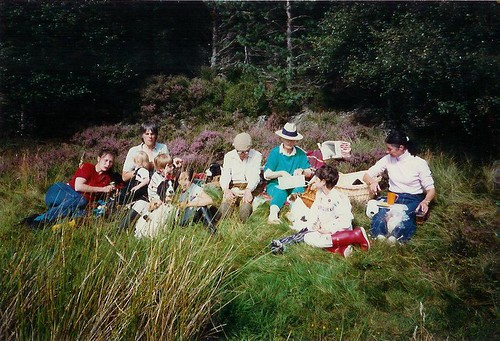
Family picnic by the loch - August 1987
Picnic at the loch when the children were young
Earlier we visited the British Cemetery off San Rocco Square. The little bell rang above the gate and George Psailas came out of the house where he was born and has lived for eighty years to help us up the small step in the little iron gateway. I pushed my mother round the gentle slopes of his flowery garden, she remarking on different plants and shrubs and gazing up to the tall trees that gave us shelter from the gentle drizzle. The mawkishness of artefact and sentiment on some graves was wholly subordinate to their sincerity. “Some do make a good case for cremation though” I muttered too keen to match her tetchiness.
Coming to the misbegotten concrete plinth that since the last two years encases some of the gravestones of those who died in the Corfu Channel Incident we quietly raged, because by then we’d found the place sublime. “Some sincere bean-counter at the impecunious Commonwealth War Graves Commission?" On one aisle between trees we watched tortoises ambling. "Gosh! One of them's having a pee" said Mum "I've never seen that before." We explored the ossuary - long empty - and other plots and heard occasionally the distant noises of the city and the airport.
“Lovely” said Mum signing her name in the visitors' book sat on a table by the gate, protected from the rain by a sheet of plastic. Later George told us there were many more tortoises in the garden since he’d introduced three from a village on the island. “This is a wonderful place” said my mother. “When you and I are over a hundred you’ll come again” he said holding her with infinite gentleness through the cemetery gate. “You know some people are frightened at the idea of living here with all these people in the ground. For me it’s paradise. I have my place here when I die.”
George Psailas
** ** **
Lines I liked from a new story sent me by Graham Hurley:
The noose of recession is tightening by the day. Selling a book like this one won’t ever be easy. People feel comfortable around violence. Anything more challenging is a bit of an ask. Do I really understand what’s at stake here? Isn’t a brimming fridge and a loaded bank account more important than whatever point I’m currently trying to make? (p.106 - my italics)
** ** **
An email to Professor Chakravarti-Kaul:
Dearest Minoti. Would you believe it! My mother has arrived for a week to stay with us in Corfu. She has been chatting away this morning – in the guest bedroom of our small home on Democracy Street in Ano Korakiana - about Sir Henry and the pleasure of your meeting with her, and your letter suggesting she be a Patroness of the Foundation for Common Land in UK and Ireland. She says she would be honoured so long as she’s doesn’t have to lecture or write about something she still feels she has to learn so much about. I have spoken to her about the historical movement from land held in common, to land held by status and then contract – in the context of public green space in Birmingham with which I’m very directly familiar...My mother sends you her love and looks forward so much to meeting you again and hopes to hear from you before then, directly or via me or Sharon.
Do you know the poignant passage in the last paragraph of Forster’s great novel Passage to India; do you recall the lines, when he and Fielding are riding together, about Aziz’s horse tripping on a stone and the thought expressed by Forster ‘not yet, not yet’? 'Even the earth and the sky seem to say, "Not yet."'
When I saw the photo of you and my mother I thought that perhaps – forgive me if I trespass on the deepest of feelings – this meeting between you and her has fulfilled Forster’s other piece of advice ‘only connect’. Perhaps this is the ‘yet’. Embraces from Greece. Simon
** **
David Cameron's speech at the Tory Party Conference in Birmingham and the first notice in Ano Korakiana from the new single local council to cover the whole island from Erikoussa to Paxos
9/10/10: Whoops! Saturday afternoon Thanassis and Katya came to tea. Thanassis told me there are two authorities - one for Corfu and the Diapontian Islands and a separate one for Paxos.
Prophet Elias before Mother Greece

Saturday, 7 August 2010

Homework ~ Ιθάκη


I've been reading and re-reading Cavafy's poem Ithaca in Greek, helped by a recording that I play over and over. It's at first almost impossible, even when I can make out the words in my head, to actually begin to speak them. It's not that by now I haven't understood the Greek alphabet. The challenge is getting first my ear, and then my unaccustomed tongue and palate, around Greek consonant and vowel combinations. Take 'βγεις'. In Greeklish this is probably best spelled as 'vgees'. Oh and why doesn't it have an accent? There's a rule on that which I keep forgetting; or take 'εύχεσαι' = 'efkesay', or 'γνώσεις' = 'gnosees', or 'πνεύμα' = 'pnevma'. Greeklish doesn't convey the right way to say such words.
In English we've lots too - 'st', 'ps', 'gr' for a start - ones I've been using for over half a century - and ditto with vowels, where, for instance, the same combination of 'ei' can be pronounced or not pronounced in different ways with no rule other than having to learn every unique instance. Phew.
With 'βγεις', you have to start with the 'β' but, like letting out a clutch, not slipping and revving but sliding smoothly into 'γ'. The Greeklish version doesn't help, nor any Latin phonetic - though it might be an aide-mémoire. The fact is mouth and ears must learn new routines; ones that get trickier with age. Take 'gnostic'. In English you ignore the 'g' except in the spelling and say 'nostic'. In Greek a word like 'γνώσεις', you must pronounce 'γν' as two letters, and not like 'gn' in 'diagnosis', but, as I described it, having a go at 'γ' but gliding swiftly effortlessly and seamlessly into 'ν'. Niko has asked me to read the poem from the book and send him a sound file of the first dozen lines of Cavafy's poem* with the transcript below based on Antony Hirst's recovery of Cavafy's originals. 
 Σὰ βγεῖς στὸν πηγαιμὸ γιὰ τὴν 'Ιθάκη, νὰ εὔχεσαι νἆναι μακρὺς ὀ δρόμος, γεμάτος περιπέτειες, γεμάτος γνώσεις. Τοὺς Λαιστρυγόνας καὶ τοὺς Κύκλωπας, τὸν θυμωμένο Ποσειδῶνα μὴ φοβᾶσαι, τέτοια στὸν δρόμο σου ποτέ σου δὲν θὰ βρεῖς, ἂν μέν' ὴ σκέψις σου ὐψηλή, ἄν ἐκλεκτὴ συγκίνησις τὸ πνεῦμα καί το σῶμα σου ἀγγίζει.
Τοὺς Λαιστρυγόνας καὶ τοὺς Κύκλωπας, τὸν ἂγριο Ποσειδῶνα δὲν θὰ συναντήσεις, ἄν δὲν τοὺς κουβανεῖς μὲς στὴν ψυχή σου, ἄν ὴ ψυχή σου δὲν τοὺς στήνει ἐμπρός σου. 
When you set out on the journey to Ithaca, pray that the road be long, full of adventure, full of knowledge. The Laestrygonians and the Cyclopes, the raging Poseidon do not fear: You'll never find the likes of them on your way, if lofty be your thoughts, if rare emotion touches your spirit and your body. The Laestrygonians and the Cyclopes, the fierce Poseidon you'll not encounter, unless you carry them along within your soul, unless your soul raises them before you.
*Apologies to all Greeks.

Email from Lin on the above clip: Show-off!!! Lx
Me: Do you really think it’s sort of OK? XXX S
L: Yeah, it's sort of OK. lol
*** ***
Of a sudden Brin Croft teems with small young people. Nephew-in-law (is that the term?) and niece, Kalvin and Emma, arrived with their new children Jacob and Edward, on the sleeper from London, invading with greetings, squeals and pattering feet, and I'm sleeping across the yard in the log cabin; Oscar too.

I cycled to the Moy Fair on General Wade's military road, a gravel track that at places parallels the A9 where I spied, with cyclist's irritating schadenfreude, the queued traffic while I pedalled through woods up and down congenial slopes, Oscar running beside, until the last mile where he jumped back in his basket to join the main road and I threaded a mile of almost stationary traffic. A driver in a red van leaned out and complained in obvious English "You trying to get yourself killed?" "Och! Gai haim to yer own country sasunnach" I mouthed - a racist line stolen from YouTube via Corfucius. We exchanged customary Vs as I left him behind taking an almost invisible footpath that leads through the steel barrier down an embankment to the old A9 and Moy House.
Moy Fair: mum and some of her grand and great grand children - Edward, Kalvin, Emma and Jacob
Mum's late husband Angus Burnett Stuart died in January 2006, He was the inaugural chairman of the Highland Field Sports Fair (the YouTube record from Aug 2007) at Moy. With well selected local colleagues, Angus ran it every August for years before passing that role to our friend James Murray. My mother's been to every fair since it started, but after a fall three weeks ago made getting about with her walker painful, she was wondering if she could go. Nervous about electric scooters she feared her wheelchair might get stuck being pushed at Moy. As it was things worked fine, and as it has nearly every year rain held off and the ground, under many feet, hooves, paws and wheels, stayed firm. We toured the tent avenues of shops, met friends in the Committee Tent and watched events in the main arena, especially the organised chaos of the terrier races in which Oscar picked a fight with another dog ('the other dog started it!') and Lulu, hating the hubbub, which most terriers relish, exited the box and returned at once to me.
I'm eclectic about events enjoying Vaisaki in Handsworth Park, Carnivals in the Forest of Dean, Carnival and Easter lamb-roast in Ano Korakiana, pot-smashing in Corfu town, and of course the Moy Fair.
** ** **
Email to Caroline Rance:
At Coignafearn. Photo: Dave Roskelly
Dear C. It may be useful for the next Inside Inlogov to know that during Nov/Dec ‘10 I’ll be working for the third year running with Professor John Martin of LaTrobe University, co-tutoring a series of seminars for practitioners – members and officers - in Australian local government on ‘Political Management Leadership: Negotiating the Overlap’ and, while in the antipodes, I’ve been invited to lead a course on 16 November in Wellington for the New Zealand Society of Local Government Managers (SOLGM) on the same theme.
In addition John and I have been invited to lead a day session in Canberra on a new high profile programme being run by The Australia-New Zealand School of Government’s (ANZSOG) ‘Excellence in Local Government’ Leadership Programme on ‘working creatively and effectively with the Mayor or CEO/elected members’. You might be able to use the attached photo which they'll use to show my wise old face on programmes there. Best, Simon
***
Ithaca - second verse....
Νὰ εὔχεσαι νἆναι μακρύς ὀ δρόμος. Πολλὰ τὰ καλοκαιρινὰ πρωϊὰ νὰ εἶναι ποῦ μὲ τὶ εὐχαρίστησι, μὲ τὶ χαρὰ θὰ μπαίνεις σὲ λιμένας πρωτοειδωμένους· νὰ σταματήσεις σ' ἐμπορεῖα Φινικικά, καὶ τὲς καλές πραγμάτειες ν' ἀποκτήσεις, σεντέφια καὶ κοράλλια, κεχριμπάρια κ' ἔβενους, καὶ ἠδονικά μυρωδικὰ κάθε λογῆς, ὄσο μπορεῖς πιὸ ἂφθονα ἠδονικά μυρωδικά· σὲ πόλεις Αἰγυπτιακὲς πολλὲς νὰ πᾶς, νὰ μάθεις καὶ νὰς μάθεις απ' τοὺς σπουδασμένους.*
*The, to me, unfamiliar sprinkle of extra punctuation - diacritics - not just the single accents (τόνοι) to show the pronounciation of most Modern Greek words in these verses were important to Cavafy who did his own publishing. The Hirst-Sachperoglou collaboration - The Collected Poems - restored Cavafy's punctuation, which until the development of Unicode for Greek Polytonic was almost impossible for users like me to type. There's a Wikipedia article on the polytonic notation of Greek explained in language I can just about follow, and this led me to an intriguing blog on Greek linguistics.
Getting better:

Thursday, 11 February 2010

Sovereign debt in the Eurozone

I bumped into David outside the village medical centre on my way up Democracy Street to use the internet at Mark and Sally's. I was aware ADEDY had called for stoppages on February 10. "The airport was closed. It's over severance compensation still unpaid after last year's privatization...and there's a national strike called for 24th February. Everyone!" Ian drove by and stopped. "I'll get the cement guy to come and give you that estimate for your balcony." "It's because there's no consensus in Parliament. The Left isn't going to play to the accountants in the EU." I bought bread at the shop; wondered if we'd be able to fly home as planned on 22 February. Meantime we must collect some firewood, do some shopping, and finish off our project to turn the downstairs dining room into a bedroom by filling in the open staircase. Lin and I had a squabble last night over fixing architrave to the opening at the bottom of the stairs. I struggled for an hour to line up three pieces of wood with their forty five degree angles and just could not get rawlplugs to stay in the right place in the uneven composition of the walls. I was cursing the unfairness of walls, wood, rawlplugs and screws while Lin read upstairs after I'd rejected her advice to use glue instead. "How the f*** do clever people do this?" I muttered as bits of plaster fell on the floor and wood and wall remained obstinately unmarried. By one in the morning I was defeated. By half one I was sullenly squeezing gobbets of brown sticky stuff from a tube onto the backs of the architrave pieces. Lin came down and to offer them up and make them fit. Then we stood in silence holding the wood to the wall as the glue set. Perfect. "Do you want a cup of coffee, Lin?"
* * *
Yesterday my email wouldn't work but Rashid at the IT Helpdesk on campus in Birmingham took over my screen - an eerie feeling - and rejigged the encryption and made everything alright. "I'm hugging you Rashid" I said over Skype as he gave me back my mouse. This connection is so vital for as I line up various bits of work in UK during March, late May and June - by which time the political landscape will look different and there'll be more news of recession and reactions to government austerity measures - and not just in Greece.

But meantime the stronger economies of Europe, especially Germany, are playing a political role stewarding the Eurozone - thus do feelings about the European dream become polarised as populations of voters in every country feel the discomfort and pain of global recession.
Back to the future: BBC 13/12/11. Greece entered Eurozone 1 Jan 2001

* * *

My mum, Barbara, in 1919 with her dad, Henry Maine
Today my mother is 93. We chatted by Skype, the continued snow and the progress of her writing "I'm up to Palestine in 1934."
With my mother in the Highlands this January

Friday, 1 January 2010

Snowed-in

Hi Simon. Just A quick HAPPY NEW YEAR you all, and to let you know that Ian with Sally's help has seen to the chimney. So you should be OK for when you come out on the 11th. Cheerio Mark.
A welcome message from Mark in Ano Korakiana with news about our problem chimney at 208 Democracy Street. Ian, the builder we found through Nick at Skripero, needed to add another length of stove pipe that reached higher above our roof, support it and top it with a spinner that would ensure it drew. Our chimney is inaccessible; just reachable by extending ladder from Leftheris' garden, and defended by wasps. The job was impossible until winter:
Oscar goes off piste
Meanwhile, back at the ranch....we sit, my mother and I, before a log fire, with plenty of wood brought in from the lean-to. The village is only a few hundred yards away but more snow in the night has blocked the lane to all but tractors and walkers. I'd cleared short pathways so that I and Sharon, my mum's helper, could get into the garden - a particular concern of my mother's, who watches a regular flow of garden birds, through her bedroom window, visiting half a dozen feeders full of seed and nuts hung from shelters on posts - robins, blue tits, chaffinches. There was a power cut for an hour after a snow-burdened tree fell on a power line to the houses at our end of the village.
After lunch, the dogs were demanding a walk. I set out, well clothed, into knee deep snow, through which the terriers bobbed, lunging through drifts that could bury them. I trudged slowly but steadily up the esker east of us, sometimes making a route for the dogs, though most of the time they seemed keen to go their own way, standing now and then to get their bearings. The landscape is pristine; Brin Rock showing over mist further down the Strath.
I don't take this terrain for granted. I know it well enough, but lose the light or get caught in a snow squall and everything changes. Today the quiet is palpable; the land like new, crossed in places by wild animal tracks already fading into the snow, while under the larger trees are shallower places slightly rank where sheep have sheltered, warming each other. I hear my breathing as I work slowly up the esker, feeling for dips with my stick. Nothing else most of the time, especially as on the down slope the esker's bulk lies between me and the road to Whitebridge via Ruthven. It's not silence, just a landscape where smaller sounds are allowed - snow clumping off a tree that swings upright relieved of its weight, a buzzard mewing in the distance, the sounds of the dogs working through drifts over their heads, panting like me who can almost hear - certainly feel - my heart beating both for exertion and for the content of this winter realm, made the nicer by the prospect of a warm hearth, hot tea and a carefully nursed glass of Laphroaig - I still pronounce it something like 'leapfrog' - that's been sitting in a cupboard at Brin Croft.
I follow a forestry track a few hundred yards then turn into the woods already exhausted with wading. Snow's up to my waist at times. The dog's follow, trusting me, passing through the gorges I create. Then, over a fence half hidden, following it through the unkept grounds of the 'ghost house' - the Lodge - where, once, the long absent owner, to discourage vandals, suspended a teaspoon in mid air on black thread, so that if you peered through a window, as I did long ago with my children and, now adult, nephews and nieces, you'd see it floating, and on a wall inside, daubed in dripping paint, the sentence, 'do not disturb us we are sleeping'. I'm told that if you trespassed inside and opened a door, a string attached to it, made another door bang upstairs. I recall a rusty hatchet buried in a lintel. The uncarpeted floor creaked. Add to this a fellow intruder going "wwaaaa waaaa woooooo rrrroooooaaaaarrrrr wooooo!" Nightmares guaranteed.
Whose woods these are
The owner's nailed plywood over every downstairs window after campers - a dozen young people apparently dropped off in the area by their parents a few years ago, smashed glass in the Lodge that had lasted at least as long as I've been roaming Strathnairn, and started a fire in the woods that was put out by locals before it spread.
Meanwhile from far away - a reply on Facebook from John Martin to my birthday greeting:
Thanks Simon, Just got home after Amy's Ride some 60kms around the Bellarine Peninsula from Geelong down to Queenscliff. Had a swim in the solar heated pool (34C!) and am off to the Foundry for a beaut steak and a red for my birthday. I am a lucky boy indeed! Cheers, John
* * *
A ramble on the roots of the current situation in Greece by Avirama Golan at Haraatz.com with interesting insights and quotes, including one from the inventor of Inspector Haritos, Petros Markaris, and in its title 'Beautiful and strange homeland' [Όμορφη και παράξενη πατρίδα] - a poem by Odysseus Elytis, sung by George Dalaras:
Όμορφη και παράξενη πατρίδα
Ωσάν αυτή που μου 'λαχε δεν είδα
Ρίχνει να πιάσει ψάρια πιάνει φτερωτά
Στήνει στη γη καράβι κήπο στα νερά
Κλαίει φιλεί το χώμα ξενιτεύεται
Μένει στους πέντε δρόμους αντρειεύεται
Κάνει να πάρει πέτρα τηνε παρατά
Κάνει να τη σκαλίσει βγάνει θάματα
Μπαίνει σ' ένα βαρκάκι πιάνει ωκεανούς
Ξεσηκωμούς γυρεύει θέλει τύραννους
Πέντε μεγάλους βγάνει πάνω τους βαρεί
Να λείψουν απ' τη μέση τους δοξολογεί.
I’ve never seen a homeland more strange and beautiful
Than this one that fell to my lot
Throws a line to catch fish catches birds instead
Sets up a boat on land garden in the waters
Weeps kisses the ground emigrates
Becomes a pauper gets brave
Tries for a stone gives up
Tries to carve it works miracles
Goes into a boat reaches the ocean
Looks for revolutions wants tyrants
* * *
In the early hours I peer through my bedroom window. The moon is full and high. Alles schläft; einsam wacht. [Flashbacks to around this time a year ago and two years ago and my first entry on Democracy Street on 1 April 2007. I love the quote from J.B.Jackson:
The bicycle had, and still has, a humane, almost classical moderation in the kind of pleasure it offers. It is the kind of machine that a Hellenistic Greek might have invented and ridden. It does no violence to our normal reactions: It does not pretend to free us from our normal environment.]
* * *
Jasper Schuringa was visiting the USA from Holland - the first to leap towards the failed faith-assisted suicidée on a plane coming into to Detroit Metropolitan - a busy airport at any time with, at Christmas, the lights of four descending planes at once visible from the milling concourse. Schuringa burned his hand attempting - it seems successfully - to put out flames meant to detonate the PETN sewn into the other man's crotch "so they would be near his testicles and unlikely to be detected"
(It won't be just "remove your belt, sir" in future, especially if suicidées use IEDs like drug mules - and if as a result we start to use body scanners, there'll be longer Qs - also vulnerable. Ooh ah missus...passeggeri nudi ai check-in... what a dilemma! Toss for virtual strip search or full pat down. See also - who profits and if they really work)
I wonder how I'd behave in Jasper's situation? A study done years later - which I must dig out - of those who'd given sanctuary to Jews during WW2 showed that, unlike those wouldn't get involved, these people had been accustomed to pondering with the encouragement of their parents “What would you/we do if…" We were like that and Lin and I played moral dilemmas - as a game - with Richard and Amy, but I was warned by Jack never to judge anyone by assuming from what you know or think of their present character, what they might actually do in a crisis (why Peter's denial is so cogent and human, because swore he would not do what, in fear, he later did)
My stepfather said that when push comes to shove you never know how you or any one else will act. People who’ve won medals will say they surprised themselves. This was true of the small minority in the Milgram experiments who refused to administer electric shocks (albeit fake ones, as they learned after) to another. Some who resisted the pressure of authority in Milgram's labs were also people who would fail the recruitment interviews of many agencies - being likely to be assessed as troublemakers. Milgram wisely reminded us, while warning of its dangers, that conformity, and therefore an impulse to obey authority, is essential to social cohesion. Hm? So who was the hero on the plane? We know a name and a few other public details, but what of his character? (Meanwhile there must be a training camp where the very faithful are carefully practising setting light to the fuses of IEDs secreted in intimately confined spaces. Oh dear oh dear. The things men do for their gods.)
** ** **
A helpful overview in New Athenian of the year 2009 in Greece

Sunday, 23 November 2008

"Eppur si muove"

There was a time in the last century when people who were displaced, detribalised, detached from the old certainties of village and family were regarded as a new kind of lost soul (as in this poignant poem by Paul Chidyausiku). Things have changed. Now the 'lost' are those whose ideas are still fixed in the lucid amber of their parent's rituals. Identity must be found by leaving that darkness - including the lurking folklore of nation, class and race - by learning, through constant enquiry, using the tools of exploration (open mind, fascination with endless mystery, method, discipline), the blinding light of generous curious reason. Did I learn this for myself? Hardly. All my parents and grandparents 'left the village' a century ago. Between them they experienced the displacements of the industrial revolution. My great great grandfather left Kelso to be an academic at Cambridge serving on the Council for India in the 1870s. My great grandmother eloped at the turn of the 19th century from an Oldham mill-owner's household to marry a Scottish journalist - George Roland Halkett - with the capital he had in his head. My grandmother died in Madras Chennai - her son, my dad, was born in India. He like so many others of his generation saw action in WW2 while my imperturbable grandfather who served in WW1 was uncomfortable when there was thunder. All travelled and served across the world. Two of my relatives - Dad and grandfather were real spooks whose work I'll never know - one was at Bletchley Park in WW2 and the other, after my mum and he divorced, married my Athenian step-mother and helped me have three half-sisters and a half-brother and an enduring connection with Greece, serving in Athens, Rangoon, Singapore, Hong Kong, Brussels and Washington. My mother rather than be a postwar Foreign Office wife divorced to work in Fleet Street. My step-father, whom she chose to 'live with' left Huddersfield to be a pioneer of press, radio and then television journalism and entertainment after his war service. Another grandmother took to driving in the 1920s, smoked cheroots, and left her debutante set to become 'red Barbara' leaving London and its circuits to start her own farm - where I was born in 1942. My eldest sister married a self-made New Yorker from the other side of the tracks. I went to private school where they tried to scare us with threats of 'ending up in a grammar school' if we didn't study hard enough. Linda who made it to Cannock Grammar school grew up in a council house on Bevan Lee Road; her father serving as a miner in the war; her mother in a munitions factory and later in the leather trade in Walsall. My life has been uneventful compared to the lives of the previous generation. * * * * "I bought", said our history teacher,"the bed whereon I was conceived." That was our history teacher, Charles Keeley (1920-1998), in the Ashburnham Room, gazing out at Little Dean's Yard one morning. The phrase, especially that preposition, joined the pool of his deliberate faux non sequiturs - too odd to be dissolved in the compost of most things past. In 1991 it was activated. I was finding out about my mum and dad's wartime union that ended in 1949. War years mainly. She and he. Enchanted evenings. What was that she'd said about air raids in London? "Oh your father and I didn't go to the shelter at The Savoy. We were having too much fun." That figured. Soldiers who'd seen action didn't take such chances. On leave in town when the sirens sounded they went underground - swiftly. But Dad's regiment - Ist Bt Coldstream Guards - part of the newly formed Guards Armoured Division (XXX Corp at Market Garden and before that Goodwood, Caen, Falaise and the dash through France, Belgium to the start line at the Meuse-Escaut canal, below the Dutch bridges, to his blighty wounds near Nijmegen) wouldn't see action until 1944. Mum worked for Vogue. Such people often felt a duty to take risks. The worst of the bombing of London - the Blitz - started in September 1940 and tailed off after May 1941. Following enquiries, I had a letter suggesting I contact Rosemary Ashby, archivist for The Savoy and Ritz. We met in a foyer off the Strand on a Friday in November - 17 years ago. She took me to her small office. She'd brought a file of room registrations from 1940 to 1944; let me copy the pages I sought - furloughs around 40 weeks before my birthday on Sunday 29 March 1942; Room 526 and 581 between Wednesday evening 25th June and Saturday morning 28th June 1941.Rosemary told me about picking hops in Kent in those years; how she and fellow land girls had once taken inadequate cover when a botfly strafed at random. I pocketed my copies of the evidence of the bedrooms - one wherein.... I could have gone upstairs, had a word with a chambermaid, peered through doors, touched walls and sat on furniture, on beds even, but Rosemary had given me enough. I had no wish for better souvenirs of the happiness that made me and I doubt our history teacher really bought that bed. It was an idea he enjoyed. In fact, now I think on it, I'm sure he said "I could have bought..." The Savoy Hotel is closed between December 2007 and May 2009 for a major make-over. * * * *
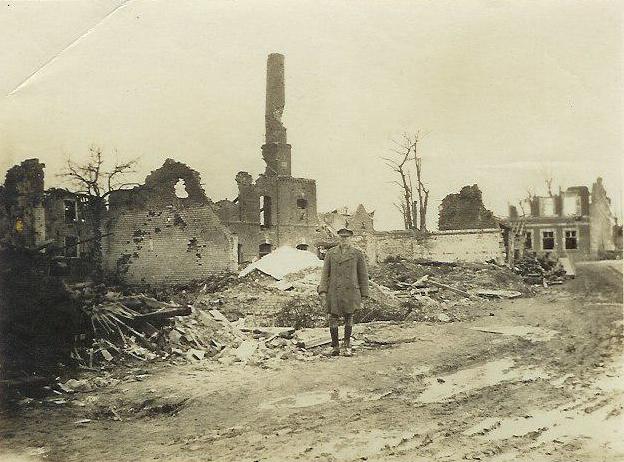
Nora Gregoriades died the other day - Maria, my Greek step-mother's sister who was so kind to me when I first visited Greece in 1957. I remember my first Greek Easter lamb roast in the Gregoriades garden in Kifissia. In 1962, after I'd sailed to Greece from England and we'd been moored to refit in Tourkolimano in sweltering August it'd been sweet relief to take the train out to cooler Kifissia, to be served as many glasses of iced lemonade as I could drink at her home with her family. On our last day in Athens, Danica back in the water, well stocked for the long voyage home, Norah took us to the Odeon of Herodes Atticus, to see John Stride and Judi Dench in Franco Zeffirelli's Romeo and Juliet. "With patient ears attend...the two hours' traffic of our stage "? I needed no prompting in that humid setting below the Acropolis that hot Athenian night before we sailed for England. I was rapt, stunned, laughing and crying Two households, both alike in dignity, In fair Verona, where we lay our scene, From ancient grudge break to new mutiny, Where civil blood makes civil hands unclean. From forth the fatal loins of these two foes A pair of star-cross'd lovers take their life; Whole misadventured piteous overthrows Do with their death bury their parents' strife.

Back numbers

Simon Baddeley