There was a time in the last century when people who were displaced, detribalised, detached from the old certainties of village and family were regarded as a new kind of lost soul (as in this poignant poem by Paul Chidyausiku). Things have changed. Now the 'lost' are those whose ideas are still fixed in the lucid amber of their parent's rituals. Identity must be found by leaving that darkness - including the lurking folklore of nation, class and race - by learning, through constant enquiry, using the tools of exploration (open mind, fascination with endless mystery, method, discipline), the blinding light of generous curious reason. Did I learn this for myself? Hardly. All my parents and grandparents 'left the village' a century ago. Between them they experienced the displacements of the industrial revolution. My great great grandfather left Kelso to be an academic at Cambridge serving on the Council for India in the 1870s. My great grandmother eloped at the turn of the 19th century from an Oldham mill-owner's household to marry a Scottish journalist - George Roland Halkett - with the capital he had in his head. My grandmother died in Madras Chennai - her son, my dad, was born in India. He like so many others of his generation saw action in WW2 while my imperturbable grandfather who served in WW1 was uncomfortable when there was thunder. 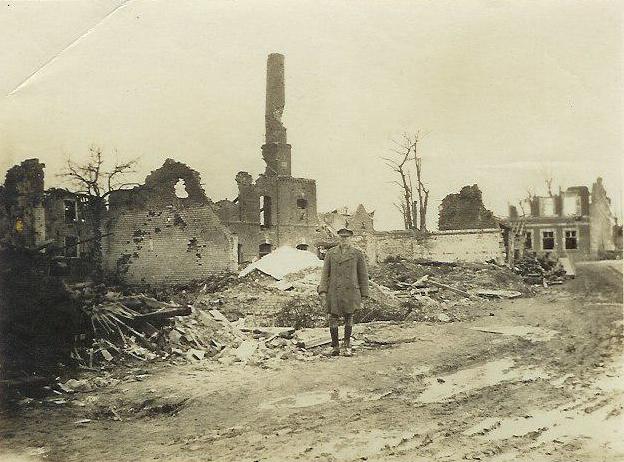 All travelled and served across the world. Two of my relatives - Dad and grandfather were real spooks whose work I'll never know - one was at Bletchley Park in WW2 and the other, after my mum and he divorced, married my Athenian step-mother and helped me have three half-sisters and a half-brother and an enduring connection with Greece, serving in Athens, Rangoon, Singapore, Hong Kong, Brussels and Washington. My mother rather than be a postwar Foreign Office wife divorced to work in Fleet Street. My step-father, whom she chose to 'live with' left Huddersfield to be a pioneer of press, radio and then television journalism and entertainment after his war service.
  Another grandmother took to driving in the 1920s, smoked cheroots, and left her debutante set to become 'red Barbara' leaving London and its circuits to start her own farm - where I was born in 1942. My eldest sister married a self-made New Yorker from the other side of the tracks. I went to private school where they tried to scare us with threats of 'ending up in a grammar school' if we didn't study hard enough. Linda who made it to Cannock Grammar school grew up in a council house on Bevan Lee Road; her father serving as a miner in the war; her mother in a munitions factory and later in the leather trade in Walsall. My life has been uneventful compared to the lives of the previous generation.
* * * *
Another grandmother took to driving in the 1920s, smoked cheroots, and left her debutante set to become 'red Barbara' leaving London and its circuits to start her own farm - where I was born in 1942. My eldest sister married a self-made New Yorker from the other side of the tracks. I went to private school where they tried to scare us with threats of 'ending up in a grammar school' if we didn't study hard enough. Linda who made it to Cannock Grammar school grew up in a council house on Bevan Lee Road; her father serving as a miner in the war; her mother in a munitions factory and later in the leather trade in Walsall. My life has been uneventful compared to the lives of the previous generation.
* * * *
 "I bought", said our history teacher,"the bed whereon I was conceived." That was our history teacher, Charles Keeley (1920-1998), in the Ashburnham Room, gazing out at Little Dean's Yard one morning. The phrase, especially that preposition, joined the pool of his deliberate faux non sequiturs - too odd to be dissolved in the compost of most things past. In 1991 it was activated. I was finding out about my mum and dad's wartime union that ended in 1949. War years mainly. She and he. Enchanted evenings. What was that she'd said about air raids in London? "Oh your father and I didn't go to the shelter at The Savoy. We were having too much fun." That figured. Soldiers who'd seen action didn't take such chances. On leave in town when the sirens sounded they went underground - swiftly. But Dad's regiment - Ist Bt Coldstream Guards - part of the newly formed Guards Armoured Division (XXX Corp at Market Garden and before that Goodwood, Caen, Falaise and the dash through France, Belgium to the start line at the Meuse-Escaut canal, below the Dutch bridges, to his blighty wounds near Nijmegen) wouldn't see action until 1944. Mum worked for Vogue. Such people often felt a duty to take risks. The worst of the bombing of London - the Blitz - started in September 1940 and tailed off after May 1941.
Following enquiries, I had a letter suggesting I contact Rosemary Ashby, archivist for The Savoy and Ritz. We met in a foyer off the Strand on a Friday in November - 17 years ago. She took me to her small office. She'd brought a file of room registrations from 1940 to 1944; let me copy the pages I sought - furloughs around 40 weeks before my birthday on Sunday 29 March 1942; Room 526 and 581 between Wednesday evening 25th June and Saturday morning 28th June 1941.
"I bought", said our history teacher,"the bed whereon I was conceived." That was our history teacher, Charles Keeley (1920-1998), in the Ashburnham Room, gazing out at Little Dean's Yard one morning. The phrase, especially that preposition, joined the pool of his deliberate faux non sequiturs - too odd to be dissolved in the compost of most things past. In 1991 it was activated. I was finding out about my mum and dad's wartime union that ended in 1949. War years mainly. She and he. Enchanted evenings. What was that she'd said about air raids in London? "Oh your father and I didn't go to the shelter at The Savoy. We were having too much fun." That figured. Soldiers who'd seen action didn't take such chances. On leave in town when the sirens sounded they went underground - swiftly. But Dad's regiment - Ist Bt Coldstream Guards - part of the newly formed Guards Armoured Division (XXX Corp at Market Garden and before that Goodwood, Caen, Falaise and the dash through France, Belgium to the start line at the Meuse-Escaut canal, below the Dutch bridges, to his blighty wounds near Nijmegen) wouldn't see action until 1944. Mum worked for Vogue. Such people often felt a duty to take risks. The worst of the bombing of London - the Blitz - started in September 1940 and tailed off after May 1941.
Following enquiries, I had a letter suggesting I contact Rosemary Ashby, archivist for The Savoy and Ritz. We met in a foyer off the Strand on a Friday in November - 17 years ago. She took me to her small office. She'd brought a file of room registrations from 1940 to 1944; let me copy the pages I sought - furloughs around 40 weeks before my birthday on Sunday 29 March 1942; Room 526 and 581 between Wednesday evening 25th June and Saturday morning 28th June 1941.
 Rosemary told me about picking hops in Kent in those years; how she and fellow land girls had once taken inadequate cover when a botfly strafed at random. I pocketed my copies of the evidence of the bedrooms - one wherein.... I could have gone upstairs, had a word with a chambermaid, peered through doors, touched walls and sat on furniture, on beds even, but Rosemary had given me enough. I had no wish for better souvenirs of the happiness that made me and I doubt our history teacher really bought that bed. It was an idea he enjoyed. In fact, now I think on it, I'm sure he said "I could have bought..."
The Savoy Hotel is closed between December 2007 and May 2009 for a major make-over.
Rosemary told me about picking hops in Kent in those years; how she and fellow land girls had once taken inadequate cover when a botfly strafed at random. I pocketed my copies of the evidence of the bedrooms - one wherein.... I could have gone upstairs, had a word with a chambermaid, peered through doors, touched walls and sat on furniture, on beds even, but Rosemary had given me enough. I had no wish for better souvenirs of the happiness that made me and I doubt our history teacher really bought that bed. It was an idea he enjoyed. In fact, now I think on it, I'm sure he said "I could have bought..."
The Savoy Hotel is closed between December 2007 and May 2009 for a major make-over.
 * * * *
Nora Gregoriades died the other day - Maria, my Greek step-mother's sister who was so kind to me when I first visited Greece in 1957. I remember my first Greek Easter lamb roast in the Gregoriades garden in Kifissia. In 1962, after I'd sailed to Greece from England and we'd been moored to refit in Tourkolimano in sweltering August it'd been sweet relief to take the train out to cooler Kifissia, to be served as many glasses of iced lemonade as I could drink at her home with her family. On our last day in Athens, Danica back in the water, well stocked for the long voyage home, Norah took us to the Odeon of Herodes Atticus, to see John Stride and Judi Dench in Franco Zeffirelli's Romeo and Juliet. "With patient ears attend...the two hours' traffic of our stage "? I needed no prompting in that humid setting below the Acropolis that hot Athenian night before we sailed for England. I was rapt, stunned, laughing and crying
Two households, both alike in dignity,
In fair Verona, where we lay our scene,
From ancient grudge break to new mutiny,
Where civil blood makes civil hands unclean.
From forth the fatal loins of these two foes
A pair of star-cross'd lovers take their life;
Whole misadventured piteous overthrows
Do with their death bury their parents' strife.
to be served as many glasses of iced lemonade as I could drink at her home with her family. On our last day in Athens, Danica back in the water, well stocked for the long voyage home, Norah took us to the Odeon of Herodes Atticus, to see John Stride and Judi Dench in Franco Zeffirelli's Romeo and Juliet. "With patient ears attend...the two hours' traffic of our stage "? I needed no prompting in that humid setting below the Acropolis that hot Athenian night before we sailed for England. I was rapt, stunned, laughing and crying
Two households, both alike in dignity,
In fair Verona, where we lay our scene,
From ancient grudge break to new mutiny,
Where civil blood makes civil hands unclean.
From forth the fatal loins of these two foes
A pair of star-cross'd lovers take their life;
Whole misadventured piteous overthrows
Do with their death bury their parents' strife.
 All travelled and served across the world. Two of my relatives - Dad and grandfather were real spooks whose work I'll never know - one was at Bletchley Park in WW2 and the other, after my mum and he divorced, married my Athenian step-mother and helped me have three half-sisters and a half-brother and an enduring connection with Greece, serving in Athens, Rangoon, Singapore, Hong Kong, Brussels and Washington. My mother rather than be a postwar Foreign Office wife divorced to work in Fleet Street. My step-father, whom she chose to 'live with' left Huddersfield to be a pioneer of press, radio and then television journalism and entertainment after his war service.
  Another grandmother took to driving in the 1920s, smoked cheroots, and left her debutante set to become 'red Barbara' leaving London and its circuits to start her own farm - where I was born in 1942. My eldest sister married a self-made New Yorker from the other side of the tracks. I went to private school where they tried to scare us with threats of 'ending up in a grammar school' if we didn't study hard enough. Linda who made it to Cannock Grammar school grew up in a council house on Bevan Lee Road; her father serving as a miner in the war; her mother in a munitions factory and later in the leather trade in Walsall. My life has been uneventful compared to the lives of the previous generation.
* * * *
Another grandmother took to driving in the 1920s, smoked cheroots, and left her debutante set to become 'red Barbara' leaving London and its circuits to start her own farm - where I was born in 1942. My eldest sister married a self-made New Yorker from the other side of the tracks. I went to private school where they tried to scare us with threats of 'ending up in a grammar school' if we didn't study hard enough. Linda who made it to Cannock Grammar school grew up in a council house on Bevan Lee Road; her father serving as a miner in the war; her mother in a munitions factory and later in the leather trade in Walsall. My life has been uneventful compared to the lives of the previous generation.
* * * *
 "I bought", said our history teacher,"the bed whereon I was conceived." That was our history teacher, Charles Keeley (1920-1998), in the Ashburnham Room, gazing out at Little Dean's Yard one morning. The phrase, especially that preposition, joined the pool of his deliberate faux non sequiturs - too odd to be dissolved in the compost of most things past. In 1991 it was activated. I was finding out about my mum and dad's wartime union that ended in 1949. War years mainly. She and he. Enchanted evenings. What was that she'd said about air raids in London? "Oh your father and I didn't go to the shelter at The Savoy. We were having too much fun." That figured. Soldiers who'd seen action didn't take such chances. On leave in town when the sirens sounded they went underground - swiftly. But Dad's regiment - Ist Bt Coldstream Guards - part of the newly formed Guards Armoured Division (XXX Corp at Market Garden and before that Goodwood, Caen, Falaise and the dash through France, Belgium to the start line at the Meuse-Escaut canal, below the Dutch bridges, to his blighty wounds near Nijmegen) wouldn't see action until 1944. Mum worked for Vogue. Such people often felt a duty to take risks. The worst of the bombing of London - the Blitz - started in September 1940 and tailed off after May 1941.
Following enquiries, I had a letter suggesting I contact Rosemary Ashby, archivist for The Savoy and Ritz. We met in a foyer off the Strand on a Friday in November - 17 years ago. She took me to her small office. She'd brought a file of room registrations from 1940 to 1944; let me copy the pages I sought - furloughs around 40 weeks before my birthday on Sunday 29 March 1942; Room 526 and 581 between Wednesday evening 25th June and Saturday morning 28th June 1941.
"I bought", said our history teacher,"the bed whereon I was conceived." That was our history teacher, Charles Keeley (1920-1998), in the Ashburnham Room, gazing out at Little Dean's Yard one morning. The phrase, especially that preposition, joined the pool of his deliberate faux non sequiturs - too odd to be dissolved in the compost of most things past. In 1991 it was activated. I was finding out about my mum and dad's wartime union that ended in 1949. War years mainly. She and he. Enchanted evenings. What was that she'd said about air raids in London? "Oh your father and I didn't go to the shelter at The Savoy. We were having too much fun." That figured. Soldiers who'd seen action didn't take such chances. On leave in town when the sirens sounded they went underground - swiftly. But Dad's regiment - Ist Bt Coldstream Guards - part of the newly formed Guards Armoured Division (XXX Corp at Market Garden and before that Goodwood, Caen, Falaise and the dash through France, Belgium to the start line at the Meuse-Escaut canal, below the Dutch bridges, to his blighty wounds near Nijmegen) wouldn't see action until 1944. Mum worked for Vogue. Such people often felt a duty to take risks. The worst of the bombing of London - the Blitz - started in September 1940 and tailed off after May 1941.
Following enquiries, I had a letter suggesting I contact Rosemary Ashby, archivist for The Savoy and Ritz. We met in a foyer off the Strand on a Friday in November - 17 years ago. She took me to her small office. She'd brought a file of room registrations from 1940 to 1944; let me copy the pages I sought - furloughs around 40 weeks before my birthday on Sunday 29 March 1942; Room 526 and 581 between Wednesday evening 25th June and Saturday morning 28th June 1941.
 Rosemary told me about picking hops in Kent in those years; how she and fellow land girls had once taken inadequate cover when a botfly strafed at random. I pocketed my copies of the evidence of the bedrooms - one wherein.... I could have gone upstairs, had a word with a chambermaid, peered through doors, touched walls and sat on furniture, on beds even, but Rosemary had given me enough. I had no wish for better souvenirs of the happiness that made me and I doubt our history teacher really bought that bed. It was an idea he enjoyed. In fact, now I think on it, I'm sure he said "I could have bought..."
The Savoy Hotel is closed between December 2007 and May 2009 for a major make-over.
Rosemary told me about picking hops in Kent in those years; how she and fellow land girls had once taken inadequate cover when a botfly strafed at random. I pocketed my copies of the evidence of the bedrooms - one wherein.... I could have gone upstairs, had a word with a chambermaid, peered through doors, touched walls and sat on furniture, on beds even, but Rosemary had given me enough. I had no wish for better souvenirs of the happiness that made me and I doubt our history teacher really bought that bed. It was an idea he enjoyed. In fact, now I think on it, I'm sure he said "I could have bought..."
The Savoy Hotel is closed between December 2007 and May 2009 for a major make-over.
 * * * *
Nora Gregoriades died the other day - Maria, my Greek step-mother's sister who was so kind to me when I first visited Greece in 1957. I remember my first Greek Easter lamb roast in the Gregoriades garden in Kifissia. In 1962, after I'd sailed to Greece from England and we'd been moored to refit in Tourkolimano in sweltering August it'd been sweet relief to take the train out to cooler Kifissia,
 to be served as many glasses of iced lemonade as I could drink at her home with her family. On our last day in Athens, Danica back in the water, well stocked for the long voyage home, Norah took us to the Odeon of Herodes Atticus, to see John Stride and Judi Dench in Franco Zeffirelli's Romeo and Juliet. "With patient ears attend...the two hours' traffic of our stage "? I needed no prompting in that humid setting below the Acropolis that hot Athenian night before we sailed for England. I was rapt, stunned, laughing and crying
Two households, both alike in dignity,
In fair Verona, where we lay our scene,
From ancient grudge break to new mutiny,
Where civil blood makes civil hands unclean.
From forth the fatal loins of these two foes
A pair of star-cross'd lovers take their life;
Whole misadventured piteous overthrows
Do with their death bury their parents' strife.
to be served as many glasses of iced lemonade as I could drink at her home with her family. On our last day in Athens, Danica back in the water, well stocked for the long voyage home, Norah took us to the Odeon of Herodes Atticus, to see John Stride and Judi Dench in Franco Zeffirelli's Romeo and Juliet. "With patient ears attend...the two hours' traffic of our stage "? I needed no prompting in that humid setting below the Acropolis that hot Athenian night before we sailed for England. I was rapt, stunned, laughing and crying
Two households, both alike in dignity,
In fair Verona, where we lay our scene,
From ancient grudge break to new mutiny,
Where civil blood makes civil hands unclean.
From forth the fatal loins of these two foes
A pair of star-cross'd lovers take their life;
Whole misadventured piteous overthrows
Do with their death bury their parents' strife.


