Total Pageviews

Showing posts sorted by relevance for query "parents of greece". Sort by date Show all posts

Thursday, 12 December 2013

Worse

Richard Pine wrote, in one of his regular pieces for the Irish Times on 11 December:
Why Greece’s schools are a shambles and its universities are chaotic 
I am sometimes asked whether the criticisms of the Greek system that I occasionally voice in this column are criticisms also of the Greek people. The answer is most emphatically "no”. It’s said that people get the government they deserve, but in modern-day Greece that is not the case.
The crisis of Greece is due to it having always been messed around politically by the major powers, and being subject now to the international expectations and persuasions in the EU and the financial marketplace. It is not due to the people, any more than the Irish banking crisis is the fault of ordinary Irish people.
While Greece may solve its economic problems, it has made scant progress on the systemic issues of social provision, in particular health and education.
The schools are a shambles and the universities are chaotic. The somewhat primitive education system may have been adequate when Greece was backward and marginal, and had only a minor role in international affairs. Today, with the expansion in curriculums, diversification and specialisation in university faculties, and the pressures of the market place, this isn’t good enough.
School-leavers deserve a university system which is transparent and offers both hope and opportunities. Most young Greeks, like their Irish counterparts, are not content with the old ways: they want to acquire skills and reach new horizons. The education system stands in their way.
Even when they graduate, however brilliant they may be, employment commensurate with qualifications is almost inconceivable. The best prospect is emigration, usually to Britain (40% of emigrants), Germany (16%), Italy (16%) and north America (5%).
Emigration by graduates is lower than in Ireland or the Baltic states, but only 16% of graduates working abroad would contemplate returning to Greece. About 46% of PhD-holders earned more than €60,000 abroad, more than twice their equivalent in Greece. The main subjects for emigrating graduates are economics and business studies, law, computer science, physics and chemistry.
Of the 'free' secondary school system, one newspaper, Kathimerini, said: 'It’s not free and it’s not education.' The annual budget for education, pre-austerity cuts, was €6 billion or slightly more than 4% of gross domestic product. This is insufficient to enable schools to meet modern standards. The worst affront is the fact that teachers direct pupils to the crammers where they work out of hours, the frontisterio - φροντιστήριο - 'tutorial college'.
Teachers earned a pre-cuts average salary of €30,000, making the frontisterio industry an essential extra cash-earner. There are an estimated 3,000 crammers, to which anxious parents are paying an annual total of €1.6 billion, or €200 per month per family. It has been described as a form of kleptocracy.
It was expected the frontisterio system could be eliminated by extending the school day, which until last year ran from 8am to 1pm; it now ends at 2pm, with provision for a further two hours’ study time, for which teachers are paid no extra. But the frontisterio still flourishes: in fact, it is mandatory if you want your son or daughter to get into university.
One result of the austerity measures has been non-replacement of retiring workers. About 23,000 teachers retired in 2011; the government could afford to replace only 3,500; the worst-hit are the disabled and those with special needs.
In 2010, the then prime minister, George Papandreou, pledged to “fundamentally change the way Greek pupils learn and teachers teach”. Attempts to honour that pledge by his, and the current coalition, government, have met opposition from the unions, because they believe the reforms won’t achieve any real improvements.
The most extensive reforms envisaged include revamping school teaching methods, coupled with abolition of the existing Greek 'Leaving Cert' and the points system of university entrance. At present, 50 per cent is required in their Leaving Cert for university entrance, but 20 per cent of school-leavers failed to reach this, with over 60 per cent failing history and maths. Greek schools rank 28th out of 31 countries measured by the OECD for literacy and maths.
Universities are not amenable to a system of control, despite efforts at reform. Universities have to be autonomous and yet responsible. That balance has yet to be found in the Greek system, which is impenetrable to the rational mind. There are 19 universities in Greece, plus 16 technical colleges, with a lecturer-student ratio of 31:1. Three Greek universities are ranked in the world’s top 500, at 193, 226 and 338. Five more feature in the range 500-1,000. Greece ranks 118th in the world league for university efficiency.
It’s essential the schools and the universities are reformed. But the two problems seem to be intractable. Greece is still struggling to find its way in the world, trying to decide how to educate its young people.
*** ***
An unsigned article a few days ago in Macropolis:
Percentage of people in Greece at risk of poverty tops EU list
The percentage of people living in Greece who are at risk of poverty rose substantially last year and almost a quarter of the country's population now falls into that category, which is the highest proportion in the European Union. Understandably, the plight of the worst off in Greece often grabs the headlines. But it is easy to overlook the fact the crisis is pushing more people who once had reasonably comfortable lives to the margins of society. The new data, which excludes the most socially vulnerable such as homeless, irregular migrants and Roma, leaves little room for doubt that this process is well underway. According to the latest figures from the Hellenic Statistical Authority (ELSTAT), 23.1% of people in Greece were at risk of poverty in 2012. This is compared to 21.4% in 2011 and 19.7% in 2009, shortly before the crisis broke out. In total, 914,973 households and their 2,535,700 members are considered as being at risk of poverty. The poverty threshold is considered to be €5,708 per person or €11,986 for each household that has two adults and two dependent children under 14. The risk of poverty threshold is 60% of the median of the total equivalised disposable household income. The worst-affected groups are single-parent households with dependent children, two thirds of which are at risk, and unemployed males. Just over 52% of men without jobs are at risk of poverty, along with 26.9% of children under the age of 17. However, the threat of hardship also affects those with work. More than 27% of Greeks with part time work are considered to be at risk of poverty, while the same applies for 13.4% of those with full time jobs. Without social transfers, almost half of Greece's population would be living at risk of poverty. It is worth noting, though, that social spending has been cut considerably over the last few years. According to the 2014 budget, social transfers were reduced by 6.8% between 2012 and 2013. They are due to be cut from about €17 billion this year to just under €14 billion next year – a cut of more than 18%. When the element of social exclusion is added to the data, the results become even more worrying, as 34.6% of the population was considered to be living at risk of poverty or social exclusion in 2012. When these two categories are combined, Greece has the fourth highest percentage in the EU, behind Bulgaria, Latvia and Romania. When only the "at risk of poverty" rate is considered, Greece ranks first, half a percentage point ahead of Romania in second at more almost three times the rate of Iceland, which takes the last place with 7.9%.
**** ****
I like these early morning starts. Alarm goes; reset it for a few hours later for Lin and descend to the kitchen for tea and to dress, then out into the chilly lamp-lit dark to cycle into town...
Hamstead Road before dawn


... to catch the non-stop train to London...
7.30am London train coming into platform 3 at Birmingham New Street

...for a morning meeting in Mayfair...
...a visit to Battersea to have one of my older Bromptons serviced at Phoenix Cycles ("You might as well sell it" said Mike "for what a proper service with replacement handlebars and wheels will cost" "Just tighten up the gears and renew the brakes then") before taking a taxi back to Dukes in St James Place...
 ...for a long lunch with an enduring friend. We drank an aromatic Stellenbosch for Mandela and argued about why some people have such a gift for making their allotment successful.
"It's a family association with the land" I claimed
"No. It's about enjoying preparing food" said Ziggi.
Back in another taxi to fetch the bicycle, and a swift ride for five and a half miles back across crowded London to Euston.
Big Ben behind me, approaching Trafalgar Square
Euston concourse - platform 5 for Wolverhampton via Derby and Birmingham New Street

I was home by 7.30. I tried to share my day but she's unpleased with my inability or is it unwillingness to get stuck into preparing the house for Christmas, inventing urgent contingencies to evade domestic responsibility; instead doing work with Handsworth Helping Hands...

...and pottering on the allotment where as well as admiring Taj's digging and shed tidying...
...I've harvested some of my Jerusalem Artichokes...
"You little darlings" I said
...and having cleaned and pealed them into salted water planning to sauté them with garlic and Bay leaves and see what they're like.
Jamie Oliver...Sautéed Jerusalem artichokes with garlic & bay leaves. Peel. Cut into chunks. Place in an oiled frying pan. Fry on medium heat until golden on both sides. Add a few bay leaves, 2 cloves of garlic, finely sliced, a splash of white wine vinegar, some salt and pepper. Place a lid on top. After about 25 minutes they will have softened up nicely. Remove the lid and the bay leaves. Continue cooking for a couple of minutes to crisp the artichoke slices one last time, then serve.


**** ****
In Ano Korakiana, where we shall be soon - celebration at the church of Saint Spyridon half way along Democracy Street:
11.12.13
s_spirid2013a1.jpg
Με την υπενθύμιση ότι «Πλούσιοι εφτώχευσαν και επείνασαν…», οι τρεις ιερείς και οι ισάριθμοι ψάλτες αναχώρησαν περί την δεκάτη βραδυνή από την οικία της Αίμης και της Κατερίνας Σαββανή (οι οποίες είχαν την επιμέλεια της φετινής εορτής)  για την εκκλησία του Αγίου, στην ανηφόρα της Πλάστιγγας.

Εκεί όπου η καθιερωμένη Ολονυχτία της εορτής του Αγίου θα κρατήσει μέχρι τις πρώτες πρωινές ώρες…δοκιμάζοντας τις αντοχές του γυναικείου κατά κύριο λόγο, εκκλησιάσματος.
s_spiridon2013f.jpg

Ανήμερα της εορτής, στον ίδιο χώρο, θα ψαλεί η Λειτουργία, σε μία κατάμεστη από κόσμο εκκλησία.Εντυπωσιακό φάνταζε το φωταγωγημένο από το διακριτικό φως του ήλιου και των καντηλιών τέμπλο του ναού.
s_spiridon2013d.jpgΣτο τέλος, στη μικρή αυλή και στην πρωινιάτικη λιακάδα, θα προσφερθούν στους εκκλησιασθέντες άρτος από την Εκκλησία, αλλά και σπερνά από την οικογένεια της Αγγέλας Θύμη.
**** **** ****
Our son has designed KLOK 3D - an application for Android phones...


Wednesday, 10 December 2008

Parents of Greece could stop this

Parents of Greece could stops this educated disorder now, but part or all of them in part approve their children's public action against a rack of concerns about theirs and their country's future. The police are forbidden - since the "anomaly" of the Junta - to do what other European police forces could do to restore order. it is perhaps no wonder some individual officers in the fray of the street or the privacy of cells let loose the feral. The same goes for those they face. This is a dangerous but not entirely unintelligent game between government and some of Greece's best and brightest. It is tragic. It is so so sad to watch this ugly family row in a place so dear. I pray that the impulses of tame klephts remain restrained, but that's an oxymoron. I read the hatred and anger on the Greek web forums against those in the streets and sense the desire, leaping from their fingers to shoot, kill, torture and impound their countrymen, who they call scum and worse. These keyboard colonels, these virtual coupmongers, and those they may prompt to action make no contribution to resolving this long sowed crisis - except like me as part of the chorus. In Axion Esti Elytis describes this Greek struggle
...it cannot be they without you nor can it be you without them… and you must face them without fail…those who wear the black shirt...who speak the language of porcupines, raw-eaters, water-brutes, bread-fearers, the leadenfaced and the neocondors.
I do not refer only to the police. They clearly have their water-brutes, but to all those who lurk - leadenfaced - yearning to start hacking this Gordian Knot.
* * * *
The violence in Corfu in San Rocco reported by the BBC and from a participant via their mobile: * * * * Plato is called anti-democratic. What democrat isn’t, who knows himself and humans - perhaps Kazantzakis’ Zorba – but only after leaving the earth. Plato said ‘justice in life and the conduct of the state is possible only as first it resides in the hearts and souls of citizens’. My ancestor, Maine, warned idealists for democracy that 'democracy is just another form of government’. Its success depended, he argued so well in Popular Government, on the constant exercise of moral intelligence to prevent it falling into the same despotic excesses the idealists presumed exclusive to monarchy. Locked in the intimate company of family and neighbours for months in occupied Amsterdam, young Ann Frank wrote ‘I don't believe that the big men, the politicians and the capitalists alone are guilty of the war. Oh, no, the little man is just as keen...’
* * *
Just got this via a Corfu contact who writes: For non Greek speakers, the reporter is horrified by:
# The screams of children being thumped by the fuzz # Bystanders trying to stop them. # People being dragged along the ground. # Children fainting or being beaten 'til unconscious
BALLISTICS: I've been with a policier pal, no-nonsense type. He says the bullet's been examined and there was NO ricochet. All this chatter from the defence about a "mistake" is crap. Also, he says the 'special' policeman(meaning not at all specially trained) was in his car and fired from the vehicle which was never under attack. I can't vouch for that bit; just quoting an In with an in. Accident schmaccident: Gonna be trouble oop t'mill over this one. You tube description: O thanatos tou Alexi Grigoropoulou den einai memonomeno peristatiko. H elliniki astynomia ksylokopei anyperspistous mathites akoma kai stis eirinikes sygentrwseis gia ti mnimi tou. Dimosiografos zontana metadidei to peristatiko sto radiofwno
* * * *
Kat - American in Athens blog - records an interview with a MAT police officer who describes how he came to Athens from Thessaloniki, choosing the police to have a job where wages, though low, arrive on time. He speaks of a 'broken country'; of being in a force that is ill-trained and unsupported.
"The guy who shot the boy isn’t someone I know, but his nickname 'Rambo' explains it all. I don’t want to know a person like this, but policeman around the world probably all know a co-worker who is (what do you call it?) irresponsible and trigger happy. All professions everywhere have bad people. It is a tragedy, and I understand why people are mad. All the MAT are paying for him, whether he is guilty or not"..."I’m sorry for the boy who was killed, but I want people to understand that many police officers are good. People call us pigs and hicks, and yes there are a few. But we’re human and have the same problems as everyone else, and we care about this country. Thank you for the chance to speak." [Police officer Epaminondas Korkoneas was charged with murder and police officer Vassilios Saraliotis was charged as an accomplice to murder.]
* * * *
11 December: They're speaking of burning cities on Radio 4 with Melvyn Bragg - in this case the two great fires of London. A modern city can't be burned down by men without nuclear weaponry or a firestorm like Dresden's in February 1945. Despite the dramatic images of flame and smoke Athens' present damage will have disappeared by Easter if not earlier. Notwithstanding the misery of shop keepers, the import of these events is not written in material harm. It never is. For an account of what happens when a city is destroyed by fire I think of Virgil's evocation of the fall of Troy in Aeneid Book 2 (Andrew Wilson's 2003 translation). Aeneas, the future founder of Rome, tells Queen Dido and her court how the Greeks - the Danaans - appeared to depart leaving a great wooden horse packed with hoplites on the beach as a gift. The world knows what followed but seldom hears the details as imagined by the Roman genius telling the story, centuries later, of the founding of Rome. I listened to David West's translation read by Richard Pasco on Penguin Audio during a long drive to Scotland ten years ago. Though I'd grown up rooting for the Greeks, I wept at the pity of Troy's destruction, Virgil's account resonating with every other story of the dreadfulness of soldiery amok in the streets of a fallen city.
* * * *
Global Voices covering blogs, videos and podcasts across the world has finally registered riots in Greece and offers a wide range of reactions - including asteris on twitter from Thessaloniki, a Wikipedia entry (which will no doubt be revised especially regularly) and these 30 (at time of writing - noon GMT 11/12/08) films on YouTube via #griots. And here I learn that my respected cyberfriend Stavros has placed a lengthy comment of mine - which he's titled 'From a Philhellene' - on his eloquent blog My Greek Odyssey - my dream about entering the home of a woman [back to the future: 29/12/08 - the Montreal Gazette publishes a belatedly story] * * * * On Wednesday I tried out the web streamed videos on political-management that I've been gently feeding into the web in the classroom. I had my own laptop with its freight of videos to show unstreamed extracts off an external hard drive and for others I was able - using the classroom PC linked to the campus LAN to show some of the extracts I'd posted on my quicklist on YouTube. It was easy to switch between computers and I think the session went really well - with my students, all practitioners, finding it useful to know they could look over the videos again, after reading the paper I'd handed out on political-management leadership. The next challenge suggested and helped by the Cochrane's via Facebook is to do that three minute introductory film to accompany the clips. From Jane C:
I think the intro would need to cover something like: 1 - this is a short intro to a series of x number of YouTube vids on the subject of political sensitivity and leadership, 2 - the videos explore aspects of the complex relationship between politicians and CEOs of local authorities and ? other public sector organisations, 3 - For some people leadership, trust and political sensitivity are natural skills and competences ... but for the rest of us they have to be researched, nurtured and honed - I hope this series will provoke your thinking and point you towards further resource material... you could always put up bibliography for further reading too.
And from Peter C who also sent some useful URLs
1) Use very few words 2) Use a big bold font 3) Use simple, telegraphese, style 4) Let pictures get your core message across
* * *
Flickr photos of the events from Teacherdude and Πορείες για το νεκρό μαθητή

* * *
A Greek blogger - Tempel or rebel - comments on narrowcasting:
And finally and most important the blogging…After french riots in 2005, Greece verified the rule : Blogging and internet are established as alternative source of independent information. Not because bloggers are objective, the opposite!!! But they are now too many!! So someone could read a variety of opinions that usually gives the whole picture. In that sense information on internet exceeds the limits of traditional media. The whole political spectrum is expressed here, without limitations of time or political correctness. And that helps the political dialogue significantly. And here comes the videotapes. The current riots boost a distribution of images by cell phones, amateur videos, photos and information on incidents minute by minute. Greek bloggers were testing the limits and discover that is not such thing. There are not limits in our passion for open and accessible information
[Back to the future 29 December 2008: 'Social media and the Greek uprising'] [Back to the future 10/01/09 Teacher dude speaks - last November but just read - of the tension between broad and narrow casting, between mainstream and webstream, between those who wrote and those who type, and how this is evolving in Greece]

Tuesday, 29 September 2015

'The cold outside'

"Welcome home" said Mark over my phone "A beer at Piatsa?"

It was long before the film of Zorba the Greek, a few weeks before Easter 1957 - ours had been on April 8th (I checked on Google). Greeks held theirs on April 21 that year. I was 16. By the time my train got to Larissa, it was hours after midnight. I was half-asleep; a compartment to myself – the seventh day of a rail journey from London via Paris and Venice where I’d spent two days in an elated stupor breathing the smell of damp paving.
Abruptly the door of the compartment was slid open. A wedding guest party surrounded me, chatting, gesturing, drinking. Vexed by their thoughtless invasion of my space I signalled them to quieten down “pleease!”.
Used to exercising weight, tutored to being in authority, I probably missed an initial hint of displeasure across the carriage of this Greek train on Greek soil. I do recall their amusement. There was the offer of a drink (tsiporo?) and gestured encouragement to join in. Surrounded  by happy laughter, not mockery, I turned, irritated, towards the darkness beyond the steamed window of the train rumbling down to Athens.  There, at dawn, on a low platform, the Greek side of my family awaited with joyous greetings, and many disturbing hugs and kisses. Through a tiny window from the loo of yia-yia's flat in Kolonaki I saw the Parthenon - no longer the familiar schoolbook illustration, the real place!
Five years later I was with a friend. We’d sailed on a small boat from England drifting ahead through August heat for landfall. After a swift reach from Sicily. sunrise on the third day, the good wind abandoned our small vessel on a limpid mirror. Fifty years later the moment remains as dreamlike as at the time; glimpsing the forms of land melded to white sky and coppery sea - a way to the mainland of Greece between Cephalonia and Zakinthos into the Gulf of Patras, 170 miles from Piraeus and the city to which I’d determined to return.
I spent my first twenty five years in a fog of schooled and inherited insensibility, almost impervious to the wisdom of generous parents – English and Greek - who probably knew that, as perhaps for them, only time would tell me.
In 1968 I was with one side of my family again. They’d flown on to Greece. My dad wanted a car while we were there. Over four days I drove his small Hillman through Belgium, Germany, Austria, Italy and by ferry to Greece (Patras? Igoumenitsa?) sleeping one night in a field above the sea, a few yards from a narrow road. From Piraeus I took another ferry to join the Greek side of my family in Aegina. We returned to Athens for a day, where, with my diplomatic family, I attended a house party somewhere near Vouliagmeni, hosted by a man whose bald head I glimpsed for a few seconds, Colonel Stylianos Pattakos
It was only in Detroit, married a year later, meeting American Greeks - and Greek exiles from the Junta - that I grasped the discomforting notion of ‘sides’, of Greece as a polity, of animosities and moral positions, words and facts and opinions that left the paper-fragranced sentences of my superlative education – in one ear as others' thoughts, out of my mouth as words for conversation and essays, and out of the other ear unedited.
Though it seems so in memory, I could not have been quite that one-dimensional, except perhaps at my mother’s breast. My CV, by the time I was thirty, was enough to ease me into academia where, mostly fuddled, time did begin at last to tell and I began to listen.
It was 25 years before I came to Greece again.
Flying to Greece - Amy, Linda, Richard

Standing in the cockpit of our Airbus (full of screens and no joystick) where passengers could – pre-9/11 – still be invited for a pilot’s glimpse of the world ahead, I stood behind my family (now my second marriage), as with Linda, Richard and Amy, we flew high over the border of Greece; able to see to port the glow of Thessaloniki; ahead the greater glow of Athens; to starboard a moonlit Ionian Sea and far below, in inky blackness, clusters of tiny glittering diamonds - villages in the foothills of the Pindos.
“Children! There’s Greece”
In the dim cabin tears welled from my eyes with the delight – and the idea – of sharing ‘my’ Greece with my wife and children. I could not speak for a moment.
Met by our relative’s driver we were swept into Athens towards Kifissia. My half-Greek half-brother and his family were with us. He too hadn't been back to Greece for a long time. Shopping malls flashed by; showrooms with glistening new cars behind picture windows, furniture shops displaying stainless steel and leather, fashion boutiques, a bright neon frieze.
“Amazing!” said George “It’s a modern European city”
I was presented with a Greece that was without the strange and magical difference that had struck me and fixed itself in my memory decades earlier. Air travel had taken away distance. All seemed lit by the familiar light of common day, modern, grown-up, no longer enchantable, respecting routine, far less dumb, a man who’d returned to meet the boy who several times had left Greece seduced by something that had been other and exotic.
I noticed blemishes – ugly architecture, urban rubbish. We enjoyed our holiday immensely. I was delighted and relieved my family liked this familiar Greece as much as I - even if not as I had first seen the place - climbing up to the Acropolis together tho’ by then the inside was fenced off to tourists, strolling in the Agora, taking the train about the city, driving through great mountain ranges of the Peloponnese via Sparta and Kalamata to Pylos, picking our way through the ruined fort of Methoni crumbling battlements and sudden chasms unhindered by health and safety warnings, sipping from the Pierian spring by the Roman temple of Corinth, where we plucked fresh figs, visiting islands in the Aegean.
Life went on. My dad died long ago. My mum, who’d divorced him years before then (hence his second marriage to an Athenian and my Greek family), remained the bridge to yet another country – the past, in which I’d not lived, an unknowable land of fantasy and invention, and the landscapes of the Highlands and its clear peat waters.
River Farnack in Strathnairn with Oscar
Σα βγεις στον πηγαιμό για την Κέρκυρα να εύχεσαι νάναι μακρύς ο δρόμος...


We could talk about our separate experiences, my adventures as novel to her and hers to me.
My Greek stepmother Maria had, like this modern Greece, become part of an ordinary present, older, almost British, no longer part of the wondrous seduction of that distant land where I’d arrived by rail, sea and road so long ago.
Coming back to Greece - painted in 1970. Hung until she died above my mother's bed. Now I'm unsure where to put it.

I come aged 66 to the morning around our kitchen table in Handsworth. My beloved daughter, Amy, tells her mum she’s seen a yacht on a free mooring for sale in Corfu on ebay. I bought it, on an unwise impulse that brought Linda and I to Greece to buy a small house in the village of Ano Korakiana.
Beforehand, our very first evening in Corfu, hire car from the airport, having seen the boat and been disappointed but resigned to our purchase; considering the possibility of ‘making a list’ of things to be done, we went to an English bar on the cluttered strip-front of Ipsos, looking over the Corfu Sea to the bare mountains of Albania and Epirus. Our fellow customers were British. Notices, including our menu, were in English. In amiable company we had our first meal in Corfu – fish and chips with mushy peas; vinegar beside HP sauce. Above the bar a flat screen played desultorily watched news of the world delivered with loud familiar voices by familiar faces interspersed with pop and football. On shelves in a corner were popular paperbacks to be exchanged; below them a week-old British newspaper, headlining an event in the public life of a celebrity. We inhabited ‘modern times’.
No longer do I leave ‘here’ to arrive ‘there’, separated by poste restante mail and, in emergency, complicated phone calls by appointment. Here and there is now everywhere.
I can sample the 'other'; what is different, exotic, foreign but welcoming – what I experienced and enjoyed in Greece at 16 – I can take a cycle ride in Handsworth in my England and see and greet men and boys in djellabas leaving their mosques, women in black wearing veils over all but part of their face, Sikhs in turbans from their Gurdwaras, woolly hats in the national colours of Jamaica, dreadlocks, weave, ....

Soho Road, Handsworth

....Somalians, Eritreans, Kurds, Iraqis, Syrians escaping war and poverty in the Horn of Africa and the Middle East, and, since EU enlargement, Poles, Roma from Rumania, Lithuanians, Bulgarians, Ukrainians, Turks, even Moldovans, also Christians from Vietnam, and, on our allotments, a Chinese family. On the Soho Road, a short walk from home, the few small supermarkets are outnumbered by the high street shops serving Handsworth’s bouillabaisse. Near home I overhear myriad languages and dialects, beginner’s English, Brummie accented.
Birmingham New Street


But since no-one would yet – or ever - consider Handsworth or its sibling inner suburbs encircling our city’s centre, a touristic, or even a gentrified destination unlike London's Brick Lane, here’s no threat to personal autonomy and human dignity as a result of visitors’ objectifications of local cultures; no more risk of having our encounters ‘commodified’ than in Anatolian Smyrna or 19th century Alexandria; no likelihood our place will be ‘spoiled’.
Here among my good neighbours...
On our street

...is crime, ill-health, mental illness, deprivation, disappointment, sadness and loss. Part of the population is transient, waiting, amid the wealth of successful immigrants planning to leave for new homes far from the centre. Here is village life in the city - a littered place of ill-repute where some strangers fear to visit - more so after dark - and indentured sociologists write semi-scanned policy papers for government. Where we’ve lived for forty years.
"Welcome home" said Mark over the phone to me in the village the afternoon of our arrival in Ano Korakiana.
I don’t think of Greece as a place where I have a second home, as might families of a certain prosperity and provenance. All over Handsworth are families of our imploded empire who make return visits to their natal villages – in Pakistan, Kashmir, the Punjab, the Caribbean, as also the villages and towns of Eastern Europe. We are nearer to them in our transhumance – returning home now and then.
Time to return to the pages of fairy stories? 'Once upon a time….there was a town, a little house, a great dark forest'
….I first met him in Piraeus. I wanted to take the boat for Crete and had gone down to the port. It was almost daybreak and raining. A strong sirocco was blowing the spray from the waves as far as the little café, whose glass doors were shut. The café reeked of brewing sage and human beings whose breath steamed the windows because of the cold outside....
Warsan Shire ~ 'Home'
no one leaves home unlesshome is the mouth of a shark
you only run for the border
when you see the whole city running as well
your neighbors running faster than you
breath bloody in their throats
the boy you went to school with
who kissed you dizzy behind the old tin factory
is holding a gun bigger than his body
you only leave home
when home won’t let you stay.
no one leaves home unless home chases you
fire under feet
hot blood in your belly
it’s not something you ever thought of doing
until the blade burnt threats into
your neck
and even then you carried the anthem under
your breath
only tearing up your passport in an airport toilets
sobbing as each mouthful of paper
made it clear that you wouldn’t be going back.
you have to understand,
that no one puts their children in a boat
unless the water is safer than the land
no one burns their palms
under trains
beneath carriages
no one spends days and nights in the stomach of a truck
feeding on newspaper unless the miles travelled
means something more than journey.
no one crawls under fences
no one wants to be beaten
pitied
no one chooses refugee camps
or strip searches where your
body is left aching
or prison,
because prison is safer
than a city of fire
and one prison guard
in the night
is better than a truckload
of men who look like your father
no one could take it
no one could stomach it
no one skin would be tough enough
the
go home blacks
refugees
dirty immigrants
asylum seekers
sucking our country dry
niggers with their hands out
they smell strange
savage
messed up their country and now they want
to mess ours up
how do the words
the dirty looks
roll off your backs
maybe because the blow is softer
than a limb torn off
or the words are more tender
than fourteen men between
your legs
or the insults are easier
to swallow
than rubble
than bone
than your child body
in pieces.
i want to go home,
but home is the mouth of a shark
home is the barrel of the gun
and no one would leave home
unless home chased you to the shore
unless home told you
to quicken your legs
leave your clothes behind
crawl through the desert
wade through the oceans
drown
save
be hunger
beg
forget pride
your survival is more important
no one leaves home until home is a sweaty voice in your ear
saying-
leave,
run away from me now
i dont know what i’ve become
but i know that anywhere
is safer than here

Friday, 1 January 2021

Greece from far away

My blood pressure as measured soon after the June 2016 Referendum on leaving the EU


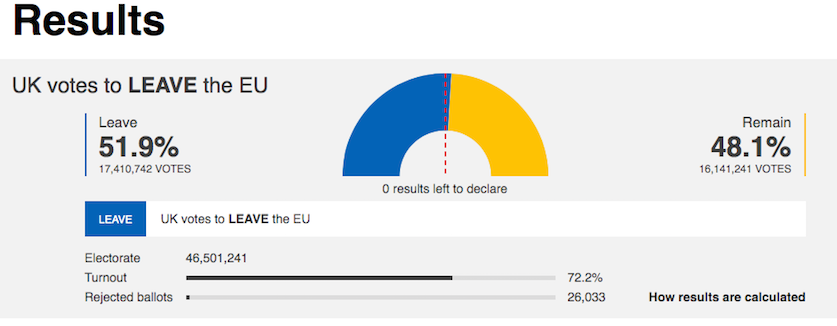
On a day in June 2016 I was the subject of one of many research projects into healthy ageing at QE Hospital 
"Your blood pressure's a little high" said one of the researchers.
"Seriously?"
She showed me her readings; in the hypertension range.
"That's odd. That's never been a problem for me"
"Well I need to point it out. Check with your GP"
"Gosh Emma, do you think I'm stressed by the Referendum result?"
"Could be." she said "We'll see how your blood pressure looks on your next visit next week"
Sunday lunch with the family - Oliver, Amy, Guy, Hannah and Linda. - weekend after the June 2016 Referendum. New potatoes from our allotment in Handsworth 

Three and a half years after the Referendum vote to leave the EU,  a friend posted on her Facebook page:

1st January 2021. MM: I wanted to write a Happy New Year message but ended up writing this instead. If you hate doom and gloom please scroll by. This is an X-rated post.
And so it comes to pass (weeping emoji's). We have woken up today no longer able to call ourselves EU citizens. And I am unspeakably sad. I don't know whether, in the long run the UK, will be better off in or out. I don't know whether there will be queues in Kent or food shortages in Tescos. But I do know that all of us who value that delicious sense of tumbling into a new culture, a new language, a new landscape have been left immeasurably poorer by the UK's decision to leave the EU. 
I speak for all of us in here who one fine day, wearing but a pair of skimpy shorts and an old T-shirt, clambered onto a charter at Gatwick to some random destination in Greece and drank so deeply of the delights of this beautiful country that we mysteriously find ourselves decades later sharing our (zoomed) βασιλόπιτα with children who speak two languages, in-laws who have never set foot on the green shores of Britain and Greek friends and colleagues who we hold dear in our hearts. 
We are heartbroken that the next generations will not know this. Those who already made it out of the gate will have their rights protected. The (richer) retirees will retire. The well-heeled will inevitably find a way. Some of our young will no doubt make it through the portcullis even after it clangs shut. But please allow us to shed a tear on this inauspicious day for all those who won't, and will never come to know what we know.

SB: Happy New Year, M. In your eloquent lament you write "But I do know that all of us who value that delicious sense of tumbling into a new culture, a new language ..." I know so well what you mean. I didn't so much 'tumble', given that my Dad - divorced post-war, then married to Maria in the lovely little church of Panagia Kapnikarea off Syntagma in Athens in 1949 - first invited me to beloved Greece when I was 16, during Easter 1957, and I, on my occasional stays with the 'Greek' side of the family in England was used to hearing my dad and Maria speaking Greek. I never looked forward to those brief childhood visits on which my mum insisted. Too much shouting and disorder and kissing and hugging among unruly half-siblings, though I liked being entrusted with a glass of wine now and then. It took four days, travelling alone on the Simplon-Orient from London, turning Balkan-wards after Venice, to get to Larissa where in the middle of the night this callow English youth, with a compartment to himself, was interrupted by a wedding party bursting in, joyfully noisy. I - a foreigner had the nerve to glare at them and ask them to be quiet. Instead of taking justified offence they laughed uproariously "Oh Englishman!" and had the effrontery to offer me a drink which I turned away. A few hours later I arrived in Athens…There, at dawn, on a low platform, the Greek side of my family awaited with joyous greetings and many disturbing hugs and kisses. Through a tiny window from the loo of Yia-yia's flat in Kolonaki I saw the Parthenon - no longer the familiar schoolbook illustration, the real place!.. ... ... Well! ... Two weeks later, when I departed from Greece, all had changed; changed utterly and forever, but that's another story, a good one. That first visit over 60 years ago was the start of an affair that I will take to my grave. You could say that 'some enchanted Easter' long ago, I saw Greece 'across a crowded room.' Even now, in dear Ano K, strolling or cycling on a small back road I hear a family, perhaps on a Sunday afternoon, laughing and talking under their veranda, and I'm possessed by an impish impulse to stroll over "Excuse me! Με συγχωρείς. Θα μπορούσατε να είστε λίγο πιο ήσυχοι!" They will laugh indulgently, even ask me to join them. I know that the UK leaving the EU can never efface - nor portcullis block - that 'delicious sense of tumbling' you describe so beautifully and which I still feel over and over when my old feet touch the soil of mother Greece.

James S, neighbour on National Opposition Street below our Democracy Street in Ano Korakiana: it’s exactly that Simon! The total mind opening of travel that Brexit seems so ignorant of!

Hi James. For people who have learned - or, in my case, taught against my will - to be happy the new border bureaucracies may bring temporary impatience, frustration and even misery, but love finds a way. I 'tumbled' (M's good word) into Greece long before the UK joined the EU, when post-war restrictions enveloped all Europe, customs examined our cases spilling out our belonging, transfers of cash were strictly limited. Through Yugoslavia I saw how the communist guards abused their own citizens, fellow passengers trying to cross their border (they were scowlingly deferential to me on my dad's diplomatic visa stamped in my dark blue passport). I was alerted by my father about the dreadful psychic scars of occupation and civil war in Greece - things that could not be spoken of, better forgotten. I've learned to accept - or, at least, to live with - queues, rationing, paperwork, inconvenience. I've been abused by immigration on arriving in New York, waited hours to enter Canada and Australia. I suspect from now - COVID restrictions notwithstanding - there'll be a couple of years of 'pain' as this bizarre event is sorting in the wash, but far worse pains have been surmounted in the past. I voted Remain, but I know other people voted to Leave the EU. who enjoy other lands beyond the English Channel as much as I.
The mainland of Greece across the Sea of Kerkyra from our home in Ano Korakiana 

I know about inventing paradise. Byron, Μπαϊρον, who came first in 1809 called her 'the wondrous land'; sailed to Greece in the brig Hercules in 1823, arrived at Kefalonia on the 4th August, to die at Mesolóngi eight months later. I first came to Greece, to Athens, by train via a three day stop in Venice - walking for hours, entranced, along damp paved alleys - in 1957, but in 1962 I sailed to Greece from England with a friend, my skipper Chris Jameson. In July we left Messina in Sicily. The first morning of our two day crossing on Danica ...
Danica
...bouncing and swaying on a swift etesian reach; came on our reverse, a sleek Greek frigate cutting smoothly through the cresting waves, heading west. In return to our salute, we saw a young sailor in perfect whites, almost sprinting to the fantail to dip her flag to us. My chest swells at the memory of seeing that lovely ensign falling and rising again in the seconds of her passing as though official Greece was saying "yasus" - just to us. 
That was 59 years ago. After that swift reach from Sicily. sunrise on the third day, the good wind abandoned our small vessel on a limpid mirror. The moment remains as dreamlike as at the time; glimpsing the forms of land melded to white sky and coppery sea - a way to the mainland of Greece between Kefalonia and Zakynthos into the Gulf of Patras. Next morning we made Byron's landfall. Shapes - north and south - that appeared and disappeared and might have been no more than dawn shadows - though we knew otherwise - lay before us. All day, in zephyrs, we sailed towards them, passed between, and anchored off Killini in Ilia where we rowed ashore to be sat at a table (my memory is flawed by so many photos of Greek tables and chairs), offered ouzikis and welcoming curiosity, before a polite policeman - reproached by our hosts - "po, po, po" - told us we were supposed to clear at Patras, but "please finish your conversation." 
170 miles from Piraeus and the city to which I’d determined to return.

I spent, as I recall, my first twenty five years in a fog of schooled and inherited insensibility, almost impervious to the wisdom of generous parents – English and Greek - who probably knew that, as perhaps for them, only time would tell me. 
In 1968 I was with the Greek side of my family again. They’d flown on to Greece. My dad wanted a car while we were there. Over four days I drove his small Hillman through Belgium, Germany, Austria, Italy and by ferry to Greece, sleeping one night in a field above the sea, a few yards from a winding road through olives. From Piraeus I took another ferry to join the family in Aegina. We returned to Athens for a day, where, with my diplomatic family, I attended a house party somewhere near Vouliagmeni, hosted by a man whose bald head I glimpsed for a few seconds, Colonel Stylianos Pattakos.
It was only in Detroit, married a year later, meeting American Greeks - and Greek exiles from the Junta - that I grasped the discomforting notion of ‘sides’;  of Greece as a polity, of animosities and moral positions, words and facts and opinions that left the paper-fragranced sentences of my superlative education – in one ear as others' thoughts, out of my mouth as words for conversation and essays, and out of the other ear, unedited. Though it seems so in memory, I could not have been quite that one-dimensional, except perhaps at my mother’s breast. My CV, by the time I was thirty, was enough to ease me into academia where, mostly fuddled, time did begin at last to tell and I began to listen.

It was 25 years before I came to Greece again.
After many years, return to Greece in 1995 with Amy, Linda and Richard

Standing in the cockpit of our Airbus (full of screens and no joystick) where passengers could – pre-9/11 – still be invited for a pilot’s glimpse of the world ahead, I stood behind my family, as with Linda, Richard and Amy, we flew high over the border of Greece; able to see, to port, the glow of Thessaloniki; ahead the greater glow of Athens; to starboard a moonlit Ionian Sea and far below, in inky blackness, clusters of tiny glittering diamonds - villages in the foothills of the Pindos.
“Children! There’s Greece”
In the dim cabin tears welled from my eyes with the delight – and the idea – of sharing ‘my’ Greece with my wife and children. I could not speak for a moment, and Linda, more English than I, was irritated at me. 

A third generation in Greece - our Amy with her cousins Natasha and Anna at sandy Pylos in 1995

*** *** ***
A decade later we spend months in Ano Korakiana on Corfu. Πέρα δόθε:

Winter 2009: The sun came up into a cloudless sky. It’s so bright and hazy, but for the crackle of awakened logs I’d mistake this winter morning for summer. Yesterday as we pottered on tasks I became so chilled I began to sniffle. By evening I was squeezing fresh lemons to mix with honey to warm in a glass. We’d been down to CJs Bingo Quiz in the evening, me in two under vests and long johns, to struggle with questions that were almost entirely about things in films and TV series. Our friend Trish, in CJs after cold day’s work cleaning charter boats at Gouvia, won. She was playing with Sally who runs CJs for Chrissie and John, also there - the latter cursing merrily to the delight of all. Trish is married to Dave, met at Ipsos Harbour in the first hour of our arrival in September 2006, who first raised our spirits as we surveyed Summer Song’s worn and musty interior, wondering if we’d been sensible buying her on ebay, sight unseen. “We’ll make a list” he said “Norman and Pauline loved that boat and she’s worth it”. And so she was and is. Dave keeps an eye on Summer Song – not only on the boat but also on the harbour politics that allow us to keep her safely berthed there. C remarked from far away on the Pacific coast. “Enjoy Corfu. Greece, no matter what, is a beautiful place to wake up in the morning" but I’m as superstitious as any atheist about reflections on the rewards of fortunae. 
'Greece, no matter what, is a beautiful place to wake up in the morning'
The names of people who rejoice in their luck are selected by a divine factotum and placed face-down on a gilded dish that passes around the table on timeless Olympus. Amid merriment, each God selects the human whose card is to be their post-prandial plaything. Here a brilliant climber says “There’s a window for the summit at dawn”; there a mother says “Our child is so perfect”; and over there a father says “There are police officers, a man and a woman, at the door. Must be about those parking fines”; and here a wife who says “no need to hold the ladder darling. Go and make us a cup of tea”; and there, in the deep ocean, an exhausted sailor says “We’re through the worst” but see this one, here’s a gem “The war will be over by Christmas”, but what about that popinjay Confederate General who said “They couldn’t hit an elephant at this dist…” Far below a fisherman on the Peneios and a woman waiting for a train at Litochoro know they hear, not the rumble of endless thunder reverberating among the peaks of Olympus, but laughter.
Good Friday picnic on a shore in Corfu. A fourth generation in Greece
In England in early January 2021 Greece seems remote - for all the continued contact via the social web. Here in the inner suburbs of Birmingham Lin and I are locked down under Tier 4. I am not to go further from our front door than our front garden. Linda - under 70 - can shop. Our neighbour, J, 'allowed to meet one other person outside', sat for a chat with me by our porch and passed the time of day. He works for Fareshare, one of the neighbours who've offered to shop for us if necessary.
Covid Tier 4. Restrictions from 00.01 Thur 31 Dec 2020
The weather is intrusively grey, wet, creating a world of pervasive sogginess that sticks to shoes hands and sleeves; which I can't avoid trailing into the house when I bring in logs, damp and stuck with rotting leaves, slimy too. I dry the wood in front of the stove before we can enjoy their warmth. Kindling I've even put in the oven for 30 minutes to get things burning in the mornings. 
Before the latest lockdown was announced I could cycle in and out of town, visit the rag market, buying a baked potato mashed with butter, salt and pepper plus a cup of tea, or a butter croissant and filter coffee eaten stood warily in on New Street. Wednesday morning I called in at the Birmingham Donor Centre in New Street to give blood. The first drop during the preliminary test for sufficient iron wouldn't dawdle down the green liquid filled test tube as it's meant, but Sarah - name off her tag - tried an alternative test. ""Yup, that's fine" "Phew". I lie in the plastic chair arm pierced skilfully almost painlessly to extract my very common 0 positive blood, but after a few minutes I'm being ministered to by three, no, four, nurses, urging me to squeeze my fist and wiggle my toes, as my blood's not coming out. "Oh no!" I think, but then "There we go! Fine now" says Margaret cheerfully. Privately I suspect the needle wasn't accurately placed in the vein.  After 10 minutes, I'm on my way, exiting through a world of masked donors and masked extractors, making another appointment in March - if I'm not breaking rules. Once home I get a text message thanking me for my blood. 
From Greece we've brought a lemon from one of our citrus trees, which, after two years barren, has fruit - - a generous load - following scale insect infestation affecting citrus, and now, other shrubs and trees, all Corfu. 
Perhaps our treatments have begun to work, as recommended by Sophia and Niko, neighbours, and Evangelina at the new Tzoulou garden shop. She recommended we spray a mix of Sivanto (2.5 m/l to 5l water) and Electro pesticide (ditto mix), to kill, and by resting on the leaves, break the life cycle of what she calls the ‘black spiny insects’.   
A lemon from Corfu back in Brum
Checking lemon leaves for citrus scale insects

*** *** ***
With some poignancy I travel 10 years back in my time machine to Ano Korakiana in February, when the village celebrated its annual Carnival ... February Carnivali, brightening the greyest chilliest and wettest day of the year. Part of the band in motley, military, priest and police, made 'oompa oompa' with drum and fife. The king enthroned, priapic with crown on his heart-covered float, accompanied by courtiers, male as female and other reversals of carnival, paraded upwards preceded and trailed by bouncing umbrellas, a phalanx of pink parasols, women in silvery wigs dancing up to the start of Democracy Street, twirling round a ribboned pole amid whistles, bangers and music.
Stopping and starting the procession gathered more people – some in masks, a long nosed Pinocchio, some as they were; streamers and confetti thrown from windows, hugging and greeting, planned and spontaneous, impossible not to smile and laugh in the chill wet. Up we went to the bandstand, round the carpark and back down the street in rain that poured from low cloud obscuring views to the sea. Nico and Sophia, standing by their front door, invited us in from the cold and wet for coffee and rich chocolates to meet their family.
“All the news is bad”
“Indeed it is” we smiled.
At 7.00 two hundred or so were gathered in the upper room of the Farmers' Co-op on the lower road to watch a demonstrably hilarious dialogue between two women we didn’t understand but clapped with everyone else. Then a formal reading by a top hatted master of ceremonies naming people in the village to theirs and everyone else’s amusement and applause.
Then a more disposable carnival king was carried out to the road and burned, with a bit of diesel to overcome the rain. Everyone began moving through a small door down short steps to the lower room to sit at long tables under a beamed roof. We were ushered to Leftheris’ family where dishes had been brought to pass with village wine in jugs, water and cola – lamb, pork, salad, cheese pies, olives, bread in chunks. As we tucked in along with every age, the dancing started with a band that created the mood of the evening, responded to people as they danced and sang – dances for couples became threesomes, foursomes until chains of us were stepping forward six steps one way, two back in that way that can’t help look elegant because the clumpers like me are carried hands held in the ring, six right, left two, unpausing until well after midnight the band made up of two guitarists, lead singer, keyboard and lighting mixer – played unceasingly. The dancing space was seldom empty. If not filled with pairs and chains, it was taken by men and women dancing solo amid clapping support, nimble and beautiful. I danced with Lin and in the circles – like Scottish reels.
“We all drank a lot of wine” said Katya when I saw her at the shop a couple of days later. As at a family wedding, wine added to the enjoyment; none crass. There was a break in the music around one in the morning. I thought we were going home, but after a few minutes, the room filled with lively chatter, the band came back with renewed energy. It wasn’t only the young on tables, though one couple danced with especial virtuosity, the young man - minutes previously in ballet skirt, tights and pigtails now entwined with a young woman who’d begun alone shivering her hips in the Arabian style. This duet had others joining in. The whole room floated on the music and swayed with the singing, happiness making us all even more good looking, and some especially handsome and beautiful. As the band said its goodbyes, an older lady led the Ano Korakiana song singing two line verses, unaccompanied, the chorus picked up by the moving circle. We walked home just before three-o-clock. “I’ve so enjoyed myself” I said “Me too” said Lin.
The song to the dance is a paeon to Corfu "Kerkyra, overflowing with greenery and beauty...into each and every corner and the seashore..." a list of all the green island's attributes 

Back numbers

Simon Baddeley