 |
| My blood pressure as measured soon after the June 2016 Referendum on leaving the EU |
On a day in June 2016 I was the subject of one of many research projects into healthy ageing at QE Hospital
"Your blood pressure's a little high" said one of the researchers.
"Seriously?"
She showed me her readings; in the hypertension range.
"That's odd. That's never been a problem for me"
"Well I need to point it out. Check with your GP"
"Gosh Emma, do you think I'm stressed by the Referendum result?"
"Could be." she said "We'll see how your blood pressure looks on your next visit next week"
 |
| Sunday lunch with the family - Oliver, Amy, Guy, Hannah and Linda. - weekend after the June 2016 Referendum. New potatoes from our allotment in Handsworth |
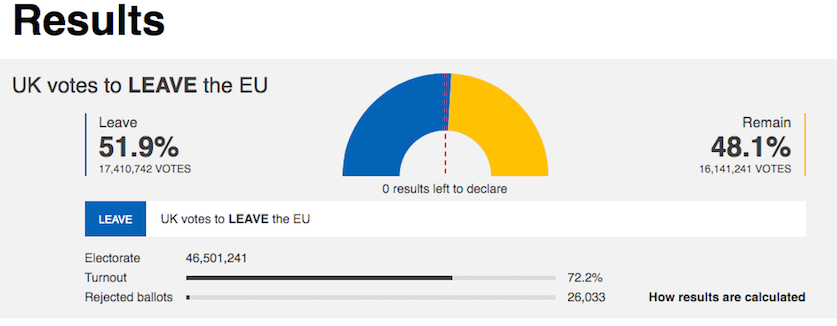
Three and a half years after the Referendum vote to leave the EU, a friend posted on her Facebook page:
1st January 2021. MM: I wanted to write a Happy New Year message but ended up writing this instead. If you hate doom and gloom please scroll by. This is an X-rated post.And so it comes to pass (weeping emoji's). We have woken up today no longer able to call ourselves EU citizens. And I am unspeakably sad. I don't know whether, in the long run the UK, will be better off in or out. I don't know whether there will be queues in Kent or food shortages in Tescos. But I do know that all of us who value that delicious sense of tumbling into a new culture, a new language, a new landscape have been left immeasurably poorer by the UK's decision to leave the EU.I speak for all of us in here who one fine day, wearing but a pair of skimpy shorts and an old T-shirt, clambered onto a charter at Gatwick to some random destination in Greece and drank so deeply of the delights of this beautiful country that we mysteriously find ourselves decades later sharing our (zoomed) βασιλόπιτα with children who speak two languages, in-laws who have never set foot on the green shores of Britain and Greek friends and colleagues who we hold dear in our hearts.We are heartbroken that the next generations will not know this. Those who already made it out of the gate will have their rights protected. The (richer) retirees will retire. The well-heeled will inevitably find a way. Some of our young will no doubt make it through the portcullis even after it clangs shut. But please allow us to shed a tear on this inauspicious day for all those who won't, and will never come to know what we know.
SB: Happy New Year, M. In your eloquent lament you write "But I do know that all of us who value that delicious sense of tumbling into a new culture, a new language ..." I know so well what you mean. I didn't so much 'tumble', given that my Dad - divorced post-war, then married to Maria in the lovely little church of Panagia Kapnikarea off Syntagma in Athens in 1949 - first invited me to beloved Greece when I was 16, during Easter 1957, and I, on my occasional stays with the 'Greek' side of the family in England was used to hearing my dad and Maria speaking Greek. I never looked forward to those brief childhood visits on which my mum insisted. Too much shouting and disorder and kissing and hugging among unruly half-siblings, though I liked being entrusted with a glass of wine now and then. It took four days, travelling alone on the Simplon-Orient from London, turning Balkan-wards after Venice, to get to Larissa where in the middle of the night this callow English youth, with a compartment to himself, was interrupted by a wedding party bursting in, joyfully noisy. I - a foreigner had the nerve to glare at them and ask them to be quiet. Instead of taking justified offence they laughed uproariously "Oh Englishman!" and had the effrontery to offer me a drink which I turned away. A few hours later I arrived in Athens…There, at dawn, on a low platform, the Greek side of my family awaited with joyous greetings and many disturbing hugs and kisses. Through a tiny window from the loo of Yia-yia's flat in Kolonaki I saw the Parthenon - no longer the familiar schoolbook illustration, the real place!.. ... ... Well! ... Two weeks later, when I departed from Greece, all had changed; changed utterly and forever, but that's another story, a good one. That first visit over 60 years ago was the start of an affair that I will take to my grave. You could say that 'some enchanted Easter' long ago, I saw Greece 'across a crowded room.' Even now, in dear Ano K, strolling or cycling on a small back road I hear a family, perhaps on a Sunday afternoon, laughing and talking under their veranda, and I'm possessed by an impish impulse to stroll over "Excuse me! Με συγχωρείς. Θα μπορούσατε να είστε λίγο πιο ήσυχοι!" They will laugh indulgently, even ask me to join them. I know that the UK leaving the EU can never efface - nor portcullis block - that 'delicious sense of tumbling' you describe so beautifully and which I still feel over and over when my old feet touch the soil of mother Greece.
James S, neighbour on National Opposition Street below our Democracy Street in Ano Korakiana: it’s exactly that Simon! The total mind opening of travel that Brexit seems so ignorant of!
Hi James. For people who have learned - or, in my case, taught against my will - to be happy the new border bureaucracies may bring temporary impatience, frustration and even misery, but love finds a way. I 'tumbled' (M's good word) into Greece long before the UK joined the EU, when post-war restrictions enveloped all Europe, customs examined our cases spilling out our belonging, transfers of cash were strictly limited. Through Yugoslavia I saw how the communist guards abused their own citizens, fellow passengers trying to cross their border (they were scowlingly deferential to me on my dad's diplomatic visa stamped in my dark blue passport). I was alerted by my father about the dreadful psychic scars of occupation and civil war in Greece - things that could not be spoken of, better forgotten. I've learned to accept - or, at least, to live with - queues, rationing, paperwork, inconvenience. I've been abused by immigration on arriving in New York, waited hours to enter Canada and Australia. I suspect from now - COVID restrictions notwithstanding - there'll be a couple of years of 'pain' as this bizarre event is sorting in the wash, but far worse pains have been surmounted in the past. I voted Remain, but I know other people voted to Leave the EU. who enjoy other lands beyond the English Channel as much as I.
 |
| The mainland of Greece across the Sea of Kerkyra from our home in Ano Korakiana |
I know about inventing paradise. Byron, Μπαϊρον, who came first in 1809 called her 'the wondrous land'; sailed to Greece in the brig Hercules in 1823, arrived at Kefalonia on the 4th August, to die at Mesolóngi eight months later. I first came to Greece, to Athens, by train via a three day stop in Venice - walking for hours, entranced, along damp paved alleys - in 1957, but in 1962 I sailed to Greece from England with a friend, my skipper Chris Jameson. In July we left Messina in Sicily. The first morning of our two day crossing on Danica ...
 |
| Danica |
...bouncing and swaying on a swift etesian reach; came on our reverse, a sleek Greek frigate cutting smoothly through the cresting waves, heading west. In return to our salute, we saw a young sailor in perfect whites, almost sprinting to the fantail to dip her flag to us. My chest swells at the memory of seeing that lovely ensign falling and rising again in the seconds of her passing as though official Greece was saying "yasus" - just to us.
That was 59 years ago. After that swift reach from Sicily. sunrise on the third day, the good wind abandoned our small vessel on a limpid mirror. The moment remains as dreamlike as at the time; glimpsing the forms of land melded to white sky and coppery sea - a way to the mainland of Greece between Kefalonia and Zakynthos into the Gulf of Patras. Next morning we made Byron's landfall. Shapes - north and south - that appeared and disappeared and might have been no more than dawn shadows - though we knew otherwise - lay before us. All day, in zephyrs, we sailed towards them, passed between, and anchored off Killini in Ilia where we rowed ashore to be sat at a table (my memory is flawed by so many photos of Greek tables and chairs), offered ouzikis and welcoming curiosity, before a polite policeman - reproached by our hosts - "po, po, po" - told us we were supposed to clear at Patras, but "please finish your conversation."
170 miles from Piraeus and the city to which I’d determined to return.
I spent, as I recall, my first twenty five years in a fog of schooled and inherited insensibility, almost impervious to the wisdom of generous parents – English and Greek - who probably knew that, as perhaps for them, only time would tell me.
In 1968 I was with the Greek side of my family again. They’d flown on to Greece. My dad wanted a car while we were there. Over four days I drove his small Hillman through Belgium, Germany, Austria, Italy and by ferry to Greece, sleeping one night in a field above the sea, a few yards from a winding road through olives. From Piraeus I took another ferry to join the family in Aegina. We returned to Athens for a day, where, with my diplomatic family, I attended a house party somewhere near Vouliagmeni, hosted by a man whose bald head I glimpsed for a few seconds, Colonel Stylianos Pattakos.
It was only in Detroit, married a year later, meeting American Greeks - and Greek exiles from the Junta - that I grasped the discomforting notion of ‘sides’; of Greece as a polity, of animosities and moral positions, words and facts and opinions that left the paper-fragranced sentences of my superlative education – in one ear as others' thoughts, out of my mouth as words for conversation and essays, and out of the other ear, unedited. Though it seems so in memory, I could not have been quite that one-dimensional, except perhaps at my mother’s breast. My CV, by the time I was thirty, was enough to ease me into academia where, mostly fuddled, time did begin at last to tell and I began to listen.
It was 25 years before I came to Greece again.
 |
| After many years, return to Greece in 1995 with Amy, Linda and Richard |
Standing in the cockpit of our Airbus (full of screens and no joystick) where passengers could – pre-9/11 – still be invited for a pilot’s glimpse of the world ahead, I stood behind my family, as with Linda, Richard and Amy, we flew high over the border of Greece; able to see, to port, the glow of Thessaloniki; ahead the greater glow of Athens; to starboard a moonlit Ionian Sea and far below, in inky blackness, clusters of tiny glittering diamonds - villages in the foothills of the Pindos.“Children! There’s Greece”In the dim cabin tears welled from my eyes with the delight – and the idea – of sharing ‘my’ Greece with my wife and children. I could not speak for a moment, and Linda, more English than I, was irritated at me.
 |
| A third generation in Greece - our Amy with her cousins Natasha and Anna at sandy Pylos in 1995 |
*** *** ***
A decade later we spend months in Ano Korakiana on Corfu. Πέρα δόθε:
Winter 2009: The sun came up into a cloudless sky. It’s so bright and hazy, but for the crackle of awakened logs I’d mistake this winter morning for summer. Yesterday as we pottered on tasks I became so chilled I began to sniffle. By evening I was squeezing fresh lemons to mix with honey to warm in a glass. We’d been down to CJs Bingo Quiz in the evening, me in two under vests and long johns, to struggle with questions that were almost entirely about things in films and TV series. Our friend Trish, in CJs after cold day’s work cleaning charter boats at Gouvia, won. She was playing with Sally who runs CJs for Chrissie and John, also there - the latter cursing merrily to the delight of all. Trish is married to Dave, met at Ipsos Harbour in the first hour of our arrival in September 2006, who first raised our spirits as we surveyed Summer Song’s worn and musty interior, wondering if we’d been sensible buying her on ebay, sight unseen. “We’ll make a list” he said “Norman and Pauline loved that boat and she’s worth it”. And so she was and is. Dave keeps an eye on Summer Song – not only on the boat but also on the harbour politics that allow us to keep her safely berthed there. C remarked from far away on the Pacific coast. “Enjoy Corfu. Greece, no matter what, is a beautiful place to wake up in the morning" but I’m as superstitious as any atheist about reflections on the rewards of fortunae.
 |
| 'Greece, no matter what, is a beautiful place to wake up in the morning' |
The names of people who rejoice in their luck are selected by a divine factotum and placed face-down on a gilded dish that passes around the table on timeless Olympus. Amid merriment, each God selects the human whose card is to be their post-prandial plaything. Here a brilliant climber says “There’s a window for the summit at dawn”; there a mother says “Our child is so perfect”; and over there a father says “There are police officers, a man and a woman, at the door. Must be about those parking fines”; and here a wife who says “no need to hold the ladder darling. Go and make us a cup of tea”; and there, in the deep ocean, an exhausted sailor says “We’re through the worst” but see this one, here’s a gem “The war will be over by Christmas”, but what about that popinjay Confederate General who said “They couldn’t hit an elephant at this dist…” Far below a fisherman on the Peneios and a woman waiting for a train at Litochoro know they hear, not the rumble of endless thunder reverberating among the peaks of Olympus, but laughter.
 |
| Good Friday picnic on a shore in Corfu. A fourth generation in Greece |
 |
| Covid Tier 4. Restrictions from 00.01 Thur 31 Dec 2020 |
Before the latest lockdown was announced I could cycle in and out of town, visit the rag market, buying a baked potato mashed with butter, salt and pepper plus a cup of tea, or a butter croissant and filter coffee eaten stood warily in on New Street. Wednesday morning I called in at the Birmingham Donor Centre in New Street to give blood. The first drop during the preliminary test for sufficient iron wouldn't dawdle down the green liquid filled test tube as it's meant, but Sarah - name off her tag - tried an alternative test. ""Yup, that's fine" "Phew". I lie in the plastic chair arm pierced skilfully almost painlessly to extract my very common 0 positive blood, but after a few minutes I'm being ministered to by three, no, four, nurses, urging me to squeeze my fist and wiggle my toes, as my blood's not coming out. "Oh no!" I think, but then "There we go! Fine now" says Margaret cheerfully. Privately I suspect the needle wasn't accurately placed in the vein. After 10 minutes, I'm on my way, exiting through a world of masked donors and masked extractors, making another appointment in March - if I'm not breaking rules. Once home I get a text message thanking me for my blood.  From Greece we've brought a lemon from one of our citrus trees, which, after two years barren, has fruit - - a generous load - following scale insect infestation affecting citrus, and now, other shrubs and trees, all Corfu.


 | ||
| Checking lemon leaves for citrus scale insects |

*** *** ***
With some poignancy I travel 10 years back in my time machine to Ano Korakiana in February, when the village celebrated its annual Carnival ... February Carnivali, brightening the greyest chilliest and wettest day of the year. Part of the band in motley, military, priest and police, made 'oompa oompa' with drum and fife. The king enthroned, priapic with crown on his heart-covered float, accompanied by courtiers, male as female and other reversals of carnival, paraded upwards preceded and trailed by bouncing umbrellas, a phalanx of pink parasols, women in silvery wigs dancing up to the start of Democracy Street, twirling round a ribboned pole amid whistles, bangers and music.
Stopping and starting the procession gathered more people – some in masks, a long nosed Pinocchio, some as they were; streamers and confetti thrown from windows, hugging and greeting, planned and spontaneous, impossible not to smile and laugh in the chill wet. Up we went to the bandstand, round the carpark and back down the street in rain that poured from low cloud obscuring views to the sea. Nico and Sophia, standing by their front door, invited us in from the cold and wet for coffee and rich chocolates to meet their family.
“All the news is bad”
“Indeed it is” we smiled.
At 7.00 two hundred or so were gathered in the upper room of the Farmers' Co-op on the lower road to watch a demonstrably hilarious dialogue between two women we didn’t understand but clapped with everyone else. Then a formal reading by a top hatted master of ceremonies naming people in the village to theirs and everyone else’s amusement and applause.
Then a more disposable carnival king was carried out to the road and burned, with a bit of diesel to overcome the rain. Everyone began moving through a small door down short steps to the lower room to sit at long tables under a beamed roof. We were ushered to Leftheris’ family where dishes had been brought to pass with village wine in jugs, water and cola – lamb, pork, salad, cheese pies, olives, bread in chunks. As we tucked in along with every age, the dancing started with a band that created the mood of the evening, responded to people as they danced and sang – dances for couples became threesomes, foursomes until chains of us were stepping forward six steps one way, two back in that way that can’t help look elegant because the clumpers like me are carried hands held in the ring, six right, left two, unpausing until well after midnight the band made up of two guitarists, lead singer, keyboard and lighting mixer – played unceasingly. The dancing space was seldom empty. If not filled with pairs and chains, it was taken by men and women dancing solo amid clapping support, nimble and beautiful. I danced with Lin and in the circles – like Scottish reels.
“We all drank a lot of wine” said Katya when I saw her at the shop a couple of days later. As at a family wedding, wine added to the enjoyment; none crass. There was a break in the music around one in the morning. I thought we were going home, but after a few minutes, the room filled with lively chatter, the band came back with renewed energy. It wasn’t only the young on tables, though one couple danced with especial virtuosity, the young man - minutes previously in ballet skirt, tights and pigtails now entwined with a young woman who’d begun alone shivering her hips in the Arabian style. This duet had others joining in. The whole room floated on the music and swayed with the singing, happiness making us all even more good looking, and some especially handsome and beautiful. As the band said its goodbyes, an older lady led the Ano Korakiana song singing two line verses, unaccompanied, the chorus picked up by the moving circle. We walked home just before three-o-clock. “I’ve so enjoyed myself” I said “Me too” said Lin.
The song to the dance is a paeon to Corfu "Kerkyra, overflowing with greenery and beauty...into each and every corner and the seashore..." a list of all the green island's attributes


