Total Pageviews

Showing posts with label Durrell School. Show all posts

Wednesday, 1 February 2012

The burden cannot be shifted

In the final volume of his series on the culminating drama of Western Civilisation – written in more confident times - Lewis Mumford saw its future depending on men and women across the world accepting responsibilities ‘they once sought to transfer to an Emperor, a Messiah, a dictator, a single God-like man. That is the ultimate lesson of democracy: the burden cannot be shifted” (The Conduct of Life, 1952:120). Last night at the Durrell School about fifty of us listened for two hours, sober and impressed, to Lia Manesi - Λία Μάνεση - giving an account of the things she’d seen in Chad and Liberia as an aid worker.
Richard Pine introduced and thanked Lia for a talk that must have lasted a hour and half but seemed shorter, which she apologized for complexity and ambivalence without ever confusing, which balanced facts and feeling, which conveyed the perfected mechanisms of corruption infusing aid without blaming givers or takers, a tragic banal symbiosis of guilt, compassion, cruelty, greed and suffering. Her pictures on screen and in words revealed filth, malnutrition, war and death in small enough focus to digest without loss of reason to feeling – pictures the north has seen many times. In the small dark lecture room above Philhellinon Street, this young woman, Greek-Irish, slim, articulate, modest – even humble – described her shared work, questioned her motives without breast-beating, gently asked her rapt audience – of many European nationalities - whether aid was doing good, whether it might even be amplifying harm, yet somehow remained optimistic of human ingenuity and told us about Africa, about individuals, particular places, balancing relevant statistics, with telling personal anecdotes that were neither self-regarding, cynical nor guilt inducing. She respected ‘them’ without patronizing, reported perfidy without blame yet never seemed neutral; the resilience of different cultures and tradition – not just African, how a history of misunderstanding had made a toxic interdependence of rich and poor, ex-colonisers and ex-colonised. Yet throughout Lia conveyed an unhesitant and direct good humour that was on the edge of optimism, though never smug, a faith in persistent humanity without a tinge of complacency. In short she did what all talent does, made her craft look easy. I felt embarrassed that she remembered me from when I’d been out for a day on Andrea’s yacht a summer ago, she crewing
 “Oh yes” I’d said “You were in a bikini. There was no wind to race so we swam in Garitsa Bay”
I guess I hadn’t noticed her.
Afterwards I went for a meal with Paul and Lula who’d invited me to the evening. We talked about Greece and Corfu and corruption, depravity and leaking roofs and bad puns over a meal in one of the older tavernas they knew, off a backstreet. As we returned to their car by the Old Port there was a sudden fracas, two men seemed to be brawling with another who I thought, momentarily, was a woman. I watched, hesitant. Paul went forward to chance an intervention, crying out at the assailants. Lula tried to pull her husband back asking what was going on. One man used a free hand to draw out a police ID, as they pinned the third to a door in the alley. I caught a glimpse of a desperate saturnine unshaven face part covered by long floppy black hair lit by the low street light. The incident passed in seconds. Lula reproached Paul for putting himself at risk.
I said quietly “Interesting, Paul. When it came to reflex action in the heat of the moment you were the Samaritan.”
Lula said, annoyed “You could have been knifed”
“He did the right thing Lula. So did you, to pull him back. It was I did nothing.”
They dropped me home where I started fitting the mended stove door ready to try it out the next day when snow is predicted on the island.
I’m without faith but I’ve never credited that artless argument that killing fields, death camps or the rape of infants was disproof of God’s existence. If God exists he would be Job’s, speaking from the whirlwind, asking, not in anger or reproach “can you hook leviathan?” looking on in grief at the suffering of lapsed men, weeping with them in the same mud, drenched with the same slime...where Christ's blood streames in the firmament... I woke in the dark trying to remember a dream that had happened earlier in my sleep, or so it seemed. I was the parent of a child – a year old perhaps – a little girl. Police had been and gone. Her face when I could look at it was a mass of swollen blue black bruises, her lips swollen grotesquely, shapeless. She had been, she’d…In the dream I was without emotion. A crime had been committed against our child. She was injured. A voice off – Lin’s I think – said at one point
“They raped her and hung her up”
I went to see her and saw only a battered featureless mask, expressionless, silent. Then I was in another place – so had I gone to sleep again and taken up the dream again? – it was a carpeted white walled high windowed office full of people moving easily between different spaces. I was leant against an opening with people passing to and fro. I was staring ahead. A square faced man with chiseled features, wearing a trench coat, passed, stopped, looked at me, reached out...
“Are you alright?”
He lightly touched my elbow. I seemed to dissolve into the wall but didn’t.
“Ng, ng, ng, ng, ng...” I started to gurgle incoherently and then like the rush of vomit I burst the water of my tears from eyes and mouth, still grunting “ng ng ng ng ng” I began keening, a low sound that seemed to be wrenched from my bowels growing louder like a hurricane where sound becomes the prime sensation dissolving time and place.
*** ***
Richard Pine's latest op-ed for the Irish Times:
Never-ending cuts and taxes leave people with deficit of hope....It is a litany of “tax, tax, tax”. Young people are doing everything they can to find a way out. The upcoming elections are viewed with utter cynicism. There’s a word for it: sperectomy, the excision of hope.

Thursday, 20 May 2010

Another country

We've had so fleeting a glimpse of Scotland, where Spring, after the hardest winter in a 100 years, is late, sprouting eagerly from the bruised surfaces of meadows, braes and trees rent by the weight of prolonged snow - trees not hardened like those of the greater northern land masses. Now, in kinder weather, the terrain is emerging - green and fresh. We strolled with the romping dogs where I'd waded through thigh deep snow a few months back. Snow still lies on higher ground, but we could walk over rich grass sprinkled with violets, speedwell, campion and daffodil.
We were at Brin Croft with my son and Liz and her fiancé, Matt. After tea Matt suggested "Shall we go to Loch Ness?" With the dogs in the back, he drove us via Dunlichity, past Loch Duntelchaig, to Dores where we strolled along the eastern shore of the Great Glen. Mirror calm. "Do you remember the film you and Amy edited about seven years ago when you were here in the winter? You paddling in the loch stripey stockings," "oh yeah, when I said I'd 'batter' that woman at an Inverness club who wouldn't let us in 'cos we were from Birmingham!" "That tree you swung on has gone now."
Loch Ness: Jess and Lulu
We wandered along a track towards Inverness, then turned for home, Matt taking us back via the outskirts of Inverness. Amid suburban sprawl that now reaches to Essich I missed our way to the Culdulthel Road. Matt turned on his Satnav to get us to Inverarnie. Richard cooked us a supper and later showed his pictures of the wedding to Poppet.
Richard and his grandmother looking at his pictures of the wedding
* * *
Abstracts from this week's Seminar on the History and Culture of the Ionian Islands at the Durrell School of Corfu. And an e-mail to Lin from Corfu:
Alan says we get more strikes and holidays here in Corfu than rainy days in England. This was after he found out that everything would be closed from Thursday through to Tuesday due to strikes and holidays. Luckily, a friend forewarned us so I got our shopping done before everything shut down. Look for pictures of the door tomorrow. Love, Honey

Friday, 14 May 2010

At Roffey Park

Notes for a talk about political awareness - compressed into an hour and a half for round 14 very bright fast streamers from the MoJ on a shrewdly tailored Leadership Programme at Roffey Park on Thursday morning. I'd been worrying about this session, ever since CD, who'd been CEO of a County Council for which I done work a couple of years ago, had recommended me, now she was working in central government. I'd started with a plan...
UNDERSTANDING ORGANISATIONAL POLITICS
This session aims to refine your understanding of political-management dynamics, especially post-election:
• assisting you to maintain your knowledge of the political scene (e.g. learning about political environments; staying informed through ‘responsible gossip’)
• developing and fine-tuning a feel for the boundaries between political, managerial and professional work (e.g. practical understanding of protocols, conventions and guidelines; analysis of dilemmas that test those boundaries; recognition of ‘danger zones’)
• enriching your vocabulary of political concepts (e.g. practical ideas that capture the experience of working in the fuzzy area between management, politics and professionalism. “The English seldom draw a line without blurring it” Winston Churchill)
• offering models of competence in politically charged situations (e.g. ‘reading’ and ‘carrying’; integrity and game-playing)
...but in the end, because this was far too much for an hour and a half, extemporised. The memorable thing about the visit to Roffey Park - which I can't repeat on my second visit on 22 June - is that I was there just before and during the first Cabinet meeting of the first hung parliament in the UK in my life. The aptly named Christopher Hope lists reasons for optimism. Boris Johnson writes and speaks of 'a robust and interesting new specimen...a crossbred dog...' that will have 'fantastic hybrid vigour'. I need - needed - no encouragement to share such opinions, especially if they hasten a shift from a two-party system that has invalidated my vote since I was entitled to cast it.
What was especially good about Wednesday evening and Tuesday morning, was to be, for a few hours, in the company of men and women as collected and focused, yet relaxed, amid the intense negotiation and uncertainty of the last few days, as steelworkers around a blast furnace or live-line workers amid a cat's cradle of high voltage cable, or indeed as collected as Alan, as he goes coolly about the work of building our balcony. "Maybe it's possible" Johnson suggested "the British people have done something pretty brilliant."
I spoke more than I should - of reading and carrying and overlapping spaces, of responsible gossip and 'integrity', allowing too little time for conversation around half a dozen critical incidents, but I'm glad of the experience. I've a similar session later in June when we may see more of this novel political landscape. I might show those parts of my films of conversations that make government outside their local context.
** **
Alan, as promised, has sent us first pictures of building done since we left:
Hi, Simon and Lin. After you left I cleaned the area in front of the window and fixed the shuttering for the last two steps. As you can see photo 1 and 2 are ready for the concrete. Photo 5 is the stairs prior to concreting. Photos 3, 4 and 6 shows the concrete in place, wet and sticky. By tomorrow this will be hard enough for the men to install the doors, if they should show up to do it. After the doors are installed I will continue with the surfacing of the steps. It takes a couple of days for the steps to cure and I can only do three steps at a time, so it will probably be another week and a half to have them all finished. And then I can call the metal man to come and measure for the railings. I'll keep you posted with more photos. I hope all went well with your daughter's wedding. Alan
Amy's wedding's not until Monday and I've promised Alan, and others in the village who asked, to post some pictures next week. What Alan's done here - shown in photo 6 - is to begin marrying three remaining treads, one badly chipped, from the old staircase to the new one. ** ** ** I have impeccable excuses for not being there but I'm really vexed at missing the seminar programme in Corfu next week organised by the Durrell School - 'The History and Culture of the Ionian Islands' from 16–21 May 2010. It's programme is described on Jim Potts' blog, the prospectus on the DSC site by Richard Pine. It all looks fascinating but the day I'd especially like to have attended was Tuesday's programme:
THE HISTORY OF THE ISLANDS DURING THE PROTECTORATE: GREEK & BRITISH PERSPECTIVES
10.00 – 11.00 a.m. Session 4
Via or Vita? — The British in the Mediterranean since 1800
11.00 – 11.30 a.m. Break for coffee
11.30–4.30 p.m. p.m. Excursion 2
A visit to the SERBIAN MUSEUM followed by a boat trip (1.30 p.m.) to VIDOS ISLAND where we can see the Serbian Mausoleum, have lunch (2.30 p.m.) and go swimming (optional!). The meze lunch is included for those paying the full registration fee; 12 euros each for others; buy your own drinks).
4.30 – 6.00 p.m. Opportunity to return to your hotel
6.00–8.00 p.m. Session 5
ANTHONY SEYMOUR (paper read in his absence by Anthony Hirst)
How to work the system and thrive: Ionians and pseudo-Ionians in the Levant 1815–1864
The Ionian Islands and the Greek Revolution
‘A history of the peasants printed in gaol’ and other unknown texts by the
1849 Cephalonian rebels imprisoned at Argostoli: a first presentation.
I just hope that the papers circulated afterwards will come my way and I can delve into them, in continuance of my failed, but not fruitless, search for the 'petition' from Ano Korakiana that Thanassis Spingos and Kostas Apergis asked me to look for in England in December 2007 (slide 3 below)
* * * Amy phones to warn us about problems flying to Scotland tomorrow:
VOLCANIC ASH UPDATE 15 May 2010 Current media coverage is reporting possible closure of UK airspace tomorrow, Sunday 16th May until Tuesday 18th May. These reports are unconfirmed and subject to the rapidly changing weather situation. Please check the Arrivals/Departures section of this website or contact your airline for specific flight details. This page will be updated as soon as further information becomes available.
Maybe, suggests Thor Thordarson, volcanologist at Edinburgh University, this phenomenon and the disruption it is causing now will last far longer - decades even, peaking between 2030-2040. This paper was published 12 years ago by geologists at the Science Institute, University of Iceland:
Gudrún Larsen, Magnús T. Gudmundsson and Helgi Björnsson, 'Eight centuries of periodic volcanism at the center of the Iceland hotspot revealed by glacier tephrostratigraphy', Geology, October 1998 (26) 10, pp. 943-946
ABSTRACT: A record of volcanic activity within the Vatnajökull ice cap has been obtained by combining data from three sources: tephrostratigraphic studies of two outlet glaciers, a 415-m-long ice core from northwestern Vatnajökull, and written records. The record extends back to A.D. 1200 and shows that the volcanic activity has a 130–140 yr period. Intervals of frequent eruptions with recurrence times of three to seven years alternate with intervals of similar duration having much lower eruption frequency. In comparison with other parts of the plate boundary in Iceland, eruption frequency is greater, episodes of unrest are longer, and intervals of low activity are shorter. The high eruption frequency may be the result of a more sustained supply of magma, owing to the area's location above the center of the Iceland mantle plume. When combined with historical data on eruptions and earthquakes, our data indicate that rifting-related activity in Iceland as a whole is periodic and broadly in phase with the volcanic activity within Vatnajökull.
Reported on 17 May 2010: why we had to drive to Amy's wedding
Alain de Botton has imagined a flightless future arousing mixed feelings of pleasure, regret and puzzled recoilings from any suggestion that among those who are homo - occasionally - sapiens, growing numbers are devoting their lives to drawing down the curtains on the 'big, fast and ugly' show to create something more entertaining. I dream of a return to
airships - perhaps like the one imagined by the young Indonesian designer Reindy Allendra - his WB-1010 for KLM - a talented piece of imagining that might become less fantastical as we consign the hydrocarbon era to history, before it does the same to us.
* ** **
My neighbours, John and Jill Rose, went onto the site of the Victoria Jubilee Allotments via the new houses next to Handsworth Park this afternoon. The long delay in opening the site could just be over in a few weeks. "I've heard from the allotments man at the city that June 6 is the day." John had pressed him a little, "Is that for real?" "Yes"
The dark green gardeners' shed has been in place since earlier in the year. Now topsoil's been spread. The water supply's in place, along with hard surfaces for access and parking. The area's being landscaped, with the levelled laying fields for cricket and football included in the S106A now surrounded by a high guard fence to keep balls in play. "Any idea of take-up?" I asked. "It's up to 92." Though it's occurring in many cities, this doesn't necessarily mean we are already suffering over-demand on ther VJA's 80 plots. For newcomers lots can be halved or quartered and others will drop out when it comes to actually starting to garden. That said once the site is visibly up and running more will be seeking spaces. It's the way the wind's blowing. (More on the VJA and local food growing - scroll down, see links)
Entrance to the nearly completed Victoria Jubilee Allotments, Handsworth
** ** **
I've just had a letter from Jennie Constable at SWFTA:
Dear Simon. At last, I have worked my way through the backlog of urgent tasks and have now had time to give the Hargreaves collection some attention. It is rather embarrassing that it is nearly a year since Mr P. first contacted us, but I am able to report that we have made some headway over the past few months. First of all, we took the opportunity of having some overseas work placement students earlier in the year to give them the task of making a basic log of the films and tapes we hold. The result is the attached Excel spreadsheet which I hope you can view. It is by no means perfect bearing in mind it was compiled by students with questionable language skills and little if any knowledge of the television industry, but on the other hand it's not bad at all as a starting point. Secondly, we have now succeeded in making what we think is an acceptable DVD for Mr Hill (with a second copy 'just in case') but I have not yet sent it to him ... Perhaps you could let me have the address, ... Finally, we'd be delighted to see you for a meeting about the collection. It would have to be either before Thursday 20th May or after Monday 7th June. I hope you've had a pleasant stay in Greece and trust you arrive back safely without any volcanic intervention! Best wishes, Jennie
Extract from an Excel spread listing JH film at SWFTA
*** *** ***
From The Greek Financial Crisis blog
The European Union and the International Monetary Fund have approved a nearly $1 trillion package to stop Greeces debt crisis from spilling beyond its borders into the rest of the eurozone. Stocks surged in Europe, Asia and the United States Monday after EU leaders agreed to a $960 billion package to contain Greeces financial troubles. Meanwhile, the austerity measures demanded by the IMF and the European Union as a condition of their loan are continuing to exact their toll. Greeces two main unions have continued to hold protests against the reforms. In a statement, one of the unions said, The crisis should be paid byall those who looted public finances.

Wednesday, 20 January 2010

Protectorate or possession?

I was delighted to accept Richard Pine’s invitation, to give a chat at the Durrell School in Philhellene Street in a few weeks - Wednesday 3 February. In Richard's words "7.30 glass of wine, 8pm talk, finish by 9pm".
I'm delving into the varying characteristics of different Lord High Commissioners of the Ionian Islands between 1815 and 1864, relying on sorties in the National Archives at Kew, on the early chapters of Diana Markides and Robert Holland The British and the Hellenes and, of course, on Eleni Calligas’s brilliant 1992 thesis – unpublished - that has brought together rich information about personalities in the Ionian political classes during the British Protectorate.
I have a portrait of Thomas Maitland, the graceless aristocrat, who in 1817 wrote a constitution for the Ionian Islands that made them more an English possession than the Protectorate, intended and agreed, in 1815.
There’s one of his successor Frederick Adam, whose statue stands outside the Protectorate's seat of government - The Palace of St Michael and St George at the head of the Liston - a man more congenial to Ionians, married to a Greek, he oversaw the building, for her, of a delightful neo-classical house, Mon Repos, in lovely grounds a mile south of the Commissioner's Palace.
I’m missing a picture of Alexander Woodford, acting Lord High Commissioner for part of 1832. I have found one of the whig intellectual Lord Nugent, keen to implement the liberal principles of his party, who became vexed when the Ionian politicians to whom he’d granted greater freedoms failed to observe his wishes.
Andrea Mustoxidi
I’ve also found one of his successor Sir Howard Douglas who sparred with a new class of Ionian parliamentarian in Andrea Mustoxidi - Ανδρέας Μουστοξύδης - intellectual, scholarly, politically astute, back from Italy enthused by republican ideas of liberty and equality brewing across the rest of Europe, by the outcome of the Greek War of Independence, the founding of the Hellenic nation and the idea of Ionian autonomy - these last two being visions that became contentiously separate in the following decades.
I’ve also a sketchy portrait of James Stewart-Mackenzie, and far better painting of his notable successor - an older portrait - of the exceptional John Colborne, Lord Seaton, a radically inclined Tory who at last dissolved Maitland’s colonial constitution and replaced it with ‘the Seatonian’, acting on the principle that power should be linked to the wishes of the electorate rather than of the Palace of St.Michael and St.George. For Seaton, Maitland’s style of government, far from being justified by Ionian venality and incompetence, was in large degree its cause. He was unique among commissioners in seeing economic problems at the heart of social discontent in the islands - exploited by many years of Venetian mono-cropping (olives in Corfu, currants in Zakinthos and Cephalonia).
Giuseppi Momferrato
The Tory in Seaton saw that by opening government to the parliamentarian liberali, he strengthened the Protectorate and undermined the campaigning zeal of the emerging radicals, the rizospastai, pressing for the departure of the British and the creation of a sovereign Ionian Republic – a political movement driven from Cephalonia – one of its leaders, the zealous and principled Elias Zervo in alliance and friendship with Giorgio Lunzo and Giuseppe Momferrato and others whose names and character I have yet to learn.
Elias Zervo
Seaton’s policies were harmed by the personality of his inherited resident, kept on instructions from London, on Cephalonia – Selwyn D’Everton - whose views on the readiness of Ionians for self-government were out of harmony with Seaton’s.
The irony of Seaton’s tenure as Commissioner was that his efforts to strengthen the hand of the liberali added to the momentum of the rizospasti who were not as distinct from the liberali as he might have hoped. The first outbreak of violence on Cephalonia in 1848 was, as Seaton recognized, a reaction against oppression and poverty imposed by local landowners, but it was used by the radicals to argue a philosophical case against the British. By enforcing the law on behalf of the signorini the British pushed Ionians enfranchised by Seaton’s reforms into the camp of the radicals.
The Rizopastai
I’m missing a picture Sir Henry George Ward, successor to Seaton, keen to continue reforms that favoured the wishes of the liberali, but faced with the murder by peasants of two landowners' employees on Cephalonia, Ward ordered military intervention resented to this day as a violent overreaction – a reminder of the fist in the glove that could be wielded by the British on behalf of the Ionian ruling class in whom they often recognized their strongest allies. There were hangings and floggings on Cephalonia – the latter penalty unfamiliar to Ionians and therefore additionally a focus of horror and widespread contempt and loathing for the Lord High Commissioner across the islands. There were good newspapers; many radical. News spread far more quickly along the islands than between London and Corfu.
Nonetheless Ward’s repression may have been a winning card for those British politicians and diplomats preoccupied with maintaining strategic power in the Eastern Mediterranean via influence on Greece. The dominant voice of the rizospasti, Elias Zervos, was silenced first by banishment to Orthoni, just off the north west coast of Corfu, but then by far more distant exile to Kythera, the southernmost of the Ionian islands, below Methoni in the Peloponnese.
Constantinos Lombardo
A way was cleared for the rise of Constantinos Lombardos from Zakinthos, a more opportunist politician who focused the energies of the rizopasti not on republican principles like Zervos, but on enosis - the transfer of the islands to the young kingdom of Greece.
I’ve a portrait of Ward’s successor Sir John Young. He was perhaps the most direct victim of the fact that Ionians were not restricting their political energies to the region. Islanders had come in delegations to London complaining directly to British ministers and MPs about the conduct of the Lord High Commissioner and his agents, cultivating support in London, and indeed the rest of Europe. There was a long tradition of Greek and British political intermingling, distinguished exemplars being Ioannis Kapodistria and later Giorgos Theotokis, who were able to navigate shrewdly amid the differences of opinion on Greece in the British political classes.
Thus, amid the accelerating trajectory of his career as one of England’s most distinguished statesman, William Gladstone, came on an extraordinary mission to Greece and the Ionian islands, convinced that most of the problems of the Protectorate lay with British policies that had blocked the emergence of a mature democracy there.
This didn't mean he came with the intention of abandoning the British Protectorate. To understand why the British government held so keenly to the Ionian islands I must recognise the motives of every power that has relied on Corfu as a military base.
Stand, on a clear day, on the summit of Angelocastra, (see this in another blog) above Paleokastritsa, from where Linda and I have gazed across fifty miles, maybe more, of the southern Adriatic – defended for three centuries by Venice, coveted in the mid-19th century by the Austro-Hungarian empire, linked in a conflux of Balkan contracts that policy-makers in Whitehall and the clubs off Pall Mall referred to as ‘The Eastern Question’, calculating whether to guard our interest in the Eastern Mediterranean via fledgling Christian states or a declining Ottoman Empire, whether, part quoting John Delane, influential editor of The Times, ‘to protect a cradle’ or ‘watch over a tomb’. Look eastward and you see a hundred miles of the mainland coast of Greece stretching south to Levkas - once Santa Maura - and Ithaka and the long contested sea marches between the Turkish Empire and Christian Europe.
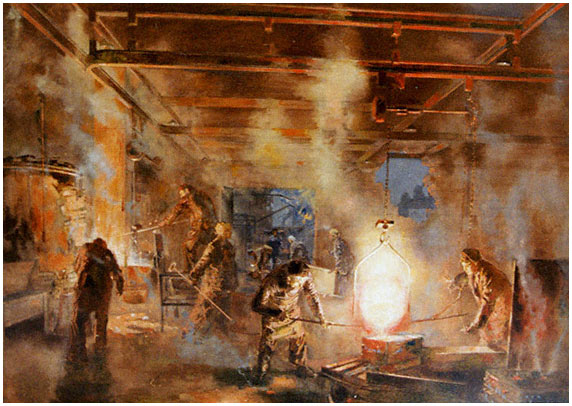
Gladstone favoured the cradle. A fervent Philhellene, steeped in English classical scholarship, he came to tell the Ionians he supported reform of their constitution but not the ending of the Protectorate. Like Seaton, Gladstone doubted the quality of their government under the Protectorate, not the quality of the Ionians. He fell half in love with the Orthodox Church, famously banging heads with the Archbishop of Corfu as they bowed to one another simultaneously.
Had events taken a different turn; had Ilias Zervos and his followers from Cephalonia not been rendered ineffectual by exile, unable to present a serious challenge to the fervent politics of enosis pressed by Constantinos Lombardos and his Zantian followers, there might just have been a sovereign Septinsular Democracy along the western shores of Greece – an Ionian polity treated by the great powers as separate from their preoccupations with the Eastern Question, less subject to the machinations of hi-politics that dog Greece to this day (Would heads at the ECB ponder excluding Greece on the grounds of her weakening influence on the €? Possibly. Would France and Germany exclude Greece, or any of the PIIGS from the EU on mere economic grounds? Inconceivable – except among journalists ill-briefed by marginal politicians). Gladstone’s new constitution, improving even on Seaton’s, was rejected by the Ionian Parliament as soon as he’d left for England, leaving the last Lord High Commissioner, Henry George Storks, to apply all his political talent to ensuring that Whitehall’s decision to surrender the Protectorate to enosis looked like a grand gift to mother Greece from Queen Victoria, so that our people could depart amid guns fired in salute, much bunting, flag waving, kisses, embraces - even tears - on both sides.
To those cynical enough to believe in Albion perfidy two things would be apparent. Britain reserved a robust military foothold in Malta, and more important, as Ilias Zervos realized, greater influence at Athens than would be tolerated henceforth in the Ionian Parliament, having ceded the Ionian Islands as a quid pro quo for for the Greek Assembly's unanimous election of the young King George of the Hellenes. The Hellenic governing classes could rejoice, with some reservations, at this further enlargement of their kingdom; continuing to nurture that ill-fated dream of recovering Constantinople – the name for Istanbul displayed on the concourse of Thessaloniki Railway Station to this day. From Corfu History Forum:
THE UNION WITH THE EYES OF A MONK (translated)
Archives of the monastery of Myrtidiotissa, Catastico 1, p. 168r
During the year 1814, the English conquered Corfu, and their occupation lasted until 1864, when the Union with the rest of Greece took place. It would be better if the earth were torn apart and swallowed us all alive. Three times damn, according to the Triode*, to Bishop Athanasios who made (sic) the Union and doomed the Ionians. In the times of England everything was good, and when the Greek nation came, God’s rage came with them, and all the expensiveness and all the great blasphemy. I remember, when I was a little schoolboy, in 1888, that my father – God rest his soul - used to tell me that at the time that the English were in Corfu, in the village of Synarades only two men used to utter profane oaths, a Stathes P. and another Petros, son of A, and no one else. And the Greek nation brought all the sins to the Ionian Islands.**
* Certain feasts of the Lord in the Orthodox Church will have a canon composed of three odes, called a Triode, chanted at Compline on each day of the Afterfeast.
**Extract from the book of Spyros Karydes Αμβροσίου Μοναχού Χρονικά Σημειώματα, η Κέρκυρα των αρχών του 20ου αιώνα μέσα από τα μάτια ενός μοναχού, 2004, p. 107
** ** **
Yesterday and today we have sun. We did gardening, washing and sawing firewood and going about in the village visiting, observing at close hand work proceeding on older houses - flooring, roofing, repairing down to conscientious details.
In Nico and Sophia's house where ambitious restoration is nearing completion, I had the honour to be introduced to George Poplis a Greek craftsman from Albania who has taught himself - from the internet - the art of wood graining adding to many other fine touches in one of the finest houses in the village.
Across the road, Mark's brother, Paul has a few months more work to do on the house he and Jacinta have moved to from Bermuda (having lived over 15 years ago on Vido). Next door an old house, long up for sale, has been bought by a Dutchman and is being properly re-roofed and set up for residence. We heard of another restoration further down that has not gone so well -woeful workmanship paid for in advance; the half-completed house now up for sale. Up steps above Nico's place is Sally and Mark's house coming along fine with much of the work done by Ian, who was laying a magnificent oak floor yesterday morning. Sally told us that there's a new carpenter's shop opened at the bottom of Ano Korakiana. I couldn't have felt more satisfied at these signs of renewal, enjoying the muffled noise of drills, sanders and angle grinders carried on the breeze drying people's washing, including ours.

Saturday, 19 September 2009

'...the ravages of bitter civil strife...'

John Koliopoulos’ book Plundered Loyalties needs to be ingested in doses. Other than Thucydides, no historian attracts my respect so much, for being able to be so involved, so human and yet so scholarly, writing soberly of events associated with the Axis Occupation and civil strife between 1941-1949, but like the Inferno the awfulness of what’s described takes on the impetus of a depression shifting one’s mood like a gradual but relentless shift in the weather. I made a vow never ever again to pretend I understood or think casually about the matter of Macedonia and its northern neighbour.
Our route last winter from Igoumenitsa, via Ioannina, on the Via Ignatia, towards Thessaloniki passed well south of the West Macedonian towns of Grevena, Florina, Kastoria, Kozani, where Mark and Sally visited over Christmas, including Lia on Grammus. ‘People’ writes Koliopoulos, Professor of Modern European History at the Aristotelian University of Thessaloniki in 1998, ‘are made to slip into thinking of Macedonia or notions about the region as something with an unchanging identity …
the result of superficial knowledge of both the history of Macedonia and attitudes towards the place and its vanishing variety of cultural and linguistic communities, as well as of refusal to come to terms with that history when it is known…the uninformed visitor … can hardly imagine the fierce passions that tore the land to pieces and drove a sizeable part of the population to the four corners of the earth as refugees or emigrants…one has to travel higher up the mountain slopes and visit half-deserted mountain villages like Ano and Kato Melas, Kotas, Antartikon, Ano and Kato Kraniona, Mavrokampos, Chalara and Old Gavros to see the marks of war on the walls of abandoned houses, their windows like empty eyesockets and their roofs fallen. They are ghost houses, their bare red mud-brick walls still standing to remind visitors of the ravages of bitter civil strife in these well-watered and verdant valleys between high mountains, some of the most beautiful in Northern Greece…A visitor is given to understand that he is an unwelcome intruder in a world brought to a standstill by so much grief.’
* * *
Watering the plants on the veranda I disturbed a wolf spider - as big as any I’ve seen here or in England - a clutch of her young spiders covering her back. We were intrigued. Mrs L came to see and suggested swiping it. “No no” we said “The spiders control the flies.” I nudged it back into the shade of the garden, some of her young jumping ship on the way.
After a morning bickering about small things we set about some odd jobs; painting the frames for the shutters we’re putting on the balcony doors; varnishing wooden coving for the small bedroom and starting to fix it up…much later we went for a walk – about three miles - west through the village’s small spaces, fruitful in evening greetings, leaving its lights clustered below the crags. The wind fluttered the olive leaves gusting to stir their branches until darkness turned them into sounds for the imagination.
A construction challenging the surrounding landscape, more Las Vegas than Ano Korakiana, nears completion on the outskirts - an imposing villa with an array of balconies and porticoes; yellow, pink and orange walls, columns and pilasters to attract the envy of people passing through the olive groves either side of the road from Agios Markos. An arrow, painted on a steep concrete drive, invites guests to park their cars below heraldic lions in golden bas-relief.
** ** **
As well as Calligas’ thesis which I took over to Richard Pine the other day so that he could have it on record at the Durrell School, wanting to invite her to a conference in 2010 on Ionian politics, I’m reading Rebecca Morris’ draft of her research on the meaning of giving blood via donation. It’s rather pleasurable reading about myself, even with all the ‘erms’ ‘um’s’ and sporadicity of recorded chat typical of the messy rawness of the data used to assemble contemporary understanding of the world. Fancy putting this in a dissertation – interesting to me but the kind of thing you’d leave out in the old days:
Simon is the only male participant I have in my study. He is also the oldest. At 65 (when I met him), I’d say that he is probably the wisest too! It also struck me when I first met him, that he is also very tall! I think I have a thing for being drawn to tall academics (given that all of my supervisors tower above me) as he is also one of ‘those’. …Educated at Cambridge University, Simon also knows about anthropology because he studied it there. This puts him finely attuned to the ethnographic endeavour, albeit one that is slightly different and ‘less (post)modern’ than mine. Simon is one of the chattiest people I have ever met. He’s like the older, male, academic version of me: loquacious! I immediately liked him and I was gutted when my Dictaphone ran out of battery power only 45 minutes into the first of our marathon conversations…. When I first met him, I was struck by not only his height, but also that he was carrying a fold-up bicycle in his hand…
I quite like this. Lin reading notes ‘loquacious’ and looks at me with a rueful grin. I’m thinking she’s thinking ‘prolix’. And while sunning myself in flattering biography I got an mail from Owen Sinclair who writes a blog called ’70.8%’ being the amount of the earth’s surface covered by sea. A self-confessed armchair sailor, Owen had asked to post my 40 year old account of sailing to the Americas. I’m proud of that, finding it tricky to imagine how we did it when we did and in so small a craft.
* * *
Richard Pine has pointed me towards a Greek police detective Inspector Costas Haritos, trained in the time of the junta, a creation of Petros Markaris. Haritos may be as much or even more to my liking than the British author Anne Zaroudi’s ‘fatman’ – mysterious nemesis of wrongdoers on imagined Greek islands.
Visiting Richard in town up narrow stairs off narrower Philhellinon off Spiridon off The Liston; coming to an old door with a brass plaque and being invited upstairs to find books shelved around a spacious room with annexe above the bustle a floor below – home of Richard’s creation, The Durrell School of Corfu. To my delight he asked if I’d like to chat to one of the monthly gatherings – with wine - for subscribing members of the School. I suggested a discussion of how successive High Commissioners, from Maitland to Storks, had got on with the Corfiots.” “Good idea, but keep it short. They enjoy the wine and the company.” “I could have, thumbnail sketches, stories, mention of statues around the town, plus pictures of Ionian politicians and their opinions of the British and how they danced with their ‘protectors’”. “Ah! ‘Call it dancing with wolves’?”
** ** **
I was asked for this newsletter item in the September Newsletter of Birmingham Friends of the Earth (FoE):
Planning Application No. N/01514/03/FUL – Victoria Jubilee Allotments
In May 2004 Birmingham’s Development Control Committee approved - by one vote - an application to build homes on the Victoria Jubilee Allotments (VJA) next to Handsworth Park – a private site surrendered by a cabal keen to profit from the development value of their plots. Supported by FoE, people in Handsworth and across the city had campaigned for ten years against this loss of urban farmland. Government guidance discouraged building on allotments, and we presented sound evidence of local demand for plots on the whole site. Bitter disappointment at the committee’s vote was partly allayed by firm promises that the successful applicant would – under a Section 106 Agreement – hand over part of the land to the city to create:
- 80 new municipal allotments with a gardeners’ meeting room
- 3 playing pitches and a cricket square and a sports pavilion with parking
In May 2008, at a site meeting attended by councillors, allotments campaigners and people concerned with local sport, constituency planning officer - Alan Orr - gave assurances that the ‘trigger point’ – number of homes sold – had arrived; that the S106A would be implemented by Persimmon Homes that summer.
Summer passed. In February 2009 the city council’s allotments team opened a short-listing process in anticipation of allotments being available by this summer. Applications came in swiftly, but, as numbers went over 50%, we heard that undefined problems in the legal arrangements the land’s acquisition by the city meant no allotments this summer and indefinite delay on the rest of the agreement.
Council staff understand and sympathise with local frustration at yet further delay in honouring a contract concluded 5 years ago. Burdened by recession, the Council has born down heavily on its allotments budget – making cuts, according to the Birmingham Post, of 65%. Front line staff who provide excellent service to plot holders are under great pressure, yet here we have a legal agreement in place, at no cost to council taxpayers, to open the largest new allotment site in the UK since WW2. The problem is demonstrably at the highest level in the city.
Simon Baddeley, Handsworth Allotments Information Group (HAIG) TO GET ON THE SHORT LIST FOR A PLOT ON THE VJA WHEN THEY BECOME AVAILABLE PHONE 0121 303 3038, e-mail: allotments@birmingham.gov.uk or complete a form on-line.

Back numbers

Simon Baddeley