Total Pageviews

Showing posts with label internal polity. Show all posts

Monday, 3 March 2014

"Unrecognisable"

Royal navy postcard - written on the back 'Smyrna in Flames Sept 1922'
 I got the train the other night, it was rush hour, from Charing Cross, it was the stopper going out. We stopped at London Bridge, New Cross, Hither Green. It wasn't until after we got past Grove Park that I could actually hear English being audibly spoken in the carriage. Does that make me feel slightly awkward? Yes.                                                Nigel Farage, London Evening Standard 28 Feb'14
Nigel Farage isn’t a nasty man. He's popular in sections. Married to a German, parent of two children, cricketer, no thug, not racist, born in a Kent village near Canterbury with a metropolitan career, before politics, in banking, he speaks of his idea of how England, perhaps ‘Britain’, its cities and market towns, have become....What did he say in Torquay last week?
“...this country in a short space of time has frankly become unrecognisable” (18.40-18.43 on video)
He might have described something similarly 'foreign' in the, once, rich cosmopolitan cities of Constantinople, Cairo, Alexandria, Smyrna, Thessaloniki; spoken - "frankly" - in worried ways about their messy hybridity; their polyglot incomprehensibility, a slight vexation that that they too had become “unrecognisable”. Over the twentieth century similar apprehensions, even hopes, in the minds of others, have laundered the diversity of those great cities; the population exchange of 1922 under the Treaty of Lausanne removed Greeks from Istanbul, victims of the 'Great Idea Μεγάλη Ιδέα' and popularly nurtured fears of irredentism, parallel dynamics to those Farage described to UKIP's Spring Conference. In 1922 the bloody catastrophe of Smyrna cleansed that city of its Greeks; renamed it Izmir. Nazi’s murdered the Jews of the great trading port of Thessaloniki. A new kind of Islamisation has dispersed those an Arab empire once harboured. Sephardic refugees found haven under in Istanbul from Christian persecution in Spain;  so the high politics of the Middle East, drives Jews from Cairo; Coptic Christians too. Modern Alexandria and Cairo may be teeming with people, but for their tourists, their diversity is blighted. The remaining Orthodox Christians of Istanbul cluster defensively in Karaköy - once Galata.
“It’s so depressing to see these great cosmopolitan places spoiled by contemporary yearning for homogeneity” I muttered to Wesley a few weeks ago, at lunch in his and Stefie's home in Ano Korakiana.
He replied “Hold on, Simon! You enjoy diversity, things cosmopolitan?”
“Of course”
“Yes Istanbul and Cairo may have changed in ways you regret, but look at London, most of the cities of Northern Europe, and your Birmingham, and Leeds, Manchester, Liverpool. What about New York, Seattle, Melbourne, Sydney? Things change. They shift.”
I perked up thinking of my own streets in Handsworth. What Farage calls ‘unrecognisable’ is where I’m at home. I once wrote of this - about the internal heterogeneity that enjoys it in the world - internal polity...
International Supermarket recognises Kosovo despite Serbian residents' refusal to recognise its 2008 Independence Declaration 

Soho Road, Handsworth, Birmingham - one of my homes
The provinces of his body revolted,
The squares of his mind were empty,
Silence invaded the suburbs,...
Moldovans meet Oscar in New Street

Some links that aid my thinking...more about mocking of the poor, fear of the other, rejection of multiplicity...
The Spirit of Haida Gwaii

The Spirit of Haida Gwaii, creation, in 1986, of Bill Reid, comes as near as any piece of art to describing my world. I embrace this work. enjoy the idea of a boat, but the much used image of the 'Ship of Fools' projects our private ugliness - looks and behaviour - as images of shared foolishness, but in the process enjoins mockery of the ugly, the poor, the maimed, the underclasses....

...the present model of a highly centralised state “will not see us through for very much longer”...'


...and this recent piece from the Inlogov blog Migration, citizenship and diversity: questioning the boundaries, in particular research described by Sarah Neal Living Multiculture...
the new geographies of ethnicity and the changing formations of multiculture in England is a two-year research project that explores the changing social and geographic dimensions of contemporary multiculture in urban England....With a focus on the ordinary encounters of increasingly diverse populations in everyday locations the project asks two key questions: how do people live cultural difference, and what role does place play in this process? It is examines the way in which ethnically complex populations routinely interact in convivial and competent ways. Exploring the dynamics and limits of this competency - and its relationship to places that have long and short histories of multiculture - is at the heart of the research
*** *** *** ***
 "What can I put into soil as wet as this?"
"Rice?"
"I can't plant potatoes can I?"
"Best thing is to put them in the fridge until May"
At Hirons where I've bought a selection of chatting potatoes and two kilos of variegated onion sets.

I've been around to my allotment hoping to start planting, but even though well drained, sloping gently down to the park, the ground is spongy damp. I'd be putting the spuds in what's damn near a swamp. As for onions...
Perhaps we'll get a few more weeks of less wet weather. Meantime Taj has cleared a mound of couch grass and removed more of the many stones. If the soil dries out a little we might be good to go. There's no sign of work on my immediate neighbours' plots, nor indeed on too many others. It's not a good time for allotments. I circulated a caution #allotments...
Dear All. Because of the zeal to cut local government bureaucracy, Section 23 of the 1908 Smallholdings and Allotments Act, which requires councils to provide allotments to local residents where there is demand, is on a hit list of ‘burdensome’ regulations.
City Farmer NewsThe Independent
This move is not unexpected. Allotment land has high value - but is currently protected. But it is urban development land where there is intense demand for new housing, promoted by the building industry and the expectations of many citizens expecting easier access to the housing market. It only needs a succession of bad seasons, a few ill-managed allotment sites with many unworked or vacant plots. The temptation to begin a process of selling part, or all, of an allotment site will, if these ‘burdensome’ regulations are removed, become even more inviting, even more feasible. In Birmingham more and more green field sites are being located by satellite and earmarked for future building. Satellite pictures also include images of allotment sites, including the means of calculating their degree of cultivation. I predict that we will see a very strong reaction to these propositions from allotment holders, petitions will be signed, but the demand for development land is relentless.
One of the greatest problems is that many allotments are no longer a means for a working man to feed his family. They are more for the leisure and recreation of the middle classes.
A friend, Dr Richard Wiltshire, who has long advised government on urban allotments and city farms, began a chat with me on one of our periodic meetings
“Does your home have a garden, Simon?”
“Yes”
“So why do you bother with an allotment? if you really needed to grow vegetables you’d use your garden. It’d be closer and more convenient and you needn’t pay rent”
He went on to say that governments have noted many people are either concreting their gardens for parking, reducing the capacity of urban land to absorb rainwater, or using them as playgrounds for their children. It would be easy to start a green movement encouraging people through grants or council tax concessions to get people growing their own food in their gardens.
“If” he pointed out “there really was a need, as in wartime, for people to grow more food themselves...for a few in government it's insane that we subsidise the middle classes by letting them have very valuable urban land for leisure and recreation at rents that hardly pay for the cost of maintaining allotment sites”
I find these views uncomfortable but they exist. Richard Wiltshire is not against allotments, has visited them all over the world, but he’s also an economist. Best wishes, Simon
Clive Birch from the Birmingham and Districts Allotments Association, replies. I hear nothing from the VJA committee...
Simon. I've read this and similar viewpoints. We tried to involve NHS in agreeing allotment gardening was beneficial for patients with depression, stress and other related problems - they stated in writing that "allotment gardening was considered to be a middle class activity!" The quest for land suitable for development is ever with us [Victoria Jubilee!]. We are always vigilant and associations contact us immediately if they see strangers with theodolites or other surveying instruments. Regards Clive
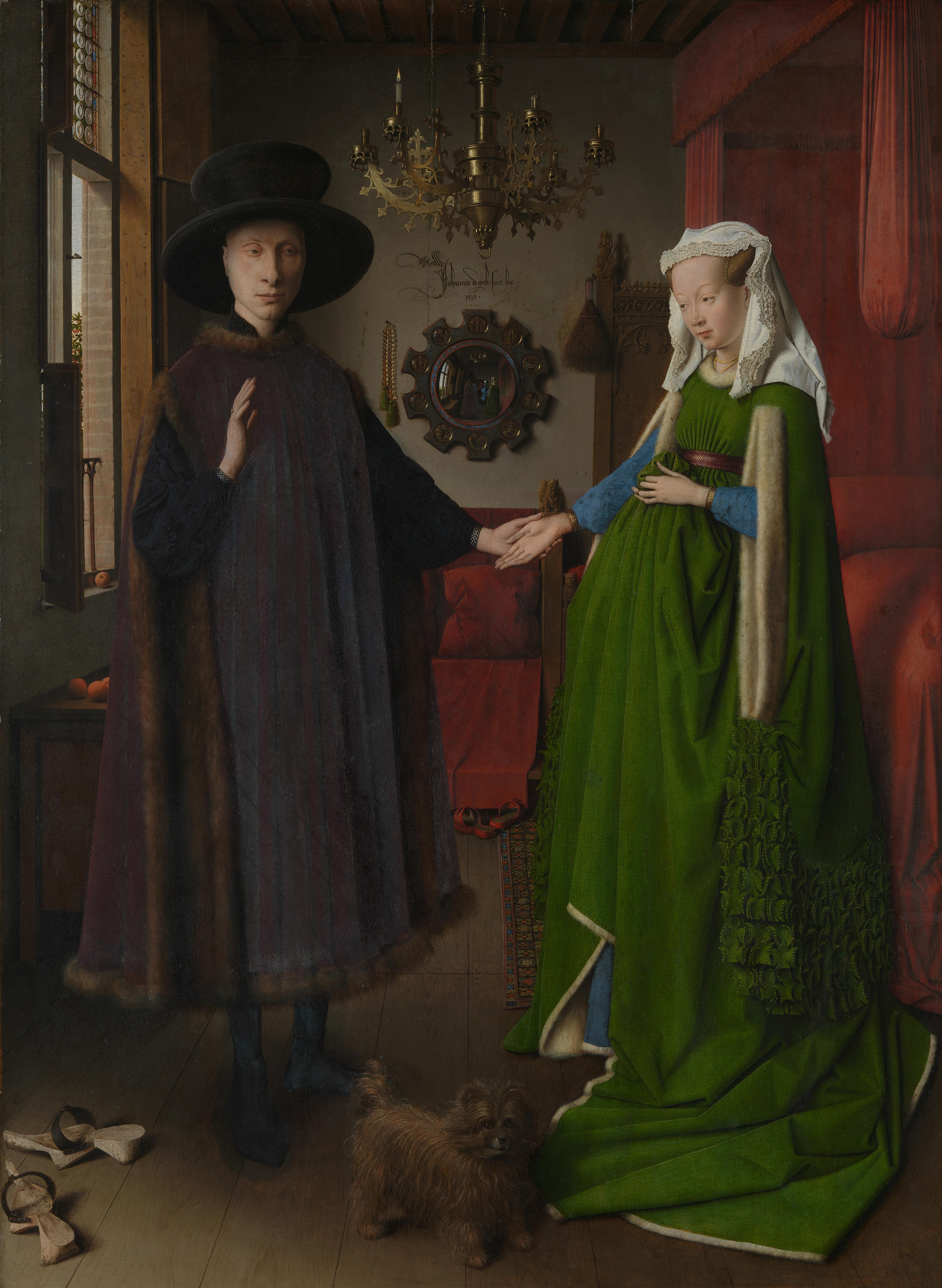
Grayson Perry might regard our allotment as a penance. Richard and I went to see Perry's wonderfully woven tapestries in the Birmingham Art Gallery on Sunday. Last year, Lin and I had delighted in the sequence of TV films in which the artist visited the people and places that inspired his Rakewell's Progress from working class Sunderland via 'Eden Close' in Tunbridge Wells to new-rich Cotswolds via the anxious self-consciousness of the various gradations of middle class - All In The Best Possible Taste with Grayson Perry. The tapestries are threaded through with another dimension of art reference - as well as Hogarth's progresses - Harlot's and Rake's - Perry draws on Mantegna, Bellini, Grünewald, Masaccio, Crivelli, Jan Van Eyck, the Master of Flémalle, Gainsborough, Van der Weyden, and many images of the Vision of St Hubert and I bet there are others. Talk about layering - literal and figurative.
Richard reads about the tapestries


"I didn't see a single bicycle"
"One in the background by the canal in The Agony in the Car Park?"
"That's someone's who can't afford a car" I said
The Agony in the Car Park


Another driver of taste that I noticed amongst the upper middle class was the desire to show the world that one was an upright moral citizen. In the past, a good burgher might have regularly attended church or done voluntary work; today they buy organic, recycle, drive an electric car or deny their child television. This need to pay inconvenient penance to society seems to come partly from guilt. The liberal, educated middle class have done well, but they must pay with hard labour on their allotment, or by cycling to work...extract from the artist's introduction to the catalogue
I don't recognise myself. Perhaps my motives are hidden from my self-consciousness. A penitent can rejoice in penance, be masochistic even. I enjoy cycling far too much. I haven't commuted since my first job in the 1960s. For me a truer self-punishment would be to have to drive a car everywhere. And my penitential plot? I don't enjoy it enough. Ha gotcha! Seriously though, I know my driving wish is to prove to myself I can get food from the ground in which I've planted its seeds. To do that under my own steam. To prove something to my stepfather perhaps? Not that he ever sought any proof from me. Not his way. But if I succeeded he'd be discreetly proud.
'The Vanity of Small Differences' by Grayson Perry - Freud's word 'narcissism'

 *** *** *** ***
Carnival 2014 in Ano Korakiana  - Sunday 2 March - we missed it again
karnav2014c.jpg
Democracy Street
karnav2014i.jpg
Luna D'Argento
karnav2014e.jpg


Εκεί, ανέκαθεν διαβάζεται η Διαθήκη του Βασιλέα προς τους υπηκόους του, που συμπυκνώνει αρκετά από τα προσωπικά και συλλογικά συμβάντα της χρονιάς. Παρότι η εκδήλωση αυτή είχε προγραμματιστεί να γίνει σε εσωτερικό χώρο, τελικά καιρού επιτρέποντος, πραγματοποιήθηκε από το μπαλκόνι παρακείμενου σπιτιού.
Το Κορακιανίτικο Καρναβάλι για μια ακόμη χρονιά, έδωσε το παρόν, παρά τις «απειλές» του καιρού έως την τελευταία στιγμή και τη σύντομη περίοδο που μεσολαβεί μετά τις γιορτές. Έτσι, μέσα σε τρεις μόλις βδομάδες, ολοκληρώθηκαν οι προετοιμασίες όλων εκείνων των στοιχείων, που το έχουν καθιερώσει τα τελευταία χρόνια στην κορακιανίτικη και όχι μόνο, συνείδηση.

Το πρωί ακόμη της Κυριακής, αρκετές λεπτομέρειες έμελε ακόμη να ρυθμιστούν και κυρίως να προβλεφθεί η εξέλιξη του καιρού, προκειμένου να προσαρμοστεί ανάλογα το πρόγραμμα.Τελικά, όλα κύλησαν ευνοϊκά και έτσι, νωρίς το απόγευμα, ξεκίνησε η καθιερωμένη πομπή από το κτίριο του Συνεταιρισμού.
karnav2014d.jpg
Δύο καλοφτιαγμένα άρματα (ένα των νεαρότερων καρναβαλιστών), το ομοίωμα του Καρνάβαλου, στο «δρόμο» τη φορά αυτή, μεταφερόμενο στα χέρια και ο κόσμος που ακολουθούσε μασκαρεμένος και μη.
Η πομπή, με δυνατή μουσική ανηφόρισε και έφθασε έως την άλλη άκρη του χωριού στην πλατεία, όπου έλαβε χώρα το πρώτο μικρό δρώμενο, για να πάρει το δρόμο της επιστροφής έως την Πλάστιγγα.
karnav2014a.jpg
Όμως η βραδιά, τη φορά αυτή ήταν ιδιαίτερα μεγάλη, αφού ο αποκριάτικος χορός πραγματοποιήθηκε στο Luna d’Argento με τη συμμετοχή τετρακοσίων και πλέον ανθρώπων, που διασκέδασαν με τις…προχωρημένες πρωινές ώρες. Και λίγο πριν από τα μεσάνυχτα, παρουσιάστηκε το όμορφο σκετς που είχαν προετοιμάσει σε πολύ σύντομο διάστημα παλιοί και νέοι Καρναβαλιστές και η βραδιά κύλησε με κέφι, μουσική και προπάντων χορό!!!

Saturday, 3 October 2009

Back in Birmingham

In the post awaiting me in England was a handwritten letter from Richard R. Hill, introducing himself as featuring in an Out of Town film in 1975 involving fishing for Black Bream at Littlehampton. As holder of the copyright for all of JH's writing and films Richard wondered if I'd give permission for a copy of the film to be released from the South West Film and Television Archive in Plymouth. Done at once. My letter sent to him and copied to SWFTA by email. What especially interested me was that Richard mentioned in his letter that he'd done wood carvings of fish and that some of these were shown by Jack in the same film. Was this the man who made the beautiful carving, left me by my stepfather, of what - because if its reddish eye I took for a roach but for the shallowness of its tail-V and its long dorsal fin making more like a common carp or - the likeliest candidate - a large crucian carp?
[Back to the future 15 October 09: I've just had an e-mail from one of Richard Hill's children: '... Unfortunately, and a big unfortunately, this is not the fish that dad carved for Jack! The fish was mounted from memory on a black background and framed in wood. It was definitely a roach that Jack had and dad can confirm that the fish you have at the moment is definitely a crucian carp and has commented on its quality.]
Before writing back to Richard, I'd phoned the Archive and given verbal permission. Mike said he'd be able mail a DVD of the requested film to Richard and told me that a whole lot of Out of Town and The Old Country in 16mm had been delivered to the Archive "in a white van". I know something about this and phoned Paul Peacock to suggest he had a chat with Mike about the possibilities of marrying sound and film in the future. I'm going to have visit the archive and find out just what is down there. For the moment I'm delighted to think I've discovered - through no effort of my own - the carver of the fish....and goodness me! It's 2-o-'clock on a windy leaf-blown October afternoon and he just called me by phone, having already got my letter. "It's a roach" Richard assured me. He and I spoke for a quarter of an hour and promised to stay in touch. I've not see the film in question, filmed off Littlehampton from a boat called Pauline - skipper Charles Fox. "A wonderful day! I'll always remember it. Mr.Hargreaves was new to sea fishing then but by the end of the day he was catching those bream as well as the rest of us. I can never pronounce the cameraman's name. Stan?" "Stan Bréhaut" "That's it". We agreed as soon as the film arrived Richard would let me know. I'm a lucky man.
* * *
Email to John Martin on 4 October 2009:
Dear John. I've know processed the following DVDs and film clips, so that they are sufficiently compressed to go on my laptop desktop as MOV or AVI files which can also be put on CDs to transfer to another laptop or be webstreamed, if and when we select appropriate extracts. Can I just check that these four films comprise the complete list of what I should have?:
1. Coffs Harbour.mov
2. Toodyay Shire.avi
3. Marion City.mov
4. Wyndham City.mov
Fascinating material John. I'm really impressed with the way the films have evolved from the Coffs Harbour film earlier in the year. Have you the stills that you mentioned of you and Annie filming? Best. Simon
** ** **
This 'newsletter' printed in 'cut-back' black instead of the colours of previous letters from ther allotments team was in my post when I got back to Handsworth. Extract from a piece I've written for the local Friends of the Earth October newsletter
'... Burdened by recession, the Council has born down heavily on its allotments budget – making cuts, according to the Birmingham Post, of 65%. Front line staff who provide excellent service to plot holders are under great pressure, yet here we have a legal agreement in place, at no cost to council taxpayers, to open the largest new allotment site in the UK since WW2. The problem is demonstrably at the highest level in the city. Simon Baddeley, Handsworth Allotments Information Group (HAIG) TO GET ON THE SHORT LIST FOR A PLOT ON THE VJA WHEN THEY BECOME AVAILABLE PHONE 0121 303 3038, e-mail: allotments@birmingham.gov.uk or complete a form on-line.'
Note: 'Snagging' - an expression I've not heard until now - is used within the construction industry to describe a process of defect identification and resolution. It's now being used outside the building industry to describe conflicts between customer and provider.
* * *
...and tomorrow, Sunday, there'll be a crowd of people around the school in Ano Korakiana visiting the polling station for the Greek General Election. My knowledge of what the elections will mean isn't good. I suspect PASOK will win, given their pre-election poll lead but any new government will have horrendously difficult decisions to make given the political, social, educational and economic state of the Hellenic Republic - shared with other European economies, especially Spain and Italy. Last December the European Court of Justice gave three rulings against the Greek Ministry of Education for discriminating against non-Greek universities and colleges. Public debt is high and rising. George Papandreou's PASOK - if it succeeds in the election - will surely focus, as its Leader has promised, on corruption. Karamanlis tried hard, but it's a 'wicked problem', and he's struggled with a one seat majority. My hope is that there's a critical mass of ordinary Greek citizens who, even though they may have treated corruption as normal, want to change. We see many signs of this - particularly among Hellenic women in professional roles, as lawyers. doctors and accountants.
The Irish - second time round - self-confidence eroded by the end of their economic blooming, have voted 'yes' to the Lisbon Treaty. Note: Britain declared war on Germany on 3 September 1939 - just 70 years since the Nazis and and Soviets completed their invasion and division of Poland precipitating the crisis that, though I was unborn, and then just a baby and a child, has echoed through my life and the lives of so many others born in the 1940s. In my case it has made me an uncritical supporter of the European Union despite the unwieldy flaws of this messy diverse would-be super-state.
I also believe with Michel Foucault that governing yourself is no more nor less difficult than governing your household (in whatever form), and both endeavours are as tricky as governing a state. This was how I came to wrote Internal Polity.
It's why I was enthusiastic when we were heard a story about the way the Faiakon Demos (Δήμος Φαιάκων), with their offices in Ipsos, had responded to village residents' plea to the Mayor about a long running nuisance involving a neighbour's illegal dogs making life unbearable, barking and whining at all hours below their windows.

The Mayor, Michael Karras (Ο Δήμαρχος Φαιάκων, Μιχάλης Κάρρας) brought in an interpreter, listened sympathetically, and almost immediately sent two very efficient women environmental health officers to enforce the law - that you may not own more than two dogs and you may not leave them unattended on land separate from your residence. This decisive action would have been unrealistic a few years ago. Word of it has spread in the village.
* * * Sunday 4 Oct 1838 UK time: Greek election exit poll results: PASOK landslide win predicted, but the Greens with 2-3% of the vote get no parliamentary representation.
*** ***
'The May Dance that was happening in the sun that day was first made up of a mob of fluttering females, all ready for what can happen as a result of going to dances.'
Read from a chapter in The Old Country at my stepfather's memorial service by his friend Cliff Michelmore ... and this is the email I've just had back from the Administrator of the SWFTA looking after Jack's films - not the one's I have, nor the ones published on DVD or posted on YouTube but original pre-production 16mm film plus sound tapes that he would have married to them and linked with a shed commentary:
Dear Simon. Many thanks for contacting SWFTA about the collection of Jack Hargreaves films that have been deposited with us. I know you spoke to my colleague Mike Brewis on Friday and I was delighted to hear all about it - I started work here in June and almost the first call I took was from a John Peters who was asking for a copy of the exploding bait box film on behalf of his friend, Richard Hill. At that time it seemed unlikely that we would make much headway with the request so it's very encouraging that so much progress has now been made.
However, there's still a certain amount of work to do before we can supply a DVD to Mr Hill, and I just wanted to let you know why. When Mr Peters first made contact, I explained that there were various reasons why it was difficult to work on his request. We are a charity with limited funding and only three staff members, and most of our time is necessarily taken up with commercial business activities. We receive a significant number of donated film collections throughout the year and our policy is to deal with these, when time allows, in the order in which they are received, and also one by one, to avoid any chance of collections being mixed up. And we would not consider releasing any copies of material from a collection until that entire collection had been properly assessed and logged. The position with the Jack Hargreaves collection was that it is very large, it is not material relating to the South West region, we had no idea who held the copyright and we had no named contact - and consequently it was not an item of any priority for us.
Mr Peters made it his business to trace the copyright holder, and we are extremely grateful that due to his efforts we are now in touch with you. Furthermore, after your conversation with Mike we now have a way of beginning to assess the collection. In view of this, and because we understand that Mr Hill is elderly and in poor health, we have decided to make an exception in this case, and to work on this single item from the collection. So far, we have found the item, but with no soundtrack. If we are able to locate the soundtrack, the work involved in marrying it up to the film and transfering the complete item to DVD will be a complex and time-consuming exercise because of the different media involved, and this work will have to wait its turn along with other less-urgent projects. We are keen to complete the DVD, but I'm sure you will understand why it might still take some time. I will of course keep Mr Hill informed of our progress.
In the meantime Mike has asked me to let you know that he has found a soundtrack referring to the woodcarving, and it confirms the carving was done by Mr Hill. As yet we have not found the film. We have also made an approximate count of the collection and we seem to have about 350 cans of film and several boxes of audio reels.
Many thanks again for getting in touch, and we look forward to keeping in contact about the collection in the future. Best wishes. Jennie Constable. Administrator, SWFTA, South West Film & Television Archive, Melville Building, Royal William Yard, Stonehouse, Plymouth PL1 3RP Tel: 01752 202650
**** Back to the future ~ 8 December '09: Lin and I were starting to clear things out of Amy's old bedroom when Lin found this carved fish. Richard Hill has told me that the Crucian carp above is not his work, so I'm wondering if this one - clearly a roach - is his, especially as on its reverse are signs of it having been mounted on another surface. I shall e-mail John Featherstone and John Peters to check as Richard doesn't do e-mails. (follow here and here)

Saturday, 6 December 2008

Internal Polity ~ αγαπην δε μη εχωουδε ημη

My little ship - Young Tiger - makes landfall off Spain's Cape Ortegal Lord, my ship is so small and your sea is so big "We are as near to heaven by sea as by land!" (On the 9 September 1583 Sir Humphrey Gilbert called out these words from the stern of the frigate Squirrel. He was heard by listeners on Golden Hind, as both ships struggled with dangerous waves 'short and high, pyramid-wise' off the Azores. Hind's people, amid their own worries, watched for Squirrel as the weather separated them, but her lights disappeared and it was believed that she foundered in the night with all hands.)
At the start of the last century, Joseph Conrad wrote Heart of Darkness - a story of Africa about darkest Europe before the world wars, the camps, the gulags, Little Boy and Fat Man. Most men, wrote Conrad, are 'heartless phantoms'. They live not in themselves. They assume their individuality and autonomy, without grasping that what they believe to be their unfettered liberty is really conditional on 'the strength and allegiances of their police.' I wrote Internal Polity over ten years ago. It was an attempt, in times when individualism cannot be relied upon to nurture individuality nor identity, to explore the use of political language to describe the internal life - starting with the only one I can try to know. The personality can be understood as plural rather than unitary, viewed as a mosaic of many parts, a 'commonwealth of souls', 'a gang in the head' or 'a society of different minds'. Such miscellany may presage resourcefulness, superficiality or fragmentation. R.L.Stevenson in Dr Jekyll and Mr Hyde (1886)
"...that truth by whose partial discovery I have been doomed to such a dreadful shipwreck - that man is not truly one, but truly two. I say two because the state of my own knowledge does not pass beyond that point. Others will follow. Others will outstrip me on the same lines and I hazard a guess that man will be ultimately known for a mere polity of multifarious, incongruous and independent denizens.'
Repression has been the favoured guarantor of civility and self-definition in the internal polity, as dictatorship was in the Balkans. Some external polities are experimenting with alternative ideals of nationhood, seeking legislative frameworks which celebrate diversity and forms of citizenship not based on assimilation. What political skills and qualities, what values and principles, might be needed to govern an internal polity experiencing this freedom from older guarantees of public identity? My contention then and now is that without a well governed internal polity you cannot hope to make an external one. And only by entering the limitless space within can one grasp the labour of becoming a citizen of the species - homo sapiens. What of the infinite space inside? What's our constitution? A dictatorship? A democracy? .
If with the tongues of men I speak, and of angels, Love I do not have, I have become a gong resounding or cymbal clanging. And if I have the gift of prophecy, and know mysteries all, faith mountains move, Love I do not have, nothing I am. Love is generous, virtuous, Love does not envy, boast, not proud is. All she protects, all she trusts, all she hopes, all she perseveres. Love never she fails. Be it prophecies, they will cease, Be it tongues, they will be stilled, be it knowledge it will cease. So remain, Faith, Hope and Love, these three. But the greatest of these is love One Corinthians 13 Zbigniew Antoni Kowalski (also called Preisner) εαν ταις γλωσσαις των ανθρωπων λαλω και των αγγελωναγαπη δε μη εχω, γεγονα χαλκος ηχων κυμβαλον αλαλαζον. και εαν εχω προφητειαν και ιδω τα μυστηρια πανταωστε ορει μεθυστανην. αγαπην δε μη εχωουδε ημη. η αγαπη μακροθυμηη αγαπη ου ζηλει, η αγαπη ου περπερευεται, ου φυση ουτε. η αγαπη παντα στεγει, παντα πιστευει, παντα ελπιζει, παντα υπομενειη αγαπη ουδεποτε εκπιπτει ειτε δε προφητειαι καταργηθησονταιειτε γλωσσαι παυσονταιειτε γνωσεις καταργηθησετε Νυνη δε μενει, πιστις, ελπις, αγαπη, τα τρια ταυτα, μειζον δε τουτων η αγαπη. (Stavros or Lliana or Adamos - if you read this can you correct the Greek for me?) * * * *
How can I expect to see the person in the state if I cannot define the state in the person? How do external politics get inside us and vice versa? When I try to make sense of attempts to synthesise psychology and politics, in particular the works of Freud and Marx or those influenced by them, I am reminded of a point at the end of Portland Bill in Dorset where spectators gather to witness a spring tide on the ebb meeting a gale from the West. Separated, it is possible to cruise these mighty systems of thought in the family yacht. Combined, they produce an unnavigable maelstrom of overfalling concepts ... Yet to understand the interaction of internal and external politics these waters must be entered.
The economic structure of society - through many intermediary links such as the class association of the parents, the economic conditions of the family, its ideology, the parent's relationship to one another, etc., - enters into a reciprocal relation with the instincts, or ego, of the new born.
Jacoby attempts to explain this confusing meeting of internal-external exploration as a dialectic. Psychology, or what he decries as psychologism, considers the 'genesis and structure of the individual psyche' but not 'the power of society in and over the individual.' And sociology, which he calls sociologism, fails to recognise that subjectivity matters and that we both invent and are invented by the processes we observe. The journalist Neal Ascherson, writing about war in former Yugoslavia, said 'the New World Disorder is also, and above all, in our heads' (Independent on Sunday 31/01/93) . The devils cast out of Legion took up residence in a herd of swine that stampeded and drowned. This story quoted by Dostoyevsky at the start of The Possessed shows individuals fermenting anarchy (29/12/08 'anarchy' is used v.loosely ref) to create in the world, a mirror of the chaos inside.
Simon Baddeley (1966) 'A Voyage to America', 1966 Roving Commissions 7:9-30 Simon Baddeley (1995) ‘Internal Polity’ in Human Relations 1995 48:1073-1103 Brian Keenan (1992) An Evil Cradling Russell Jacoby (1975) Social Amnesia Julian Jaynes (1976) The Origin of Consciousness in the Breakdown of the Bicameral Mind Simon Baddeley (1997) “Governmentality” in Brian Loader (ed.) (1997) The Governance of Cyberspace (London:Routledge) (5) 64-96
My seacraft mentor Denys Rayner who fought in the Battle of the Atlantic, and designed boats for peace time sailors, would challenge attempts to personify the sea. ‘…neither cruel nor kind’ he wrote in his war autobiography Escort ‘Any apparent virtues it may have, and all its vices, are seen only in relation to the spirit of man who pits himself, in ships of his own building, against its insensate power.’

Monday, 28 May 2007

Multiplicity not Ship of Fools

The Spirit of Haida Gwaii, creation, in 1986, of Bill Reid, comes as near as any piece of art to describing my world. I like the idea of a boat, but the much used image of the 'Ship of Fools' projects our private ugliness - looks and behaviour - as images of shared foolishness, but in the process enjoins mockery of the ugly, the poor, the maimed, the underclasses [Bosch's is the example I know from Foucault's 'Madness and Civilization' used on Psych 171 courses I taught long ago at Michigan]. It's too easy to see a ship crewed by others. Reid's figures, though mainly animals, are us - our polity. I crew this boat; may even aspire to advise its skipper. The image consoles when I'm despondent about democracy - the worst form of government except for the others. 'There is certainly no lack of activity in our little boat,' said Reid, 'but is there any purpose? Is the tall figure who may or may not be the Spirit of Haida Gwaii leading us, for we are all in the same boat, to a sheltered beach beyond the rim of the world ... or is he lost in a dream? The boat moves on anchored in the same place' freighted with creatures who bite and claw as they row. Not a grounded apolitical ship of fools, rather the discordant family of all living things striving to up-anchor and gain steerage amid the dangers of the sea, about which my mentor, Denys Rayner, wrote 'neither cruel nor kind ... Any apparent virtues it may have, and all its vices, are seen only in relation to the spirit of man who pits himself, in ships of his own building, against its insensate power.' (Preface to 'Escort: The Battle of the Atlantic' London:Kimber 1955)

In the bow Grizzly Bear faces Bear Mother, their cubs between them. Next is Beaver at home on the ocean floor hoarding the water and fish of the world; then Dogfish Woman with a hooked beak, gills on her cheeks and a pointed head; then Mouse Woman, guide to those passing from the human to the non-human domain. Raven steers. Beneath his wing is a grudging oarsman representing humans who labour to build and rebuild. Athwartships is Wolf with claws in Beaver’s back, his teeth in Eagle’s wing. Beneath Eagle is Frog. The hatted figure is the shaman Kilstlaai, holding a speaker’s staff topped by an Orca.

Unlike the Ship of Fools this boat is a descendant of Jason's Argo and the crews who shared in Ulysses' odyssey, comforting me with my ancestor's maxim 'Except the blind forces of Nature, there is nothing that moves in the world today that is not Greek in origin'. Reid's vessel, introduced to me by the political philosopher Jim Tully ('Strange Multiplicity: Constitutionalism in an Age of Diversity' Cambridge, 1995), who places it on the cover of his book, inspired my favourite paper: Baddeley, S. (1995) 'Internal Polity' Human Relations, Vol. 48, No. 9, 1073-1103 (1995) hum.sagepub.com/cgi/content/abstract/48/9/1073
Abstract: Repression has been a conditional means of civilizing the psyche, but in pluralistic democracies where diversity is valued, where assimilation is not a condition of citizenship and where aspirations are formed within consumerism, this road to self-understanding is unreliable. At a time when neither individualism nor collectivism encourage individuality, the idea of an internal polity enriches self-awareness, strengthening agency in the world. Perhaps.

* * *

While on mythic boats what of Argo? Here's the artist Engonopoulos' impression of her celebrity crew of argonauts - all progeny of Gods. Someone's sitting on the gunnels gazing at the sea smoking a cigarette (not in an enclosed space). Jason's staring ahead in shades, not exactly leading, but holding a fine steering oar. There's Heracles with a studded club; Orpheus with lyre, and some of the crew in the water, relaxing. Lovely blue. Lots of light. How is this relaxed company going to get all the way from Volos to Colchis at the far end of the Black Sea to steal the Golden Fleece? Perhaps they'll just chill out on the shores of the northern Aegean and make up a brilliant story about their adventures when they get home.

* * *
The ship and crew I really want to know more about is the Hercules - a two masted square rigged brig of 120 tons chartered in Genoa by Lord Noel Byron - a collier, therefore tubby, skippered by a Captain Scott - from whose decks the great poet sighted Zante and Cephalonia on 2 August 1823. Hercules carried Byron in company with Edward Trelawny, James Hamilton Browne, (author of an account of their voyage from Italy to Greece), Vitali, Count Pietro Gamba, Dr. Francesco Bruno, Constantine Skilitzy, the gondolier Tita Falcieri, the valet Fletcher and steward Lega Zambelli, several other servants, five horses, Byron's bulldog Moretto, and the Newfoundland dog Lyon. After several months wait at Cephalonia, Byron received a summons from Prince Alexander Mavrocordato to come at once to Missolonghi, with a request 'to co-operate...in the organization of western Greece.' The machinations that followed, made more confusing by separate accounts of the events up to Byron's death on the 19 April 1824, have not sullied the historical conclusion that the poet, though he did not die in battle, died for the freedom of Greece.

I would like also to know about the ships of Admiral Lascarina Bubulina of Spetses who fought in the Greek War of Independence, having been born in a Constantinople prison. In 1811, twice widowed, the mother of seven children, rich by inheritance from her husbands, Bouboulina managed to increase her fortune by astute trading, becoming partner in several Spetsiot vessels, building three of her own, including the Agamemnon - the first and largest Greek fighting ship of the 1821 War of Independence. I only learned this because she was mentioned in a commentary by Michael Cacoyannis explaining why Zorba called Madame Hortense 'Bouboulina'.

Back numbers

Simon Baddeley