Total Pageviews

Showing posts with label Smyrna. Show all posts

Monday, 3 March 2014

"Unrecognisable"

Royal navy postcard - written on the back 'Smyrna in Flames Sept 1922'
 I got the train the other night, it was rush hour, from Charing Cross, it was the stopper going out. We stopped at London Bridge, New Cross, Hither Green. It wasn't until after we got past Grove Park that I could actually hear English being audibly spoken in the carriage. Does that make me feel slightly awkward? Yes.                                                Nigel Farage, London Evening Standard 28 Feb'14
Nigel Farage isn’t a nasty man. He's popular in sections. Married to a German, parent of two children, cricketer, no thug, not racist, born in a Kent village near Canterbury with a metropolitan career, before politics, in banking, he speaks of his idea of how England, perhaps ‘Britain’, its cities and market towns, have become....What did he say in Torquay last week?
“...this country in a short space of time has frankly become unrecognisable” (18.40-18.43 on video)
He might have described something similarly 'foreign' in the, once, rich cosmopolitan cities of Constantinople, Cairo, Alexandria, Smyrna, Thessaloniki; spoken - "frankly" - in worried ways about their messy hybridity; their polyglot incomprehensibility, a slight vexation that that they too had become “unrecognisable”. Over the twentieth century similar apprehensions, even hopes, in the minds of others, have laundered the diversity of those great cities; the population exchange of 1922 under the Treaty of Lausanne removed Greeks from Istanbul, victims of the 'Great Idea Μεγάλη Ιδέα' and popularly nurtured fears of irredentism, parallel dynamics to those Farage described to UKIP's Spring Conference. In 1922 the bloody catastrophe of Smyrna cleansed that city of its Greeks; renamed it Izmir. Nazi’s murdered the Jews of the great trading port of Thessaloniki. A new kind of Islamisation has dispersed those an Arab empire once harboured. Sephardic refugees found haven under in Istanbul from Christian persecution in Spain;  so the high politics of the Middle East, drives Jews from Cairo; Coptic Christians too. Modern Alexandria and Cairo may be teeming with people, but for their tourists, their diversity is blighted. The remaining Orthodox Christians of Istanbul cluster defensively in Karaköy - once Galata.
“It’s so depressing to see these great cosmopolitan places spoiled by contemporary yearning for homogeneity” I muttered to Wesley a few weeks ago, at lunch in his and Stefie's home in Ano Korakiana.
He replied “Hold on, Simon! You enjoy diversity, things cosmopolitan?”
“Of course”
“Yes Istanbul and Cairo may have changed in ways you regret, but look at London, most of the cities of Northern Europe, and your Birmingham, and Leeds, Manchester, Liverpool. What about New York, Seattle, Melbourne, Sydney? Things change. They shift.”
I perked up thinking of my own streets in Handsworth. What Farage calls ‘unrecognisable’ is where I’m at home. I once wrote of this - about the internal heterogeneity that enjoys it in the world - internal polity...
International Supermarket recognises Kosovo despite Serbian residents' refusal to recognise its 2008 Independence Declaration 

Soho Road, Handsworth, Birmingham - one of my homes
The provinces of his body revolted,
The squares of his mind were empty,
Silence invaded the suburbs,...
Moldovans meet Oscar in New Street

Some links that aid my thinking...more about mocking of the poor, fear of the other, rejection of multiplicity...
The Spirit of Haida Gwaii

The Spirit of Haida Gwaii, creation, in 1986, of Bill Reid, comes as near as any piece of art to describing my world. I embrace this work. enjoy the idea of a boat, but the much used image of the 'Ship of Fools' projects our private ugliness - looks and behaviour - as images of shared foolishness, but in the process enjoins mockery of the ugly, the poor, the maimed, the underclasses....

...the present model of a highly centralised state “will not see us through for very much longer”...'


...and this recent piece from the Inlogov blog Migration, citizenship and diversity: questioning the boundaries, in particular research described by Sarah Neal Living Multiculture...
the new geographies of ethnicity and the changing formations of multiculture in England is a two-year research project that explores the changing social and geographic dimensions of contemporary multiculture in urban England....With a focus on the ordinary encounters of increasingly diverse populations in everyday locations the project asks two key questions: how do people live cultural difference, and what role does place play in this process? It is examines the way in which ethnically complex populations routinely interact in convivial and competent ways. Exploring the dynamics and limits of this competency - and its relationship to places that have long and short histories of multiculture - is at the heart of the research
*** *** *** ***
 "What can I put into soil as wet as this?"
"Rice?"
"I can't plant potatoes can I?"
"Best thing is to put them in the fridge until May"
At Hirons where I've bought a selection of chatting potatoes and two kilos of variegated onion sets.

I've been around to my allotment hoping to start planting, but even though well drained, sloping gently down to the park, the ground is spongy damp. I'd be putting the spuds in what's damn near a swamp. As for onions...
Perhaps we'll get a few more weeks of less wet weather. Meantime Taj has cleared a mound of couch grass and removed more of the many stones. If the soil dries out a little we might be good to go. There's no sign of work on my immediate neighbours' plots, nor indeed on too many others. It's not a good time for allotments. I circulated a caution #allotments...
Dear All. Because of the zeal to cut local government bureaucracy, Section 23 of the 1908 Smallholdings and Allotments Act, which requires councils to provide allotments to local residents where there is demand, is on a hit list of ‘burdensome’ regulations.
City Farmer NewsThe Independent
This move is not unexpected. Allotment land has high value - but is currently protected. But it is urban development land where there is intense demand for new housing, promoted by the building industry and the expectations of many citizens expecting easier access to the housing market. It only needs a succession of bad seasons, a few ill-managed allotment sites with many unworked or vacant plots. The temptation to begin a process of selling part, or all, of an allotment site will, if these ‘burdensome’ regulations are removed, become even more inviting, even more feasible. In Birmingham more and more green field sites are being located by satellite and earmarked for future building. Satellite pictures also include images of allotment sites, including the means of calculating their degree of cultivation. I predict that we will see a very strong reaction to these propositions from allotment holders, petitions will be signed, but the demand for development land is relentless.
One of the greatest problems is that many allotments are no longer a means for a working man to feed his family. They are more for the leisure and recreation of the middle classes.
A friend, Dr Richard Wiltshire, who has long advised government on urban allotments and city farms, began a chat with me on one of our periodic meetings
“Does your home have a garden, Simon?”
“Yes”
“So why do you bother with an allotment? if you really needed to grow vegetables you’d use your garden. It’d be closer and more convenient and you needn’t pay rent”
He went on to say that governments have noted many people are either concreting their gardens for parking, reducing the capacity of urban land to absorb rainwater, or using them as playgrounds for their children. It would be easy to start a green movement encouraging people through grants or council tax concessions to get people growing their own food in their gardens.
“If” he pointed out “there really was a need, as in wartime, for people to grow more food themselves...for a few in government it's insane that we subsidise the middle classes by letting them have very valuable urban land for leisure and recreation at rents that hardly pay for the cost of maintaining allotment sites”
I find these views uncomfortable but they exist. Richard Wiltshire is not against allotments, has visited them all over the world, but he’s also an economist. Best wishes, Simon
Clive Birch from the Birmingham and Districts Allotments Association, replies. I hear nothing from the VJA committee...
Simon. I've read this and similar viewpoints. We tried to involve NHS in agreeing allotment gardening was beneficial for patients with depression, stress and other related problems - they stated in writing that "allotment gardening was considered to be a middle class activity!" The quest for land suitable for development is ever with us [Victoria Jubilee!]. We are always vigilant and associations contact us immediately if they see strangers with theodolites or other surveying instruments. Regards Clive
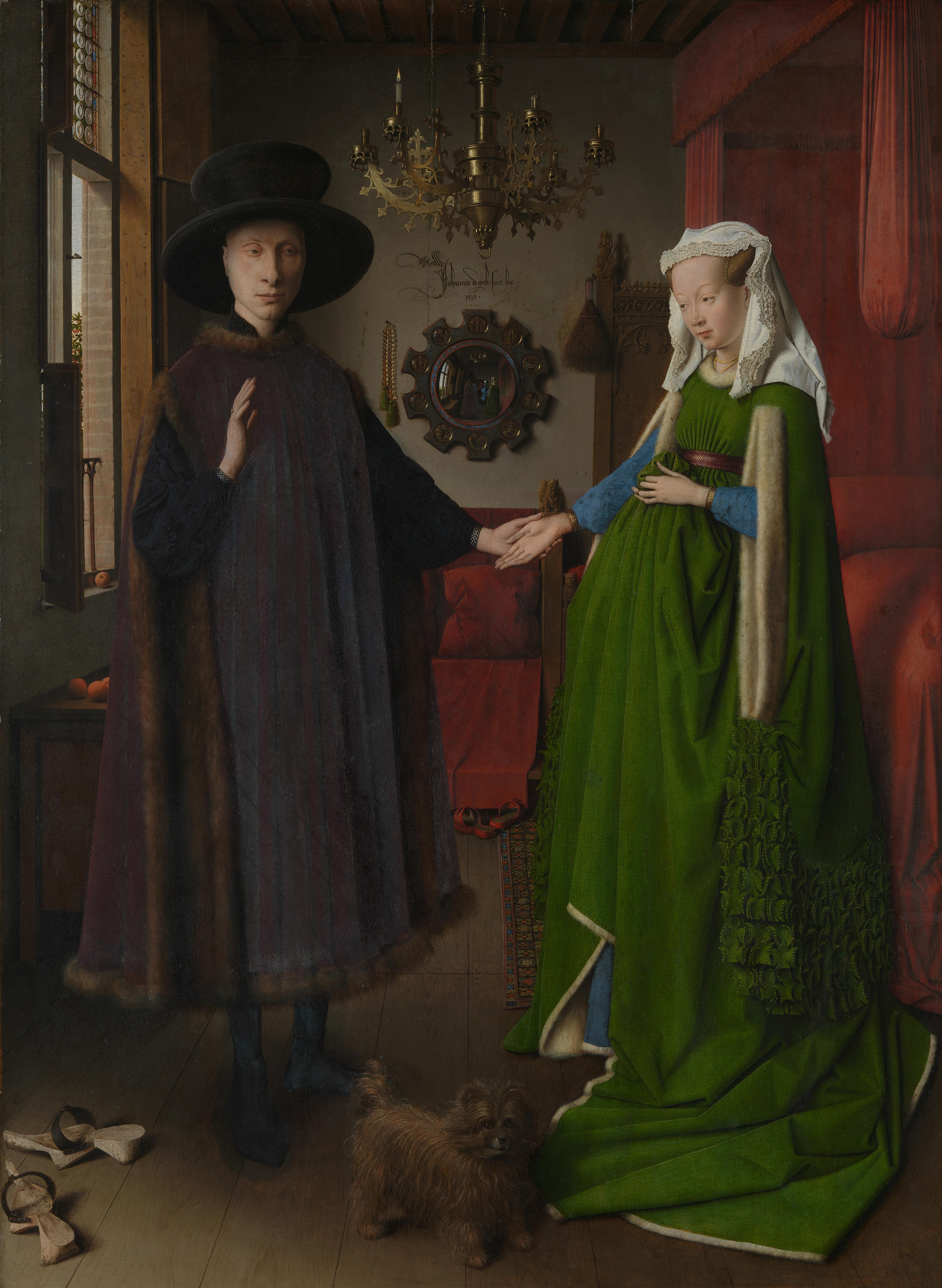
Grayson Perry might regard our allotment as a penance. Richard and I went to see Perry's wonderfully woven tapestries in the Birmingham Art Gallery on Sunday. Last year, Lin and I had delighted in the sequence of TV films in which the artist visited the people and places that inspired his Rakewell's Progress from working class Sunderland via 'Eden Close' in Tunbridge Wells to new-rich Cotswolds via the anxious self-consciousness of the various gradations of middle class - All In The Best Possible Taste with Grayson Perry. The tapestries are threaded through with another dimension of art reference - as well as Hogarth's progresses - Harlot's and Rake's - Perry draws on Mantegna, Bellini, Grünewald, Masaccio, Crivelli, Jan Van Eyck, the Master of Flémalle, Gainsborough, Van der Weyden, and many images of the Vision of St Hubert and I bet there are others. Talk about layering - literal and figurative.
Richard reads about the tapestries


"I didn't see a single bicycle"
"One in the background by the canal in The Agony in the Car Park?"
"That's someone's who can't afford a car" I said
The Agony in the Car Park


Another driver of taste that I noticed amongst the upper middle class was the desire to show the world that one was an upright moral citizen. In the past, a good burgher might have regularly attended church or done voluntary work; today they buy organic, recycle, drive an electric car or deny their child television. This need to pay inconvenient penance to society seems to come partly from guilt. The liberal, educated middle class have done well, but they must pay with hard labour on their allotment, or by cycling to work...extract from the artist's introduction to the catalogue
I don't recognise myself. Perhaps my motives are hidden from my self-consciousness. A penitent can rejoice in penance, be masochistic even. I enjoy cycling far too much. I haven't commuted since my first job in the 1960s. For me a truer self-punishment would be to have to drive a car everywhere. And my penitential plot? I don't enjoy it enough. Ha gotcha! Seriously though, I know my driving wish is to prove to myself I can get food from the ground in which I've planted its seeds. To do that under my own steam. To prove something to my stepfather perhaps? Not that he ever sought any proof from me. Not his way. But if I succeeded he'd be discreetly proud.
'The Vanity of Small Differences' by Grayson Perry - Freud's word 'narcissism'

 *** *** *** ***
Carnival 2014 in Ano Korakiana  - Sunday 2 March - we missed it again
karnav2014c.jpg
Democracy Street
karnav2014i.jpg
Luna D'Argento
karnav2014e.jpg


Εκεί, ανέκαθεν διαβάζεται η Διαθήκη του Βασιλέα προς τους υπηκόους του, που συμπυκνώνει αρκετά από τα προσωπικά και συλλογικά συμβάντα της χρονιάς. Παρότι η εκδήλωση αυτή είχε προγραμματιστεί να γίνει σε εσωτερικό χώρο, τελικά καιρού επιτρέποντος, πραγματοποιήθηκε από το μπαλκόνι παρακείμενου σπιτιού.
Το Κορακιανίτικο Καρναβάλι για μια ακόμη χρονιά, έδωσε το παρόν, παρά τις «απειλές» του καιρού έως την τελευταία στιγμή και τη σύντομη περίοδο που μεσολαβεί μετά τις γιορτές. Έτσι, μέσα σε τρεις μόλις βδομάδες, ολοκληρώθηκαν οι προετοιμασίες όλων εκείνων των στοιχείων, που το έχουν καθιερώσει τα τελευταία χρόνια στην κορακιανίτικη και όχι μόνο, συνείδηση.

Το πρωί ακόμη της Κυριακής, αρκετές λεπτομέρειες έμελε ακόμη να ρυθμιστούν και κυρίως να προβλεφθεί η εξέλιξη του καιρού, προκειμένου να προσαρμοστεί ανάλογα το πρόγραμμα.Τελικά, όλα κύλησαν ευνοϊκά και έτσι, νωρίς το απόγευμα, ξεκίνησε η καθιερωμένη πομπή από το κτίριο του Συνεταιρισμού.
karnav2014d.jpg
Δύο καλοφτιαγμένα άρματα (ένα των νεαρότερων καρναβαλιστών), το ομοίωμα του Καρνάβαλου, στο «δρόμο» τη φορά αυτή, μεταφερόμενο στα χέρια και ο κόσμος που ακολουθούσε μασκαρεμένος και μη.
Η πομπή, με δυνατή μουσική ανηφόρισε και έφθασε έως την άλλη άκρη του χωριού στην πλατεία, όπου έλαβε χώρα το πρώτο μικρό δρώμενο, για να πάρει το δρόμο της επιστροφής έως την Πλάστιγγα.
karnav2014a.jpg
Όμως η βραδιά, τη φορά αυτή ήταν ιδιαίτερα μεγάλη, αφού ο αποκριάτικος χορός πραγματοποιήθηκε στο Luna d’Argento με τη συμμετοχή τετρακοσίων και πλέον ανθρώπων, που διασκέδασαν με τις…προχωρημένες πρωινές ώρες. Και λίγο πριν από τα μεσάνυχτα, παρουσιάστηκε το όμορφο σκετς που είχαν προετοιμάσει σε πολύ σύντομο διάστημα παλιοί και νέοι Καρναβαλιστές και η βραδιά κύλησε με κέφι, μουσική και προπάντων χορό!!!

Saturday, 7 February 2009

'History is a cruel mistress'

I saw graffiti on a billboard by the old port when we arrived two weeks ago that said, beside the anarchist logo, “F*ck routines”. I like breakfast, sometimes boiling eggs, making toast and cutting it into soldiers, if Lin’s up jostling over her share of yoke, she disliking white. Then some chat. Collecting and sawing firewood. Painting walls. Filling cracks. Picking lemons. Collecting windfall oranges. Buying soft crusty bread at the shop, 40 paces away, made in the village rather than delivered from a central bakery. Putting clothes in the washer. Having a cup of tea. Chatting about credit – from reciprocity to plastic. * * * E-mail circulated to me on 3 February 09 about current plans for the Old harbour in Corfu:
Please forward this letter I have sent you. It is about the project of making a marina for sailing yachts at the old harbour of Corfu (SPELEA). This is a project which should never have been thought about since it will alter the character of the old harbour, at the very moment when Corfu town has been designed a World Monument by UNESCO. Unfortunately Corfiot people weren’t informed on time about this project, or, even worse, they/we did not react early enough. But even if we cannot avoid the creation of a marina at least we can try to ensure some features of it will not look dreadful. For instance the breakwater jetty is supposed to have 3 meters height from sea level when ready. This will alter dramatically the landscape, since it will hide the view of Vido island. As far as common sense shows this height is not needed, since the actual jetties are 1.50m. high and they seem to be high enough to protect the ships from any storm up to now. On Tuesday 3 February, which is tomorrow at TELEKERKYRA TV channel, (this is not a good link I'm afraid try MyKerkyra? SB) at 10 o' clock in the evening, there will be a broadcast about this issue. My brother is moderating and they are going to show with virtual images what the whole area will look like after the marina will be finished. I consider it is important that people are properly informed about the issue. A second broadcast will take place next Tuesday (12 Feb 09) as well on the same issue. After that we are several people thinking of finding ways to react to what we consider a shame for our town. I am afraid people who do not understand Greek will not be able to follow the discussion on TV, so please send part of this English letter to them in order to keep them mobilized for any further actions. Thank you for your help. All the best, Katina Vlahou
* * *
Lin and I removed the stove chimney and cleared it of accumulated wood soot and hardened olive resin. We must replace the failed cap on the pipe that won’t revolve but it’s tricky to get to. With a cleaned chimney and old abandoned wood we’ve collected, the stove, which had become smokey, performed perfectly, though we didn’t need it until late evening after a warm sunny day with news of snow in England where’s there’s grumbling about conditions that appear unexceptional, except we have much more traffic on many more roads in an interconnected just-in-time economy while local council contracts don’t easily cover the levels of salt, employment and equipment for events that tend to occur ten or more years apart. E-mail circular dated 4 Feb 09 from Roger Blandford, Assistant Director - Maintenance & Utilities, The University of Birmingham
Dear Colleague. During the recent spell of frost, snow and ice, the Grounds & Gardens team have attempted to keep the University roads and footpaths as safe as possible by frequent gritting. However, this has severely depleted the University's stock of rock salt. We have used 30 tonnes this week alone, roughly half the amount we would normally expect to use in a complete year. It is difficult to replenish our stocks because all major suppliers have been instructed not to release stock until the local Council's demands are satisfied. Heavy snow is again forecast tonight and tomorrow and our remaining stock of grit is unlikely to be enough to maintain free and safe access everywhere on campus and surrounding properties. We will attempt to keep the main routes clear. All staff are advised to take extreme care and try to keep to well used routes that have been gritted where possible.
A man at CJs said all that was needed was snow ploughs on the front of the garbage trucks. I wondered why he wasn’t in government. Richard sent me a nice black and white picture he’d taken of snow in Whitehall Road in Handsworth.
* * *
Mark Mazower’s book Dark Continent: Europe’s 20th Century is the best history book I’ve read for ages. His account brings revelations. As a democrat sceptical about democracy, agreeing with Churchill’s view that’s it the worst form, but for the others and with Maine that it can be as much an instrument of despotism as monarchy, I’ve been less than supportive of those who saw democracy as a bright shining hope. Mazower shows democracies emerging over Europe after the first war, imitating Britain and America, and failing dismally, giving way to dictatorships with the willing collaboration of whole populations for whom the right to a free vote was less important than the right to work and eat. Another historian called the first part of the 20th century the age of dictators, culminating in a world where fascism and communism seemed to provide solutions to problems that for democracies and capitalism proved insoluble. Nazi success in reducing unemployment was widely respected; the advance of German soldiery across Europe in the late 30s was welcomed by many politicians and populations in the countries into which they marched, a means of replacing failing democracies and renewing the strength and vitality of decadent polarised societies; accommodation with Hitler’s hegemony was advocated by elements of the establishment in both Britain and USA. These collaborationist enthusiasms were understandably played down or expunged in post-war national histories. Mazower is an archaeologist of early 20th century European complicity in the defeat of its democracies. Reading his book, criticised by one historian, Prof. Raymond Pearson, for being overly negative about Europe’s 20th Century, my heart goes out to those who fought to preserve and maintain the ideals of John Stuart Mill and Thomas Jefferson, from intellectuals in arms to unread foot soldiers who knew that something was wrong with that bloke who’d only got one ball, not to mention poor old Goebbels who’d ‘no balls at all’. The complement to this is Richard Hillary’s The Last Enemy:
"Thank you, sir," she said, and took my hand in hers. And then, looking at me again, she said after a pause, "I see they got you too."
Hillary's initial reaction was anger at her presumptive comment on his ravaged face. He’d helped stretcher her from a blitzed house. Then he was enveloped in the realisation that his misdirected rage was really against the evil he and his friends and this dying woman and hers were fighting together. The historian criticising, while admiring, Mazower’s work, wanted more attention to the way democracy had, after the experience of Nazi misrule, spread across Europe in the century’s second half, made to work better and earned greater support from the mass of Europeans than in the century’s earlier half. To be fair Mazower says as much but none can read his work without becoming more hesitant in their confidence that democracy is safe in European hands – especially when capitalism falters yet again.
* * *
‘History is a cruel mistress’. Irishman Richard Pine is Director Emeritus of the Durrell School in Corfu where he lives. Writing in the Irish Times on 4 Feb 09, he argues that riots in Greece aren’t only about failures in the education system and income disparity…‘they can be the expression of a much older and more deep-seated unrest, rooted in the way a relatively new country can emerge.’ There had been a dream towards the end of the country’s first century of achieving an elusive national unity through recovery of Constantinople – ‘the symbol and centre of the Hellenic world’ along with its Greek inhabited littoral along the eastern shores of the Aegean basin. This big idea (the Megali Idea), pursued by military invasion of Turkey, conditionally supported by Britain, was defeated by the new secular leadership of Kemel Ataturk, whose vulpine face decorates Turkish currency today. Flickering black and white news film of burning Smyrna, Anatolia’s hub, its name changed to Izmir, are easily viewed on YouTube, and contemporary comments show Hellenes deeply aware of their fellow citizens’ massacre and mass expulsion in 1922.
‘In the folk memory and in the political memory, Greece is still coming to terms with that disaster. It is also still trying to understand the return of adults who, as children, were exported to eastern bloc countries by the communists during the civil war (1946-49). And it is also trying to cope with the presence of thousands of so called Pontine Greeks – refugees from former Russian territories in the Black Sea area, now mostly living in sub-standard housing in Athens: Greek but for the most part not speaking Greek, the victims and the agents of drugs and prostitution.
Pine argues that because Greece so long remained ‘the plaything of the major powers, right up to and after the second World War’ its civil war came much later than that of other countries struggling for unity.
‘The civil war, between communists and the right, was partly ideological, partly due to the rival economic strategies which developed in the 1930s to deal with the civil divisions in the aftermath of the Anatolian catastrophe, which had already resulted in two periods of dictatorship. Anatolia precipitated the crises of the 1930s and 40s, and the civil war, unmentioned and unmentionable in most arenas, is still precipitating today’s unrest, while the aftermath of Yugoslavia (especially the as yet unresolved problem of Macedonia) is a continuing problem on Greece’s borders.’
This is familiar - a preliminary to the nub of Pine’s argument about the future. Turning to such positives as Hellenic success in soccer, the staging of the 2004 Olympic Games, the new rail linked international airport in Athens, even its winning of the Eurovision Song Contest, Pine points out that Hellas has been a tiger economy ‘after Ireland, the most successful in Europe’, capable of giving economic leadership to ‘Bulgaria, Romania and even Turkey in a Balkan mini-empire’. The trouble is that continued economic development has policy imperatives and cultural trajectories ‘at variance with the horizons and experience of the majority of Greek people, 20 per cent of whom live below the poverty line, and it disturbs a deep resonance within the collective memory... A Greek is someone who, as novelist Vangelis Hatziyannidis puts it, “spends more time planning the past than he does planning the future”…Greece, like many emerging societies, is trying to come to terms with the transition from a rural economy and culture to an urban cosmopolitanism and the resulting change in demography.’ Pine makes comparisons with his own country. The journey from the many walled pastures, marshlands and green hills of Irish farm life to teeming new Dublin. My stepfather wrote and spoke about the same seismic changes in England. Weren’t Dave and I discussing the same thing in CJ’s by Ipsos beach last night – wondering, in the light of recession – how the new urban culture would cope with some of the self-help that might be needed to survive if things get worse. Pine celebrates Athenian Café society: ‘vibrant, and volatile…where young people debate the transition, and discuss the pain of that transition, with the past always forbiddingly looking over their shoulder. It is this fissure between old and new, traditional and modern, that lies at the root of unrest and fuels the riots.’ I’m back to my earliest intellectual experiences aboard an Irish freighter working for the Tavistock Institute trying to make sense of theories of change, unpicking ideas from Eric Trist and his colleagues first in the coal industry, then in other factories and, for me, in shipping – my role that of a bewildered research assistant – trying and mostly failing to grasp the effects of a lost tradition (at an age when I felt none), the challenge of its rediscovery, the possibility of its transformation – so that something of the human spirit connected to older ways, might survive amid the socio-technical changes of disenchanted modernity. Why sweat with handsaw cutting firewood? Why make wine at home? Why walk and cycle but for recreation? Why look after a donkey but for sentiments about past service? Roots, says Pine, are about everything Hellenic ‘not easily torn up’. Yet he’s saying they must be, at the very least, examined so that such vital Hellenic ideals as freedom, virtue and truth can grow in different soil. Is he also suggesting that young Aristotle, Pericles, Demeter, Antigone and Alkestis, should be renamed Tracey, Wayne, Aaron, Dustin or Chantelle or similar names from the pool of new celebrity? Pine mentions the enduring dynasties of Greek politics. I recall my 16 year-old Greek half-cousin Ioanna, in 1962, at her father’s house in Kifissia, dropping, with incomprehensible fervour to ignorant me, the names of admired Karamanlis and disliked Papandreou.
‘Today’ writes Pine ‘their descendants, lacklustre George Papandreou (leader of the opposition party, Pasok, and grandson to his same-name grandfather) and the obstinate Costas Karamanlis, prime minister (leader of New Democracy, the party founded by his uncle, Constantine Karamanlis), gesture at one another in polite, meaningless phrases that deceive no one. Plus ça change. Like so many present-day Irish politicians, there are dynasties at the centre of Greek politics. But you don’t have to be a cute hoor to succeed in Greece. If you aren’t born into the professional classes, no amount of cuteness will help. And that, in itself, has alienated most of the have-nots. Dynastic doesn’t work any more. The fact that neither New Democracy nor Pasok has an answer, and the additional fact that smaller parties on both left and right are unwilling or unable to enter political dialogue with the major players, suggests that current political rivalries are relatively unimportant compared to the problem of giving Greece a new sense of purpose that is linked, but not shackled, to the past.’
At the Leftheris the other evening young Mrs L gave me the piece of paper I’d asked for so I could draw a picture of our chimney problem, as well as a recipe her mother had for serving blood oranges. It was a Nea Dimokratia leaflet, blank on one side. I asked if they wanted it back, but they all smiled and gestured that some on the family were ND and others were Pasok. "Mama is that, papa is this" they said in jesting rivalry, one dismissing one party, another family member dismissing the other – with slightly resigned nods all round about the likelihood any could solve the problems of the world. Nonetheless I note with slightly guilty relief that while rubbish continues to stack up around wheely bins across the island, those on Democracy Street have been emptied and all signs of overflow tidied away. I suspect we are plugged in up here.

Saturday, 10 May 2008

Before and after

Just before we left there was a small hullabaloo in Democracy Street. We hurried out to join in, and found the Leftheris, and their children and friends peering excitedly into next door's garden where Bubble's litter, in a nest near a wall, were having their first look at the world. Even I could manage enough Greek to join in the glow of pleasure and the counting of the kittens - three, one orange. We left Ano Korakiana before sunrise on Thursday. We arrived in Birmingham just after midnight this Saturday morning - taking the 900 bus into town, where I phoned a minicab to avoid the higher charges of the hackney cabs, whose drivers knew there were no trains from the airport into the city after 2327. Waiting for the bus, we met two students who'd just arrived from Cyprus. We chatted and called them a taxi from Moor Street for a journey on to Wolverhampton. At Frankfurt airport I read a 9 May copy of USA Today - the headlined special report said 'Gas costs reshape daily life'. An on-line paper this evening starts:
With crude oil now above $120 a barrel and threatening to go higher, it is clear that our preferred and convenient means of going places, our car, the airplane and the rental car soon are going to be parked because they will be too expensive to operate...
* * * In Venice we left our bags at a friendly hotel on Fondamenta Di Santa Chiara; bought fresh bread and picnic'd in a shady park - Giardino di Papadopoli - near Piazzalle Roma, sipping Leftheris' home grown rosé from the cola bottle he'd handed us on Easter Sunday, feeding the pigeons and sparrows. I noticed visitors struggling with their bags over the stepped Scalzi bridge opposite the rail station to avoid paying a vaporetto fare to cross the Grand Canal. The new bridge - Ponte di Calatrava - when completed - will ease that walk. The trek from Venice's vast Marittima, where we disembarked, will be trickier to sort out. See the comment here on walking it in reverse: 'If you're adventurous and aren't hauling luggage, you can save time by walking along the sidewalk street below the southwestern edge of the Piazza (past the Garage Comunale) until you reach an old steel footbridge with a sign (in Italian) that says "authorized persons only" or words to that effect. This will lead you to Marittima's back entrance. Warning: The bridge is rusty with holes and patches, so walk carefully and avoid the bridge if you're heavy or wearing high heels. Also, the port police may not let you use the bridge from the Marittima side, probably because the cruise authorities don't want to be responsible if you fall through.' Luck found us a trolley by the ferry to cart our cases to the official exit where we were politely told we could take it no further. Thereafter, along Tronchetto we hauled across a couple of roads and a roundabout busy with motorised traffic to and from the Strada Statale 11, using piecemeal sidewalks, across the neck of the Ponte della libertà , to complete the 1500 metre journey to Piazzalle Roma, where, amid phrenetic queuing, new arrivals are divested of their cars, debussed and decoached. People aren't expected to actually enter Venice on foot, despite it being the finest walking city in Europe - once you're there. * * * 9 May 2008 0016. Between Croatia and Italy on the way north. Peering over a rail eleven decks above the distant wash of an immense ferry, I get vertigo as from a high factory roof. The blatancy of the artificial light, bathing the ship’s public spaces, blinds me, making the surroundings remote and unfriendly, despite the calmest of Mediterranean nights. I can make out an occasional star and a crescent moon. Its reflection on the sea or looms from distant lights are all but indiscernible. I'm enclosed by a claustrophobic acoustic landscape of rumbling propellers, rattling screens, vibrating deck plates, roaring extractor fans, humming air-conditioning. Inside, sleep is made difficult by lights that won’t turn off and the background sound of television. The passage of this great private leisure centre - self-described as the 'paradise of the sea' - is hardly apparent until we close the land becoming a platform from which to enjoy mountainous scenery or a panoramic view of Venice. This surging Adriatic juggernaut separates us from the sea; in my case the intimate orchestra of sensations afforded by sailing in a small boat – the starry heavens, the moonlit wavelets slapping the hull, the small flaps and creaks of sails and spars, the swirling phosphorescence of myriad creatures sparking in our wake, the friendly glimpse of oil lamps inside a cosy cabin when making a cup of tea for the watch, the dim luminous face of the compass, the rocking of our quiet passage, distant and occasional lights on land or other vessels - the generous bosom of the surrounding sea. Of course there are other nights of buffeting wind, crashing waves, invading spray, driving rain and difficult reefing - weather through which this great vessel charges impervious, when, seeing her passing, I would think with envy of a warm cabin aboard her, but I know where my preference lies. * * * We are tidying the crude panels nailed round the top of the stairwell – two sides with wood and the third as stucco atop more builders’ foam. Our work has often been accompanied by music on the laptop – tunes woven into these wonderful weeks - Queen, Greek bands from Corfu, Rachmaninov’s Liturgy, Fauré’s Requiem, Hadjidakis’ 30 Nocturnes, rebetika about Smyrna, Vangelis’ Bladerunner soundtrack, Eleni Karaindrou’s soundtrack for The Weeping Meadow, Theodorakis’ setting of Axion Esti, Mozart’s Requiem in Dm, Thomas Trotter playing the refurbished organ in Birmingham Town Hall, Lully, Marais, Saint-Colombe, Couperin, Savali (the last five from the soundtrack of Tous Les Matins du Monde). * * * On Thursday at 7.00 in the morning we will take a ferry to Venice and home. We return briefly in July, and then for September. This afternoon Aln, who’s helped so much with the house renovation, is coming over with H to look at our progress. Yesterday he and she came with us on Summer Song to lunch at Agni. This time Summer Song's old engine sounded sweet staying merely warm to the touch. We didn’t use it so much. I’ve found in Aln and H two gifts. He knows how to sail and, with H, is content with zephyrous progress, passages marked by bubbles that drift silently beside our hull, or a landmark ashore whose position only changes when a conversational distraction stop us noticing it until we look again and see it’s slipped behind or drawn a fraction closer. In addition we had a jocund breeze – coming and going, to Taverna Nikolas in the cove. We came to the jetty at Agni under sail – with two seconds reverse from the engine and a hand with warps from Pericles – and we berthed at Ipsos the same way (though being sensible I had the engine running out of gear just in case). Our ancestors were forever seeing their surroundings under sail, or propelled by oars, feet, or on rumbling wheels, tied for all history to the headlong maximum of a galloping horse. Early rail passengers spoke with excited wonder of landscapes passing smoothly by at intoxicating pace. Trains began our affair with speed, embracing velocity as an ideal, experience what had previously been the province of birds and projectiles. To be pedestrian is to be tedious; ‘dawdling’ a weakness. Our hypermobility is our economy. It mustn’t slow-down. Speedophilia spread from increasing pace to shrinking the time spent on cultivation and manufacture, and from there to fast eating and other fleet sensations. Now speed envelops and traps the richest beneficiaries of modern economies who realise time can't be bought. When did my enterprising nephew in the city enjoy a long slow meal or a family walk uninterrupted by an e-mail or phone call? That phrase - 'a long slow' - brings to mind an aged pimp in Montmartre - when John and I and my daughter Amy travelled by train with our folding bicycles to celebrate a ‘carfree’ day in Paris. He lounged beside a grandmotherly dame and proffered us – the men – ‘une copulation longue et dureé’. Capitalism’s genius struggles to profit from the novel choice of slowness amid the conveniences and imperatives of speed. It will surely succeed - engendering anxiety about pace. Where once the punter paid for a ‘quickie’ and fusses when a fast-food queue delays a minute, slower pleasures will lead the market. The need, and therefore the demand, is growing. Entrepreneurs profiting from the business of popular air travel will take to bicycles, local produce and even commit to relationships ‘longue et dureé’. For the time being slowness is an esoteric good, a choice rather than a fashion, not yet a significant dimension of consumerism, a political rather than an economic choice. We peered at passing inlets, caves, paths into woods, private developments stealing the public cliff top path between Kaminaki and Nissaki, attractive houses nestling amid olives, blatant villas, gazed at verdant flower filled slopes, layers of rock bent into arches by durations that stretch imagination, the shaled fissures and towering crags of Pantokrator, close enough to the shore to rock in redounding wavelets above us two parallel contrails made into sky-filling ‘V’ by our perspective. Aln, H and Lin politely demolished my case for the irrelevancy of most news from the world, proving my dismal failure at Socratic method. I did however demonstrate the wonder of the simplest of knots that will hold secure to the strength of the rope with which you tie it, while remaining easily undone; a knot I can tie behind my back – the bowline. * * * 4 May. So far this is the longest Lin and I have been away from England or indeed from our home in Birmingham. “I don’t want to go back” she muttered; not “I don’t want to go home”. Which is saying a lot because we have plenty of enjoyment in England – places, people, events, but in these last weeks the accumulation of novel sensations – whether a multitude of candle flames reflected from brass trumpets and swaying tubas in the narrows of Democracy Street, shattering terracotta on the Liston, an afternoon breeze raising wavelets in the Corfu Straits, darkening the sea like raised nap on blue velvet; and doing the same, in reverse, to the olive canopy, turning up the silver side of their spinach leaves as we ride among them in the meadows below Agios Ilias – Lin, me, Jill and Sally, and the dog Molly; Kostas humming Ένα Το Χελιδόνι’ as he drives me to his home for a snack and pickings from his garden – eggs still warm, asparagus, peas, broad beans, lettuce, and, from his deep freeze three strawberry granita mixes – “made by myself’ - like small scarlet skating rinks; Easter Sunday’s clear air suffused with the scent of roasting lamb, strolling together beyond the village between flowered verges to be with Mark and Sally and their friends invited - delightfully privileged - to partake of their particular spitted lamb – a New Zealand body and a Greek head who’d been to tea with her husband - delectable morsels of quail roasted on a grid, pitta bread with sausages mustard and tomato sauce with fireflies gathering in the warm dusk, and the midnight before – when my candle guttered out near the bandstand at the top of the village and I reached towards the crowd already there and a flame was offered “Yasoo Simon” said a quiet voice in the darkness - Katia Thannassis and Costas Aspergis a fortnight earlier; Lin raising her candle to mark our front door lintel; Mr Leftheris outside his house in the street after midnight handing us a bottle of wine from his garden vine, shaking our hands “Kronia Polla” and Lin having some gift eggs ready from England for his grandchildren; everywhere smiles, nods and "Χρόνια πολλά"s from strangers, neighbours and people we nearly know – we are half entranced full of dreams as our brains reorganise us for the novel contract we’ve made with one another and this village of Ano Korakiana which, through the fortunate drift of happenstance, seems to have found us. The other day Alan and Honey invited us to strawberries, tea, cream and perfect scones - made by a baker they'd found near Potamus. * * * I’m in the Med without tide and much windlessness. I need to know things about engines that never bothered me. Why was heat resistant paint smoking on one of the pipes through which water should be circulating? :”There’s your problem” said Dave in harbour. With my pocket screwdriver I removed a jubilee clip, slid off a piece of flexible pipe and removed the pipe joint unit. A wad of solidified salt had stopping water circulating round Summer Song’s 25 year old engine, while allowing it to emerge with the exhaust. Dave, impressed by my boldness in engine surgery, came with a proper spanner and removed the water circulating head. “Clear that salt; renew these cooling pipes; cut yourself some gaskets, and you’ll be fine.” I scissored out the shapes from 0.25m brown sealing paper from Kontokali chandlers - where I bought a meter of flexible pipe. The engine ran cooler than I’ve known with far more water gouting out of the exhaust, but then the batteries stopped charging. Without a working battery there’s no way to start the engine. Dave did some diagnosis with his circuit tester. “Could be the alternator; could be this relay (a scruffy little box suspended between wires); could be this regulator that’s been attached outside because the internal one broke.” I watched and tried to learn; took the alternator to the car electrician at Pirgi where a friendly son, Kostas, explained his Dad, Spiros, was the alternator man but spoke no English “…and I’m off to Athens, but leave it. I’ll call you”. An hour or so later I was called at Ano Korakiana where I was helping Lin with woodwork repair round the stairwell. “The old alternator seems OK. My dad’s replaced the old box. See what happens.” I drove down the leafy road to Pirgi, collected the repair and then to the harbour. Dave re-installed before my grateful eyes helped by the wiring sketch he’d made earlier. The jump-lead I’d bought gave us enough power from the domestic battery to start the engine. To my relief and delight Dave’s tester showed the batteries charging. After I’d run the engine 10 minutes and checked it’d restart from the smaller engine battery, I joined Dave at CJ’s for a drink. “Ben had a Greek grumble today.”said Dave. “ ‘Too many English yachts in the harbour. They should be in the marina!’” I have always wondered how long the free mooring could last. “It’s the season. People feeling crowded. There are eight English boats out there. We should be OK for the moment because we’ve got homes on the island.” * * * It’s May. A few white figures brave the chilly sea off Ipsos' pebbled beach; occasional cyclists and walkers are touring the back roads; amplified bass and mini-moke convoys are heard; contrails mark the sky as geese trail in from the north. This morning I woke from a nightmare of a conversation as the bewildered guest - in a fake castle - of powerful people of hideous character exchanging bland simplifications about governing others in order to realise their destiny. Especially galling was my own diplomatic fawning amid this company of the despicable. As we left – I was with someone else who was my crew, on the yacht - Summer Song of course - in which we’d journeyed to this landlocked place, a beautiful stone faced woman of indeterminate age, her face fixed into an arrogant rictus beneath an immaculate hairdo, remarked “You wear that silly hat and that easy smile, yet you rule the world”. [I realise - awake - I've dreamt of Corinna Harfouch as Magda Goebbels in the 2004 film 'Downfall' - 'Der Untergang'. Seeing images of a fine actress instead of the real person dispelled the aftertaste of my horrid dream. I'm friendly to the activation-synthesis theory, suggesting dreams are a mental filing process - nothing to do with Freud's sub-conscious wish-fulfillment and so no interpretation needed, though it's interesting to ponder the origin of these disjointed impressions being tidied into a story during slumber. It's pure coincidence this woman killed her children and was then shot by her husband on 1 May 1945. I was 3.] As my crew and I left in search of the castle car park – a car ride preceding our return to the yacht - we got lost. Attempting to shortcut across the battlements my companion disappeared. Moments later I heard his agonised cries for help. Then I woke. I read a newspaper round-up of ‘the news’ from the UK, trying to peer through the hedge of opinionated interpretation as editors and their journalists discard and connect dots to make a pattern – shaking out inconvenient imponderables, formatting daily meanings; ‘tales (with few exceptions) told by idiots’, prompting surrogate emotions and casual conversation about what’s happening. I’m drawn into chat about often poignant irrelevancies – events which if they happened in our street, our village or involved our family and friends would matter - would entail some action - but which distanced by time and place from us are no more significant than a good DVD which at least pretends to be no more than entertainment. I check the price of oil, food bills, exchange rates, demographies - trends that emerge like seasons, slower but no less dramatic. Socrates would be amused, far less pompous, about the news-makers having equipped his friends and pupils with precision tools for demolishing the certainties of people who think they know and restore a more proper perplexity about what we can know.

Back numbers

Simon Baddeley