On stepping into our bedroom we are reminded of the improvisatory confidence with which ‘John the builder’; put that part of the 'improved' house together for our credulous predecessors. Tread over the threshold and the floor, sloping below the horizontal, sinks a little and creaks unreassuringly. Nothing serious, but yesterday we got round to rolling back the taupe carpet, unscrewing the chipboard just beyond the door, revealing the new plaster ceiling of the room below and the sturdy unplanned roof beams of the original one storey house on which our bedroom had been built. With a makeshift straight-edge we made a new – this time level - support, fixed it firmly between two beams, lowered and screwed down the chipboard and relaid the carpet.
“That was easy enough”
Now we need to level one other part of the floor, fix and paint sturdy skirting board on each wall to fill the gap between floor and walls, install a fitted wardrobe – for which we already have the uprights to support a pair of recovered wooden French windows, add in shelves for books and clothes, and do some repainting
*** *** ***
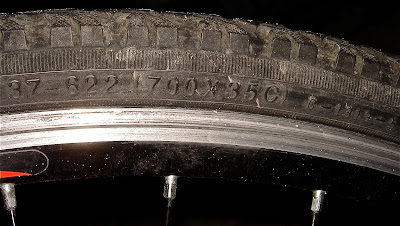 I can keep changing inner tubes suffering minute slow punctures but I’d be more confident if I got a new tyre – road tyre 700 x 35c, but what’s the other measurement inscribed on this tyre, made in China. 37 – 622? Yianni at the cycle shop next to the old hospital will have what I want. Thorns pierce cycle tyres so easily I always pause before setting out to check and scrub the treads, my specs off so I can peer closely at the rubber, knife tip poised to tease out embedded thorns, near invisible. One thing happens. Mud or excrement picked up on the tread will collect a thorn, which if undiscovered, works its way through the tyre. Removing a deflated inner tube at home I use a bowl of water to find the bubbles from the puncture. Beside the road I’ll just use a spare new tube and mend the punctured later, or run the inflated inner tube past my lips to feel for a little stream of escaping air. I also run my fingers carefully round the inside of the tyre to find the culprit cause.
As it is Yianni convinces me, not to buy a new tyre - yet; but rather to spend €10 on a product I didn't know existed - a 'thorn resistant' tube. Let's see.
*** *** ***

The rain has returned, enclosing the village; gossipping in the tiles, and gutters and down pipes, dribbling, trickling, splashing through the early hours, while thunder grumbles across the island muted by walls, bolted shutters, thick curtains and our warm bed.
Last night supper with Mark and Sally we exchanged news like sailors at a post island, discussing the pleasure of being warm in winter. I recalled that Jack London short story of the Yukon traveller caught out in deep winter, finding shelter beneath a tree with matches to start the fire that will save his life; how when, with his last flame - the other matches having all flared in one go as he fumbled with the bunch - he succeeds, the growing warmth brings down a great heap of extinguishing snow from the branches above him. End of tale.
“People are switching to wood, burning it green. Oil’s so dear”
“Other’s have been stocking it all year, the back yard full”
“The other day we were at X’s and I was getting cold. I’d not bothered to wear warm underclothes. I said something. He said ‘the crisis’ and threw me a blanket”
‘Surely it’s best to forget central heating. Keep one room cosy, farmhouse kitchen style. People together, cooking and a stove. Bedrooms don’t matter. Quilt. Electric blanket. Hot water bottle. Two in the bed.”
“If there’s a warm stove, the electric failures don’t matter. Plenty of matches and candles. Water stops. We’ve got enough for tea in bottles and plenty from the downpipes for flushing the loo.”
“Go to bed. Read a book with a torch.”
I spoke of the café Stamatis was making of his shop.
“Good idea but the road's cramped there for sitting outside at tables. OK for cyclists and walkers in the summer.”
“The next bunch of electric bills have arrived. Not too bad. I have a rebate” said Sally
“Might be because of the legal challenge to the government’s right to raise taxes through electric bills” I suggested
“The government’s appealing. They say the TV tax has long been collected this way, so why not property tax?”
“We don’t even have a TV but we still pay that”
I’d been reading Corfucius’ – Chris Holmes - account of how while he shivers in his house above Kontokali, striving to economise on power bills, his electric bills are coming in over €2000 a time; and have been for decades, despite repeated attempts to assail the unresponsive bureaucracy of DEH. Chris’s late mother built a fence around the edge of her garden; not one that marked the actual boundary between her’s and her neighbours’ property but for the convenience and aesthetics of her garden. The neighbours have now constructed a more substantial fence which treats that garden fence as a boundary. This new unofficial boundary separates Chris from his electric meter, adding to the difficulty of investigating the disproportionate power bills. If he breaches the new fence to allow an electrician to check his meter he risks a confrontation with neighbours convinced he’s trespassing. To get anywhere he needs a lawyer to confirm the correct boundaries who can convince the police who, in theory, should be overseeing an electrician’s investigation of the ‘leakage’.
“A pretty pickle!”
“We were in town on Tuesday…
 …had lunch at Rouvas (Stamatis Desyllas 13) with Richard Pine. He’s morose. More so than usual. I’d talked - almost cheerfully - of my mother dying but my grandson being born”
“He muttered a short version of the Macbeth's last speech – petty pace… last syllable of recorded time etcetera – this futile cyle of death, birth, death, birth”
“Hardly surprising. He has to get out of the Durrell School building in Philhellinon in town by 1 April. The landlord is determined to sell the premises and wants him out. Thousands of books have to be moved to his home in Perithia. He founded the Durrell School of Corfu in 2001. Realized a dream. He’s facing the wrench of losing it. For eleven years he’s stayed there, living in the school a narrow flight of dark wood stairs above a narrow street of tall buildings off the Liston....
 its front door concealed until you are opposite, between two small shops; at first living there all the time and then, when he got a house in the north, making a weekly bus journey – he has no car – between Perithia and the city, staying in the little bedroom-study one or two nights a week. How can he replace that useful routine?”
“He could run it from Perithia. It’s an idea as well as a place.”
“Richard hasn’t got an ounce of self-pity. He’s got other strings, His present book that should be out this year and his writing for the Irish Times about the situation in Greece, and he does lots of editing.”
“All the same...”
“We had a good meal together. Main dish, a little house wine, fizzy water and a shared Greek salad, all well served with the opportunity to look at all the dishes first. Richard said the lemon chicken was delicious. I had beef stew and that pasta that looks like rice; Lin roast chicken, roast potatoes. Cost us €12 each. Not bad.”
While we were with Richard I presented him with my copy of the 1999 edition of his book about the great Irish playwright Brian Friel – The Diviner – with which I’ve been struggling.
“Do me the honour?” I asked
 He swiftly wrote in the frontispiece. I asked if he had a copy of Friel’s ‘A Fine Day in Glenties’ - a travelogue piece written for Holiday magazine in 1963, a newsstand mag unavailable via the global university library. He’d referenced it in his last piece in the Irish Times. It described Friel’s Baile Beag (Ballybeg – small town), the invented place and population in Donegal which is Friel’s source…
“This island is the most expensive place in Greece” said Sally
No-one comes here now to live cheaper than in the UK.
“Prosciutto? That's a lot less expensive than in England” I suggested" But we had to pay cash at Sconto’s the other day” I said “No credit or debit cards”
“Their shelves have been pretty empty lately. With no credit the cash flow means it’s always going to be touch and go - with food retail especially. Lidl’s fine because their Europe-wide, German HQ, credit’s available. It’s when the ferries can’t run because of a port strike they have stocking problems – even though they’re sourcing more from Greece, it’s suppliers are on the mainland.”
“P at the shop told me George the old man who sits outside the cake shop died a few weeks back. She showed me his picture on her phone. Seemed very matter-of-fact about it. He was 82”
Mark told us Tony Blok who’d bought Dave and Fran’s house at the bottom of the village at the end of 2011 had died.
“There’s more to it” he said
Tony Blok met me via email early last year, took me out for an excellent meal in town and invited me to join the croquet club he’d got going on spare ground next to Gouvia marina. We enjoyed several games...
...He was a generous coach, conceding points on purpose without making it obvious. I’d found him reticent - on how he’d come to Corfu, where he’d lived, what he did. Mark and I web-searched his name and found reports that he’d been several years in prison for perjury, money laundering and the theft of a rare painting, still missing, reputedly worth half a million pounds. There's a back story - in which this painting, 'knocked' in 1993 from an elderly lady on the Isle of Man, and misnamed Girls on the Beach (or in one text 'grils on a beach') ended up cremated inside the wooden leg of Michael Underwood, a Brighton 'character' criminal. Tony Blok was accused trying to help Underwood to sell the Orpen. There must be more to this.
“He had cancer of the throat” said Mark “Had a stroke a few months back. Apparently he panicked and drove himself to casualty in his underpants and lived a few more days in the hospital”
“Blimey. What’ll happen to the house? There’ll be a big tax penalty if an heir tries to sell it straight away.”
“A son has been out. I wonder where that picture is?”
“The place is jinxed”
When our friends Dave and Fran lived there, just before Dave had got the property insured it was almost wholly burned down. Dave, an ex-copper, was wrongly suspected by the Greek police of an insurance fiddle and held for a while. They lost lots of money but rebuilt the place and eventually returned to England and sold it to Tony Blok. Pondering this bizarre business I could also imagine an alternative interpretation that has Tony Blok being framed for the crimes of which he was convicted; getting out of prison and trying to start a new life on Corfu.
Before we left to stroll home, pleased with our evening, we’d fixed a day for Mark and Sally to eat with us next week. Mark had dug out photos taken during a few days walking in and around Vikos Gorge at the New Year. No snow for once, except on the peaks; rivers blue grey with snow melt. They had beautiful places to themselves – a mighty corridor of towering cliffs, shale heaped at their feet above the greenery lined river lacing between trails beside oak and plane trees, one twisted like a drawing from Arthur Rackham into which Mark’s brother Paul had climbed to peak through a bole hole like an old man of the woods his face blending with the crinkled bark.
“We filmed him” said Mark “as he climbed into the middle of the trunk from above and put out a face there, a foot or a hand. Played the film backwards. So the tree looked as if it was giving him birth.
We saw Paul and Cinta this afternoon for a cup of tea. Cinta explained our electric bill in detail to Lin’s satisfaction – what was tax, what was tax on what, and what was for the electricity we’d used. The whole bill was €88, of which €46 is the new house tax – the charge currently challenged as illegal because of the method of collection.
“The bills coming to some of the big villas in the north west are really big…around €2000-€3000” said Paul “You have to have a licence now to cut even your own trees, there’s so much illegal firewood collection. In Zagori the police were stopping vehicles to check for illegal logging…”
“I read about the smog in Athens caused by all the new wood fires”
“The government’s thinking of lowering the cost of heating oil. The tax benefit is being lost in fines for breaching EU standards on smoke emission”
“At least we don’t notice this in the village”
“There were police all over Kato Korakiana a few days back. Someone was suspected of beach combing for the bales of hash floating ashore round Dassia…”
“Dumped during pursuit?”
“…perhaps a trafficker sank in foul weather when crossing. This has happened before. The police confiscated loads of marijuana some years ago and disposed of it by incineration. The wind was blowing inland. People were standing around in the waft like statues on Easter Island”
*** ***
Cats sit around looking cold and damp, their fur scuffed, ungroomed. Now and then they spit and scratch and mew settling differences; trying noisily to breed.
 “There are too many” I said. Even as we feed them I regret my indifference towards them. We’ve followed certain cats through generations and watched them grow from kittens. Yet I blame them for their winter desperation, finding their wheedling at our door disconcerting.
“I suspect there’ll be some disease to do some culling as it did a couple of years ago” said Lin
The perennial shouting and scolding that all the time we’ve lived here comes from her house and the street between us as our neighbour Katerina tries to look after her two grandchildren, Kateriniki and Nectaria, hasn’t yet recurred. At first I put the unexpected quiet down to winter hibernation but when I asked where the two were, Katerina pointed up the village “πάνω”, towards where their mother lives. Katerina’s pension had been reduced she explained – by how much we couldn’t follow. €120 from €150? Pointing to her mouth and making the old sign for money – thumb and forefinger rubbed together - she said “I can’t feed them for that”
**** ****
Letter from Tony in Connecticut…
“That was easy enough”
Now we need to level one other part of the floor, fix and paint sturdy skirting board on each wall to fill the gap between floor and walls, install a fitted wardrobe – for which we already have the uprights to support a pair of recovered wooden French windows, add in shelves for books and clothes, and do some repainting
*** *** ***
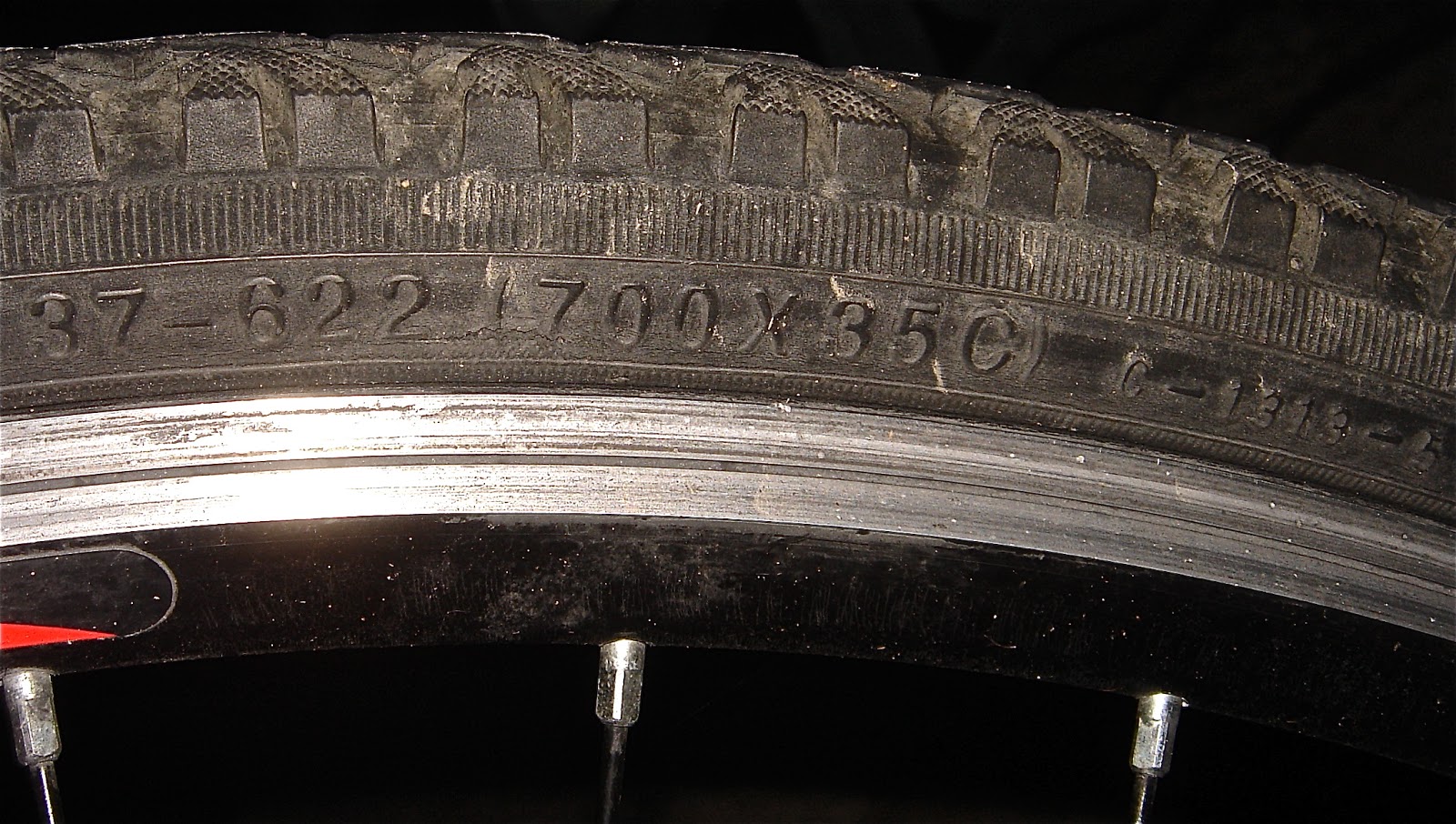
As it is Yianni convinces me, not to buy a new tyre - yet; but rather to spend €10 on a product I didn't know existed - a 'thorn resistant' tube. Let's see.
*** *** ***

The rain has returned, enclosing the village; gossipping in the tiles, and gutters and down pipes, dribbling, trickling, splashing through the early hours, while thunder grumbles across the island muted by walls, bolted shutters, thick curtains and our warm bed.
Last night supper with Mark and Sally we exchanged news like sailors at a post island, discussing the pleasure of being warm in winter. I recalled that Jack London short story of the Yukon traveller caught out in deep winter, finding shelter beneath a tree with matches to start the fire that will save his life; how when, with his last flame - the other matches having all flared in one go as he fumbled with the bunch - he succeeds, the growing warmth brings down a great heap of extinguishing snow from the branches above him. End of tale.
“People are switching to wood, burning it green. Oil’s so dear”
“Other’s have been stocking it all year, the back yard full”
“The other day we were at X’s and I was getting cold. I’d not bothered to wear warm underclothes. I said something. He said ‘the crisis’ and threw me a blanket”
‘Surely it’s best to forget central heating. Keep one room cosy, farmhouse kitchen style. People together, cooking and a stove. Bedrooms don’t matter. Quilt. Electric blanket. Hot water bottle. Two in the bed.”
“If there’s a warm stove, the electric failures don’t matter. Plenty of matches and candles. Water stops. We’ve got enough for tea in bottles and plenty from the downpipes for flushing the loo.”
“Go to bed. Read a book with a torch.”
I spoke of the café Stamatis was making of his shop.
“Good idea but the road's cramped there for sitting outside at tables. OK for cyclists and walkers in the summer.”
“The next bunch of electric bills have arrived. Not too bad. I have a rebate” said Sally
“Might be because of the legal challenge to the government’s right to raise taxes through electric bills” I suggested
“The government’s appealing. They say the TV tax has long been collected this way, so why not property tax?”
“We don’t even have a TV but we still pay that”
I’d been reading Corfucius’ – Chris Holmes - account of how while he shivers in his house above Kontokali, striving to economise on power bills, his electric bills are coming in over €2000 a time; and have been for decades, despite repeated attempts to assail the unresponsive bureaucracy of DEH. Chris’s late mother built a fence around the edge of her garden; not one that marked the actual boundary between her’s and her neighbours’ property but for the convenience and aesthetics of her garden. The neighbours have now constructed a more substantial fence which treats that garden fence as a boundary. This new unofficial boundary separates Chris from his electric meter, adding to the difficulty of investigating the disproportionate power bills. If he breaches the new fence to allow an electrician to check his meter he risks a confrontation with neighbours convinced he’s trespassing. To get anywhere he needs a lawyer to confirm the correct boundaries who can convince the police who, in theory, should be overseeing an electrician’s investigation of the ‘leakage’.
“A pretty pickle!”
“We were in town on Tuesday…

“He muttered a short version of the Macbeth's last speech – petty pace… last syllable of recorded time etcetera – this futile cyle of death, birth, death, birth”
“Hardly surprising. He has to get out of the Durrell School building in Philhellinon in town by 1 April. The landlord is determined to sell the premises and wants him out. Thousands of books have to be moved to his home in Perithia. He founded the Durrell School of Corfu in 2001. Realized a dream. He’s facing the wrench of losing it. For eleven years he’s stayed there, living in the school a narrow flight of dark wood stairs above a narrow street of tall buildings off the Liston....

“He could run it from Perithia. It’s an idea as well as a place.”
“Richard hasn’t got an ounce of self-pity. He’s got other strings, His present book that should be out this year and his writing for the Irish Times about the situation in Greece, and he does lots of editing.”
“All the same...”
“We had a good meal together. Main dish, a little house wine, fizzy water and a shared Greek salad, all well served with the opportunity to look at all the dishes first. Richard said the lemon chicken was delicious. I had beef stew and that pasta that looks like rice; Lin roast chicken, roast potatoes. Cost us €12 each. Not bad.”
While we were with Richard I presented him with my copy of the 1999 edition of his book about the great Irish playwright Brian Friel – The Diviner – with which I’ve been struggling.
“Do me the honour?” I asked

… ‘ the “convincing” trueness of the atmosphere which pervades Friel’s most unreal plays and thus gives them the sense of people “behaving naturally”. This engagement with the ‘constituency’ thus provides Friel with the types of life sufficient to populate and encompass the largest issues with their essential actors.’ (‘Some of you people aren’t happy unless you’re miserable and you’ll not be right content until you’re dead’) (RP p.47, C.1)Richard had written
‘…Friel’s description of Glenties (Ballybeg) on that particular day – a day composite of many observations, of course – encapsulates everything that any drama of the world could say’.He didn’t know where I could get a hold of the old article, which he could quote from by heart.
Anton Chekhov used to say that he got the ideas for his searing dramas by looking out of the window and seeing all human life going by. Brian Friel showed us much the same in his essay on his mother’s home town, A Fine Day at Glenties.We agreed the cost of our meal at Rouvas wasn’t bad.
“This island is the most expensive place in Greece” said Sally
No-one comes here now to live cheaper than in the UK.
“Prosciutto? That's a lot less expensive than in England” I suggested" But we had to pay cash at Sconto’s the other day” I said “No credit or debit cards”
“Their shelves have been pretty empty lately. With no credit the cash flow means it’s always going to be touch and go - with food retail especially. Lidl’s fine because their Europe-wide, German HQ, credit’s available. It’s when the ferries can’t run because of a port strike they have stocking problems – even though they’re sourcing more from Greece, it’s suppliers are on the mainland.”
“P at the shop told me George the old man who sits outside the cake shop died a few weeks back. She showed me his picture on her phone. Seemed very matter-of-fact about it. He was 82”
Mark told us Tony Blok who’d bought Dave and Fran’s house at the bottom of the village at the end of 2011 had died.
“There’s more to it” he said
Tony Blok met me via email early last year, took me out for an excellent meal in town and invited me to join the croquet club he’d got going on spare ground next to Gouvia marina. We enjoyed several games...
 |
| Gouvia last Spring: the late Anthony Blok on the right |
...He was a generous coach, conceding points on purpose without making it obvious. I’d found him reticent - on how he’d come to Corfu, where he’d lived, what he did. Mark and I web-searched his name and found reports that he’d been several years in prison for perjury, money laundering and the theft of a rare painting, still missing, reputedly worth half a million pounds. There's a back story - in which this painting, 'knocked' in 1993 from an elderly lady on the Isle of Man, and misnamed Girls on the Beach (or in one text 'grils on a beach') ended up cremated inside the wooden leg of Michael Underwood, a Brighton 'character' criminal. Tony Blok was accused trying to help Underwood to sell the Orpen. There must be more to this.
 |
| William Orpen Midday on the Beach |
“He had cancer of the throat” said Mark “Had a stroke a few months back. Apparently he panicked and drove himself to casualty in his underpants and lived a few more days in the hospital”
 |
| From the internet |
“Blimey. What’ll happen to the house? There’ll be a big tax penalty if an heir tries to sell it straight away.”
“A son has been out. I wonder where that picture is?”
“The place is jinxed”
When our friends Dave and Fran lived there, just before Dave had got the property insured it was almost wholly burned down. Dave, an ex-copper, was wrongly suspected by the Greek police of an insurance fiddle and held for a while. They lost lots of money but rebuilt the place and eventually returned to England and sold it to Tony Blok. Pondering this bizarre business I could also imagine an alternative interpretation that has Tony Blok being framed for the crimes of which he was convicted; getting out of prison and trying to start a new life on Corfu.
Before we left to stroll home, pleased with our evening, we’d fixed a day for Mark and Sally to eat with us next week. Mark had dug out photos taken during a few days walking in and around Vikos Gorge at the New Year. No snow for once, except on the peaks; rivers blue grey with snow melt. They had beautiful places to themselves – a mighty corridor of towering cliffs, shale heaped at their feet above the greenery lined river lacing between trails beside oak and plane trees, one twisted like a drawing from Arthur Rackham into which Mark’s brother Paul had climbed to peak through a bole hole like an old man of the woods his face blending with the crinkled bark.
“We filmed him” said Mark “as he climbed into the middle of the trunk from above and put out a face there, a foot or a hand. Played the film backwards. So the tree looked as if it was giving him birth.
We saw Paul and Cinta this afternoon for a cup of tea. Cinta explained our electric bill in detail to Lin’s satisfaction – what was tax, what was tax on what, and what was for the electricity we’d used. The whole bill was €88, of which €46 is the new house tax – the charge currently challenged as illegal because of the method of collection.
“The bills coming to some of the big villas in the north west are really big…around €2000-€3000” said Paul “You have to have a licence now to cut even your own trees, there’s so much illegal firewood collection. In Zagori the police were stopping vehicles to check for illegal logging…”
“I read about the smog in Athens caused by all the new wood fires”
“The government’s thinking of lowering the cost of heating oil. The tax benefit is being lost in fines for breaching EU standards on smoke emission”
“At least we don’t notice this in the village”
“There were police all over Kato Korakiana a few days back. Someone was suspected of beach combing for the bales of hash floating ashore round Dassia…”
“Dumped during pursuit?”
“…perhaps a trafficker sank in foul weather when crossing. This has happened before. The police confiscated loads of marijuana some years ago and disposed of it by incineration. The wind was blowing inland. People were standing around in the waft like statues on Easter Island”
*** ***
Cats sit around looking cold and damp, their fur scuffed, ungroomed. Now and then they spit and scratch and mew settling differences; trying noisily to breed.

“I suspect there’ll be some disease to do some culling as it did a couple of years ago” said Lin
The perennial shouting and scolding that all the time we’ve lived here comes from her house and the street between us as our neighbour Katerina tries to look after her two grandchildren, Kateriniki and Nectaria, hasn’t yet recurred. At first I put the unexpected quiet down to winter hibernation but when I asked where the two were, Katerina pointed up the village “πάνω”, towards where their mother lives. Katerina’s pension had been reduced she explained – by how much we couldn’t follow. €120 from €150? Pointing to her mouth and making the old sign for money – thumb and forefinger rubbed together - she said “I can’t feed them for that”
**** ****
Letter from Tony in Connecticut…
Dear Simon. I sent you (@birmingham a proper letter about your Mother's service so here I will stick to more mundane matters.
Glad you and your Mother like the NYR. It is excellent and more in-depth than the New Yorker. I should resubscribe but I get three science journals plus the Economist plus the NY Times which I have barely time to get through. But perhaps a change would be good for me. The NYR has a family connection too. Helen's brother, Whitney Ellsworth, was the publisher from its founding and for at least 20 years thereafter.
New good books? I got a year's worth for Christmas and birthday. I will hardly have time to finish them all before next Christmas rolls around.
The most awakening so far is ReGenesis by George Church and Ed Regis. It is all about how "synthetic biology will reinvent Nature and ourselves." Synthetic biology is the use of genetic engineering technology to invent totally new organisms that have never before existed on earth - in effect giving rise to a very rapid and conscious origin and evolution of species. Darwin in the folds of our brain. It is amazing what can be done rapidly and cheaply with modern g.e. techniques. Nothing like the laborious and clumsy recombinant DNA technology of the late 1960's and early 70's. ReGenesis is not an easy book to read because the authors do not provide a glossary. So, unless one is familiar with biological and taxonomic terms it is hard to follow some of the current and future processes that they are describing. Still well worth the effort and absolutely fascinating.
Another one that I am just starting and think might interest you: The Great Sea by David Abulafia. It is a history of the Mediterranean Sea and the harbors on its edges each acting as portals to the interiors beyond. It is not a history of the lands surrounding the sea. Very well written. I think will be fascinating but I caution that it is BIG - 650 pages. Would be interested to hear what you think of it.
Another yet: The Pun also Rises by John Pollack. I love and love to make puns. The book is not an anthology of puns but rather a history of punning and the impact of punning on the development of language and inventions. As Pollack puts it, "(Punning) is about freeing our imagination to leap from one idea to the next even when those leaps seem illogical or impossible. And it is precisely that capacity to link wildly disparate ideas that enabled people, through thousands of generations of trial and error, to move from cave to skyscraper to space station, and from drum to telegraph to iphone." A short fast read - enjoy.
Finally Helen gave me for my birthday this week Artemis Cooper's biography of Paddy. Not always so well written but fascinating to me because Paddy is such an amazing strange character. What a weird dislocated childhood he had. I gather that he never completed the book on the third leg of his walk from Brussels to Istanbul; however, I gather some of his notes on that leg are sufficient to reconstruct an account which will be published some day. But it will probably not have that quality of an extended florescent metaphor that characterizes his own completed works. I gather he had terrible writer's block and it was almost impossible for him to 'finish' sentences.
As to what is going on over here, I am not sure I am quite as optimistic about Obama as I was in my November email written in the euphoria of his re-election. The compromise over the 'fiscal cliff' is terrible and I am afraid he gave up a great deal of leverage that he had over the Republicans by settling for a minor increase in taxes on the rich while leaving unresolved what cuts in spending are going to be made and leaving unresolved the issue of the ceiling on the national debt. On the latter he has taken off the table the desire to directly challenge Congress on whether Congress has the right to set a limit on national debt given that Congress has appropriated funds for various programs at a level that cannot possibly be paid for by the current provisions in our tax code. And I see that three Senators (two GOP and one Dem) snuck a provision into the fiscal cliff compromise that rewards the biotech drug firm Amgen with $500 million in Medicare funds by protecting the monopoly pricing status of certain drugs over the next two years! And the two GOP senators are the very ones who yelling loudest about the need to reform (reduce) Medicare benefits primarily for middle and lower income people. What outright shameless CROOKS!
At least in his inaugural address today Obama mentioned climate change, gun control, and federal gay marriage. Will he pursue them vigorously and expend real political capital on these issues? Hope so but not optimistic - especially if he allows himself to get mired in endless quarterly showdowns over the national debt and related issues.
Well enough for now. We have winter here but not nearly as much snow as normally. It has been generally warm here although we are forecast to get some bitter cold over the next few days. Meanwhile I read that the UK has been getting snow and relatively quite cold weather. Climate Change?? Seems likely given that this has happened for two years in a row. Very strange weather year around.
In the meantime everyone over here is hanging on from week to week awaiting the next episode of Downton Abbey. Do you get it? A time-warp fantasy when we crave one as the clock of reality tolls a black moonless midnight.
Best wishes and love to you both. Tony
 |
| Corfu: wet day in the city |