Total Pageviews

Showing posts with label Waseem Zaffar. Show all posts

Wednesday, 14 January 2015

<Δεν είμαι ο Τσάρλι!>

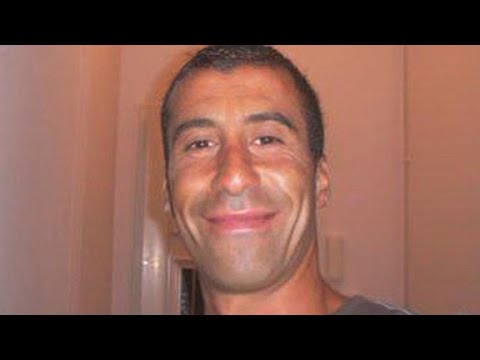
Lt. Franck Brinsolaro   Officer Clarissa Jean-Philippe   Officer Ahmed Merabet


To quote Aaron Sorokin's angry, even menacing, Colonel Nathan Jessup 'most men and women sleep "under the blanket of the very freedom that I provide"'. Writing Internal Polity 20 years ago I was first struck by Joseph Conrad's observation that...
Few men realize that their life, the very essence of their character, their capabilities and their audacities, are only the expression of their belief in the safety of their surroundings. The courage, the composure, the confidence; the emotions and principles; every great and every insignificant thought belongs not to the individual but to the crowd: to the crowd that believes blindly in the irresistible force of its institutions and of its morals, in the power of its police and of its opinion. (Conrad, An Outpost of Progress in Cosmopolis (London) Vol. 7, No.XVIII (Jun 1897), p.611)
"I'm sorry we drew him again" Renald 'Luz' Luzier - the man who missed the fatal editorial meeting on 7th July because he overslept 30 minutes - chooses a much more conditional relationship with the 'blanket'; does not draw his emotions, principles, composure, courage and confidence from faith in the force and morals of social institutions or the power of the police. Many, including me, do - more than most of the time I want to admit.


Article in Dragoumanos ~ 12 Jan 2015 (English translation below)
Σε όλο τον κόσμο, και σίγουρα σε ολόκληρο to Twitter, οι άνθρωποι δείχνουν την αλληλεγγύη με τους δολοφονηθέντες δημοσιογράφους του σατιρικού γαλλικού περιοδικού Charlie Hebdo, διακηρύσσοντας σε μαύρο και άσπρο ότι μοιράζονται πάρα πολύ τις τιμές που αποδόθηκαν στους γελοιογράφους που σκοτώθηκαν. Συναισθηματικά και ηθικά είμαι απόλυτα με την εν λόγω συλλογική ηθική – αλλά στην πραγματικότητα εγώ και σχεδόν όλοι όσοι δηλώνονουν την αλληλεγγύη τους δεν είναι «Τσάρλι», γιατί απλά δεν έχουν το θάρρος τους.
Εξωφρενικά και – υπό το φως του βάρβαρου τέλους τους – από αμέλεια γενναίος. Το είδος του απίστευτα θαρραλέου ανθρώπου που πραγματικά αλλάζει τον κόσμο. Όπως σημειώνει ο Τζορτζ Μπέρναρντ Σο, ο «λογικός άνθρωπος προσαρμόζει τον εαυτό του στον κόσμο, ενώ ο παράλογος άνθρωπος επιμένει να προσπαθεί να προσαρμόσει τον κόσμο στον εαυτό του“, και ως εκ τούτου, «όλη η πρόοδος εξαρτάται από τον παράλογο άνθρωπο“. Ο Charlie Hebdo ήταν ο παράλογος άνθρωπος. Έδωσε τη μάχη, που έχει σε μεγάλο βαθμό αφεθεί στην αστυνομία και στις υπηρεσίες ασφαλείας.
Είναι ένα εύκολο πράγμα να διακηρύξει κάποιος την αλληλεγγύη μετά τη δολοφονία τους και αυτό είναι συγκινητικό να βλέπει κανείς μια τέτοια συλλογική απάντηση. Αλλά στο τέλος – όπως και τόσα άλλα παραδείγματα hashtag ακτιβισμού, όπως το #bringbackourgirls η εκστρατεία εναντίον των απαχθέντων Νιγηριανών μαθητών- δεν θα κάνει τη διαφορά, εκτός από το να μας κάνει να νιώθουμε καλύτερα. Κάποιοι βγήκαν στους δρόμους, αλλά οι περισσότεροι από αυτούς που δηλώνουν ότι είναι Charlie το έκανε αυτό μέσα από την ασφάλεια ενός κοινωνικού απολογισμού των μέσων ενημέρωσης. Εγώ δεν τους επικρίνω για την επιθυμία να κάνουν αυτό. Απλά, δεν νομίζω ότι οι περισσότεροι από εμάς έχουν κερδίσει αυτό το δικαίωμα.
Πολλοί, αν όχι οι περισσότεροι, δημοσιογράφοι αυτο λογο κρίνονται. Θα στηρίξουν την δημοσίευση εικόνων που ξέρουν πως θα θέσει σε σοβαρό κίνδυνο τον εαυτό τους ή την οργάνωσή τους – και μετά τα γεγονότα αυτής της εβδομάδας μπορεί κανείς να τους κατηγορήσει δύσκολα; Οι εταιρείες έχουν καθήκον μέριμνας για το προσωπικό τους και οι άνθρωποι έχουν καθήκον να φροντίζουν τον εαυτό τους και τις οικογένειές τους.
Είναι επίσης λογικό να μην δίνει κανείς περιττές αφορμές. Αλλά θα ήταν ανέντιμο για τους περισσότερους συγγραφείς και σκιτσογράφους να ισχυρίζονται ότι θα χλευάσουν πρόθυμα τον προφήτη Μωάμεθ, όπως θα έκαναν και για τον Ιησού. Μπορώ να εκφράζω τη λύπη μου για το γεγονός ότι τα μέσα μαζικής ενημέρωσης φοβούνται να δημοσιεύσουν μια επιθετική γελοιογραφία του προφήτη, αλλά θα ήθελα πραγματικά μία σε κάθε άρθρο που έγραψα; Γιατί παρ όλα τα γενναία μας λόγια για το πώς θα κερδίσει η ελευθερία, για το πώς δεν μπορούν να φιμώσουν σάτιρα, η σάτιρα φιμώθηκε.
Για να είσαι ο Τσάρλι θα πρέπει να είσαι έτοιμος να αψηφήσεις τις πραγματικές απειλές θανάτου και επιθέσεις με βόμβες μολότοφ. Να επιμείνετε, όπως οι δημοσιογράφοι που δολοφονήθηκαν, εν όψει των δεδομένων κινδύνων για τη ζωή σας, ενώ εργάζεστε υπό αστυνομική προστασία (οι νεκροί περιλαμβάνουν δύο αξιωματικούς). Να συνεχίσεις να δημοσιεύεις γελοιογραφίες και ανέκδοτα που ξέρετε ότι θα πυροδοτήσουν εκείνα τα άτομα που χρειάζονται μόνο λίγο υποκίνηση για να σκοτώσουν. Απαιτείται να αγαπάτε τη ζωή σας και τους φόβους για την οικογένειά σας λιγότερο από την απόλυτη αρχή της ελευθερίας. Πρέπει να είστε τόσο αποφασισμένοι να πολεμήσετε το φασισμό των φονταμενταλιστών που σας κρατούν από το να δημοσιεύσετε , όταν η ορθολογική σκέψη σας λέει να σταματήσετε. Αυτοί οι άνθρωποι δεν ήταν μόνο σατιρικοί. Ήταν μαχητές της ελευθερίας που εσκεμμένα προκαλούσαν έναν εχθρό που ήξεραν να είναι θανατηφόρος.
Κάθε χρόνο δεκάδες δημοσιογράφοι σκοτώνονται και πολλοί άλλοι τραυματίζονται εκτιθέμενοι στα πιο επικίνδυνα μέρη του κόσμου, εκθέτοντας κτηνωδία, εγκλήματα πολέμου και την αδικίας. Πέρυσι, 66 εργαζόμενοι στα μέσα ενημέρωσης έχασαν τη ζωή τους, σύμφωνα με τους Δημοσιογράφους Χωρίς Σύνορα – το ένα τρίτο από αυτούς στη Συρία και την Ουκρανία. Αυτοί οι άνθρωποι και κάποιοι πιο τυχεροί συνάδελφοί τους θα μπορούσαν να διεκδικήσουν το θάρρος να είναι ο Τσάρλι – αν και ούτε ακόμη και αυτοί θα τολμούσαν να είναι τόσο ανοιχτά προκλητικοί και οι περισσότεροι, πολύ σωστά, καταβάλουν κάθε δυνατή προσπάθεια για να ελαχιστοποιηθεί ο κίνδυνος για τους εαυτούς τους.
Αλλά εμείς οι υπόλοιποι, σαν εμένα, που κάθονται με ασφάλεια σε ένα γραφείο στη Δυτική Ευρώπη – ή όλοι όσοι σε άλλα επαγγέλματα που ποτέ δεν θα προτίθενται να λάβουν το είδος των κινδύνων που αυτοί οι Γάλλοι δημοσιογράφοι πήραν καθημερινά – δεν είμαστε Τσάρλι. Είμαστε απλά χαρούμενοι ότι κάποιος άλλος είχε το θάρρος να είναι.
Je ne suis pas Charlie. Δεν είμαι ο Τσάρλι, δεν είμαι αρκετά γενναίος


Κείμενο μεταφρασμένο από την Google και SB -.text translated by Google and SB
Je ne suis pas Charlie. I'm not Charlie, I'm not brave enough. All over the world, and certainly around to Twitter, people show solidarity with the murdered journalists of French satirical magazine Charlie Hebdo, proclaiming in black and white that share too the values ​​attributed to cartoonists killed. Emotionally and morally I am totally with that collective morality - but in fact I disown their solidarity. I am not 'Charlie' because I just do not have the courage.
Wildly and - in light of the brutal end - recklessly brave. The kind of incredibly courageous people who really changed the world. As noted by George Bernard Shaw, the 'reasonable man adapts himself to the world, while the unreasonable man persists in trying to adapt the world to himself,' and therefore 'all progress depends on the unreasonable man.'  Charlie Hebdo was the unreasonable man. He engaged in a battle which has largely been left to the police* and security services.
It is an easy thing to proclaim a solidarity after the murder and it is heartwarming to see such a collective response. But in the end - like so many other examples of hashtag activism, like #BringBackOurGirls campaign against Nigeria's abducted students - will not make a difference, except to make us feel better. Some took to the streets, but most of those who say they are Charlie did this through the security of a social media account. I do not criticize them for wanting to do this. I just do not think that most of us have earned that right.


I was in Trafalgar Square last Thursday; parked my bicycle in the wet to gaze

Many, if not all, journalists will resist the publication of images they know will seriously endanger themselves or their organisation - and after the events of this week can one blame them? Companies have a duty of care for their staff and people have a duty to care for themselves and their families.
It also makes sense, on some occasions, not to give in. But it would be dishonest to claim that most writers and cartoonists will willingly mock the Prophet Muhammad, as they have Jesus. Should I regret the fact that the media are afraid to publish an offensive cartoon of prophet, Would I really like one in every article I wrote? Because for all our brave words about how to win freedom; about how satire cannot be silenced, it has been.
To be Charlie I should be ready to defy actual death threats and attacks with Molotov cocktails; should insist on continuing to work, as did the murdered journalists, despite the availability of public information about their lives; to continue under police protection (the dead include two officers); to continue to publish cartoons and jokes that you know will trigger those individuals who need just a small incitement to kill; to love your life and fears for your family less than the absolute principle of freedom. You must be utterly determined to fight fascism fundamentalists, keeping to your post when rational thought tells you to stop. These people were not only satirical; they were freedom fighters who deliberately confronted an enemy they knew could kill them.
Every year dozens of journalists are killed and many others injured as bystanders in the most dangerous parts of the world, while exposing brutality, war crimes and injustice. Last year, 66 media workers were killed, according to Reporters Without Borders - one third of them in Syria and Ukraine. These people and some more fortunate colleagues could claim the courage to be Charlie - although not even they dared to be so openly provocative, and most rightly make every effort to minimise risk to themselves while continuing to work.
But the rest of us, like me, sitting safely in an office in Western Europe - or all those in other professions - would never intend to take the kind of risks these French journalists took daily - we're not Charlie. We are just happy someone else had the courage to be.
...and see the experience of Roberto Saviano, the brave journalist and 'unreasonable' man, who who exposed the global iniquity of the crime families of Naples where Linda and I were in January 2013. Eloquent Roberto Saviano struggled to find the words to describe, ‘to construct…an image of the economy’... picturing what ‘it leaves behind…as it marches onward’.
‘The most concrete emblem of every economic cycle is the dump (Ch.10 in Gomorrah: Land of Fires pp.282)…the true aftermath of consumption. The south of Italy is the end of the line for the dregs of production, useless leftovers, and toxic waste.’
From his confined world surrounded by security everywhere he goes Saviano writes tellingly of the fate that awaits unreasonable men and which I can see already being done to the dead at Charlie Hebdo...'There’s another fear, worse than anything else. It’s the fear of being discredited. It’s happened to everyone who has ever been killed for what they believe in. It’s happened to everyone who has reported crimes or told uncomfortable truths. They did it to Don Peppe Diana, the priest who was shot dead in Casal di Principe in 1994 for preaching against the mafia and threatening to refuse to give the sacraments to Camorra members.' Well organised crime doesn't involve, most of the time having to go through the messy business of killing people. You pay off those you can bribe. The others - the brave and principled - you discredit; make it look, to shallow opinion, as if their target is actually involved in gang activity, that all he or she seeks is celebrity, that this is a child molester, drug-dealer, or whatever's currently the worst to be in public dis-esteem. It's easy enough isn't it? My god! I read a comment on the Saudi whipping of Raif Badawi - another 'unreasonable man' - for blogging about free speech and secularism; arrested in Jeddah and charged with 'insulting Islam through electronic channels' and 'going beyond the realm of obedience'. "He knew the rules in Saudi. What did he expect?"

Note BBC newsletter on whether it has been or is always unacceptable within Islam to depict the Prophet. There are different rulings between Shia and Sunni.
*** *** ***
While thousands demonstrate for tolerance and decency in a hyper-diverse Europe, other movements have been afoot gaining support...
When up to a dozen world leaders and roughly 1.5 million people gathered in Paris on Sunday to mourn the murder of 10 editors and cartoonists of the satirical newspaper Charlie Hebdo and seven other people by three French-born Islamic radicals, they wanted to demonstrate that Europe will always embrace liberal and tolerant values.
But the more telling event may turn out to be a counter-rally that took place at a 17th-century town hall in Beaucaire, France, that was led by Marine Le Pen, the leader of the far-right National Front. In Beaucaire, the crowd ended Le Pen’s rally by singing the French national anthem and chanting, “This is our home.”
Le Pen is at the forefront of a European-wide nationalist resurgence — one that wants to evict from their homelands people they view as Muslim subversives. She and other far-right nationalists are seizing on some legitimate worries about Islamic militancy — 10,000 soldiers are now deployed in France as a safety measure — in order to label all Muslims as hostile to traditional European cultural and religious values. Le Pen herself has likened their presence to the Nazi occupation of France....
*** ***
Meanwhile in Handsworth in Birmingham - a Monday of street cleaning with Handsworth Helping Hands volunteers with neighbours in Hutton Road
Waseem, Carol, Denise, Hendrina, Mahmood, Mike, John, Ruth, Jimoh, Linda, Simon & Oscar dog (photo: Waseem Zaffar)


Thursday, 29 August 2013

Connecting rubbish in the streets to social cohesion

One of our ward members, Councillor Waseem Zaffar MBE, JP, chairman of Birmingham City Council's Social Cohesion and Community Safety Scrutiny Committee, wrote a piece on 25th August in the Birmingham Mail on connections between mental health and crime.
We need help to understand this complex issue  Traditionally, we haven’t talked about the link between mental health and crime. To do so appeared to undermine the moral basis of justice. Society wants the commission of crime to be a simple matter of right and wrong.
If the agent of a crime is mental illness, it clouds the issue. At the most fundamental human level, that is why criminal justice and mental health have been kept too far apart by the authorities for too long.
At last, though, that is changing. Lord Victor Adebowale’s Independent Commission on Mental Health and Policing recently submitted its 80-page report to London’s Metropolitan Police Commissioner.
Following on from this, West Midlands Police and Crime Commissioner, Bob Jones, held a summit on mental health and learning disability.
The Birmingham City Council scrutiny committee which I chair is now taking up this baton, with our own enquiry into mental health and criminal justice in Birmingham.
A fundamental conclusion of the Adebowale Report is that “mental health is part of the core business of policing”.
The Metropolitan Police service estimates that up to a quarter of its incidents are mental health-related. They get 20,000 more calls a year related in some way to mental health than robbery calls, and 50,000 more than sexual offences. My committee’s inquiry will be looking for this kind of data for Birmingham, and seeking to interpret it for our particular context.
Very many people with mental health issues end up committing crimes because they don’t get the right support from health and social services at an early enough stage. Currently many are not ‘diagnosed’ until they enter the criminal justice system. Our aim in this inquiry is to explore how Birmingham City Council and its partners can work together more effectively to identify and reduce the number of those with mental health issues entering the criminal justice system.
We’re inviting people and organisations from across the city to send us their views on this complex issue. We want to find out how mental health is understood across the different agencies, and who takes responsibility for what. We know some groups are over-represented in both criminal and mental health systems, so how are such inequalities being addressed?
An inquiry is only as good as the evidence it receives. This is why we want people across the city to get involved.
It's not a connection anyone living in a big city who looks around them can question. Waseem posted his article on Facebook. My response among many other positive comments:
This is lovely intelligent and decent article. We have created a pre-Victorian judgemental world that abhors the notion of mental state as an explanation for criminality, since it fudges a determination to see the world as black and white, good and evil with nowhere in between - a pre-kindergarten view of human nature. Your comments on police experience of mental illness chime closely with my daughter's WM police experience, with my wife's teaching experience on a 'tough' estate and now with our experience of people we encounter as part of our work with Handsworth Helping Hands. There are so many 'lost souls' living in a sort of twilight world, utterly outside the experience (as they are allowed or inclined to publish) of tabloid judgemental journalists. I don't budge an iota on being 'tough on crime' but let's be more sophisticated about the probability that too many of the most successful criminals don't get found by the police, don't live 'around here' but are happy to use and exploit a wide pool of mental ill-health, which they, by pushing drugs, help expand. So much minor anti-social behaviour we encounter is committed by people unable to manage their own or their children's lives. I said 'pre-Victorian' earlier, because it was from the 19th century on that we began to share the more complex understanding of connections between mental health, poverty and crime that you describe in your article, and which the media and too many of our political leaders are determined to destroy in favour of shock-horror fear-mongering about 'feckless evil layabouts in our midst.' I'm not of the Faith but I do believe with utter faith that I am my brother's keeper, and that one of the greatest of parables is that of the Good Samaritan. Too many of us pass with ignorant trepidation 'on the other side' Thanks for your article Waseem.
Handsworth Helping Hands is doing their second 'Skip it, don't tip-it' day in Crompton Road today, with an extra skip at the top of Westminster Road...


Mindful of the connections Waseem's committee is exploring, I suggested to all our ward members they might look more closely into links between litter and social cohesion...and posted the letter on HHH's Facebook pages
Dear Ward Councillors
RUBBISH  AND SOCIAL COHESION
After Cllr Waseem's wise linking of crime and mental health and therefore social cohesion, it’s taking far too long to make connections between social cohesion and the state of the environment in Lozells and East Handsworth.
You know the effect of untidy, littered messy streets and frontages comes up again and again and again as a number one priority at meetings in the ward.
It was a priority for the success of events in Handsworth Park that there be almost instant clear-ups after big events there. This means people not involved are less likely to harbour uninformed, even racist views, about people using the park for cultural celebrations. Pollution poisons more than the environment, it sticks in people’s minds as a constant irritant stirring resentment in our community against others in the same community.
Rubbish wrecks relationships! Dirt is divisive!
How about a scrutiny of the connection between social cohesion and the state of our streets looking into the prospects of enhancing partnership between BCC, Veolia (why why do we not have a re-use centre like the one in Sutton Coldfield next to the waste depot there and why can these big organisations not to do more to educate citizens about street cleaning, advancement, contamination etc?), local organisations like HHH, and the community - street by street.
You should hear us in HHH transit van when we go out scavenging, grumbling and expressing our views about ‘feckless, dirty, lazy people who chuck out rubbish everywhere? (We are always polite in direct interactions with the public!)
If we are seeing our streets and making private observations about some of our neighbours like this, I bet others are.
Littering makes enemies of neighbours who could be friends! How about that for a maxim? Simon
Linda posted a set of images on the same day:
I took these photos whilst walking home from the post office today.
Cllr. Hendrina Quinnen replied to me and fellow ward councillors, Waseem Zaffar and Mahmood Hussain, HHH's John Rose, Linda Baddeley and Mike Tye and ward officers Steve Salt, and Cllr James McKay, Cabinet Member for a Green, Safe and Smart City, as well as Nick Reid, Principal Operations Manager, Fleet and Waste Management...
Hello Simon
Thank you for your email. On behalf of the Councillors, I can confirm that:
1. We take all the Environmental Issues seriously.
2. We would like to see Lozells and East Handsworth Ward Cleaner and Greener 24/7.
3. We are trying various strategies to address this matter; this includes working in partnerships and increasing street the contacts and Environmental Groups.
4. We have now an agreed plan, that we hope to implement from September - trying to speak face to face with all the Residents.
5. We are seeking to expand Environmental Friendly Organisations/ Groups like HHH, to cover every street in our Ward.
We note the success of HHH - thanks again.
6. We are pleased that Veolia has now joined in - in this venture and will be offering some Grants to the Environmental Groups.
I hope you have accepted the invitation to the launch on Wednesday, 18 September 2013 at James road, Tyseley, Birmingham, B11 1BA, from 4.30pm.
We do invite your views on how we can improve on Keeping our Ward clean - thus tapping on your first hand experience, for the benefit of all.
Kind regards
Hendrina
My letter's a forlorn hope but I wanted to slip it in to the discourse. I want to refine and focus the narrative connecting messed up streets to community well-being. For the moment, there's neither the interest nor - equally important - the grasp of the problem among our local politicians, that would prompt significant attention to these problems. Littering like mental health is a 'wicked' problem.
'Wicked problem' is a phrase originally used in social planning to describe a problem that is difficult or impossible to solve because of incomplete, contradictory, and changing requirements that are often difficult to recognize. The term ‘wicked’ is used, not in the sense of evil but rather its resistance to resolution. Moreover, because of complex interdependencies, the effort to solve one aspect of a wicked problem may reveal or create other problems.
Litter doesn't matter enough compared to other things. It's unsexy compared to issues associated with crime, social cohesion, education, housing and immigration. But then you could say the same for mental health's conflation with crime - which is why it was so good to read Waseem's article. Hendrina's doing her best and has helped with some of HHH's work on the street; the best responses we can expect, a little baffling, but we appreciate the nice remarks about HHH. Things are being done by way of the placing of litter bins, the posting of notices warning of fines for flytipping, and the work of the council's waste services people despite ever diminishing funding, and HHH has been given a grant for its work in the Ward. A phone call to Nick Reid yesterday morning had one of his people dropping off a dozen pairs of litter pick-up gloves and a hundred large trash bags to help with the 'skip it, don't tip it' day. Nick will also send some of his people down the road with a council waste truck during the day, as he has on several other occasions when we've asked. Overall our impact on the problem is miniscule. I half suspect that the way we'll end up really getting attention and shared engagement with what I'm calling 'litter' and the people I'm calling 'litterers' with all the associated attitudes that go with such opinions, will be by focusing on sustainability and in particular the idea of recycling - not throwing things away, not wasting things.
Oscar dog, Denise and Jan from HHH with Sean and Cabs of BCC after  a tidying up job in Handsworth


Tuesday, 27 November 2012

London again

To London with Christmas presents for the Greek side, dropped off near Piccadilly, then on to Marble Arch to catch a central line tube to Shepherds Bush to collect the masters for Out of Town whose rights I have at last bought from Endemol. Vic - Victoria - greeted me in reception and pointed me to the package waiting for me to collect, containing the signed agreement that transfers all royalties due to Endemol on sales of my stepfather's DVDs to me.  I shook her hand and said can I take a photo - with my laptop...
Vic in reception at Endemol Worldwide Distribution

...and so on to Hounslow Civic Centre for further work on coaching scrutiny chairs.
*** ***
Talk about something funny going on on the roof tops. A massive hole is being dug in the back garden of a neighbour's house. Lin's been on the phone to the council and been passed back and forth. Cllr Zaffar came to have a look and is on the case but says "with the new planning legislation there'll be more of this! Try getting in touch with the BBC...Adrian Goldberg:

Dear Adrian. I am Chair of the Beaudesert Road Residents in Handsworth. We do not usually get involved in difficulties between neighbours. We try to represent the interests of all residents of our street. This is a rare exception to which I request your most urgent attention.
Mrs Jo (Josie) Robbins is living alone at xx Beaudesert Road, Handsworth  (her husband John recently went into care). Jo's phone number is 0121 523 xxxx and she would be ready to chat with you. Her daughter may be with her as Jo is currently distressed.
Going into her side alley a few days ago where she usually goes to enter her garden Jo found just beyond its gate an abrupt drop of over eight foot. Luckily it was daylight and she stopped herself in time.
She asked me and my wife over to look at building work being done in the back garden of her neighbour’s home - xx Beaudesert Road, B20 3xx
A massive hole had been dug, in anticipation of getting planning approval for an extension to the house of Dr Din Shariff under planning application 2012/05049/PA
We have tried to get some action from Birmingham Planning enforcement, from building safety - to whom the planning officer directed us - and even from Health and Safety but our concerns have been jockeyed around between these services with excuses about lack of power and even the suggestion that Mrs Robbins only recourse may be civil action - an unedifying prospect for her.
Meantime the work continues often until 9.00pm at night with enormous amounts of earth being removed right up and in places beyond the boundaries of the garden of number 29.
The householder called on Mrs Robbins a few days ago and gave her an apology for removing all her side path, patio wall and fence, assuring her it will all be made good, but at the moment the work has not had formal approval from the Council Planning Committee (I phoned the department to check this a few minutes ago).
In our opinion corners are being cut in an alarming way, and a dangerous precedent created, with the prospect of additional harm to community cohesion and neighbourliness as well as personal safety.
Cllr Waseem Zaffar , a most excellent ward member as you know, has now visited the site and is making enquiries but at the time he was at 29 Beaudesert Road on Monday afternoon he suggested to me that we contact you.
I attach some photos taken by Linda Baddeley that I think you will consider make the urgency of the problem self-evident
I know how busy you are but your attention to this matter would be enormously appreciated. Kind regards, Simon (working in London today)
*** ***
In Ipsos Summer Song has been craned from her mooring and sits on the shore ready for her new engine transplant. Dave emailed me a photo this morning:
Hi Simon all went well summer song out of the water...The bottom of your boat was very bad with weed, and there seems to be about ten coats of old anti-foul still on the boat from years past, and is very rough. This means it will take lots of power from the engine to drag along....two ways to sort...scrape off which will take a long time by hand. It is about 4mm thick, or you can shot blast it which takes it back to as new and smooth, the cost is about the same both ways but shot blast gives a better finish the cost is about €xxx. regards Dave 
Dear Dave. I’ve had another coffee and more thought about work on Summer Song. Let’s be sure to get the new/recon engine into her first before spending any more money, just in case anything goes wrong and the dear boat ends up as scrap. That’s critical. Can you ask M to have a look at the bottom? The reason is that I recall Summer Song’s bottom being sanded at Vangeli in 2007 and it looked pretty good after a power wash. I expect a heap of weed and barnacles but not so clear about those 'layers of paint'. I'm thinking about applying my own energies (labour of love) with help from you to scraping the hull when we arrive, assisted no doubt by copious rain. If sand blasting is still the best option then, so be it. I can watch the process. As you say there’s no massive hurry, even for the strake and hatches...leave them until I’m back. We have a good while before the season starts...Best Simon
Hi Simon. Have been down to see the boat and you are quite right to hold off on the removal of the antifoul by shot blasting...one of the things I want to discuss with you later...we had several power cuts through yesterday evening with huge storms through the night, speak to you later. Mark 
...and this was the weather on the opposite side of the Straits of Taranto, 80 miles across the Adriatic from Albania and Corfu...
Taranto, Italy Wed Nov 28, 2012 1:58pm EST(ReutersA violent storm hit the troubled ILVA steel plant in southern Italy, injuring dozens and adding to disruption at the huge site, which is already caught in a widening pollution scandal that could cost billions. The tornado rolled off the sea and hit the port city of Taranto on Wednesday, bringing down a chimney stack and damaging a warehouse and lighthouse at the factory's docks...Around 20 workers were injured out of a total of 38 people hurt in Taranto and divers searched for a worker who was unaccounted for after a dockside crane collapsed. Three others on the crane were rescued. The sudden storm, which television pictures showed filling the sky with a dark grey swirl of cloud that ripped across the harbor, was the latest blow to ILVA, which has become one of the most pressing issues confronting the government of Prime Minister Mario Monti. Europe's largest steel plant had already stopped production and faces the threat of permanent closure after magistrates this week seized semi-finished material and steel in a corruption investigation linked to the environmental scandal....
***** *** ***
Euro Crisis Deal Struck: Euro Zone, IMF Reach Agreement On Long-Term Greek Debt.....Reuters  |  Posted: 11/26/2012 6:10 pm EST Updated: 11/28/2012 4:24 pm EST
BRUSSELS, Nov 27 (Reuters) - Euro zone finance ministers and the International Monetary Fund clinched agreement on reducing Greece's debt on Monday in a breakthrough to release urgently needed loans to keep the near-bankrupt economy afloat. After 12 hours of talks at their third meeting in as many weeks, Greece's international lenders agreed on a package of measures to reduce Greek debt by €40 billion, cutting it to 124% of gross domestic product by 2020...

Saturday, 1 September 2012

What's it mean to be Brummie?

Οδός Δημοκρατίας, Άνω Κορακιάνα, Κέρκυρα
Dear Cllr Zaffar
I am so sorry that neither Linda nor I can attend at the Inquiry on 18 September 2012. I know we would very much have enjoyed contributing and hearing what others have to say on the subject of being a Brummie along with other questions you are investigating.
Linda says the attached essay on ‘Being a Brummie’ is far too long - over 4000 words - and doesn’t answer in any precise way the questions your committee is asking, but it was a good exercise for me, and who knows, some parts of it may be of interest and even use to you and your colleagues. I look forward very much to reading the O & S Committee’s final report. Consider the attached is ‘written evidence’ submitted to the committee and therefore in the public domain. Any errors are mine.  Best wishes, Simon and Linda Baddeley copied to Rebecca Short, Iram Choudry for Birmingham City's Social Cohesion and Community Safety Scrutiny Committee
‘WHAT IT MEANS TO BE BRUMMIE'
There cannot be a city in the world where combining social cohesion with integration is not a matter of concern, pride or a mix of both. Much of the world has set itself against 20th century solutions to intractable problems of human integration - partition as happened in British India, in Ireland, in Greece and Turkey in the 1920s and now, again, in the Balkans, is almost as discredited as apartheid. We know that without formal action by governments some populations will, even in the same country or city, seek partition and isolation according to identity and often economic standing, aggregating in particular districts and even by street, using politically correct codes to seek areas where they may find others like themselves or avoid ones where they will not. We know that efforts by government from bussing in order to integrate schools to making it unlawful for finance companies to ring fence mortgage lending areas have had debateable success when it comes to reducing a tendency for populations to atomise. This process can be exacerbated if implicit, or worse, explicitly approved by government agencies and businesses through ill-balanced policies and employment practices. One person’s cohesion is another’s separation. There is a dilemma here, riven with contradiction. If a community of place feels threatened in its identity, especially in its ability to socialise children into its own habits and mores and faith it will work to maintain its boundaries, pursuing initiatives to enable schooling and child rearing that sustains its fold. Thus the very social solidarity that we value by becoming associated with one group ends up harming efforts to weave a more inclusive social fabric for the larger population.
I’m Simon Baddeley. I and my family have lived in Handsworth since 1978, I arrived in Birmingham in 1973, living first in lodgings in Cannon Hill, then having explored the city via circuits on the number 11 bus route, buying a small terrace near Edgbaston Reservoir. I have worked these years as an academic with a special interest in the working relations of politicians and managers in local government. With my colleague Andrew Coulson, an ex-councillor for Selly Oak, I run an accredited course on Overview and Scrutiny at my university. I believe in evidence-based policy-making but am not naïve about the challenges this presents to elected politicians. I’ve been involved in many local groups and campaigns. I was a founding member of the Handsworth Park Association. I maintain the Handsworth Allotments Information Group which carried out local research on demand for allotments to stop the Victoria Jubilee Allotments from being entirely lost to housing development. Since 2010 I have had a plot there, with bees. I gave up my car in 2007 and have for many years advocated improved public transport, and an infrastructure for our city that encourages walking and cycling. I have lectured on local government issues across the UK as well as in Sweden, Canada, Australia and New Zealand and remain, in my 70th year, a part-time visiting lecturer at Birmingham University. With my wife, Linda, and other neighbours, we have recently brought a local voluntary handyman service from insolvency, to a situation where, renamed as Handsworth Helping Hands, we aim to provide a mix of free and paid services to vulnerable people, and carry out such tasks as garden tidying, street clearance and the laying out of neglected public flowerbeds. The following essay is one that I was invited to submit by Cllr Waseem Zaffar MBE as an attempt at answering the question ‘What it means to be Brummie'. My essay is autobiographical. It implies that I was the instigator or main actor of various events. Where this is true I am proud, but no-one is more aware than I that co-operation, collaboration and joint activity among friends, neighbours, strangers, council officers and elected members has been an essential ingredient of my active citizenship in Birmingham - no mean city.
When I was ten years old in 1952 my parents were driving me and my sister from London to Pembrokeshire for a holiday by the rocky coast of St David’s. Our route took us along the road to Wolverhampton that passes through the Black Country. As I looked east I recall peering from our car at a landscape of chimneys under a grey sky and making a remark about how ugly it was. My stepfather, a wise man as I now know, from Yorkshire, self-made but taken to living with my mother who was from a social background that included being a debutante, presented to the King at Buckingham Palace (an outmoded ritual) said gently “That, Simon, is Birmingham. In this place we are passing through they make the wealth of the greatest empire the world has ever known.” He was no imperialist. By ‘greatest’ he meant ‘very very large’, as I, brought up in the 1950s on maps of the world covered in pink, well knew. “Don’t ever forget that. This is the Black Country we’re passing through”. Not only did he mean ‘very large’, he wanted me, a Londoner and a child of the Home Counties where I went from age 6 to a private boarding school, to have a childish introduction to how wealth was made; to an idea of work that was as far outside my ken as coal-mining was to the Etonian George Orwell, before he did research for The Road to Wigan Pier.
Many years later I came back from higher education in a mid-Western university at a loose end as to what my career might be. They didn’t do the careers preparation that is normal now. I got the education at public school and later at Cambridge of someone whose employment and future were taken for granted. Not a brilliant intellect nor an assiduous student, I scraped through that privileged education until the Americans forced me to maintain A grades to stay in Grad School and even kept class registers. I recovered enough credit to be able to apply for academic work, and so was called from my temporary lodging near Trafalgar Square to an interview in Birmingham.
At New Street Station I was a little late. I asked the taxi driver to go quickly to the University
“Which one?”
“Er?”
He made a guess and drove west. I had only that childhood memory of Birmingham so I was puzzled that our route seemed, after the first minutes, to be entirely lined and even overhung with trees and hedges. I even glimpsed a lake and broad lawns on the way. The interview was nine floors up in an ugly tower block from which, while waiting to be called in, I saw, beyond the red-brick of Edgbaston campus, a vast landscape of houses laced with trees and green spaces with blue hills in the distance.
“So it’s quite a small town” I thought seeing countryside on the city’s edge. “I could get out of it quite easily”
If I had been asked in those days what I would have thought of spending my career in Birmingham, of making a life here and bringing up children, if I had any, as Birmingham citizens (I hadn’t encountered the term Brummie then), I would have laughed and made some remark like
“Hand me a saw so I can remove my legs – without anaesthetic”.
I’m familiar now with Londoners who aren’t sure of our city’s whereabouts and the cliché about the no-man’s land that begins north of Watford. To people born in Birmingham it is probably impossible to grasp the level of loathing and contempt that a certain type of southerner has for ‘the great working city’. For years after I’d come to work here I had a London relative who would wonder ‘when I was coming back to civilisation’. I, unphased by class, ethnic or religious difference in others, raised by parents for whom that kind of attitude was a crime worse than murder (to which such sentiments led, as they well knew), directed all my latent capacity for prejudice and irrational animosity towards places. And of all the places I imagined the worst, none exceeded Birmingham.
Birmingham forgave my unfounded and ridiculous ‘placism’. Well actually it didn’t. If I can personify a whole city in the style of my inane London-bred prejudice, Birmingham didn’t even notice and if it did, it couldn’t have cared less. This is not a city with a chip on its shoulder. Not for me anyway. I love it even for its drear messiness, for its accent – considered, I’ve read somewhere, the least liked in the country - which can make me stop dead and turn to greet if I hear it on some foreign street. I was amused when once another step-grandfather, retired to a shooting moor and fishing river in the Highlands, on hearing my visiting six year old daughter bubbling with enthusiasm, suggested she might benefit from a few elocution lessons. This opinion was immediately conveyed to her by my mother. They were highly amused “I’m a Brummie, Grandma,” she laughed. 
The Birmingham in which I came to work in 1973 was already changed beyond the recognition of that childhood holiday memory of a view from a car on the way to Wales. The sea of belching chimneys was near drained. The air was clean without the waft of coal fires that I could still gather when visiting my future wife’s parents in Cannock. As with other industrial cities of the UK and indeed across the rich world, the manufacture that was part of Birmingham’s core, her raison d’etre, shared – as Boyle’s 2012 Olympic Opening Ceremony told Londoners who might have missed it – with the whole of Britain, was in terminal decline, haemorrhaging all that gave meaning and identity to thousands of her citizens, bleeding away tool setting apprenticeships; whole workforces thrown out of work, hundred of small enterprises becoming as abruptly, mysteriously and poignantly desolate as the Marie Celeste. I recall seeing heavy machinery parked on some of the city’s industrial side roads, boxed up and addressed with foreign writing ready for shipping to the far edge of the Pacific. In the Jewellery Quarter post office there were more and more queues of people with small parcels of unfinished metal goods being sent off for cheaper polishing 10,000 miles away, to be posted back to a diminishing pool of workshops as more and more were converted to retail outlets. A landscape of exciting possibilities was turning into one of hopeless impossibility.
As is the case with history in the making, I missed the full grain of these tectonic shifts in the global economy – seeing instead a sequence of separate events that didn’t make any sort of clear picture of what was happening to ‘my’ city. It was only in the late 80s after the riots that some called ‘rebellions’ – we were ever debating different narrations of the slow trauma that had hit Birmingham – had had their worst impacts on the very people brought in to enliven the local economy, as our great empire imploded.
My first home in Birmingham was at 1 Daisy Road, near the Edgbaston Reservoir. From there I got married. Linda and I were already matched when it came to combining our salary earning jobs (she a primary school teacher) with voluntary activity. We started The Reservoir Roads Residents Association, initially to campaign against the noise and nuisance, especially car parking in our narrow streets, from events at the Tower Ballroom. We took them to the Licencing Committee and won a deal that saw the ballroom funding an overflow car park. John Marriage QC for Mecca, accused us – eighty neighbours assembled at the licencing committee - of being ‘brown shirts’ trying to provoke indignant rebuttal that would make us look stupid. We didn’t rise to that ruse. Later, when the city wanted to sell off a tract below us for housing, our association, consulted by the council, were successful in getting a playground included in the final plan. We also set off a wasp’s nest of successful protest after city engineers tried, misguidedly, to redirect traffic past the local primary school to relieve congestion at the end of Ladywood Middleway.
Later a more sombre and divisive circumstance; a friend had taken Lin and I to his Working Men’s Club in Weoley Castle. Visiting us, he suggested we all visit ours – The Mount Pleasant on Reservoir Road – where I, from Westminster and Cambridge, was proud to have been accepted as a member. On arriving we were welcomed as usual at the door, but Tom, trailing us, was barred and told that it was ‘a members only evening’. I once saw an outside toilet in Alabama bearing the sign ‘coloureds only’ but I’d never seen Jim Crow at work in England. Of course I’d read about it; had heard of signs in Birmingham windows letting flats which said ‘No dogs or coloured’. We were deeply embarrassed. Tom, inclined at first not to dignify the insult by even noticing it, pursued the incident through the CRE and we, with another friend, were witnesses able to use the articulate skills of a teacher and an academic to strengthen Tom’s case that the Mount Pleasant exercised a colour bar. I learned later, when the club was forced by law to open its doors wider, that this was the first successful case of its kind in the country – so skilful had such clubs been in camouflaging their prejudices. It didn’t make me feel good at all. I had been welcomed into a working men’s club and helped turn that hospitality into a poison chalice for them. An old Irishman took me aside in the aftermath as I sat bravely, but in Coventry, forcing down a pint in the club bar;
“Simon, Simon, Simon. Oh dear, oh dear, oh dear. We know you mean well. They used to treat us like that. We were the duck eggs. Now they do it to the coloureds. Simon you’ll never understand. I see all these people (I could almost see his parentheses on ‘these people’) everywhere. I see them all the day, Simon, everywhere! I just want to have one place where I can be among my own.”
Our residents association chairman – a sober neighbour – said quietly to me
“I’m very disappointed in you and Lin”
He’d put me up for the club and was on its committee. So here was I, possibly the only man in the UK who belonged both to a Working Men’s Club in Reservoir Road in Birmingham and the Savile Club in Brook Street in London, understandably unwelcome in the first and shortly to resign from the latter, because it refused to open its doors to women. Was I getting overstretched in self righteousness, or was it that Birmingham’s non-conformist tradition of radicalism, unconnected to party political allegiance, had proved infectious?
One day in 1985, just after Carnival in Handsworth Park, I walked my four year old son down the Lozells Road, a few hundred yards from our home in Handsworth. The road had the reek of burning, buildings scorched, windows smashed, cars burned out, after the mayhem of the previous night. We’d had phone calls from foreign relatives asking if we were OK and had stepped outside and heard sirens in the distance. I wanted my son to remember this in later years (as a 30 year old, he was out with his expensive camera in Newtown taking dramatic photos one torrid night in July 2011 as the Barton Arms was looted and set alight). Mrs Thatcher’s Lord – Willie Whitelaw - had cautioned her not to view these events as just criminal. So, amid all the local enquiries in the shocked aftermath, we had a very senior civil servant sent up from Number 10 to visit. Denise F, of Haughton Road Residents, organised a spread for him. Twenty or so of us from different local groups were around a table in a borrowed room by Richmond Hill. We were asked to think aloud about what had happened. A woman, who worked for a lift company on Hamstead Road, waxed furious at the failure of the police to do something about ‘these people’. She was steaming with resentment and in this small assembly of white people she wanted to send a message from Handsworth and all of “us” that “enough was enough” and “we want you to do something now to deal with these people and help us to leave the area”. Denise interrupted her in mid-flow. “Excuse me,” she said, as she still does nearly 30 years later when making a public point, “but who’s ‘we’? I want this gentleman to know that we are all from Handsworth and we’re all disgusted by what's happened, but that doesn’t mean we want to leave Handsworth and I’m not sure who do you mean by ‘these people’?”
I remember two things, no three; how that intervention set us all talking and the civil servant listening; the look of astonishment and utter dismay on the face of the first woman who thought she was among her fellows; and the swell of pride I feel to this day at living in Handsworth with neighbours such as these.
Jump forward twenty years. Jump past Birmingham’s great and quite successful endeavour at transforming itself into a post-industrial city. Jump past my and my friends’ and neighbours’ campaigns for the future of Handsworth Park, my short history of the founding of that park, made easier by the community history resources of Birmingham Central Library, our campaign to save at least part of the Victoria Jubilee Allotments, working with local people and helping make two telling TV programmes on the subject, so that we could see, in Handsworth, the biggest new municipal allotment site in the UK since WW2, starting and running a residents’ association in our road, successfully lobbying a rating tribunal for changes in the valuation of our and our neighbours’ homes. Jump past petitioning over local issues to do with night noise, conserving green verges, resisting unwelcome planning applications for changes of use or incursions on green space, cleaning up the church yard of St Mary’s, Handsworth. Jump past helping start The Friends of Black Patch Park, a successful campaign, in which we were joined by the descendants of the Gypsy families, who had been turfed violently from the Black Patch in the 1900s in order to lay out that same municipal park now under threat of being used as retail space.
It’s 2005, just twenty years since the grim events of 1985. Jump to me thinking such things will not happen again. In summer 2005 a tale spreads with help from local radio stations, some supported by the Home Office now, and of course via forums on burgeoning social web, that a young Black girl has been repeatedly raped in an Asian owned hair products shop. There are riots. A young Afro-Caribbean schoolboy on his way home and, until now, uninvolved in these events, is murdered in the street by a gang of Asian youths.
The media, as is their job, were on our streets in some numbers, along with innumerable police officers in yellow tabards, seeking and collecting evidence from people of all ethnicities in a way that would have been inconceivable twenty years earlier. I was cycling down Lozells Road feeling depressed – an unfamiliar mood brought on at realising that warnings I’d thought alarmist, even inciting, had proved so correct; miserable that so much angst, from which I, with job, good health and unalloyed optimism instilled since birth, could not begin to experience – that such a desire for futile and anarchic attempts at violent resolution still lurked unseen and had had such cruel consequences. I was dismayed that complex economic and cultural differences seemed to have spawned a myth that put together multiple rape, Asian business success and hair products. What kind of alienation and anomie could have enabled such fatal stupidity among my neighbours? I parked my bicycle outside the Pak Supermarket (it’s owner once said, unless this is another if nicer myth, “Some people call me Paki. I’ll give that name to my shop”). I bought some vegetables and I chatted to the man at the till. That was pleasant, given we were all on edge. As I walked out of the shop I clumsily jolted over a display crate of tomatoes which spilled over the pavement, even into the road. I started blindly, almost tearful at this stupidity added to depression, to pick them up. “Don't worry, Don’t worry,” cried the shopkeeper hurrying to help, “No problem”. Then a smart little saloon car drove up and parked right by us and out hopped a beautiful young black woman, my daughter’s age, and she too began helping me to pick up the spilled tomatoes, all three of us chatting as I apologised. I cycled a few yards down the road and then – I an unbeliever – mouthed a prayer, “Thanks my lord and my redeemer”.  I get these ridiculous signs now and then, which I find odd, not embarrassing, in fact joyous, but wonder why they come to me, often just when I most need them.
I think it was only two years later I was at one of the local police consultative meetings at Rookery Road Fire Station – a new building with meetings for the use of community groups. These meetings are never fractious. ‘We’ are a sample of familiar faces from across several neighbourhoods within Handsworth, Lozells and Soho, including people of every background who’ve been attending similar meetings for decades. A lot of us know each other and enjoy our debates. We listen to local crime statistics, report concerns in particular areas and argue about detail.  We had been discussing the increasing visibility of young white prostitutes on certain streets. One Black woman began to wax voluble about “all the new comers” – Eastern Europeans, especially Poles but others from an expanded EU – and mentioned that “these people” were “bringing down the quality of the area”. There were a few nods of agreement but suddenly someone said “Wait a moment! What are you saying?” There was a hush and then widespread laughter. The meeting then moved on to a discussion of the causes of prostitution, the work of the police and social services in trying to bring these young women into the protection of social services, trying to find and arrest their handlers. Someone said “and why have we no Eastern European groups represented here?”
Answers to the questions posed by the committee are complicated or they are not answers. Writing down my thoughts makes it a easier to admit what I don’t know. I would like to please the no-nonsense element of this city, to have had some snappy bullet points that would cut to the heart of the issues. That would be lazy. Of course there must be summaries and lists, but I hope we can also read stories that describe how individuals find the balance, amid all the contingencies of life, between the many identities and separate loyalties that accompany growing up in a diverse yet connected population. The variety that both pleases and worries is not just out there. It is also inside the home and deep inside individuals. There is a challenge of external governance but there is also one of internal governance. The stories I hope to see are, like mine, the biographies of people living in a complicated world – one which will get even more complicated, demanding emotional literacy and private courage. Citizenship is eroded in a globalised economy, having more to do with the papers people need to work than with identity and duty. Place is eroded in a joined up world just when social fragmentation makes us yearn for somewhere we can stand our ground. Identity is no longer donated by birth - or not securely so - but must rather be striven for, invented and created by every individual. Citizenship is not what’s on a passport. It’s a journey that someone must make, as in other times they made pilgrimages. Some of us from birth learn of the importance of the Haj. I would like examples of pilgrimages that others can imagine taking. Children not equipped at home or by other institutions with the necessary navigational instruments and skills to make this highly personal journey are deprived; at risk of becoming no more than consumerist ghosts.
Handsworth

Back numbers

Simon Baddeley