Total Pageviews

Showing posts with label scrutiny. Show all posts

Saturday, 1 September 2012

What's it mean to be Brummie?

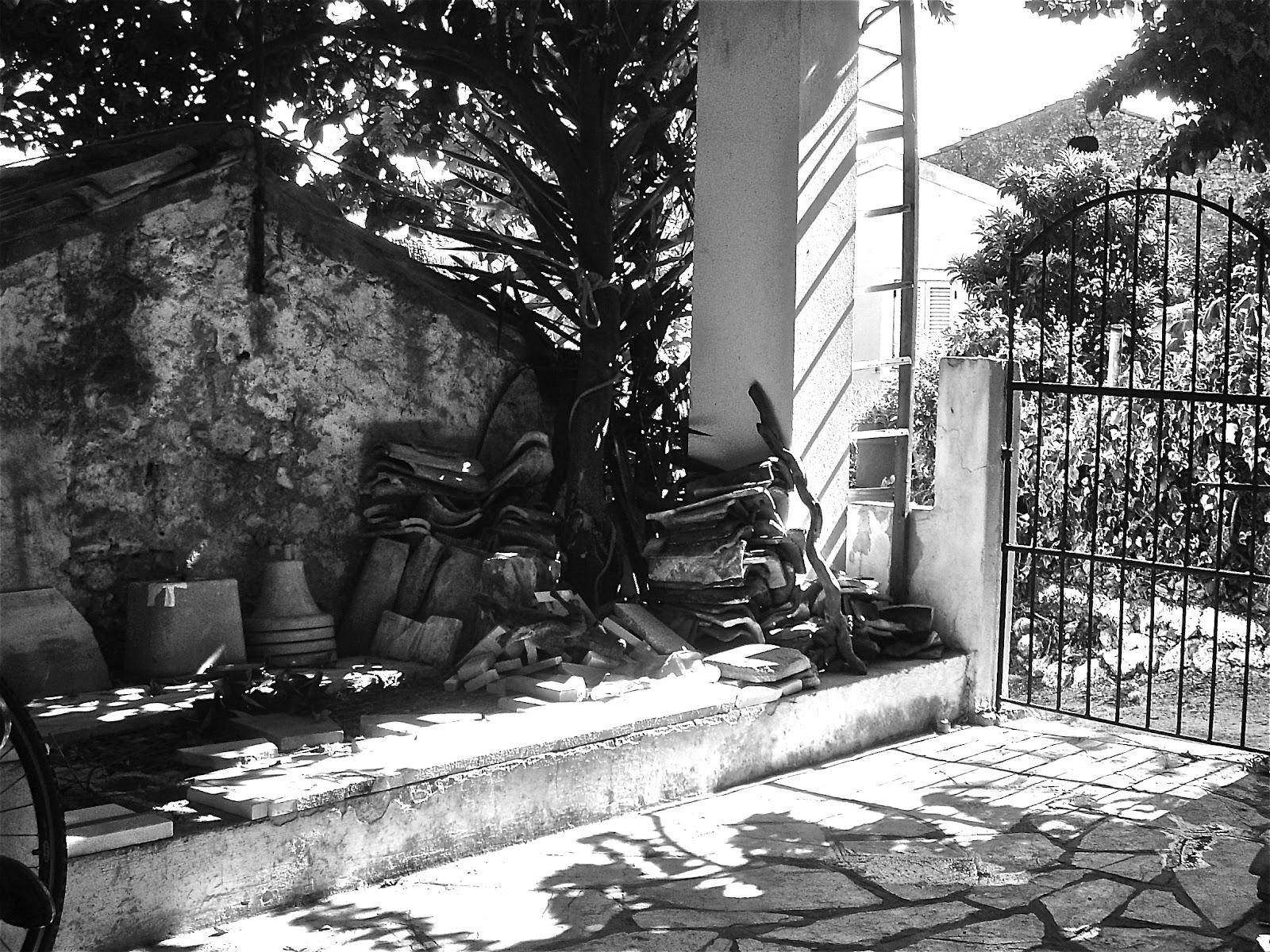
Οδός Δημοκρατίας, Άνω Κορακιάνα, Κέρκυρα
Dear Cllr Zaffar
I am so sorry that neither Linda nor I can attend at the Inquiry on 18 September 2012. I know we would very much have enjoyed contributing and hearing what others have to say on the subject of being a Brummie along with other questions you are investigating.
Linda says the attached essay on ‘Being a Brummie’ is far too long - over 4000 words - and doesn’t answer in any precise way the questions your committee is asking, but it was a good exercise for me, and who knows, some parts of it may be of interest and even use to you and your colleagues. I look forward very much to reading the O & S Committee’s final report. Consider the attached is ‘written evidence’ submitted to the committee and therefore in the public domain. Any errors are mine.  Best wishes, Simon and Linda Baddeley copied to Rebecca Short, Iram Choudry for Birmingham City's Social Cohesion and Community Safety Scrutiny Committee
‘WHAT IT MEANS TO BE BRUMMIE'
There cannot be a city in the world where combining social cohesion with integration is not a matter of concern, pride or a mix of both. Much of the world has set itself against 20th century solutions to intractable problems of human integration - partition as happened in British India, in Ireland, in Greece and Turkey in the 1920s and now, again, in the Balkans, is almost as discredited as apartheid. We know that without formal action by governments some populations will, even in the same country or city, seek partition and isolation according to identity and often economic standing, aggregating in particular districts and even by street, using politically correct codes to seek areas where they may find others like themselves or avoid ones where they will not. We know that efforts by government from bussing in order to integrate schools to making it unlawful for finance companies to ring fence mortgage lending areas have had debateable success when it comes to reducing a tendency for populations to atomise. This process can be exacerbated if implicit, or worse, explicitly approved by government agencies and businesses through ill-balanced policies and employment practices. One person’s cohesion is another’s separation. There is a dilemma here, riven with contradiction. If a community of place feels threatened in its identity, especially in its ability to socialise children into its own habits and mores and faith it will work to maintain its boundaries, pursuing initiatives to enable schooling and child rearing that sustains its fold. Thus the very social solidarity that we value by becoming associated with one group ends up harming efforts to weave a more inclusive social fabric for the larger population.
I’m Simon Baddeley. I and my family have lived in Handsworth since 1978, I arrived in Birmingham in 1973, living first in lodgings in Cannon Hill, then having explored the city via circuits on the number 11 bus route, buying a small terrace near Edgbaston Reservoir. I have worked these years as an academic with a special interest in the working relations of politicians and managers in local government. With my colleague Andrew Coulson, an ex-councillor for Selly Oak, I run an accredited course on Overview and Scrutiny at my university. I believe in evidence-based policy-making but am not naïve about the challenges this presents to elected politicians. I’ve been involved in many local groups and campaigns. I was a founding member of the Handsworth Park Association. I maintain the Handsworth Allotments Information Group which carried out local research on demand for allotments to stop the Victoria Jubilee Allotments from being entirely lost to housing development. Since 2010 I have had a plot there, with bees. I gave up my car in 2007 and have for many years advocated improved public transport, and an infrastructure for our city that encourages walking and cycling. I have lectured on local government issues across the UK as well as in Sweden, Canada, Australia and New Zealand and remain, in my 70th year, a part-time visiting lecturer at Birmingham University. With my wife, Linda, and other neighbours, we have recently brought a local voluntary handyman service from insolvency, to a situation where, renamed as Handsworth Helping Hands, we aim to provide a mix of free and paid services to vulnerable people, and carry out such tasks as garden tidying, street clearance and the laying out of neglected public flowerbeds. The following essay is one that I was invited to submit by Cllr Waseem Zaffar MBE as an attempt at answering the question ‘What it means to be Brummie'. My essay is autobiographical. It implies that I was the instigator or main actor of various events. Where this is true I am proud, but no-one is more aware than I that co-operation, collaboration and joint activity among friends, neighbours, strangers, council officers and elected members has been an essential ingredient of my active citizenship in Birmingham - no mean city.
When I was ten years old in 1952 my parents were driving me and my sister from London to Pembrokeshire for a holiday by the rocky coast of St David’s. Our route took us along the road to Wolverhampton that passes through the Black Country. As I looked east I recall peering from our car at a landscape of chimneys under a grey sky and making a remark about how ugly it was. My stepfather, a wise man as I now know, from Yorkshire, self-made but taken to living with my mother who was from a social background that included being a debutante, presented to the King at Buckingham Palace (an outmoded ritual) said gently “That, Simon, is Birmingham. In this place we are passing through they make the wealth of the greatest empire the world has ever known.” He was no imperialist. By ‘greatest’ he meant ‘very very large’, as I, brought up in the 1950s on maps of the world covered in pink, well knew. “Don’t ever forget that. This is the Black Country we’re passing through”. Not only did he mean ‘very large’, he wanted me, a Londoner and a child of the Home Counties where I went from age 6 to a private boarding school, to have a childish introduction to how wealth was made; to an idea of work that was as far outside my ken as coal-mining was to the Etonian George Orwell, before he did research for The Road to Wigan Pier.
Many years later I came back from higher education in a mid-Western university at a loose end as to what my career might be. They didn’t do the careers preparation that is normal now. I got the education at public school and later at Cambridge of someone whose employment and future were taken for granted. Not a brilliant intellect nor an assiduous student, I scraped through that privileged education until the Americans forced me to maintain A grades to stay in Grad School and even kept class registers. I recovered enough credit to be able to apply for academic work, and so was called from my temporary lodging near Trafalgar Square to an interview in Birmingham.
At New Street Station I was a little late. I asked the taxi driver to go quickly to the University
“Which one?”
“Er?”
He made a guess and drove west. I had only that childhood memory of Birmingham so I was puzzled that our route seemed, after the first minutes, to be entirely lined and even overhung with trees and hedges. I even glimpsed a lake and broad lawns on the way. The interview was nine floors up in an ugly tower block from which, while waiting to be called in, I saw, beyond the red-brick of Edgbaston campus, a vast landscape of houses laced with trees and green spaces with blue hills in the distance.
“So it’s quite a small town” I thought seeing countryside on the city’s edge. “I could get out of it quite easily”
If I had been asked in those days what I would have thought of spending my career in Birmingham, of making a life here and bringing up children, if I had any, as Birmingham citizens (I hadn’t encountered the term Brummie then), I would have laughed and made some remark like
“Hand me a saw so I can remove my legs – without anaesthetic”.
I’m familiar now with Londoners who aren’t sure of our city’s whereabouts and the cliché about the no-man’s land that begins north of Watford. To people born in Birmingham it is probably impossible to grasp the level of loathing and contempt that a certain type of southerner has for ‘the great working city’. For years after I’d come to work here I had a London relative who would wonder ‘when I was coming back to civilisation’. I, unphased by class, ethnic or religious difference in others, raised by parents for whom that kind of attitude was a crime worse than murder (to which such sentiments led, as they well knew), directed all my latent capacity for prejudice and irrational animosity towards places. And of all the places I imagined the worst, none exceeded Birmingham.
Birmingham forgave my unfounded and ridiculous ‘placism’. Well actually it didn’t. If I can personify a whole city in the style of my inane London-bred prejudice, Birmingham didn’t even notice and if it did, it couldn’t have cared less. This is not a city with a chip on its shoulder. Not for me anyway. I love it even for its drear messiness, for its accent – considered, I’ve read somewhere, the least liked in the country - which can make me stop dead and turn to greet if I hear it on some foreign street. I was amused when once another step-grandfather, retired to a shooting moor and fishing river in the Highlands, on hearing my visiting six year old daughter bubbling with enthusiasm, suggested she might benefit from a few elocution lessons. This opinion was immediately conveyed to her by my mother. They were highly amused “I’m a Brummie, Grandma,” she laughed. 
The Birmingham in which I came to work in 1973 was already changed beyond the recognition of that childhood holiday memory of a view from a car on the way to Wales. The sea of belching chimneys was near drained. The air was clean without the waft of coal fires that I could still gather when visiting my future wife’s parents in Cannock. As with other industrial cities of the UK and indeed across the rich world, the manufacture that was part of Birmingham’s core, her raison d’etre, shared – as Boyle’s 2012 Olympic Opening Ceremony told Londoners who might have missed it – with the whole of Britain, was in terminal decline, haemorrhaging all that gave meaning and identity to thousands of her citizens, bleeding away tool setting apprenticeships; whole workforces thrown out of work, hundred of small enterprises becoming as abruptly, mysteriously and poignantly desolate as the Marie Celeste. I recall seeing heavy machinery parked on some of the city’s industrial side roads, boxed up and addressed with foreign writing ready for shipping to the far edge of the Pacific. In the Jewellery Quarter post office there were more and more queues of people with small parcels of unfinished metal goods being sent off for cheaper polishing 10,000 miles away, to be posted back to a diminishing pool of workshops as more and more were converted to retail outlets. A landscape of exciting possibilities was turning into one of hopeless impossibility.
As is the case with history in the making, I missed the full grain of these tectonic shifts in the global economy – seeing instead a sequence of separate events that didn’t make any sort of clear picture of what was happening to ‘my’ city. It was only in the late 80s after the riots that some called ‘rebellions’ – we were ever debating different narrations of the slow trauma that had hit Birmingham – had had their worst impacts on the very people brought in to enliven the local economy, as our great empire imploded.
My first home in Birmingham was at 1 Daisy Road, near the Edgbaston Reservoir. From there I got married. Linda and I were already matched when it came to combining our salary earning jobs (she a primary school teacher) with voluntary activity. We started The Reservoir Roads Residents Association, initially to campaign against the noise and nuisance, especially car parking in our narrow streets, from events at the Tower Ballroom. We took them to the Licencing Committee and won a deal that saw the ballroom funding an overflow car park. John Marriage QC for Mecca, accused us – eighty neighbours assembled at the licencing committee - of being ‘brown shirts’ trying to provoke indignant rebuttal that would make us look stupid. We didn’t rise to that ruse. Later, when the city wanted to sell off a tract below us for housing, our association, consulted by the council, were successful in getting a playground included in the final plan. We also set off a wasp’s nest of successful protest after city engineers tried, misguidedly, to redirect traffic past the local primary school to relieve congestion at the end of Ladywood Middleway.
Later a more sombre and divisive circumstance; a friend had taken Lin and I to his Working Men’s Club in Weoley Castle. Visiting us, he suggested we all visit ours – The Mount Pleasant on Reservoir Road – where I, from Westminster and Cambridge, was proud to have been accepted as a member. On arriving we were welcomed as usual at the door, but Tom, trailing us, was barred and told that it was ‘a members only evening’. I once saw an outside toilet in Alabama bearing the sign ‘coloureds only’ but I’d never seen Jim Crow at work in England. Of course I’d read about it; had heard of signs in Birmingham windows letting flats which said ‘No dogs or coloured’. We were deeply embarrassed. Tom, inclined at first not to dignify the insult by even noticing it, pursued the incident through the CRE and we, with another friend, were witnesses able to use the articulate skills of a teacher and an academic to strengthen Tom’s case that the Mount Pleasant exercised a colour bar. I learned later, when the club was forced by law to open its doors wider, that this was the first successful case of its kind in the country – so skilful had such clubs been in camouflaging their prejudices. It didn’t make me feel good at all. I had been welcomed into a working men’s club and helped turn that hospitality into a poison chalice for them. An old Irishman took me aside in the aftermath as I sat bravely, but in Coventry, forcing down a pint in the club bar;
“Simon, Simon, Simon. Oh dear, oh dear, oh dear. We know you mean well. They used to treat us like that. We were the duck eggs. Now they do it to the coloureds. Simon you’ll never understand. I see all these people (I could almost see his parentheses on ‘these people’) everywhere. I see them all the day, Simon, everywhere! I just want to have one place where I can be among my own.”
Our residents association chairman – a sober neighbour – said quietly to me
“I’m very disappointed in you and Lin”
He’d put me up for the club and was on its committee. So here was I, possibly the only man in the UK who belonged both to a Working Men’s Club in Reservoir Road in Birmingham and the Savile Club in Brook Street in London, understandably unwelcome in the first and shortly to resign from the latter, because it refused to open its doors to women. Was I getting overstretched in self righteousness, or was it that Birmingham’s non-conformist tradition of radicalism, unconnected to party political allegiance, had proved infectious?
One day in 1985, just after Carnival in Handsworth Park, I walked my four year old son down the Lozells Road, a few hundred yards from our home in Handsworth. The road had the reek of burning, buildings scorched, windows smashed, cars burned out, after the mayhem of the previous night. We’d had phone calls from foreign relatives asking if we were OK and had stepped outside and heard sirens in the distance. I wanted my son to remember this in later years (as a 30 year old, he was out with his expensive camera in Newtown taking dramatic photos one torrid night in July 2011 as the Barton Arms was looted and set alight). Mrs Thatcher’s Lord – Willie Whitelaw - had cautioned her not to view these events as just criminal. So, amid all the local enquiries in the shocked aftermath, we had a very senior civil servant sent up from Number 10 to visit. Denise F, of Haughton Road Residents, organised a spread for him. Twenty or so of us from different local groups were around a table in a borrowed room by Richmond Hill. We were asked to think aloud about what had happened. A woman, who worked for a lift company on Hamstead Road, waxed furious at the failure of the police to do something about ‘these people’. She was steaming with resentment and in this small assembly of white people she wanted to send a message from Handsworth and all of “us” that “enough was enough” and “we want you to do something now to deal with these people and help us to leave the area”. Denise interrupted her in mid-flow. “Excuse me,” she said, as she still does nearly 30 years later when making a public point, “but who’s ‘we’? I want this gentleman to know that we are all from Handsworth and we’re all disgusted by what's happened, but that doesn’t mean we want to leave Handsworth and I’m not sure who do you mean by ‘these people’?”
I remember two things, no three; how that intervention set us all talking and the civil servant listening; the look of astonishment and utter dismay on the face of the first woman who thought she was among her fellows; and the swell of pride I feel to this day at living in Handsworth with neighbours such as these.
Jump forward twenty years. Jump past Birmingham’s great and quite successful endeavour at transforming itself into a post-industrial city. Jump past my and my friends’ and neighbours’ campaigns for the future of Handsworth Park, my short history of the founding of that park, made easier by the community history resources of Birmingham Central Library, our campaign to save at least part of the Victoria Jubilee Allotments, working with local people and helping make two telling TV programmes on the subject, so that we could see, in Handsworth, the biggest new municipal allotment site in the UK since WW2, starting and running a residents’ association in our road, successfully lobbying a rating tribunal for changes in the valuation of our and our neighbours’ homes. Jump past petitioning over local issues to do with night noise, conserving green verges, resisting unwelcome planning applications for changes of use or incursions on green space, cleaning up the church yard of St Mary’s, Handsworth. Jump past helping start The Friends of Black Patch Park, a successful campaign, in which we were joined by the descendants of the Gypsy families, who had been turfed violently from the Black Patch in the 1900s in order to lay out that same municipal park now under threat of being used as retail space.
It’s 2005, just twenty years since the grim events of 1985. Jump to me thinking such things will not happen again. In summer 2005 a tale spreads with help from local radio stations, some supported by the Home Office now, and of course via forums on burgeoning social web, that a young Black girl has been repeatedly raped in an Asian owned hair products shop. There are riots. A young Afro-Caribbean schoolboy on his way home and, until now, uninvolved in these events, is murdered in the street by a gang of Asian youths.
The media, as is their job, were on our streets in some numbers, along with innumerable police officers in yellow tabards, seeking and collecting evidence from people of all ethnicities in a way that would have been inconceivable twenty years earlier. I was cycling down Lozells Road feeling depressed – an unfamiliar mood brought on at realising that warnings I’d thought alarmist, even inciting, had proved so correct; miserable that so much angst, from which I, with job, good health and unalloyed optimism instilled since birth, could not begin to experience – that such a desire for futile and anarchic attempts at violent resolution still lurked unseen and had had such cruel consequences. I was dismayed that complex economic and cultural differences seemed to have spawned a myth that put together multiple rape, Asian business success and hair products. What kind of alienation and anomie could have enabled such fatal stupidity among my neighbours? I parked my bicycle outside the Pak Supermarket (it’s owner once said, unless this is another if nicer myth, “Some people call me Paki. I’ll give that name to my shop”). I bought some vegetables and I chatted to the man at the till. That was pleasant, given we were all on edge. As I walked out of the shop I clumsily jolted over a display crate of tomatoes which spilled over the pavement, even into the road. I started blindly, almost tearful at this stupidity added to depression, to pick them up. “Don't worry, Don’t worry,” cried the shopkeeper hurrying to help, “No problem”. Then a smart little saloon car drove up and parked right by us and out hopped a beautiful young black woman, my daughter’s age, and she too began helping me to pick up the spilled tomatoes, all three of us chatting as I apologised. I cycled a few yards down the road and then – I an unbeliever – mouthed a prayer, “Thanks my lord and my redeemer”.  I get these ridiculous signs now and then, which I find odd, not embarrassing, in fact joyous, but wonder why they come to me, often just when I most need them.
I think it was only two years later I was at one of the local police consultative meetings at Rookery Road Fire Station – a new building with meetings for the use of community groups. These meetings are never fractious. ‘We’ are a sample of familiar faces from across several neighbourhoods within Handsworth, Lozells and Soho, including people of every background who’ve been attending similar meetings for decades. A lot of us know each other and enjoy our debates. We listen to local crime statistics, report concerns in particular areas and argue about detail.  We had been discussing the increasing visibility of young white prostitutes on certain streets. One Black woman began to wax voluble about “all the new comers” – Eastern Europeans, especially Poles but others from an expanded EU – and mentioned that “these people” were “bringing down the quality of the area”. There were a few nods of agreement but suddenly someone said “Wait a moment! What are you saying?” There was a hush and then widespread laughter. The meeting then moved on to a discussion of the causes of prostitution, the work of the police and social services in trying to bring these young women into the protection of social services, trying to find and arrest their handlers. Someone said “and why have we no Eastern European groups represented here?”
Answers to the questions posed by the committee are complicated or they are not answers. Writing down my thoughts makes it a easier to admit what I don’t know. I would like to please the no-nonsense element of this city, to have had some snappy bullet points that would cut to the heart of the issues. That would be lazy. Of course there must be summaries and lists, but I hope we can also read stories that describe how individuals find the balance, amid all the contingencies of life, between the many identities and separate loyalties that accompany growing up in a diverse yet connected population. The variety that both pleases and worries is not just out there. It is also inside the home and deep inside individuals. There is a challenge of external governance but there is also one of internal governance. The stories I hope to see are, like mine, the biographies of people living in a complicated world – one which will get even more complicated, demanding emotional literacy and private courage. Citizenship is eroded in a globalised economy, having more to do with the papers people need to work than with identity and duty. Place is eroded in a joined up world just when social fragmentation makes us yearn for somewhere we can stand our ground. Identity is no longer donated by birth - or not securely so - but must rather be striven for, invented and created by every individual. Citizenship is not what’s on a passport. It’s a journey that someone must make, as in other times they made pilgrimages. Some of us from birth learn of the importance of the Haj. I would like examples of pilgrimages that others can imagine taking. Children not equipped at home or by other institutions with the necessary navigational instruments and skills to make this highly personal journey are deprived; at risk of becoming no more than consumerist ghosts.
Handsworth

Monday, 27 August 2012

Heat

We left Birmingham amid rain, flying through the night. A mix of reading, dozing, with now and then a touch of turbulence to mark our steady passage through the darkness. Lin’s picnic of bread rolls and ham with mustard, a cup of coffee from the trolley to sip, an exchange about the time. I turned my watch forward two hours; read some more – Henning Mankell’s Italian Shoes – enjoying its icy Baltic landscape. Catnapped. Our almost unnoticeable journey - made easier by staff kind enough, without charge, to place us in a front row with leg-stretch space - comes to an end with a familiar descent, a tiny bump, a reaching up into lockers for hand baggage, a ludicrous bus ride under 50 metres to the ramp into the terminal at Kapodistria, a few seconds examination by a young woman immigration officer, a few minutes as luggage bumps onto the carousel and we’re on our way in a car left for us at the airport; the quiet pleasure of arrival laced, not with the strangeness of a new place, but with the delight of weaving a familiar route through the sleeping city, along the esplanade, onto the dual carriage way to the T-junction at Tzavros where the Paleo road turns away from the sea and we draw closer to invisible mountains, taking the turning at Doctor’s Bridge on the road to Sidari; after two kilometres the sharp turn right for Ano Korakiana, whose street lights start to show through the trees
“There’s a nasty pothole just here” I mutter
“I know I know”
But it had been filled in since we left in May. Then we’re stopped on the road above our steps with street light to see the way down. I cart our cases to the door; fumble with keys – one carrying an LED to show the keyhole; let myself into our house’s hot interior, turn on water and electricity, plug in the fridge; get the kettle going for a cup of tea and coffee. Lin joins me, unpacking food from England to go in the fridge. I turn on the air-conditioning for 30 minutes while we get used to expected but unaccustomed heat, halve our last picnic roll and sit with our hot drinks, before turning in to sleep as the light grows outside.
We sleep until midday – 10am UK time – then rise, creakily, still stunned by heat.
“Shall I turn on the air-conditioning again?”
“No you will not” says Lin “Have you any idea how much electricity those units use? Open more windows”
Outside is as hot as inside. Heat is in the stone of our deep thick walls, the concrete steps and path, stored in the village. Blood heat weather makes me dozy until I get used to it, slowing myself. We’d come in August to attend Paul McGovern’s Agiotfest event in a small dry sloping field behind the houses in Ag.Ioannis, a mini-concert supported by local businesses. Sally who runs a bar in Ipsos sold hot dogs and beefburgers. Another stand sold light and heavy Corfu beer and village white wine - all chilled.
Lin and I pulled up chairs at a vantage point below a venerable olive tree, and enjoyed the music. Friends appeared, as you’d expect on an island. Mark came up and  and tapped our shoulders. So good to see him.
“Hi you two” He’d just left work “I’ve driven across Greece today, from Evvoia”
“How’s everything?”
 “Fine. Busy”
We saw Lionel, Paul M and Lula, Hilary P, Sally from Ipsos, Colin, Sue, Kostas and Georgia  – sometimes sitting with them and they with us. Later I stood beside the towering speakers beside the stage to watch the acts more closely and when Steve Gibbons arrived, round midnight, Lin joined me and we danced.
*** *** ***
Lefteris lost the greater part of his vegetables in the heat as July shifted to August. We'd seen his garden bare below the washing line.
"In one day and night, everything was gone. Vasiliki watered but it was too hot."
"The grapes too?"
"Everything"
His surviving crops are on a small estancia above the village and he's still managed to grow some kolokithakia in the garden here. Ours planted before we left have not survived. The mainland and the island's further heights are lost in heat haze. The sea's like steel. Mosquitoes are rare. Swallows have gone. Ants and wasps abound. Work is best done in the early morning when there's dew; even a small breeze. Then things go quiet until the evening. High summer is no time to be in the Mediterranean. We look to the cooler weather of September. I've used the rare ripe lemons left in the garden to make citron pressé adding ice and bowl of water to cool my feet and keep ants at bay. Winter's the risky season in the north; here it's the summer that's risky. Northerners share imagery that collates winter with shivering and the seasonal distemper of long nights, assuaged by Christmas. In the modern world it’s seldom so - with shops and cars, salted roads and central heating. When for 24 hours a rare snow storm evades the mighty Gulf Stream and closes our modern spaces, the weather personalities don thick clothes and gravitas to pass on official warnings to an insufficiently tremulous population to take only journeys that are "absolutely necessary"
In Britain winter’s danger’s kept at bay, so muted in the cities where most of us live, we rejoice in the exceptions, turning out in city parks to throw snowballs, slide down slopes on plastic sledges (so seldom used they have to be bought anew); imitating figures in a landscape by Bruegel.
Here, even in evergreen Corfu, it's summer’s bone. Hay, no longer grazed by sheep and goat, tempts madmen hungry for the hullabaloo of a bush fire, ally of land robbers greedy to lay concrete over burned woods. Stoves in winter disperse the cold; in modern homes here, air-conditioners reverse the process fanning heat into the street.
Perhaps this is why Christmas hasn’t been nearly as important in the Greek religious calendar as Easter. Mediterranean winters haven’t warranted the hieratic borrowing of our ancient mid-winter cattle slaughter and meat salting combined with pagan ceremonies to recover a sun, that doesn’t come near so close to disappearing down here. Of course in Greece, no more than Britain, it’s hardly fatal weather; not like the furnaces of Arabia or India or the red spinifex wastes of central Australia, but all the same, when the sun rises over the edge of the mountains, it flares through the house as though studio lights have been turned on, projecting patterns of light and shadow, dazzling me through even the small kitchen window. Turning away I’ll feel its heat on my neck and shoulders.
The effect’s stronger when there’s no wind; when that furnace door opens over an oily mirror at sea, for a few seconds made discernible on the horizon as an orange coin, before a soundless detonation of light.  The summer’s no friend in Greece, provides no cricket-green days between showers. And yet in the village - in villages across the olive belt - the torridness of the day enlivens evenings. Its relief from the heat of the day brings out families for meals at tables laid by the street amid geranium and bougainvillea, roses, jasmine and vine, and children playing late.
Our close knit houses are - like an ingenious theatrical set - turned inside out. As the evening progresses characters enter and exit. The occasional car passes left-right and right-left on Democracy Street, shining a spot on a neighbour, a grey haired lady in a print dress. She leans, a practised actor, on the green iron railing above the thirteen whitewashed steps that zig-zag twice to the street. She chats to someone below - one of the main characters sat in front of his house, Lefteris, who’s already been talking cross-stage to the family in the garden opposite hidden by a fig tree,  sat round a table under a vine canopy. At a window in the high building across the narrow street there’s a fleeting silhouette, then Lin’s on stage chatting from the alley to Lefteris family who’ve joined him. Now there are two leaning at the railings. I’m in the picture, entered centre from the steps of our balcony. Natasha gets up so we, who’ve not seen her since we arrived, can kiss and embrace.
She asks how we are; speaks of the fires on the island, some near here, some below the city. The sound of children runs in the wings. All of a sudden there’s a frieze of them strewn across the steps, cycling to and fro on the street, calling to one another, acknowledging grown-ups, even us
“Hullo Simon”
“Hullo Linda”
Extras stroll up and down, discrete in the shaded background – ready to join in an opening song and dance routine.
*** ***
This adventure of recovering my stepfather's films - the first made in 1959, the last in 1986 - continues. Lucy Danson at Delta has sent me copies of her artwork and a draft of my essay on Jack that will go as part of a leaflet with the boxed set of original Out of Town Programmes that Charles Webster plans to put on sale on October. We await Endemol's approval.
Simon in 2011 on Democracy Street; Jack in1986 at Raven Cottage
...but it looks as if these 34 episodes of Out Of Town are the only ones left. All the rest, like potsherds from an old dig, are cracked, or incomplete. These are the last and only real original broadcasts that Jack made of his twenty one year series – Out Of Town – made available by my friend Charles Webster and his colleagues.
*** ***
Cllr Waseem Zaffar, one of our ward councillors, is chairing the city's Social Cohesion and Community Safety Scrutiny Committee, inviting representatives from voluntary and community organisations in four areas of the city - Brandwood, Bordersley Green, Kingstanding and Lozells and East Handsworth - as well as some city wide organisations, to take part in a small workshop session to discuss some of the questions raised by the Enquiry, speak to them about their experiences and hear what more the Council could do to enhance relationships between communities...on the 18th September from 4pm - 6pm in the Council House, Victoria Square. When I told Waseem I was really sorry I couldn't make it he asked me to send a letter with my thoughts on:
• Whether residents of Birmingham consider themselves Brummie
• What gives people a shared sense of belonging and identity – is it their street, neighbourhood, city or other factor?
• How much pride there is in Birmingham as a place to live and work
• What positive stories are there around people with shared values coming together to make a difference?
• How do we engage with new communities and how do we support their integration into the city?
• What more could we do to make people proud of living in our city?
I shall have a go at these interesting questions. I'm not sure if they are answerable.

Thursday, 15 March 2012

London for a day to see a man about a book

I was at Aylesbury Vale Council on Tuesday evening leading a seminar on Chairing Skills for Scrutiny. So much of this is less about the obvious matter of politeness, which unlike etiquette isn't a skill, but about getting the scoping right...
Chairing is needed to steer through stages of scrutiny
...and setting the scene so that as many as possible know and agree what they are looking for, or if they begin to find out something that comes as a surprise, being able to recognise the unfamiliar. Good questioning tends to follow. I've simplified types of questions to five - rhetorical, open, closed, probing and reflective. They gain their strength in combination. Standing orders and rules of debate are almost irrelevant with Scrutiny since it doesn't make decisions, doesn't by and large entail voting and prospers through influence rather than authority.
From Aylesbury I took a train to London...
Up-line at Aylesbury
...getting into Marylebone by 10.30pm and checking into a nice cheap hotel on Gloucester Place - with only Sky on the TV and strange landscapes on the wall...
...a toy boat inside the glass of one. How I'd have enjoyed that as a child! Dropping off my bag, I cycled out to find a place to eat and had to go all the way to Euston then up to the edge of Camden Town to find an open Indian Restaurant. The ethnic mix has shifted. I could have tried Colombian, Mexican, Lebanese, Moroccan and plenty of Japanese but the mix has changed and I wanted bhaji, poppadoms, paratha, balti...
The next morning after a comfortable sleep and a shower I had breakfast in the basement full of young French tourists served by French students. I was probably the only one there with a UK passport and certainly the oldest. It was a nice place since my other cheap London Hotel has gone up-market. Why should I pay more than £50 for a night in the centre of London? I wrote complimentary things in the feedback form and said goodbye at the desk and a young man carried my bicycle all the way up a narrow flight of stairs to the street. I worked my way across a town. I can't get lost in this city. Off Oxford Street I turned into Soho via Dean Street. How thoroughly established the bicycle is becoming in the capital; more and more people riding the familiar Barclays 'Boris Bikes'; more and more cycle shops open every time I visit. Unlike the situation in - say - Amsterdam, the bicycle still carries a frisson of subversion. People grumble about cyclists, sometimes vehemently, even venomously on web sites' in reader's messages in London papers and the congestion of London makes cycling its streets even more satisfyingly efficient as one sails among vehicles slowed by their own proliferation.
Charles Law at Simons Muirhead & Burton in Frith Street is giving me advice on my rights to publish one of my stepfather's books, that might be sold alongside the re-issued DVDs of Out of Town (scroll down 'Saplings' for back story).
Charles Webster of Delta who've bought a licence from Endemol to re-issue the DVDs, met me and the other Charles in the lobby, I keeping an eye on the 'chess-clock' to stay inside the hourly fee I've allowed myself. Charles W showed me the thirty four recovered versions - transferred to DVD - of original Out of Town broadcasts lent him by Endemol. Before Christmas, when these new and original episodes were unearthed via Kaleidoscope, I was convinced they belonged to me. Since then Endemol who own the other films about to be re-issued have 'discovered' that these tapes are part of a large batch of material they, or their predecessors Primetime, then Southern Star, bought from Meridian TV the successor to Southern Television which lost its franchise in 1981.
Charles Webster of Delta with the 'new' 34 episodes of Out of Town

*** *** ***
ΠΡΟΣΚΛΗΣΗ
Το Διοικητικό Συμβούλιο του Αγροτικού Συνεταιρισμού Άνω Κορακιάνας, καλεί τα μέλη του Συνεταιρισμού σε επαναληπτική Γενική Συνέλευση την Κυριακή 18/03/2012 και ώρα 11.00 π.μ. στην αίθουσα συνελεύσεων του Αγροτικού Συνεταιρισμού, με τα παρακάτω θέματα:
1.Τροποποίηση Καταστατικού – προσαρμογή στο νέο θεσμικό πλαίσιο (απόφαση για αυτόνομη πορεία Συνεταιρισμού)
2. Μετατροπή έκτακτης εισφοράς σε συνεταιριστικό κεφάλαιο.
3. Επιστροφή μερίδων θανόντων συνεταίρων
4. Διαμόρφωση θέσης ενόψει της Γενικής Συνέλευσης της ΕΑΣΚ στις 19/3/2012
5. Ανακοινώσεις - Διάφορα
Ο Πρόεδρος ΔΣ: ΣΕΒ. ΜΕΤΑΛΛΗΝΟΣ
Ο Γραμματέας ΔΣ: Γ. ΚΕΝΤΑΡΧΟΣ

CALL
The administrative council of the Ano Korakiana Rural Co-operative invites members of the Association to a General Meeting next Sunday 18/03/2012 at 11.00 am in the Assembly Room of the Farmers Union, with this agenda:
1.Modification to the Association - adapting to the new institutional framework (to pursue an autonomous Cooperative route)
2. Convert special contributions to a cooperative fund.
3. Back portions for deceased partners
4. Make arrangements for the General Assembly on 19/3/2012 of the Union of Agricultural Cooperatives (EASK)
5. Announcements - Miscellaneous
The Chairman of the Board: SEB. METALLINOS
The Board Secretary: G. KENTARCHOS
*** ***
Sihlangu
It's flattering and touching when a stranger decides to tell a story about you, with added music and design - a page from my old diary with an owl's feather found at the Pierian Spring, το ύδωρ της Πειρήνης, at Corinth - as has Sihlangu Tshuma, Journalism student at Birmingham City University, from Bulawayo, Zimbabwe, writer of these words on his country:

Mugabe: the author of smart genocide
The silence of the lambs: when Christians stand aside and look

He came to visit us a few days ago, showed me a film he'd made at Uplands Allotments and another of Bonny in the Garden of Eden, and one of my friend Rajinder Rattu  - and, with a dinky little recorder, encouraged me to talk about mum and Maria - 'the other women in my life'

Monday, 5 December 2011

Posting messages on a Greek website

I want to remind myself of words and phrases that accompany posting to a Greek website - in this case Ano Korakiana's. These may be helpful given that translation programmes - like Google Translate - do not cover translation of commands and responses on the site. Normally, names, emails and security codes are written in the Latin alphabet - ABC - rather than the Greek - ΑΒΓ. It's fine on signposts for Greek places to help a foreign traveller, but as a rule I don't like using Greeklish - phonetic transcription of Greek in Latin text as in "Yasoo" or "Efharisto" rather than «Γεια σου» or «ευχαριστώ»

Νέο σχόλιο - New comment

Όνομα - Νame

Μήνυμα - Μessage

Κωδικός Ασφαλείας - Security Code (where you enter a code to prove you're human)

Ο Κωδικός Ασφαλείας που γράψατε είναι λάθος - Τhe Security Code you entered is wrong

Αποστολή - Send

Το μήνυμα σας αποθηκεύτηκε. Θα εμφανιστεί μόλις εγκριθεί από τον διαχειριστή - Your message is saved. It will be displayed once approved by the administrator.

Δείτε το σχόλια - View comments
*** ***
The other night my sleep was fitful. I was at supper; elegantly dressed guests. White tablecloth. Bright clear water. I held my breath but after a while could do it no longer. Not wanting to seem gauche I gently allowed myself to float slowly upward hiding the fact that my lungs were bursting and I was on the edge of panic. I rose far too slowly noticing the table and its guests receding below me. Just before I began to flounder I woke.
"I had a weird dream" said Lin. I didn't mention mine, in the aftermath of my embarrassment.
"I was walking in a town. Wearing nothing. I was rather embarrassed. You said 'Don't worry. It'll be alright nobody'll notice' You walked in front. I saw a piece of material like a sarong lying on the ground so I picked it up to wrap it round me because I felt people were staring. I stopped to put it round me. This woman stopped and between us was a square drain. She was holding a stick. I said something to her.  I looked at the drain. The sarong dragged into the water. It was all wet at the bottom. The woman said 'Yes but I'm going to kill this cod' and I saw the silhouette of a large fish swimming below the surface. She raised her right hand with the stick. I woke up."
I told Lin my dream
"That sensation of suffocating."
I've not known it since I was a child. These are amniotic.  It's worry and excitement; apprehension and anticipation."
*** ***
I cycled with Oscar to an office on the Tyburn Road to check over the equipment and files held by an accountant who's rather abruptly resigned his chairmanship of our credit union. The route on the road is ugly, traffic ridden through Birmingham's leadville, but I travelled via the towpath of the Birmingham and Fazeley Canal, up to Aston, under the clanging concrete overheads of Spaghetti Junction, Oscar running with me. Both contented. Next to the office on Tyburn Road was a dirty spoon café - difficult to find in the city centre. I had a fried egg on toast and a mug of tea scanning stories from an abandoned redtop until it was time for my visit. The woman behind the counter went out to fuss over Oscar, waiting patiently in the pannier of my bicycle leant against the window. Having got a measure of what needed moving, we headed home the way we'd come passing under the self-store warehouse that reaches over the waterway to rest on fifty four squat pillars, reflected light dancing on the opposite wall, inaccessible and unmarked.
*** *** ***
On Monday that relentless actor in the global economic crisis - the rating agency Standard & Poor's - threatened to downgrade the credit standing of 15 of the 17 euro nations, including France's and Germany's AAA listing...

Come Thursday-Friday's latest do-or-die Eurozone summit in Brussels, we draw closer to the moment when historians may record that it was decided to maintain or end the idea of European fiscal union:
....With the fate of the 17-nation single currency at stake at a summit this week, 20 years almost to the day since the Maastricht summit at which European leaders agreed to merge their monies, the same battles are still being fought out. Between sovereignty and federalism; between 'stability' and growth; between more solidarity and stricter discipline; between a directorate of big states and a more democratic organization for the continent; and between a tightly-knit "core Europe" and a broader but looser union. The outcome of Friday's 27-nation European Union summit may determine the course of the world's largest trading bloc. One road leads to a core group of euro zone states forging ahead with closer integration; another to a continuation of the current, multispeed Europe limping along at the pace of the slowest in the convoy; and a third toward a potential breakup of the currency and disintegration of the Union.
*** *** ***
In readiness for a session on our scrutiny module next week I'm preparing a morning with my colleague John Cade, leading a discussion about political-management working relationships. with a film I made in 2009 of John at work in Birmingham City Council.

A conversation, recorded for Birmingham University on 10 March 2009, between Cllr Alistair Dow, Chair of the Scrutiny Co-ordinating Committee of the City Council and his lead officer, John Cade, Director of Scrutiny; video streamed with permission of the participants, solely for teaching and research. The film divides into four sections.

Clip 1: 00.30 The Bank of Birmingham
Clip 2: 08.00 Possible 'Call-in'
Clip 3: 16.47 Scoping
Clip 4: 31.04 Seminar on 'Call for action'

Each extract deals with aspects of the way a politician and an officer, with key roles in Scrutiny, work towards decisions about the working of an important local government function.
*** ***
At Lozells Methodist Church in Lozells Street a number of us met to try to thrash outs ways of setting up a Community Development Trust. The cost of the meeting came pout of the last of this year's Community Chest* for the ward. There's always a sense on these occasions of re-inventing something for the umpteenth time, but it's good to meet new people and see old acquaintances and talk about the places where we enjoy living; rehearsing what matters and where and how- ten years hence - we'd like things to be. I find the company the better for the fact that there's minimal chance of money coming to the area, that as the recession continues the various communities and non-communities of the area are whether they know it or not to be forced to be more self and group reliant, thrown back on our own devices, which isn't so bad.
Pauline, Mike Tye, Lincoln Moses and Aftab Rahman at my table
Cllr Waseem Zaffar posted on Facebook:
Excellent session at the ward visioning workshop led by the North West Birmingham Development Agency on developing a partnership arrangement for third sector and resident groups across the ward. Fantastic attendance from local activists who offer so much expertise, skills and knowledge. Many thanks to all those who attended including Michael Brown, Aftab Rahman, Dilbagh Dham,i Doreen Osbourne, Jo B Midland Heart, Gharib Bani, Khalid Mahmood, Simon Baddeley, Sajid Shaikh, Shahida Choudhry. So proud to represent a ward that has so many active residents! THANK YOU!
Working on a Community Development Trust on 6 December 2011
*From Cllr Mike Whitby's speech on the state of the city in October'11: We are taking forward the Localism Agenda placing Ward and Constituency Committees at the heart of the Council’s approach to localisation, and by doing so the City made a commitment and allocated £4m Community Chest across the 10 Constituencies ensuring that decisions made locally could also be funded locally. We have continued to see support on a local basis for such things as; gating schemes, local carnivals, floral schemes, youth projects & sporting schemes.

Saturday, 3 December 2011

«Αποφασίζουμε»

At the end of October, in the run-up to the G20 meeting in Cannes on 3/4 November'11, President Sarkozi and Chancellor Merkel - Σαρκοζί και Μέρκελ - pressed George Papandreou, who was then still Prime Minister of Greece, to decide whether his country planned to remain in the Eurozone....: “Εμείς αποφασίζουμε για την Ελλάδα”. To many their words came out as "We decide for Greece"

On 1 December 2011 on the Ano Korakiana website:

ΑΝΑΚΟΙΝΩΣΗ
Στις 28/11/2011 πραγματοποιήθηκε η 2η Λαϊκή Συνέλευση των κατοίκων της Άνω Κορακιάνας για το χαράτσι της ΔΕΗ. Δηλώνουμε ότι θα αντισταθούμε οργανωμένα και συλλογικά στη ληστεία και την υποβάθμιση της ζωής μας και αρνούμαστε την πληρωμή του χαρατσιού για τα ακίνητα.

Α π ο φ α σ ί ζ ο υ μ ε:

- Κανένας εργολάβος με εντολές διακοπής δεν θα πατήσει το πόδι του στο χωριό μας
- Αναρτούμε πανό στις εισόδους του χωριού, μαζεύουμε τα χαράτσια και  δημιουργούμε δίκτυο επικοινωνίας και άμεσης παρέμβασης για να εμποδίσουμε τη διακοπή του ρεύματος
- Κανένα σπίτι χωρίς ρεύμα. Είμαστε αποφασισμένοι να επανασυνδέσουμε το κομμένο ρεύμα.
- Συγκροτούμε Λαϊκή Επιτροπή για τον καλύτερο συντονισμό της δράσης μας

ΚΑΝΕΝΑ ΣΠΙΤΙ ΧΩΡΙΣ ΡΕΥΜΑ
ΚΑΝΕΝΑΣ ΜΟΝΟΣ ΤΟΥ ΣΤΗΝ ΚΡΙΣΗ

ΣΗΜ.: έχει ξεκινήσει και στο χωριό μας και δυναμώνει από βδομάδα σε βδομάδα, η κίνηση-αντίδραση που εξελίσσεται και σε άλλα χωριά της Κέρκυρας κ.ά., ενάντια στους έκτακτους φόρους στα ακίνητα, που εισπράττονται μέσω των λογαριασμών της ΔΕΗ, αλλά και της απειλής για διακοπή της ηλεκτροδότησης σε όσους δεν πληρώσουν.

"No to the poll tax"

NOTICE
On 28/11/2011 the second People's Assembly of the residents of Ano Korakiana debated the property tax charged through bills from the Public Power Company. We declare that we will offer organised and collective resistance to this robbery and degradation of our lives and we refuse to pay the increased property tax.

W e  d e c i d e :

- No contractor with disconnection orders sets foot in our village
- We post banners at the entrances of the village, gathering to ensure we are in touch with one another to organise collective interventions to stop disconnections
- No home will be be without electricity. We are determined to reconnect homes whose power supply is cut off.
- We form a Popular committee for the better co-ordination of our activities.

NO HOME WILL BE WITHOUT ELECTRICITY
NO-ONE WILL FACE THIS CRISIS ALONE

What has begun in our village grows stronger from week to week, spreading to other villages of Corfu, against the extraordinary taxes on property collected by the Public Power Company using the threat of disconnection of power against those who do not pay.
*** ***
Linda and I, now in England, were discussing how we should conduct ourselves.
"I'm not sure" said Lin "whether we, as foreigners, should join in."
"I know. I'm unsure" I thought for a while "We've already paid the first of the two bills containing the tax increase" We left the money with friends. "We've still another property tax bill to pay."
Lin was silent.
"You know what?"
"?"
"I think it's right we should pay, but I would, if someone was about to have their electricity disconnected for non-payment, stand in any peaceful crowd that sought to intervene by gathering between someone's home and the contractor's workmen."
"I'd do that" said Lin.
Πρέπει να αποφασίσουμε...
*** ***
Athens News on 2 December reports the new Prime Minister Lucas Papademos saying to Parliament at his first session of PM's questions: "I do not think it is correct to cut off the power supply to households that cannot afford to pay..." Indeed something has to give as yet another instalment of the mighty bail-out, the 6th tranche, money on unimaginable scale, is agreed. Nick Malkoutzis, deputy editor of Kathimerini's English Edition, points out in his blog Inside Greece that...
...the impression is often created that Greece is being unfairly rewarded with 'cheap money despite failing to get its act together. The country is continuing to spend much more than it earns in revenues but its large deficit is not just down to the slow pace of public sector reforms, the worsening recession has deeply affected the revenues side of the equation as well....Greece’s inability, for whatever reason, to get its public finances on track does not change the fact that the bulk of the money Athens is borrowing from its eurozone partners is going toward repaying foreign banks, investors and institutions and only about a fifth is being spent on public sector salaries and pensions....the Greek bailout is by and large a recycling of money from eurozone taxpayers to European banks, which also helps buy everyone time ahead of a possible default by Greece. This theory is only emphasized by the fact that just days after Greece is due to receive its €8-billion loan tranche this month, it has to meet two major bond maturities: one for €1.2 billion on December 19 and another for €4.6 billion on December 29. In other words, Greece will pay out a total of €5.8 billion to its lenders this month, which is exactly the same amount that it is borrowing from the eurozone. As self-serving as that may appear on the part of its eurozone partners, Greece is in a position where it cannot survive without these loans until a better solution is adopted. At least for now, the two sides are bound together as they hurtle through the current uncertainty. 
*** ***
After teaching in Dumfries and Galloway on Tuesday I went south west of London to brief members and councillors on the implications for them of the Localism Act, just passed - and the wisdom of persuading scrutiny members to identify and focus on these for the rest of the authority. I enjoy cycling through London, strolling through the concourses of capital stations, crossing the Thames...
On Waterloo Bridge
...waiting in a shelter on a wet platform at the outer edge of London as through-trains dash by.
"The next train will not be stopping at ..."

My nurturing narratives of government at school were almost invariably - Boadicea, the English Civil War, Robin Hood, Hereward the Wake, Rob Roy notwithstanding - about the accrual of authority to the monarch, the centralisation of royal power - the Domesday Survey and Norman hegemony, before that the Romans and their roads and walls, later Henry VII and his use of the Star Chamber to gain control of a powerful royal exchequer, the Act of Union, and these, despite the spilling of blood, were stories of governments able to maintain and widen the rule of law, bringing greater opportunities for justice against the wolves of localism - predatory tribes, war lords, robber barons, raiding Picts, lawlessness along the marches, plunder and civil strife. I asked people what positive stories they knew from their history books - their early education in history - about devolution; about the giving up of power by larger governments to smaller. No-one could raise a hand.* Localism's heroes are rebels, outlaws (even criminals like the psychopath Dick Turpin), protestors, petitioners, and martyrs. There are no great narratives of localism triumphant. This is why it is so difficult to renegotiate relations between centre and locality in the United Kingdom. That it is happening is undoubted. Few do not believe it should not - so 'wicked' and intractable are the problems faced by a central government that attempts to control our unwieldy polity ("Try to control everything; you end up controlling nothing"). Do you now hear anyone at the centre calling for greater power there, unless it is to demand it from the larger government of Europe? Who now celebrates strengthening the control of Whitehall? There are struggling nations like Iraq where honourable and effective central government is yearned for; but not in Britain. Everyone thinks localism is an idea whose time has come (see The Welsh Assembly, The Scottish Parliament, even a faltering Northern Ireland Assembly) but do not be surprised if this happens slowly, cautiously, laboriously, vexingly and frustratingly slowly. There has never in the history of this 'United Kingdom' been a great story of successful devolution. It's being written as we speak. The Localism Act is not as significant for all the hoo-haa surrounding Big Society as the Local Government Act 2000, but it is not to be ignored. It offers further choices and possibilities. It needs to be scrutinised in detail - all 497 pages.
THE LOCALISM ACT  2011
Of special interest are those elements of the Act that relate to Overview and Scrutiny in local government. Three amendments relating to Scrutiny were made in the report stage,
1. The deletion of the prescription about matters non-scrutiny committee members may refer to a scrutiny committee. Councillors who are not members of scrutiny committees will no longer be restricted to referring only local government matters to scrutiny committees. This means that any members of an authority may refer any matter to scrutiny committees for consideration.
2. The removal of the link between the scrutiny committee’s powers to scrutinise partner authorities and improvement targets in local area agreements, widening the partners’ activities that overview scrutiny committees can scrutinise
3. The removal of the distinctions in the scrutiny provisions between district councils in county councils’ areas and other partners authorities. This gives scrutiny committees of non-unitary district councils an equivalent position to scrutiny in other authorities, allowing them to hold partner bodies to account.
...but the Localism Act introduces a demarcation line according to whether a local authority opts for Executive arrangements or Committee arrangements. It has that choice. If an Authority settles on Executive arrangements these must include provision for the appointment of at least one scrutiny committee. The rest of the provisions concerning scrutiny will then apply. But if an Authority settles on a committee system it may have one or more scrutiny committees - or none.
The Act contains provision for local authorities to continue to have a role in scrutinising the work of health authorities. In the consultation stage leading up to the bill there were proposals to merge local authority scrutiny functions into Health and Wellbeing Boards…Bodies like the Centre for Public Scrutiny, the Unitary and County Scrutiny Network as well as INLOGOV pointed out that, given that it was almost certain that senior Executive Members and Officers would be appointed to these Boards, the scope for scrutiny would be limited with the scope for conflict of interests increased. It would also be very difficult for the proverbial person on the Clapham omnibus to see such a Board being independent and impartial. Bluntly, the proposals were flawed…these representations were listened to …so now there’s continuing opportunity for scrutiny to contribute to the work of the NHS.... 
The role of a Designated Scrutiny Officer involves (see p.252)
- Promoting the role of authorities’ of O&S committee(s)
- Providing support to O&S committee(s)
- Providing support and guidance to ‘Members, Members of the Executive and Officers of the Authority’
Furthermore, in stating that this Officer should not be the Head of Paid Service, Monitoring Officer, or Section 151 Officer and placing it in this category suggests that it is envisaged that this role should be at a senior level.
An Inlogov view: Whether or not a Council chooses to conduct its affairs through committees; it should properly resource a capacity to undertake scrutiny. For committees, or for that matter cabinets (and cabinets are, in the last resort, just single party committees, dealing with detailed and complex agendas) there is no substitute for the analysis of an issue or service in depth which scrutiny is properly placed to do and where an input from non-executive Members can bring out choices and alternatives that otherwise might never see the light of day…
Using the Scrutiny function to make sense of the Localism Act 2011
_________
*There may be few if any striking narratives of locality and devolution but there are some increasingly prominent stories - fulminations where the story and its style make the narrative - against forms of sovereignty that no longer lie with nations. Of these one of the most prominent is Greg Palast's recent Vultures' Picnic: In Pursuit of Petroleum Pigs, Power Pirates, and High-Finance Carnivores. I must thank this journalist for introducing me to the 'vulture fund' - 'a private equity or hedge fund that invests in debt issued by an entity that is considered to be very weak or dying, or whose debt is in imminent default.' Hear Palast on the phone to the US libertarian part-time gonzo historian, anti-globalist Alex Jones Show - especially when speaking of Greece as a 'crime scene' between 06.30-08.09 - more elaborately and soberly outlined in the film Debtocracy Χρεοκρατία, made earlier this year by Katerina Kitidi and Aris Hatzistefanou, mentioned in Democracy Street on 17 June'11.
*** *** ***
I took the train to Stourbridge on Saturday morning to meet Simon Winter and sit in on part of the Kaleidoscope Christmas Event in The Talbot Hotel.
If anyone can dig up old copies of my step-father's TV programmes - especially Out of Town -  it's likely to be via people who belong to or are associated with Kaleidoscope.

Sunday, 20 July 2008

Back in Birmingham

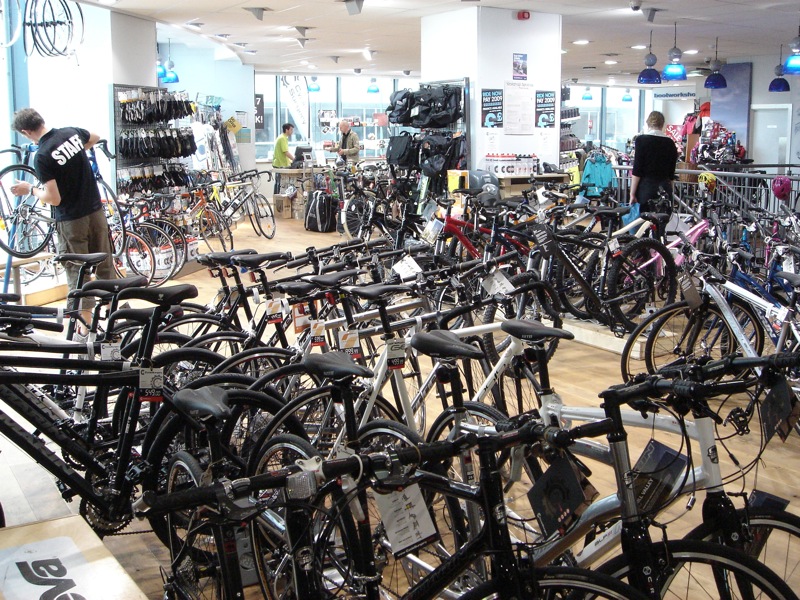
We're back below the grey skies of Birmingham in July. Light showers, gentle breezes and occasional touches of blue and the garden thriving with greenery. Guy collected us from Gatwick on Thursday afternoon (effortless flight from Corfu in what looked like a brand new EasyJet Airbus) so we didn't have to wait ages for the cheap train journey we'd spent so long booking. (What is happening to me!). Richard and I went into town by taxi on Saturday and bumped into Amy at work and spoke to her Sergeant Pietrafesa. Once she was off work - having started at 7.00am - we got donuts in Selfridges and visited the new city centre Cycle Surgery that's now part of Snow & Rock. I was impressed - not least because they stocked 'proper bicycles', with baskets, bells, mud and chain guards and sit-up and beg handlebars as well as a selection of folders including Bromptons, but also because they offered a serious repair service in a city that, despite once being the city of a 1000 trades has had little of this sort in the centre for ages. Maybe things are changing for the better (link to image and commentary on bicycles in Birmingham) - not least because Amy's boss rides a bicycle. On Friday I was on campus with Andrew on the last day of the accredited Oversight and Scrutiny module on which we work together. He told me of some of the changes afoot in our part of the University - especially the new Centre for Public Service partnerships (CPSP). Tonight I head south to Brighton for a workshop on Monday with new chairs of scrutiny, then I'm in Haringey for some consultation on political-management leadership on Tuesday, using the time to drop in on Phoenix Cycles to get a front wheel-bearing fixed by Mike at Battersea (tho' this is something I could now get done in Brum), then on Thursday and Friday I'm at Telford running an event on member-officer relations for middle range professionals from Midlands councils. I do enjoy being a tourist in my own country. I took pictures for Andrew at Priorsfield on Friday - in particular one of Roger Patrick, retired police officer, discussing his Phd thesis on the challenges of relating performance figures to policing policies. We've e-mailed friends in Ano Korakiana. H's daughter will stay with her husband at 208 in August and we'll be back there after they leave. With the internet and webcams and more friends I feel close to Democracy Street, able to inspect every change in the surface of the road past our house and able to gaze over Ano Korakiana and even hear its wonderful band in their blue and yellow as they march on the Liston and above the village "the floor of heaven...thick inlaid with patines of bright gold" MoV: 5, 1

Back numbers

Simon Baddeley