Total Pageviews

Showing posts with label snow. Show all posts

Thursday, 14 December 2017

Snow

I’d almost forgotten about snow; proper snow with sledging, snowballing, and inconvenience for people who want to go to work. The children rejoice. So far as I know, so does Oscar dog, even when, in the Highlands, there was little to be seen but his tail and a nose, surfacing now and then to check position. 

Birmingham, with the rest of the country south of the borders, gets taken by surprise. Snow comes so infrequently, the airwaves disperse hyperbole about 'weather', it can't be nostalgia that I recall such conditions as normal, to be taken in our stride. This weekend on to Monday, buses didn't run. Schools closed. No trains or trams for 48 hours, No gritting. When salting came, as befits services under 'austerity', only arterial roads got the treatment. 
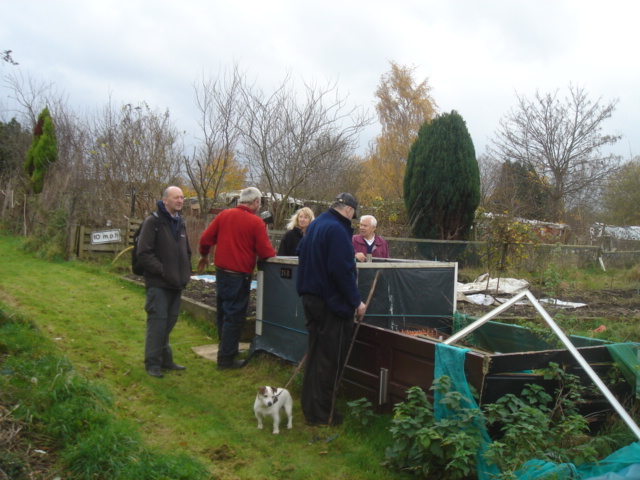
Oliver was staying with us on Sunday. We ventured out on foot to the allotments. 
At the iron gates I brushed frosted snow off the lock's push buttons.
"We're the only ones to visit" 
"How do you know, grandpa?" 
"What do you notice about the snow, Oliver?"
To my surprise he couldn't work it out. 
We trudged through boot-depth snow to the plot. 

Pristine. From the parks came shouts and laughter. In the distance I could see the smudgy shapes of many Canada geese standing by the pond among the naked trees, oblivious to the stick people cantering about, snowballing, making snowmen, sledging.
"Help me, Oliver"
He'd already made sure to bring a carrot. The snow packed up sticky to make good lumps to pile up for our snowman's body. When he was nearly as high as me I used  a trowel to shape neck and shoulders. Oliver collected chunks with his gloved hands to fill in gaps in the body. 
"Charcoal for eyes! Veg nets for a scarf. Give us the carrot" 
I carved holes for nose and eyes.
"His mouth!"
I went in the greenhouse and found a dried runner bean pod, curved. Perfect. 
Amy rang "come home, Dad. We're all here now. Pasties and mince pies and...
"We'll go sledging in the park?"
"Of course"
I tarried to put out nuts, seeds, water and fat-balls for birds, Garlic stems were poking out through the snow in two beds; winter onions too. But for disturbance around our snowman, the plot lies under the snow, its soil teeming with dormant life. The burgeoning of summer is hardly imaginable. The bees are silent, clustered in winter around the queen; living off honey. The scene is black and white, but for Oliver's warm red coat and flags on the fruit cage.

** ** **
Our park has a special glamour under snow. Amy, Guy, Hannah, Oliver, Oscar dog and I walk over the rail bridge to the other side of the park with its bandstand, and steeper contours, good for sledging. 

We all have a go on our plastic sledges. I slide on my front, the better to steer with my toes. The children are fearless, sitting upright, veering into trees, tipping over. Up we stumble and down we go again - together and in turns dodging trees, the metal fence near the foot of the run, whooping, shouting, laughing with others sharing the slope,...
... until the sky tunes itself to dusk. We head home dragging the children on sledges. 
"I love seeing the street lights through the trees" I said to Amy. We're in a lovely city park remote from feral winter.
Dusk in Handsworth Park


** ** ** **
With many others, we've been helping Jan Kimber campaign against building houses over most of the Lea Hall Allotments. Jan and I evoked Handsworth Allotments Information Group (HAIG) - the small group that I'd set up to campaign against building houses over all the old Victoria Jubilee Allotments, where I now have my plot.
Lea Hall Allotments on Google Maps 

The plan to build on Lea Hall Allotments

Planning application 2017/08883/PA was submitted, on 25th October 2017, by Countryside Properties to build 110 new homes at the Lea Hall allotments site on Wood Lane, in Handsworth Wood. 'A mixture of detached, semi-detached and terraced, 79 of these 3+4 bed homes will be for sale and the other 31 will be for private rent.' My objection sent, with others, to Birmingham City Council Planning Department:
I wish to express my objection to planning application 2017/08883/PA to build on Lea Hall Allotments.
Allotments have legal protection under the the Small Holdings and Allotments Act 1908, unless it can be shown there is no demand for plots.
To suppress demand, Lea Hall Allotments Committee have been engaged in a ‘managed’ retreat from responsibility to look after these allotments, turning a statutorily protected green space into a profitable windfall site for housing.
This strategy, to empty allotment sites and suppress demand for plots,  in order to sell them, was criticised in the report of the Select Committee on Environment, Transport and Regional Affairs Fifth Report ‘The Future For Allotments’ 11 June 1998, which described what’s been happening at Lea Hall Allotments as ‘constructive non-maintenance’.
Members of Lea Hall Allotments Committee have colluded with Countryside Properties (the second developer with whom they have had recent dealings), in ‘constructive non-maintenance’, by:
- not advertising plots and rejecting applications for them
- abandoning all but minimal maintenance, and failing to invest in site infrastructure,
- unnecessarily cutting down some of the site’s mature trees,
- repeatedly telling plot holders that plans to build on the site have already been agreed,
- excluding the contribution of women plot-holders to promoting the site by prohibiting them from committee deliberations, 
The applicant claims suitable substitute plots are available on other allotment sites. This is not a case that has been easy for them to make, as the Lea Hall Allotments site is, or would be if properly managed, uniquely attractive, facing open green space to the north (across a railway line which assists security), with woodlands on its edge, good drainage and an exceptionally well equipped clubhouse with bar, toilets, a bowling green and facilities for meetings and entertainment.
This application by Countryside Properties threatens to remove yet more green space from one of  our city’s finest Victorian suburbs, contrary to guidance in Birmingham City Council’s ‘Mature suburbs: Guidelines to control residential intensification - Feb 2008.
Properly managed  and advertised, Lea Hall Allotments, left as allotments and conservation area, open to the public, would be a most valuable community asset.
There is a significant deficit of open space in Lozells & East Handsworth Ward. The proximity of the application site to Perry Hall playing field, quoted by the applicant as an example of green space availability, is compromised by the railway line between New Street and Walsall that runs along the northern boundary of the neighbourhood.
The new allotments in the applicant’s proposal cover only 24% of the existing site and they are far smaller than the normal average of 200 square metres in other city allotments..
The woodland in the north east corner of the site provides screening and noise protection for residents of Lea Hall Road, serves as a visual amenity for users of Perry Hall Playing Fields, is a habitat for a rich variety of flora and fauna, and contributes to the area’s drainage.
It seems especially unwise to allow this development on greenfield land given the forthcoming analysis by West Midlands Combined Authority on the remediation and development of brownfield land (West Midlands Land Commission - Final Report to the West Midlands Combined Authority Board. 9th February 2017)
A tour around Lea Hall Allotments on 22nd November


Jan Kimber describes Countryside Properties' plans for Lea Hall Allotments at Birchfield Neighbourhood Forum - 30 Nov 2017

Friday, 9 September 2016

September in the village ~ Σεπτεμβρίου στο χωριό

“I wish we could take Amy and the family to this island” I said to Lin "With Oliver going to school" – his first day on Friday - "their visits here will be even more hemmed by the airfare pricing” 
"They can’t come when the ferry runs” Only July, August and September. 
"Yeah! Fares gauged to school dates!"
Vido

Lin and I were on the ferry to Vido - a sturdy caique that chugs hourly between the Old Harbour and a jetty on Vido, a kilometre opposite. We walked with our swimming things on a rough track to a cove we know with a jetty and a narrow shore to lay out our picnic blanket and wade into the clear warm water. “It’s so easy to float!” 

I drew long breaths bobbing gently, awash in the sea, sun piercing my closed eyelids. Later, drying in the breeze, we read until our beach slipped into the shade of overhanging pines. Behind the bar opposite the city an Englishwoman, northeast accent, speaking Greek with ease, remembered us. 
“Hullo again” she smiled, serving a cold beer and coke.  

We asat with others among the pink brown trunks of tall pines. Amid sparkling wavelets ships of every size plied back and forth. A cruise liner called sonorously for her passengers’ return from the city. After a while its enormous bulk was slipping soundlessly out to sea. A blot appeared in the dazzling sea, resolving into a shape 
“A rowing boat?” 
“That’s our ferry” said Lin 
“No it isn’t” 
“Yes it is. Look” 
The silhouette of a wedge had grown into our caique returning with lots of people to land, taking fewer of us back to Corfu.
The next day, Sunday, we rose late. 
I get up, empty the bins into a plastic bag, wee in the compost just topped with a swept heap of summer-shed leaves and blackened lemon husks. 

Wasps are everywhere. Their ceaseless buzz has an edge, different from bees “Not one of ours?” We’ve both been stung. After the first pain stings become an itch. Milder than English wasps. I sweep the space under the balcony; play bountiful with the cats that beg at the door, casting them handfuls of dried pet food – comforting routines. I’ve been cutting back wisteria, forever trying to play constricting serpent with our wood balcony; also tall soft-spiked branches of bougainvillea insinuated between the decking. From the public path where it’s piled, with gloved hands I stuff big black plastic sacks with chopped stalks and leaves. Six sacks. I take them to the top of the steps to Democracy Street; collect the car and fill it with green waste to dump in the first empty wheelie bin I find, outside the village beside the Sidari Road.
“Last day we have the car. Let’s go to Mon Repos, to the beach there”
Lin was in a vexed study. Tired out from responsibilities in England. I irritated her. We didn’t speak, driving through town to the Kanoni road, not easy to find, but we know the route so well. Parked by the gates to the palace, we strolled a broad shaded zigzag drive, past the lovely house, and then by a roundabout route, since we’d missed the direct track, we came to a strand deeply covered in dead dry seaweed, absorbing sound. All along a narrow stone jetty, reaching 80 metres out to sea, were Greeks with colourful towels resting on Sunday afternoon; one I saw, stood near the end of the jetty, ample flesh shaking a little. I waited for a resounding splash. She poised herself, splayed feet washed by gentle waves, and entered the water with a perfect dive, supple as a seal, disappearing, surfacing, disappearing, surfacing further than I’d have expected, shaking her wet black hair, diving again, heading seaward where the shores of the mainland stretched south, a hazy outline of flawless blue china. Mother Greece. 
The jetty below Mon Repos

Others on the Mon Repos jetty read, listened with earphones, sunbathed, chatted on their phones and to each other. A man like the charioteer came down on his bicycle, lent it against a tree, washed himself in the water of the Kardaki spring at the back of the beach. I stumbled clumsily into the water by the shore, made my way around the length of the jetty and stumbled back out. Lin sat and read. 
“Shall we go now?” I said 
“If you like” 
We ascended by the easier route through old woods of acacia , eucalyptus, scots pine and cypress. On the Paleo road home towards Ano Korakiana we stopped at Emeral for ice cream – mine dark bitter chocolate, Lin peaches and cream. 
“I’ll take the car back tomorrow. Come back by bus” 
“I’ll give you the money”
*** ***
Monday down at the airport I handed in our little hire car, paying with an envelope of cash, took my pannier and bike from the rear-seat, unfolded and pedalled into town, stopping at the new Green Bus Station to get the latest timetable. The way into the city, unless you stick to the pavement – which, if you’re on foot, gives out, ejecting you into a busy road - is blocked by a sturdy concrete central reservation on the short dualled carriageway that was Ethniki Odos Lefkimis. Impassable. Logic? Unassailable. Who would want to bring a cycle into a bus station? 
“I’ve a folding bicycle. It fits easily in the luggage space with passengers’ bags and pushchairs” 
“What did you say?” 
“Forget it” 
I’m not playing victim over so irritating a triviality. I cycle gently among pedestrians until the reservation ends, cross carefully to the centre to join motorised traffic heading up the gentle slope of Dinatou Dimolitsa, into Mitropolitou Methodiou and so, amid increasing bustle, to San Rocco Square, jostling with buses, cars, vans, scooters, into G.Theotoki, until across a barrier I’m bumping along the cobbles of newly pedestrianised Evgeniou Voulgareos, dotted with spring planted municipal trees. I pass among bright coloured strollers who shift like swimming fish at the sound of my tuneful bell as I weave elegantly up the narrow way to broader Kapodistriou behind the Liston, then down N.Theotoki – a flâneur on wheels amid noon’s contrasts of light and shade and the conversations of hundreds of people. Now and then a great plane rumbles overhead, glimpsed from the ground as it heads north freighted with passengers bound for work, brief holidays ended, Corfu’s green and blue falling below; swiftly hazed. I’ll catch the bus to Sokraki from the stop beside Sette Venti Café. I look for a bar without a queue that sells Ionian Beer, the green top bottles, and there just opposite my stop on the Old Port Road I sit inside a cushioned sofa sipping from a flute glass reading Orhan Pamuk’s Snow – the novelist imparting insight into the dynamic of political Islam beyond the reach of non-fiction; walking me through the snow-filled streets and the population of Kars - a contested Anatolian city - decaying - against closed borders with Armenia on the eastern edge of modern Turkey. !0 minutes before the bus I paid for my beer and found, nearby, a small grill. Waiting in the generous shade of a pavement acacia I picked happily at the bits and pieces of fresh pork gyro – tomato, crispy juicy pork, chips, fresh pita, licking sauce from my fingers as the bus arrived. 15 passengers boarded; people who would once have waited conveniently at the old Green Bus station, but aren’t going to walk, especially with their shopping, a mile across town to the new one. My familiar journey from the Old Port takes under an hour. Ticket €2.90. On level ground I continued reading, glancing at our whereabouts – Kontokali, Gouvia, Tzavros, Dassia, sinking into a reverie of falling snow and darkness, missing the landscape outside, rocked by the familiar racket of changing gears as turning and turning the bus climbs steadily up from the sea. Some passengers are getting off. Are we in Spartillas? Or are we already edging between buildings on the road through Sgourades, descending through olive groves to the sharp left turn at the T-junction in Zygos which, if you turn right,  leads north through Klimatia and Episkopi to the coast at Roda? I see gardens, frontages, stores, woodpiles, verandas, houses, forest slopes, whole villages perched on long ridges I passed when cycling this route. Stop anywhere. From a glance, I’ll know exactly where we are. Nothing’s odd or foreign. The undergrowth along the verges - parched kindling mingling with rich greenery - bracken, brambles, dry seeded flowers, tall tangled grasses, thistle, fig that grows like weed, feral vines, errant climbers reaching into the woods.
It’s cooler where I leave the bus in high Sokraki to freewheel blithely down the mountainside passing the two reservoirs that hold the village water, seeing the road below, half-wondering if it’s the road above, so circuitous are the zigzag turns; passing below the little church of Ag Isadoras, through the narrows of Venetia, into Ano Korakiana – all the way my feet resting on the pedals, my hands on the brakes checking my speed enough to avoid overheating the sides of my Brompton’s 16” wheels.
** ** ** **
An intransitive verb is simply defined as a verb that does not take a direct object. There's no word in the sentence that tells who, or what, received the action. It’s not as if I’m not prepared – when it comes to starting to read Jonathan Littell’s The Kindly Ones. There are stages in making sense of its subject matter, that starts with someone born in 1942 learning. Remote from it in time and place I was nonetheless alive while these things were happening, and long after, when so many called  to account found ways to lie or deny their part. 
“There was so much propaganda, we didn’t believe such things” said my mum late in life. 
I don’t hold her to account for one second – nor countless others who could not believe or, if they tried, could not begin to understand and even if they did could do nothing. I mean those involved. David Thomas in Ostland – ostensibly a thriller – stretches that genre; asks what would you or I have done? Littell creates, in his SS officer, a character who, so far as I know, doesn’t exist. Why? Because he’s someone who, throughout the novelist’s account - I’ve got about 500 of over 970 pages to go - sticks steadfastly to the transitive tense, avoiding the evasive intransitive; not using verbs that duck the direct object; verbs reflexively, and usually disingenuously, placed in sentences without a personal pronoun; without an  ‘I’ - to tell who or what carried out the action, the einsatz. Littell’s writing, unparagraphed even during dialogue, has a quality of relentlessness and pace as though he is writing for his life. The great hanging proposition, supported by prolonged casuistry, innumerable examples, conundrums, utterly detailed research, that those who took part in these actions were no different from the rest of us, no different from me. So don’t, says this fictional first person biography, get into the minds of others when trying to understand and explain, go into the possibilities that exist in you, in me, as I recount this terrible tale. Did Bosch paint himself in hell? We can speculate. But Dr Max Aue does, in excruciating detail, with all the second rate, half-baked pernicious nonsense of a highly educated grown man striving to be honest.
** ** **
There’s something I can like about the torpor of high summer in Greece that is foreign to England. 
I don’t really like being so hot, but if I move slowly, use the weather as a reason for lying about reading with a cold drink to hand, I come to terms with it. 
August - from the village

But now the enveloping heat of August, but not the wasps, has been chased decisively away by two 24 hour intervals of rain, wind, thunder and lightning. 
Gabriella, a friend from Rumania rang to ask “Are you alright?” 
“Why?” 
“Oh my dear, there’s been news of a typhoon in Corfu, flooding and cars washed away.” 
"Blimey. So sweet of you to call us. No we’re fine. Just a bit damp.” 
I’d read on facebook about someone who’d described flying towards Corfu entering the blanket of cloud that’s been covering the island on a plane full of people frightened, as we would be, by extreme turbulence; how their holiday plane seemed to descend for ever through a tunnel of unbroken cloud rushing by, windows slashed with rain, the interior lit by flashes of lightning, and still no sight of ground – 'some were crying, others screaming now and then' - until the pilot gave up and diverted to Thessaloniki, where passengers were boarded at a local hotel with vouchers for food. This contemporary bout of terror reminded me of how passengers on a 19th century sailing ship, embayed by a sudden shift of wind strength and direction, might be given hours of fear as her crew work to balance weight of sail against risk of losing spas, praying to weather a distant cape.
The start of September

*** ***


We’ve been at Stamati’s Piatsa, most evenings, less than a minute from our front door. Three years it’s been going, converted from a shop; a small plaka’d triangle right against an especially narrow few yards of the road through the village. I have come to enjoy this unpromising place for a bar. 
Aristeidis Metallinos - sitting over to the right - carves the peddler in to the village Cat 222 1985 marble relief 55 x 69cms

It’s a small theatre. The wings are east-west along the road that bisects the village, on one side almost invisible, but with the doors and canopy of the baker’s shop and its customers comings and goings glimpsed askance. On the other, a 50 metre stretch of Democracy Street down to the Philharmonia rehearsal and teaching rooms, that disappears round a bend on a slope. Entering left and right we see bicycles, scooters, vans, cars and the municipal refuse truck that passes through at night...

... men hanging on dashboards front and back, a miasma of rot in their wake. We wave to them and they wave back. Now and then when a parked car narrows the road even more Stamati walks into the street waving directions. Our entertainment includes surmising how vehicles going opposite directions will pass one another. From the bandroom, from time to time, we hear their rehearsal music. Add to this pleasing melange of sounds, the rub-a-dub-dub-dub on some evenings of the lads on their motorbikes. 
There are other ways onto the stage; from a Venetian arch over steps just below, from the house opposite – three metres across the street. Dogs and cats are extras, lying insouciant on the patchy tarmac as wheels pass inches from their reclining paws, or barking at something off-stage, or wandering between our feet, being stroked and patted, as we sit at the outside tables.  As in classical drama actual action occurs outside the theatre, retold and discussed by us as anecdotes, tales, opinions, judgements. 
Aristeidis Metallinou 1984 Cat 205, marble relief 40 x 59cms*

I doubt Aristeidis Metallinos would charge us with being ‘the snails of the village’? Do we gossip? Yes but we also debate and discuss and laugh a lot. 
“Socrates asked three questions of an informant” I was told the other day by Yani Metallinou – that 'M' name traditionally diffused throughout Ano Korakiana - and one who recalls, as a ten year old, seeing the laic sculptor at work, rhythmically chipping at stone and marble. 
“First question. Is it good news? Second. Is it true? Third. Is it helpful? If not ‘yes’ to all three, say 'no more'"
Above our theatre, but below the sky and the Trompetta crags that tower over our village, there’s the next floor of the surrounding houses with doors, french windows, shutters, a balcony. Perfect for hanging out washing and enacting a conversation with those below, Juliet to Romeo.  From May to July, even early August, swallows nest and raise their young in niches all around, adding their chatter to the sounds of children – playing football, skateboarding, cycling – easily moving out of the way of vehicles. The other night, as happens now and then, Stamati organised music, sardines, souvlakia. Two musicians – an old man and young man, son of a neighbour, played for four hours almost without a break, keyboard, guitar, for a while, bouzouki. People danced – Zebetiko - and sang – "laiki musiki" - seeming to know all the words and tunes.
*Translation: 'When the village’s snails are alone they sit and boast about their big horns. But when somebody comes up to them they try to hide their horns, one behind the other, between their legs'
*** *** ***
My goodness! A leap in time. Bignells Cottage in Itchen Abbas. My half sister, Oriana, sent me this picture the other day - a watercolour by my great-aunt Florence Apperley, who I called Auntie Flo.
Bignalls Cottage, Itchen Abbas 1940

She painted the cottage in September 1940 - at the height of the Battle of Britain, this thatched house belonged to my great grandmother Lucy Halkett, with whom I spent much time as a small child. She taught me to read. I am unsure when Gaga (my name for her) bought this lovely place. I believe she sold it in 1949. I was born in 1942. Born in another thatched cottage on the other side of England, I spent part of my earliest childhood at Bignalls, on my own and with my sister, Bay, 18 months younger. The house stood next to an avenue of lime trees that led down a gentle slope to the River Itchen. My room, my nursery, is the upstairs window on the far left. The next two upstairs windows were to Gaga's bedroom. Early on summer mornings, as I recall 70 years later, I would get out of bed and climb into hers. She'd start reading to me, teaching me letters and words as a story proceeded. I recall the first of many classical tales - that of Baucis and Philemon. In her 70s then she could complete the Times x-word in half an hour. Later in her 90s she complained of her mind going "It takes me an hour" she grumbled. In 1969, she died in her sleep at 99, after heading upstairs with her usual nightcap of malt whisky. About six years ago I was in Winchester for work. I found a few hours to cycle out to Itchen Abbas and catch a glimpse of Bignell's Cottage and stroll beside the Itchen in whose crystal water I saw brown trout through the reflection of my face as I gazed down from a low bridge hardly two feet above the river.

Monday, 29 November 2010

Rain and floods in Victoria

The Loddon river overflows
On Saturday morning we woke in the soft home bed of John and Annie’s home in Bendigo – their guests. Late Friday night Melbourne Domestic had teemed with midnight arrivals. Our flight out of Brisbane landed at 9.15 to be held an hour on the apron without an exit tunnel to the terminal, weather having delayed preceding flights. By the time we were at the carousel awaiting our bags, travellers bound to Sydney had missed that city’s landing curfew. Stuck in Melbourne, their bags already loaded on departing flights, an apologetic announcer offered them taxi vouchers and A$220 each for a local overnight hotel. We were headed for the carpark and John’s car, the freebus was packed first time round. Catching the next we were at the carpark by 11.15, plonking luggage and ourselves in the warm car and on our way north through driving rain. “One thing goes wrong... the smoothness of the system makes for a bigger mess,” I said “Yeah” said John “As Fred used to say, there’s no redundancy of parts.” Now and then through the wet dark I glimpsed the rising tail lights of planes departing on international journeys. In an hour and a half we were gliding through the empty wet streets of Bendigo, past the floodlit statue of Queen Victoria, familiar buildings, then dark again towards Junortown and home for cups of tea, Annie fast asleep already, and Lin and I to bed. Next day, after a night of further rain John and Annie went to vote in the state elections, we spoke to some of the party workers at the polling station. Labour, in power for three elections is likely to be displaced by voters moving rightwards in favour of the Liberals and the Nationals. "It's more a vote against the incumbents than a vote for their replacement" said John.
He drove us south from Bendigo past surging creeks, overflowing brown rivers, streaming ditches, noisily through long puddles across the road, to Daylesford to a delightful BBQ with friends serving local wines, tasty steaks, fried chicken and well dressed salad with juicy camembert to follow. We debated and agreed that we’d eat al fresco despite the rain and sat in happy conversation, almost dry, beneath a sloping awning that we took turns to lift to release the gathering pools. It was all strange, having visited at the same time for the last two years, to see the land like this after twelve years of drought.
Lunch at Daylesford
***** ***** So we’ve completed five workshops in Queensland – all successful with almost uniformally excellent evaluations. The state local government association had done a great job advertising our work and recruiting a level mix of senior local politicians and CEOs to share experiences with us and each other as they’ve digested our thoughts and examples of negotiating the overlap of political and managerial responsibilities in government. A remark on the final seminar in Brisbane has set us thinking: “You focus on just two people – the Mayor and the CEO. What about the others involved in the overlap?” Good question. My answer has been that the CEO-Leader/Mayor relationship models the others. Get that right and you’re positioned to ensure that the rest are OK. There’s the methodological point – that it’s tricky to track the dynamics if you have more than two in camera. John and I discussed this at the depart gate at Brisbane, and then at greater length this morning; questions coming to mind:
How do elected politicians share out, if they do, different policy tasks among political colleagues?
What’s the division of labour between councillors in relation to maintaining political oversight of the work of the council?
What criteria apply to the selection of elected members to these roles?
Who decides and how?
By what procedures are delegations shared and organised among councillors?
What forms of accountability are applied to the work of councillors in these roles?
What form of language – titles, briefs, portfolios – is used in referring to the organisation of separate responsibilities?
How is the organisation of political leadership matched to the organisation of managerial leadership?
“You know where this fits,” said John “in the content and focus? We’ve got ‘learning’, ‘negotiating’ and ‘governing’. It’s the last of those. Let’s ask people about this next seminar.” The work I’d done in UK a few years back with Michael Lyons on ‘cabinet-chief officer relations’ could apply here, indeed a twenty minute discussion at the end of the last Brisbane seminar had been all about how the Mayor and his or her political colleagues organised ‘portfolios’. There’s little or no party politics in Australian local government, and no reference, as in UK to a ‘cabinet’ or before that ‘the group’ of senior members who the officers, and other members in many councils, looked to for steer. I realised, with excitement, that we didn’t know enough, or in some cases, anything about how local government politicians were organising themselves collectively around the task of government. ** ** ** I’m rereading The Turn of the Screw by Henry James. I read it first when I was still in callow teens and was disappointed at finding it so unfrightening after all I’d been warned. I guess I’d have had the same experience with Conrad’s Heart of Darkness which I read much more recently. Neither of these novels have their full effect on an innocent reader. They're not revelatory and for that reason can leave the young reader – that I once was – hoping for more literal terrors as in Poe or even the brothers Grimm. With the awful knowledge of human depravity, not, thank god, experience, that comes with time’s education, these two works written not far apart at the turn of the 20th century, are landmarks in the documentation of evil, of things unthinkable in kinder times or among a more blinkered generation. Conrad pretended to be speaking about Africa’s stereotypical ‘darkness’ but he was, through his fictional interlocuter, Marlow, sat quietly on that vessel moored in the estuary of the murky Thames where the yarn was spun, referring with awful prescience to us in Britain and Europe. In Turn of the Screw James’ circumlocutions, once opaque, are now read as what he intended, an adult’s increasingly frightened search for internal fiends; ones she thinks may be figments of her imagination, hopes they are, but which she gradually realises have possessed the children in her care, inveigled them into innocent collusion in the crime against them. There has always been child abuse, but only in the last half-century, or less, have we opened the furnace door, exposed its banal frightfulness. James uses the diversion of unreality – the supernatural - to tell a story about a hideous reality. When I first read this book, like a million others who didn’t acknowledge or even believe in such things, I couldn’t make out what was so scary about it, nor did the films of the book help. Now I fully grasp the famous dying quote from Heart of Darkness - ‘the horror, the horror.’ ** ** **
In our hotel in Brisbane
It's not as if we aren't kept pretty well reminded of Europe's currency while noting how well A$s and NZ$s are performing against the pound. Poor Greece and Ireland too... "default" say the people - and then I learn from a piece in an Australian newspaper that Europe tried monetary union in the 19th century and failed. I didn't know that. * * * In Brisbane’s Art Gallery we came across a striking picture - a surrealist painting by James Gleeson - Structural emblems of a friend; – one in which I recognised across the length of a large gallery a startling likeness. Lin came over as I gazed at it. “So like your Dad." He died in 1972 the year before she and I met. “I’ve seen photos - that one of him with your brother.” She meant the one of him taken with George in 1969 in a caique off Aegina, but I was thinking of an older portrait, taken about the time Gleeson painted his self-portrait in 1941.


*** ***
Meanwhile the local shop at Inverarnie in the Highlands is almost snowbound. Margi Fleming, my mother's carer sent photos of the weather and mum, when I skyped her from Sidney, spoke of temperatures of -20° "Worse than last year and much earlier!"

Back numbers

Simon Baddeley