Total Pageviews

Showing posts with label banality of evil. Show all posts

Monday, 29 November 2010

Rain and floods in Victoria

The Loddon river overflows
On Saturday morning we woke in the soft home bed of John and Annie’s home in Bendigo – their guests. Late Friday night Melbourne Domestic had teemed with midnight arrivals. Our flight out of Brisbane landed at 9.15 to be held an hour on the apron without an exit tunnel to the terminal, weather having delayed preceding flights. By the time we were at the carousel awaiting our bags, travellers bound to Sydney had missed that city’s landing curfew. Stuck in Melbourne, their bags already loaded on departing flights, an apologetic announcer offered them taxi vouchers and A$220 each for a local overnight hotel. We were headed for the carpark and John’s car, the freebus was packed first time round. Catching the next we were at the carpark by 11.15, plonking luggage and ourselves in the warm car and on our way north through driving rain. “One thing goes wrong... the smoothness of the system makes for a bigger mess,” I said “Yeah” said John “As Fred used to say, there’s no redundancy of parts.” Now and then through the wet dark I glimpsed the rising tail lights of planes departing on international journeys. In an hour and a half we were gliding through the empty wet streets of Bendigo, past the floodlit statue of Queen Victoria, familiar buildings, then dark again towards Junortown and home for cups of tea, Annie fast asleep already, and Lin and I to bed. Next day, after a night of further rain John and Annie went to vote in the state elections, we spoke to some of the party workers at the polling station. Labour, in power for three elections is likely to be displaced by voters moving rightwards in favour of the Liberals and the Nationals. "It's more a vote against the incumbents than a vote for their replacement" said John.
He drove us south from Bendigo past surging creeks, overflowing brown rivers, streaming ditches, noisily through long puddles across the road, to Daylesford to a delightful BBQ with friends serving local wines, tasty steaks, fried chicken and well dressed salad with juicy camembert to follow. We debated and agreed that we’d eat al fresco despite the rain and sat in happy conversation, almost dry, beneath a sloping awning that we took turns to lift to release the gathering pools. It was all strange, having visited at the same time for the last two years, to see the land like this after twelve years of drought.
Lunch at Daylesford
***** ***** So we’ve completed five workshops in Queensland – all successful with almost uniformally excellent evaluations. The state local government association had done a great job advertising our work and recruiting a level mix of senior local politicians and CEOs to share experiences with us and each other as they’ve digested our thoughts and examples of negotiating the overlap of political and managerial responsibilities in government. A remark on the final seminar in Brisbane has set us thinking: “You focus on just two people – the Mayor and the CEO. What about the others involved in the overlap?” Good question. My answer has been that the CEO-Leader/Mayor relationship models the others. Get that right and you’re positioned to ensure that the rest are OK. There’s the methodological point – that it’s tricky to track the dynamics if you have more than two in camera. John and I discussed this at the depart gate at Brisbane, and then at greater length this morning; questions coming to mind:
• How do elected politicians share out, if they do, different policy tasks among political colleagues?
• What’s the division of labour between councillors in relation to maintaining political oversight of the work of the council?
• What criteria apply to the selection of elected members to these roles?
• Who decides and how?
• By what procedures are delegations shared and organised among councillors?
• What forms of accountability are applied to the work of councillors in these roles?
• What form of language – titles, briefs, portfolios – is used in referring to the organisation of separate responsibilities?
• How is the organisation of political leadership matched to the organisation of managerial leadership?
“You know where this fits,” said John “in the content and focus? We’ve got ‘learning’, ‘negotiating’ and ‘governing’. It’s the last of those. Let’s ask people about this next seminar.” The work I’d done in UK a few years back with Michael Lyons on ‘cabinet-chief officer relations’ could apply here, indeed a twenty minute discussion at the end of the last Brisbane seminar had been all about how the Mayor and his or her political colleagues organised ‘portfolios’. There’s little or no party politics in Australian local government, and no reference, as in UK to a ‘cabinet’ or before that ‘the group’ of senior members who the officers, and other members in many councils, looked to for steer. I realised, with excitement, that we didn’t know enough, or in some cases, anything about how local government politicians were organising themselves collectively around the task of government. ** ** ** I’m rereading The Turn of the Screw by Henry James. I read it first when I was still in callow teens and was disappointed at finding it so unfrightening after all I’d been warned. I guess I’d have had the same experience with Conrad’s Heart of Darkness which I read much more recently. Neither of these novels have their full effect on an innocent reader. They're not revelatory and for that reason can leave the young reader – that I once was – hoping for more literal terrors as in Poe or even the brothers Grimm. With the awful knowledge of human depravity, not, thank god, experience, that comes with time’s education, these two works written not far apart at the turn of the 20th century, are landmarks in the documentation of evil, of things unthinkable in kinder times or among a more blinkered generation. Conrad pretended to be speaking about Africa’s stereotypical ‘darkness’ but he was, through his fictional interlocuter, Marlow, sat quietly on that vessel moored in the estuary of the murky Thames where the yarn was spun, referring with awful prescience to us in Britain and Europe. In Turn of the Screw James’ circumlocutions, once opaque, are now read as what he intended, an adult’s increasingly frightened search for internal fiends; ones she thinks may be figments of her imagination, hopes they are, but which she gradually realises have possessed the children in her care, inveigled them into innocent collusion in the crime against them. There has always been child abuse, but only in the last half-century, or less, have we opened the furnace door, exposed its banal frightfulness. James uses the diversion of unreality – the supernatural - to tell a story about a hideous reality. When I first read this book, like a million others who didn’t acknowledge or even believe in such things, I couldn’t make out what was so scary about it, nor did the films of the book help. Now I fully grasp the famous dying quote from Heart of Darkness - ‘the horror, the horror.’ ** ** **
In our hotel in Brisbane
It's not as if we aren't kept pretty well reminded of Europe's currency while noting how well A$s and NZ$s are performing against the pound. Poor Greece and Ireland too... "default" say the people - and then I learn from a piece in an Australian newspaper that Europe tried monetary union in the 19th century and failed. I didn't know that. * * * In Brisbane’s Art Gallery we came across a striking picture - a surrealist painting by James Gleeson - Structural emblems of a friend; – one in which I recognised across the length of a large gallery a startling likeness. Lin came over as I gazed at it. “So like your Dad." He died in 1972 the year before she and I met. “I’ve seen photos - that one of him with your brother.” She meant the one of him taken with George in 1969 in a caique off Aegina, but I was thinking of an older portrait, taken about the time Gleeson painted his self-portrait in 1941.


*** ***
Meanwhile the local shop at Inverarnie in the Highlands is almost snowbound. Margi Fleming, my mother's carer sent photos of the weather and mum, when I skyped her from Sidney, spoke of temperatures of -20° "Worse than last year and much earlier!"

Thursday, 31 December 2009

Good men and women of Ioannina


'Let the world know that we value our Jewish presence, one of the oldest in Greece, and will not allow callous, hateful acts to define us as a community or as a people.' The Citizen Initiative for the Defense of the Jewish Cemetery of Ioannina - 18 December 2009
What a sweet piece of news from beautiful Ioannina in Epirus via June Samaras of Kalamos Books who runs the excellent news feed Hellas-Greece:
From: Marcia Haddad Ikonomopoulos, Thu, 24 Dec 2009 12:40:21 +0000 Subject: Christian citizens demonstrate in support of Jewish cemetery in Ioannina
Normally I would wait for our monthly e-newsletter to pass on recent news from Greece, but some news deserves to be passed on immediately, especially when it is such good news. Too often, negativity makes the front page. In recent years, anti-Semitism is all too prevalent. What then can be more emotionally rewarding than to pass on the news of a recent mass demonstration against anti-Semitism? Where did this demonstration take place? In Ioannina! It was organized by the Christian citizens of the city and was heralded as a “a human chain against racism.” The cemetery was surrounded by the citizens of Ioannina to show their support for the Jewish community of the city and to publically show their outrage at recent desecrations of Jewish tombstones. In addition, a public exhibition was held, highlighting the ancient Jewish presence in the city and the importance of the Jewish cemetery as a monument to the long Jewish presence in Ioannina. The committee that organized the public display of support made the following statement: “The Jewish cemetery is not only the religious space of the Jewish Community but, also, a cultural monument of our city, the protection of which, like other historical monuments of our city, is the duty of every citizen.” Let us all applaud the good citizens of Ioannina who organized and took part in this historic event. Photos of the event can be found in the attachments.
Marcia Haddad Ikonomopoulos, Museum Director
I referred to the desecration of Jewish graves in Ioannina in July 09 - part way down this part of Democracy Street
Note the carefulness with which the statement refers not to 'callous and hateful people', but to 'callous and hateful acts'. Some who do evil consider it some amplification of their character, yet evil is essentially as ordinary as good - both start small; both begin with specific and individual choices; 'banal' as Hannah Arendt taught me - engraving her phrase into my understanding of every worst impulse in myself, helping explain it in others, framing atrocities. Banal. Banal. Banal. The Book of Job - of nearly all writing in the Bible, my favourite, has a verse that captures this, personifying evil without turning it into anything but an eternal and intimate presence: 
7 ז וַיֹּאמֶר יְהוָה אֶל הַשָּׂטָן, מֵאַיִן תָּבֹא; וַיַּעַן הַשָּׂטָן אֶת יְהוָה, וַיֹּאמַר, מִשּׁוּט בָּאָרֶץ, וּמֵהִתְהַלֵּךְ בָּהּ.
And the Lord said unto Satan:
'Whence comest thou?'
Then Satan answered the Lord, and said: 'From going to and fro in the earth, and from walking up and down in it.'
I subtitle Democracy Street 'waging peace - the banality of good' - Η κοινοτοπια του καλου - because goodness too goes to and fro in the earth.

Ioannina 25 March 1944 Deporting of the Ρωμανιῶτες: 'A voice is heard in Ramah...Rachel weeping for her children, and would not be comforted, because they are not.'
[13 Dec 09: See this drama about The Jews of Zakinthos On September 9 1943, the governor of the German occupation named Berenz had asked the mayor, Loukas Karrer, for a list of all Jews on the island. Rejecting the demand after consulting with Bishop Chrysostomos, they decided to go together to the governor's office the next day. When Berenz insisted once again for the list, the bishop explained that these Jews weren't Christians but had lived here in peace and quiet for hundreds of years. They had never bothered anyone, he said. They were Greeks just like all other Greeks, and it would offend all the residents of Zakynthos if they were to leave. But the governor persisted that they give him the names. The bishop then handed him a piece of paper containing only two names: Bishop Chrysostomos and Mayor Karrer.
On Corfu,  Spiridon Kollas Κολλάς Σπυρίδων, mayor from 1925 until 1951, collaborated with the Nazis, issuing a proclamation, thanking the Germans for ridding the island of the Jews so that the economy of the island would revert to its "rightful owners"]
Holocaust Memorial in Corfu Town dedicated on 25th November 2001 
[Back to the future - 8 Jan 2010: Arson attack on Etz Hayyim synagogue in Hania, Crete on the night of 6/7 Jan 2010]
** ** **
An unintended consequence of Greece's extensive 'grey economy' is that many are, for the moment, superficially cushioned from events in its public economy - the otherwise jobless being paid in cash at the expense of employment protection, insurance and pension investment. Meantime a socialist PM has to balance promises of wealth redistribution with 'belt-tightening'. There's no sign of light at the end of the tunnel, for Europe let alone Greece, unless you believe recession's good for the earth or are confident of having the means to get by. [Back to the future ~ 1 January 2009: Corruption in Greece]
Cartoon of the day ~ Kathimerini 31 December 2009
* * * *
It's snowed more. I strolled half a mile further down the lane with mail for Birch Cottage from the shop. The house was almost camouflaged into the hill behind it. It's owners hadn't been out for two weeks. One said cheerfully "...and I've got the truck stuck. Silly of me." It was a few yards away, snow piled under the large front bumper. "Phone Farquar?" "Yes I might but he's taken the plough up and down twice" "He's a good man. He'll surely help." I walked on following the terriers as they plunged ahead, enthusiastic as ever. They rejoice in snow. I too. Hardly another hundred yards past the sheep, still clustered below the cottage, I heard, then saw, Farquar's tractor entering the muffled landscape. I started slowly back as silhouettes moved around the feeding pen drifting in to feed on a bale of hay delivered from a double-pronged lift.
The dogs obeyed me, staying close as we approached the sheep. "OK" shouted Farquar "keep on by!" I edged round, but still cut off one part of the flock which clambered away, then, once I was back on the track, hurried back to their manger. I think Farquar had come to an agreement about another snow ploughing and a rescue of the truck, but for now he headed home, catching me up and surging by, as I waited knee deep the dogs beside me, hardly showing. We waved at each other.

Tuesday, 24 July 2007

The banality of good - Η κοινοτοπια του καλου?

The picture of Barbati on the slopes of Pantokrator, taken by Lin from Corfu Fishing Port last November, has nothing to do with the discussion below. I just wanted a pin-up of the sea.
Από: Simon Baddeley
Προς: Nikos Dimou 20 Ιουλίου 2007 11:36 μμ
Θέμα: Re: Another bloody Philhellene*

I describe my blog as “waging peace” and I was thinking of adding the phrase “the banality of good” - both being about playing on the phrases “waging war” and “the banality of evil”. To complicate things I was hoping to have a Greek translation of these phrases that captured their meaning – but which was a good interpretation and not just a good translation. I am getting so much pleasure reading your articles. How I wish I could read them again in Greek to understand the extra nuance of the original. In fact so parental is Greek (and Latin) to English that much comes through but not all. Herete. Simon
From: Nikos Dimou (his third letter)
Date: Sat, 21 Jul 2007 08:49:39 +0300
To: Simon Baddeley
Subject: Re: Another bloody Philhellene

Well then it is: "i koinotopia tou kalou" - which is a bit Oscar Wildean ...

N. Nikos Dimou Athens
Greece www.ndimou.gr
doncat.blogspot.com
nikosdimou.blogspot.com
My tutors have been letting me know this isn't straightforward. From the office via my sister:
Dear Verena,
Thinking about the Greek version of “the banality of good” I must say that I cannot come up with a standard Greek phrase corresponding to it, not one that I know of anyway. I can attempt to “propose” something equivalent but in that case it would help me a lot to know the context in which the phrase will be used. There are words that could be suitable to create the Greek phrase. The choice depends on context.
Η πεζοτης του Συναιτου

Η κοινοτοπια του Σωστου


Το τετριμμενον του Αγαθου

Η απλοτης του Ορθου

Η απλοτης του Καλου

There could also be other good ways, involving more than two words, in which to express the concept satisfactorily, but knowledge of the context is necessary, Dimitris
And from Corfu
Από: Simon
Προς: Alex


Dear Alex
I need a philosopher. Is there a translation that captures the opposite of Hannah Arendt’s ‘banality of evil’?
Best wishes, Simon
Από: A 26 Ιουλίου 2007
Προς: Simon


Hello Simon. Finally, after a long and adventurous journey I am in Corfu, where I was greeted by an abnormal high temperature weather and scorching fires. I thought of what you sent me before and I asked a couple of friendly opinions here in Corfu, only to agree that we disagree with “kainotopia tou kalou” because it sounds bit like a prototype, an archetype or revolutionary. I think in the context of the firefighters it sounds better something like “aperantosini tou kalou” “to afilodokso kalo” “geneodoria tou kalou” mostly fit, meaning aperantosini – limitless, afilodokso – without the need for recognition, geneodoria – selfless giving.
In the concept of “waging war” or the idea of, if you use something like “evilness good” it would be an oxymoron. The solution might be the substitution of good with “areti” which is noble charisma and then can use it like “to proterima tis aretis” which is the advantage of having noble trait. I hope it helped a bit.
BTW, the Kapodistrias plan was not enforced properly across the country, therefore became a local and regional nightmare!
I also read the comments you wrote on the amazon website and I don’t think you went too far. I ordered the book because I want to see some of the actual writing and research. Hope you are flood-safe! Hopefully see you in Greece!
Cheers, Alex
[Note: Artemis Leontis in her brilliant book Topographies of Hellenism: Mapping the Homeland, Ithaca and London: Cornell UP 1995, which seeks - 'humbly' - to bridge 'the wide chasm between the dead and the living' (p.13) quotes Cedric H.Whitman on the difference between a classicist and a philhellene being 'chiefly this: . . . a philhellene likes the living Greeks, and a classicist likes the dead ones' The Vitality of the Greek Language and Its Importance Today, New York: The Greek Archdiocese Publication Dept. 1954]
* * *
21st century weather in UK from the Independent - 24 July:

Amidst all the news of communities being overwhelmed by water yesterday, one very significant announcement, from Gordon Brown and the Secretary of State for the Environment, Hilary Benn, was that the Government is setting up an independent inquiry to look at the flood events ... Its report ... may prove a milestone in terms of the British public's appreciation of the reality of climate change. It will doubtless focus on the key problem in terms of flood response ... but it may also take a view of the disaster in terms of global warming, and may well come to the conclusion that we are already witnessing the future. ... In April 1989 Margaret Thatcher ... gave her Cabinet a seminar on global warming at No 10 and one of the speakers was the scientist ... James Lovelock. A reporter asked him ... what would be the first signs of global warming. "Surprises." Asked to explain, he said: "The hurricane of October 1987 was a surprise, wasn't it? There'll be more." The floods of 2007 were a surprise as well ...

Monday, 16 July 2007

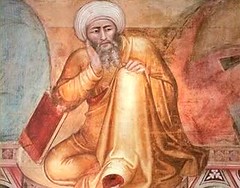
Averroes

Averroes Originally uploaded by Sibad.
I think of Averroes, and the Islamic thinkers who helped found modern medicine and who, centuries ago, strove to bring wise secularism to Europe's murderous theocracies. Thank goodness I have so many Muslim neighbours, so many teachers, friends and students who offer me and my family nothing but kindness and respect and who'd never be so ill-mannered as to insinuate their faith on me. Then I know the courageous conversation of Averroes and his contemporaries lives on Democracy Street. (see this analysis of Islam's modern dilemmas)
' ... doing little things with great love
E-mail from me to someone with a group on Flickr called 'hum drum town': I think your interest in the ordinary is extraordinary. I've been involved with local government all my career. It's focus is on the hum drum in people's lives - tho' of course there are dramas too. My blog is called 'waging peace'. It's about the ordinary things people and government's do - or don't do - to maintain civility and safety and peace. Among fire officers it's as much about preventing fires through monitoring and regulation as it is about bravely and efficiently putting them out. I'm interested in mundane tasks that keep the peace. When Hanna Arendt wrote in 1963 (I read her book Eichmann in Jerusalem in 1969) that Adolf Eichmann personified the 'banality of evil', it occurred to me that could be reversed. Best wishes Simon Reply: My father is involved in local government as well - so I guess from a young age I've been exposed to arguments from the Planning Commission regarding zoning, and building, etc. Waging peace makes a lot of sense to me. The small and the ordinary that comes into play here. Think of how much depends on people behaving in a civil manner. Big problems occur when we stop paying attention to small or ordinary things. Or maybe I'm just making excuses for myself. :-) I'm not really a 'big picture' kind of person. I just find that it makes more sense to 'think small' and to do little things with great love, if that makes any sense. Cheers & Best wishes, N

Friday, 22 June 2007

Keronvel - pondering causes of harm

Thursday, June 21, 2007. Still raining. This place lends itself to strong light. Its absence flattens the broad acres of variegated granite and sand, removing perspective. Lacking contrasting shades giant boulders lose their striking scale. Wetness, which I like in a city - Corfu being a good example - especially when it goes with rain on canopies dripping off roofs into cascading gutters, and gloom, adding mystery to a Scottish glen, doesn’t suit Brittany. This is my subjectivity at work, but I like this coast edged by distant dangerous overfalls, while in-shore a gusting wind shifts shades of azure and darker blue across the rocky shallows, testing the hovering seabirds, driving cloud shadows which abruptly darken a foreground of rock and green shore while dazzling a strip of distant beach and as swiftly shading the horizon while flattering the place I’m standing with a surge of light and warmth.
We resorted to a supermarket to buy presents and wine. The rain drummed on the high roof above the busy aisles. Arthur’s even started to pack. Lin’s reading in the car parked outside the gîte. Dorothy’s listening to music through earphones. We phoned Amy at Glastonbury “Hullo mummee!” “Hullo mummee” echoed Liz, near Amy’s phone. “It’s wet here too but we’re in the tent.” “What do you want for presents?” “Danetta dark chocolate mousse and Mikado biscuits, pleeeeese”. For Richard it’ll be lager and saucisson sêche. Say’s Lin “I bet the weather will brighten as we leave France.” The forecasts say ‘No”.

* * * * * *

1230 pm Thursday The air is fresh with sea smell under a grey sky, the rain coming in gusts from the west - weather that seems to cover most of western Europe though an e-mail from Belgrade reports unprecedented heat. Now at 1230 in the afternoon Dot’s made up our picnic but we’re still in the gîte nattering and having cups of tea. At breakfast - Dot’s poached eggs on toasted baguette - I drew from Arthur more of his mining life before and during the war. He was 5 years down Hilton Main from 1934 and called up as a miner with threat of prison, disallowed from his attempts to join the army, to go down the same mine again for the duration. After that he worked at Goodyear making tractor tyres. The story continues. I hope Richard and Amy who have other things in their lives now will want to know about their grandparents early lives doing mining and factory work that has now dispersed to other parts of the world.

* * * * * *

I’ve been sent an essay about ‘harm in world politics’. It’s by one of the strategic managers from the Fire & Rescue Service who thought it might interest me. He suggests that de-civilising is ‘an almost complex form of barbarism coupled with the continual refinement of the civilizing process that aids rather than hinders the barbarism’. He suggests the sociologist Norbert Elias might see us as ‘late barbarians’. I replied:

Dear R. It is a privilege to be entrusted with your paper. I will now read it properly. Being on holiday is a good time to read in a relaxed and concentrated way. I have been intrigued, and some would say almost morbidly curious, about the subject that is the theme of your essay for almost as long as I can recall.

I started, this interest, when I was staying with the parents of a school friend when I was about 10 or 11 in 1952. His parents were the kindest hosts. I happened to wander in their house and saw on a desk a copy of Russell’s early commentary on the Holocaust ‘The Scourge of the Swastika’.

As you may know many English children were probably far more protected as a generation from knowledge of violence. No television and few images - nothing to compare with the exposure via film, TV, internet and magazine that today‘s children (and most parents) take for granted. Perhaps my parents immersed in a world war wanted us to be innocent for a while.

I leafed through this book. I’d never seen a corpse, not even a photo of one. The worst pictures I saw were pictures of the crucifixion, I found them pretty horrific but they were paintings. All of a sudden here were black and white photos of hundreds of deformed emaciated dead bodies being pushed into pits by men driving bull dozers with masks over their faces. I didn’t really understand what I was seeing. Then my friend’s dad came in and saw me with the book.

I realise now that he was horrified that I had been able to see it, that it had been there for me to view even though that was my fault for wandering into his study. My memory is not the shock of the photos but the shock and seeing this gentle man so emotional and disturbed. I took it for annoyance at me but it was more complicated than that, as I’ve said. The images had an effect that burned into my brain rather more slowly but I recall the moment, over 50 years ago, with clarity.

Many years later I was pondering not how to tell my son the facts of life. I reckon from looking at his text books that knew rather more than me so good was the primary school curriculum on sex education. My worry was how he should learn about the evil men do. When he was 9 I was delivering a paper in Vienna (on IT in local government) and took him with me for a treat – to enjoy the great wheel, the cakes and sweets, and the streets of a beautiful city. While there I had arranged to visit the Simon Wiesenthal Centre and, after the conference, while touring the city we arrived at the centre by appointment. It was an ordinary third floor flat with an Austrian policeman at the entrance. We were met by a sweet lady called Rosemary who greeted us, obviously well used to school visits. We saw no horror pictures but we did see many filing cabinets in a spacious office and on the wall in the reception area a vast and slightly faded map of Europe upon which were dotted the names of camps and railway routes between them and the various nations of Europe. I could hardly speak but we did get into conversation. I was told by Rosemary that Mr. Wiesenthal was away but sent his best wishes. She gave Richard something to drink and we chatted about the work of the centre. We were only there about 20 minutes but I thought that if and when my son became curious on this subject he would recall a visit to an address in Vienna and the attention of a kind lady.

She explained before we went that Wiesenthal was doing his work because of what happened to his mother. People asked if he could forgive to which his reply was that you can forgive something done to yourself but you cannot, and have no right to, forgive someone for what they did to someone else.

It’s a story about forgiveness that underlines the importance of your interest in the process of decivilising. I met an old man who lived near us about ten years ago who’s late wife was a Czech who’d survived the camps. An ex-marine, he’d met her in Europe in 1945. “She forgave them” he told me. “How was that possible?” He paused in his porch, where I was on one of my door-to-door campaigns for a local cause – Neighbourhood Watch, I think, if not the Park or allotments. “All the same people who got involved in those things live round here” he said. “How do you mean?” I asked anticipating for a second a fantasy of anonymous war criminals in Handsworth. “Our neighbours. Among them there are camp guards, people who’d join the underground, people who’d harbour you despite the danger, people who’d betray and collaborate, people who’d use the situation to settle old differences between neighbours. They’re all the same people.”

Mazower and his co-writers are doing fine work on events in Greece in the 1940s. I hope we may meet again and work further on current issues for the F&RS in xxx. A thought and a question (no need to answer): do you think people with a non-conformist tradition in their background are more alert to the sudden emergence of evil in their immediate surroundings, including in themselves, because of the message from the pulpit about the closeness of hell fire – the message that the devil goes round and about like a prowling lion searching for opportunity? My stepfather said that even though he was an atheist his Methodist upbringing had given him a life-long fear of hell even though he no longer believed in the religion that taught him about it. I recall that I didn’t really start to grasp what this was all about until I was forced to confront the possibility that it was I who could have been the perpetrator of genocide – not some other species of human. If I recall that insight came about 20 years after I’d seen that picture of the bulldozers at work at Belsen. Best wishes, Simon (in France until 24 June)
[Back to the future 19/07/07: Is it possible that Europeans in their dark century were the perpetrators and victims of greater racism than on any other continent (Nanjing and other atrocities notwithstanding) and so have learned a terrible lesson about the banality of evil - how it starts with quite small incivilities (hence our preoccupation with what some call 'political correctness' but which is also about assiduous politeness - verbal and non-verbal). We know how close to civilization lies its opposite - how easy it is to indicate lack of worth in another individual because they belong to another collective group (age, ethnicity, nation, gender, sexuality, faith, class, disability, the list is endless and always waiting reinvention). Because we fear our own potential for evil (a burdensome self-consciousness) we make jokes about all these things but they are seldom funny. What matters most is that we are human - or try to be. It is of course clear as day that by having such noble sentiments I am better than everyone else. Evil is as close and as lethal as current to the linesman on an electricity pylon and that to steer from it I must be as well insulated, well trained and consequently as alert about the energy of evil as he is about the energy of electricity - but I must never lose my sense of humour, since to be good requires wit as well as wisdom.]

* * * * * *

I got a letter from Alex in England for a fortnight before returning to the house in Nebias in SE France where she and Brian and daughter Zoë have part settled. They, like us, are working out how much to stay in UK and how much to make home in another very different place. I’d sent her some references as part of an upgrade of Compendium Learning’s website.

* * * * * *

The process of getting my Iraqi friend and his family to England to live and work is proceeding through different bureaucracies.
‘…Do you think that the seat may be offered in the next academic year? Or may be in September this year or later? Because, in case my travel will be delayed till sometime after the beginning of the new year, I may well need to register my sons in a Primary school before they are already filled. Registration has already started and only the private schools are accessible to Iraqis who have invalid residency in xxx. …’

The Middle East is overflowing with fugitives. My friend speaks of his good fortune at even having these circumscribed choices compared 'to most of my compatriots’.

* * * * * *

I am steadily filling my order book with paying work. I was 65 on 29 March, but I’ve delayed accepting my state pension for the next two years – preferring a lump sum around 2009 with interest. While I’m earning I don’t want to pay income tax on it either.

* * * * * *

This bloody chapter writhes in my head. It causes me more worry than anything. It’s a daily reminder of inadequacy - for all the pleasant displacement activities prompted by this familiar paralysis. It’s like making love in old age – the delightful ridiculous unreliable coincidence of presence, desire and potency.
There are various ways of looking at leadership ‘at the apex’. The intermingling of politics and management is granted - their separation a convenient myth practised by politicians and managers seeking to evade difficulties of government. Among the ways of commenting on the interconnection (or its avoidance) are Max Weber’s, Agneta Blom’s, John Stewart’s, Peter Self’s, Poul Mouritzen’s and James Svara’s and mine (drawing on these). I should describe each in brief and then expand on my three categories of relationship using examples, in the case of the last and most positive, from my film interviews of members and officer’s in conversation.
Where I can contribute is by discussing the fluidity and tension in the relationship between a politician and an officer. How it can shift from reciprocity to dependency. Though Self used the image of a bridge between politics and administration, he omitted Weber’s argument about a ‘profound source of tension’ between democracy and bureaucracy or, to stay with Self’s metaphor, the opposing pressures on the keystone – which are on the one hand the source of the bridge’s stability, but on the other a reminded of the violence of its collapse if the equilibrium of forces bearing on the keystone is disturbed, either by the crumbling of the keystone itself or the grounding of the bridge. An interdependent overlapping relationship - a tango - can become separate and co-dependent with a change of power and personality and external circumstances. The Jeeves-Wooster, and the Sir Humphrey-Jim Hacker relationships present themselves as attractive evasions of the tango. The challenge for a political leader and a senior manager recognising the possibilities that a relationship is ceasing or has ceased to be reciprocal, interdependent and overlapping, is how to recover the dance, how, jointly, to relearn its complex steps and rhythm. I have conversations that show the delicacy of this process of re-establishing, renegotiating and strengthening trust at the political-management interface.

* * * * * *

My interpreter friend is as ready as she is going to be facing complaints to which she is being required to answer to her profession’s disciplinary panel. I’m to be her ‘friend’ at a hearing in London in early July. It starts at 1600pm and I must catch a train from Paddington at 1803 for work in Devon next morning. She feels nervous. I’m thinking that by being there until 1715 I am helping as well as I can, on top of the arguments I’ve helped prepare with her. Neither of us is quite right.

* * * * * *

There are sunny windy intervals when the coast becomes lovely. Here Arthur, Dorothy and Lin gaze westward over the Anse de Guillec, about a kilometre NW of Kerblat, on one of the regular benches placed along the shores by the local council.

* * *

ATHENS, Greece, June 21
Sweltering weather blanketed much of southeastern Europe Thursday, bringing a deadly storm to Vienna and power problems in Greece.

Back numbers

Simon Baddeley