Summer returned, chastened, and then went again ...

...and returned. September in Corfu.
Vasiliki has been collecting ripe figs from the tree in her garden next door, lessening the interest of wasps. I’ve pruned the remaining grapes – shrivelled and sour – from the vine strung along the wooden balcony rails. We’re better for the extra insect netting, protecting the bathroom and kitchen windows. We can leave them open to collect a breeze.
“This house stays quite cool though. I’m sure the old thigh tiles along with the polystyrene insulation on the roof and the thick walls, help protect us from this heat”
"But we still have that one leak through our bedroom roof" said Lin
We’ve been able to work on small jobs; like the metal brackets I’m using to strengthen the part desiccated surfaces of the balcony banisters, alternately baked and soaked.

I sweep the plaka, ignoring wasps. I feed the compost with used teabags, ash from the stove grate not used since last winter, bits of tissue, peelings from Lin’s cooking, damping all with a hose. I envy the speed, compared to my compost heaps in England, with which the leaves and twigs return to earth.
Indoors, I’ve at last fixed a working latch, bought on eBay, for the door between the kitchen and the dining room. I'll look out for brass handles.

We’ve recovered a wooden window frame from beside wheelie bins below the village. Two trips. Lin’s sketching a cupboard and shelves she’d like built her side of our bed.


I enjoy the way these constructions come together, new and old wood inter-scarfed, looking like part of the room, in the way of customer-commissioned joinery.

The skirting board pressed to the uneven shape of one bedroom wall had detached itself. With a more powerful drill I fix it with stronger rawl-plugged screws. The mirror in our bedroom now sits above the chest of drawers shipped from Scotland, levelled on an uneven floor, pieces of wood added to its front feet.

In oour too clinical kitchen, I’ve unscrewed the supports of a white-faced chipboard shelf, lowered them to allow space for spice jars and fixed on the same supports, a plank of venerable wood we found by a verge, maturing, till needed, in the apothiki. It sanded handsomely, varnish showing the grain.

“I tthink it’s walnut” said Lin.
I’m chopping and sacking earlier pruning of sun dried wisteria; lugging twined tendrils out of the orange tree, training the serpentine climber to wind itself along wires parallel and outside the deep green iron railings of our side balcony, guiding it away from the vulnerable wood of the south facing balcony. I’ve cut chunks out of the bougainvillea. I’ve scraped away greenery encroaching on the gate from the garden into the path that runs below the house, grumbling to Lin about the shabby work of the unknown in the house below, who’s left untidy building waste along the footpath by the small extension he’s having built, as well as stacking, without a by-your-leave, palettes and sacks of new building material obstructing the steps from the street to our house. The vegetable space which in Spring he’d marked out with string and bamboo, has, as I’d half expected of one who can’t tell a slow worm from a snake, is in three months a cluttered, overgrown and unproductive muddle, like the allotment plots left by transient renters on the Victoria Jubilee who thought, for a few weeks of waning enthusiasm that it was romantic to get food from the soil instead of from shops.
Using the smooth edged blade of a multi-tool Lin’s scraping the raised edges of cracks in the sitting room ceiling; filling and laying on white paint where stove smoke has greyed her original work.
“It’s nearly ten years since this room was painted. There’s been lots of winter smoke since then.”
 In the apothiki I found a little old window in its frame, we’d rescued years ago from beside the bins; painted brown; easily sanded off. The frame showed signs of long gone rots and woodworm at two corners, baked dr and clean through several summers.
“We’ll include it in the construction, but this window needs to open to the right. We must change the hinges” said Lin. At Profi I found two right hand hinges, almost matching the old ones.

With a little whittling of the existing indents they fitted and holding them down as I drilled new holes almost on top of the old, the window now opened in her preferred direction.
Walking the next day I spied a fly-tip of chipboard in a small brambly space behind St Athanassius, with a small door from which I unscrewed a round pine handle, just right.

The wood moulding that runs between separate panes in a window – in this case triangular, with insets on the base of the triangle to hold the edges of the glass. On the recovered window frame we’re using as part of the cupboard and shelves had been broken out. They weren’t by the wheelie bins with the other wood. We could see them often in the windows of older, often empty, houses but seeing no more abandoned old frames, I drove into town and, at the two timber yards I know, asked, using diagrams, for a meter length of the moulding.
“Yes” they knew what I wanted.
“No” they did not stock it. “Palia, old”.
Our friend Kasey, now in the village, introduced us to an English carpenter friend and neighbour who works in hard wood.
“They’re called tramsons” he said. “Give me your frame I’ll make some up for you. You know that to insert them you’ll need to take the frame apart?”
“I can do that”
The joinery at the carpenter’s house was superb – as a whole, and in tiny details that anyone who works with wood could see and appreciate. My efforts, compared, looked so puny for all my pride in how, with occasional butt joints, crude scarfs, screws, glue and sanding and filler I can hide a multitude of small incompetencies; even let them show, so long as the construction’s sound.
“I don’t like pine” he said.
Near all our joinery is pine, soft, easy to work and, when aged, displays its history, the work and use that came before; blemishes, scratches, on one wash-top the singeing of the morning shaver’s resting cigarettes, sealed splits, joiner's marks, bruises, black nails and rusted slot screws, layers of oil paint, lacquer and varnish, to us engaging, like elderly bodies of loved and useful people.
Down at the stables by Luna D’Argento, the meadows collect water, ground turns muddy. The horses roll in it; extra work.
Early morning I woke to the familiar roar of torrential rain, thunder, lightning. In the hours that followed, enjoying the protection of our sturdy roof, pleasantly slumbering semi-awake, the downpours in almost regular succession, soothing, the sound all-enveloping, water released from suspension relieving the deep clouds of weight, running down the gutters, soaking everything. Such weather gives Corfu its distinctive greenery. Shutters and doors painted the Aegean blue of souvenir postcards look out of place. How vexing must be such weather for people on a few days' holiday. I know how my attitude towards it changes when the family are here – tho’ Amy has never been phased by rain, likes walking in all weathers, as we learnt together in her childhood, especially in the Highlands, where birch and heather drip below unfurling mist.
“Come to Greece in September. It’s a lovely time”
Not at the moment.
But then again, yes, now! Summer returns again. Lin and I take the 9.00 bus into town for a visit to our bank to pay our property tax, for which we again needed the help of our accountant, since the local tax office website Eleni'd taught us to access, using our usernames and passwords, had changed; enough to confuse us. Then lunch at Pergola with Richard Pine. Now there’s a quandary for Athens – Seven Turkish army officers escaped after the failed coup seeking asylum in Greece as Erdogan demands their extradition. ‘Athens caught in the middle again by European crises’ writes Richard in the Irish Times. If Greece does not do as the Turkish PM wants, which now includes a provocative demand for revocation of the Treaty of Lausanne that ceded once Italian islands off the coast of Turkey to Greece, then he only has to release yet more refugees across the Aegean.
We had fried squid, grilled squid and grilled sardines, having started with beans, horta and fried aubergines. I tried to tell Richard about my epic read of The Kindly Ones. Its author worked six years for an international charity in Bosnia, Chechnya, Congo, Sierra Leone, Caucasus, Afghanistan, Syria. This book is - winner of the Prix Goncourt - is fiction; exploring how Jonathan Littell might have been had he been born in Germany at the start of the 20th century.
“I wish I had time to read” Richard remarked “I’m immersed in seeing every known film of Sherlock Holmes” – research for his latest book on the intimacy of popular and canonic story-telling. His thesis is that the Leavis view of a pantheon of high literature separate from the yarns of the masses is nonsense. He’s including the tales of King Arthur and Robin Hood. Of these two “there never was an original book. So over the centuries every bedtime story-teller, every yarner has been able to invent their adventures to listeners’ and readers’ choice”.
I told Richard how we’d heard of the Hellenic tax inspectors' work in a bar nearby; how a couple had sat down with other customers and ordered drinks; how after an interval they’d been joined by another woman. Then all three stood up and confronted the young man who owned the bar. They told him that by law his invoices should have been placed on the tables where drinks were served; not on the bar where he’d had them lined up in little cups. He was fined €5000.
Last Thursday I invited, as planned, two new friends, Ann and Steve Ford, to come with Dave and I on Summersong to visit Lazaretto. For my grandson, I’ve renamed Execution Island. Oliver and I call it Pirate Island.
After we’d docked at the makeshift concrete jetty, I let Ann and Steve walked ahead up the gentle track, to see the young men’s crosses in the clearing before the church and the Lazaretto hospital. As usual there are few signs of visitors, but some authority has placed bright red fire extinguishers around the area between the church and the still unfinished Visitor Centre. It looks too as if thieves have got away with the wiring from the generator beyond the main buildings. The doors of the buildings have been left open, no doubt to ventilate the incomplete restoration. We saw the clean polished pine floors and still new render, ready for plaster, and paint. At Pergola with Richard, who’s always predisposed to be as grouchy as I, I mentioned the article he’d written about Lazaretto a few months ago, ‘exposing’ the waste and the dereliction of what could have been a place for young and old to learn more about what happened to leave these memorials to the dead, and the execution wall surrounded by Acacia seedlings springing up like weeds.
“Couldn’t it be good to have been good to learn more about such things?”
“I asked” replied Richard “a teacher friend here. ‘Do they really teach by rote in the schools here?’ ‘They do. Everyone knows there was a Civil War between 1947 and 1949’ ‘Can they learn more? Ask questions? Discuss?’ ‘Oh no. Everyone learns the dates’”
“But Richard” I said “wouldn’t it be cathartic? Wouldn’t it also be honest to know and strive to understand what happened?”
Ironic, he replied “Why? You’d just feel worse. People can’t see the point of feeling even worse than they do already. I tell you that since that article, others have been asking me ‘how do we get to that island?’ I tell them there’s no proper landing place”
"Yes I know of several people here who - because of what happened there - say they would never go to Lazaretto!"
We can land there with ‘Summersong’ because she’s bilge keel, hardly 29 inches draft. We can sail in close and jump off onto the jetty on which there are no convenient bollards. Anchor off and take a line ashore.
“And you know what” he added “if you say look you’ve already spent €314,000 on restoring the church and the quarantine hospital and on building the Visitor Centre and now it’s all falling down incomplete, I’d be told by Greeks ‘so what?’”
“But what about truth and reconciliation”
“Ha!” I took this exclamation to mean that here these two states – truth, reconciliation - were irremediably opposed; that only consigning the whole mess to oblivion could avoid the anger and yearning for revenge and atonement that would follow any project to recover the ‘truth’. Instead the different versions of what happened remain cherished by fewer and fewer as time returns the memories that still remain to dust.
“Oh I forgot. Did you know they’ve changed that new Green Bus route again. It’s good news. So many complaints! They must have listened. Our bus now goes left towards the Old Port, along Xenofondos Stratigou, turning sharp right near the old bus station, up past the New Fort, through the open air market down to San Rocco Square. The new stop is just off the square on Dimoulitsa"
*** *** ***
Our son's come to stay with us for a few days....


...and returned. September in Corfu.
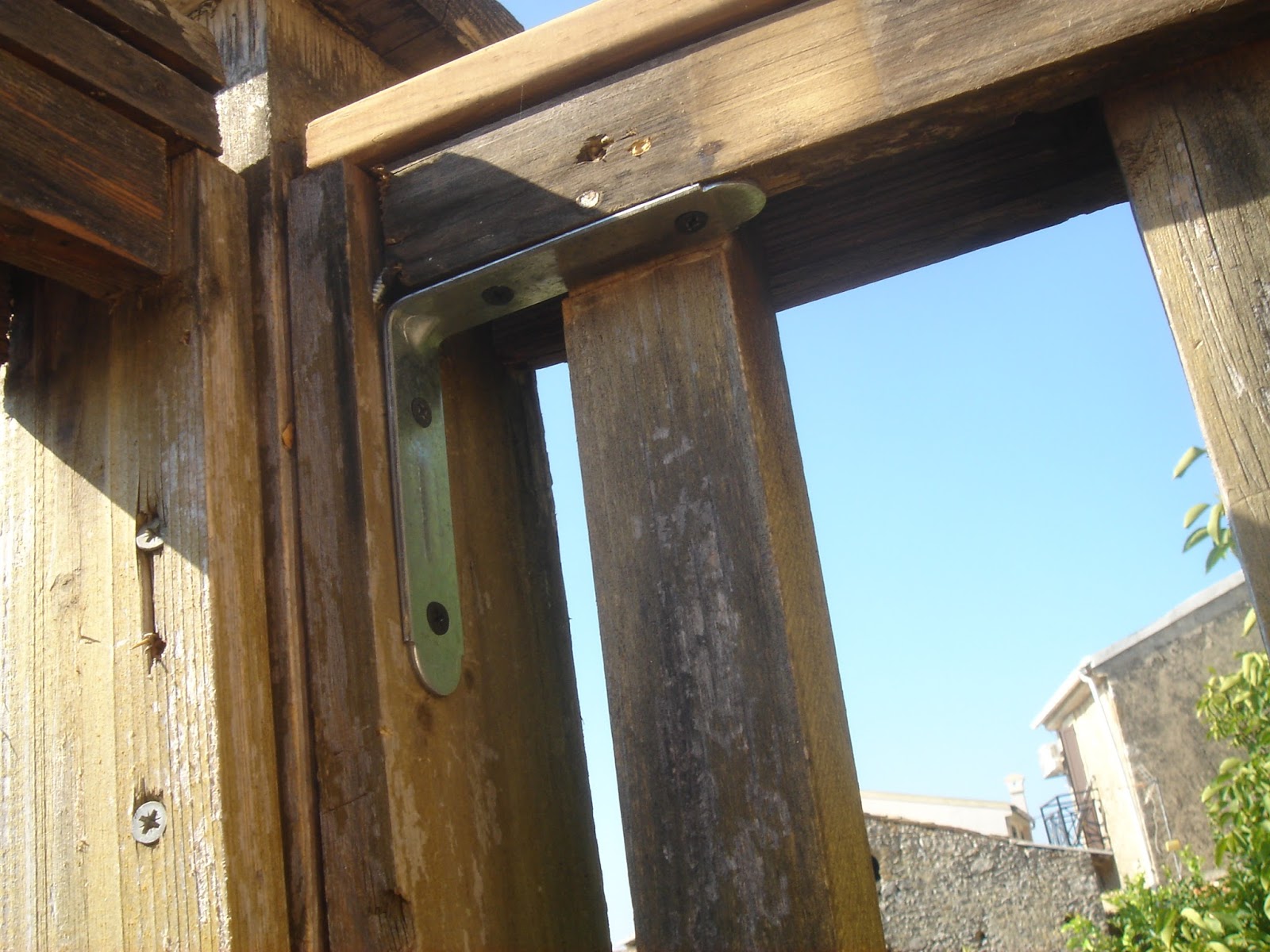
Vasiliki has been collecting ripe figs from the tree in her garden next door, lessening the interest of wasps. I’ve pruned the remaining grapes – shrivelled and sour – from the vine strung along the wooden balcony rails. We’re better for the extra insect netting, protecting the bathroom and kitchen windows. We can leave them open to collect a breeze.
“This house stays quite cool though. I’m sure the old thigh tiles along with the polystyrene insulation on the roof and the thick walls, help protect us from this heat”
"But we still have that one leak through our bedroom roof" said Lin
We’ve been able to work on small jobs; like the metal brackets I’m using to strengthen the part desiccated surfaces of the balcony banisters, alternately baked and soaked.
I sweep the plaka, ignoring wasps. I feed the compost with used teabags, ash from the stove grate not used since last winter, bits of tissue, peelings from Lin’s cooking, damping all with a hose. I envy the speed, compared to my compost heaps in England, with which the leaves and twigs return to earth.
Indoors, I’ve at last fixed a working latch, bought on eBay, for the door between the kitchen and the dining room. I'll look out for brass handles.

We’ve recovered a wooden window frame from beside wheelie bins below the village. Two trips. Lin’s sketching a cupboard and shelves she’d like built her side of our bed.


I enjoy the way these constructions come together, new and old wood inter-scarfed, looking like part of the room, in the way of customer-commissioned joinery.

 |
| First draft cupboard, drawer and shelves... |
The skirting board pressed to the uneven shape of one bedroom wall had detached itself. With a more powerful drill I fix it with stronger rawl-plugged screws. The mirror in our bedroom now sits above the chest of drawers shipped from Scotland, levelled on an uneven floor, pieces of wood added to its front feet.

In oour too clinical kitchen, I’ve unscrewed the supports of a white-faced chipboard shelf, lowered them to allow space for spice jars and fixed on the same supports, a plank of venerable wood we found by a verge, maturing, till needed, in the apothiki. It sanded handsomely, varnish showing the grain.

“I tthink it’s walnut” said Lin.
I’m chopping and sacking earlier pruning of sun dried wisteria; lugging twined tendrils out of the orange tree, training the serpentine climber to wind itself along wires parallel and outside the deep green iron railings of our side balcony, guiding it away from the vulnerable wood of the south facing balcony. I’ve cut chunks out of the bougainvillea. I’ve scraped away greenery encroaching on the gate from the garden into the path that runs below the house, grumbling to Lin about the shabby work of the unknown in the house below, who’s left untidy building waste along the footpath by the small extension he’s having built, as well as stacking, without a by-your-leave, palettes and sacks of new building material obstructing the steps from the street to our house. The vegetable space which in Spring he’d marked out with string and bamboo, has, as I’d half expected of one who can’t tell a slow worm from a snake, is in three months a cluttered, overgrown and unproductive muddle, like the allotment plots left by transient renters on the Victoria Jubilee who thought, for a few weeks of waning enthusiasm that it was romantic to get food from the soil instead of from shops.
Using the smooth edged blade of a multi-tool Lin’s scraping the raised edges of cracks in the sitting room ceiling; filling and laying on white paint where stove smoke has greyed her original work.
“It’s nearly ten years since this room was painted. There’s been lots of winter smoke since then.”

“We’ll include it in the construction, but this window needs to open to the right. We must change the hinges” said Lin. At Profi I found two right hand hinges, almost matching the old ones.

With a little whittling of the existing indents they fitted and holding them down as I drilled new holes almost on top of the old, the window now opened in her preferred direction.
Walking the next day I spied a fly-tip of chipboard in a small brambly space behind St Athanassius, with a small door from which I unscrewed a round pine handle, just right.

The wood moulding that runs between separate panes in a window – in this case triangular, with insets on the base of the triangle to hold the edges of the glass. On the recovered window frame we’re using as part of the cupboard and shelves had been broken out. They weren’t by the wheelie bins with the other wood. We could see them often in the windows of older, often empty, houses but seeing no more abandoned old frames, I drove into town and, at the two timber yards I know, asked, using diagrams, for a meter length of the moulding.
“Yes” they knew what I wanted.
“No” they did not stock it. “Palia, old”.
Our friend Kasey, now in the village, introduced us to an English carpenter friend and neighbour who works in hard wood.
 |
| Wood transom holding a pane of glass |
“They’re called tramsons” he said. “Give me your frame I’ll make some up for you. You know that to insert them you’ll need to take the frame apart?”
“I can do that”
The joinery at the carpenter’s house was superb – as a whole, and in tiny details that anyone who works with wood could see and appreciate. My efforts, compared, looked so puny for all my pride in how, with occasional butt joints, crude scarfs, screws, glue and sanding and filler I can hide a multitude of small incompetencies; even let them show, so long as the construction’s sound.
“I don’t like pine” he said.
Near all our joinery is pine, soft, easy to work and, when aged, displays its history, the work and use that came before; blemishes, scratches, on one wash-top the singeing of the morning shaver’s resting cigarettes, sealed splits, joiner's marks, bruises, black nails and rusted slot screws, layers of oil paint, lacquer and varnish, to us engaging, like elderly bodies of loved and useful people.
 |
| The history of a joint |
** *** ***
At Piatsa, Mark, who's not eating well, said “There’s some shitty weather on the way”Down at the stables by Luna D’Argento, the meadows collect water, ground turns muddy. The horses roll in it; extra work.
Early morning I woke to the familiar roar of torrential rain, thunder, lightning. In the hours that followed, enjoying the protection of our sturdy roof, pleasantly slumbering semi-awake, the downpours in almost regular succession, soothing, the sound all-enveloping, water released from suspension relieving the deep clouds of weight, running down the gutters, soaking everything. Such weather gives Corfu its distinctive greenery. Shutters and doors painted the Aegean blue of souvenir postcards look out of place. How vexing must be such weather for people on a few days' holiday. I know how my attitude towards it changes when the family are here – tho’ Amy has never been phased by rain, likes walking in all weathers, as we learnt together in her childhood, especially in the Highlands, where birch and heather drip below unfurling mist.
“Come to Greece in September. It’s a lovely time”
Not at the moment.
But then again, yes, now! Summer returns again. Lin and I take the 9.00 bus into town for a visit to our bank to pay our property tax, for which we again needed the help of our accountant, since the local tax office website Eleni'd taught us to access, using our usernames and passwords, had changed; enough to confuse us. Then lunch at Pergola with Richard Pine. Now there’s a quandary for Athens – Seven Turkish army officers escaped after the failed coup seeking asylum in Greece as Erdogan demands their extradition. ‘Athens caught in the middle again by European crises’ writes Richard in the Irish Times. If Greece does not do as the Turkish PM wants, which now includes a provocative demand for revocation of the Treaty of Lausanne that ceded once Italian islands off the coast of Turkey to Greece, then he only has to release yet more refugees across the Aegean.
We had fried squid, grilled squid and grilled sardines, having started with beans, horta and fried aubergines. I tried to tell Richard about my epic read of The Kindly Ones. Its author worked six years for an international charity in Bosnia, Chechnya, Congo, Sierra Leone, Caucasus, Afghanistan, Syria. This book is - winner of the Prix Goncourt - is fiction; exploring how Jonathan Littell might have been had he been born in Germany at the start of the 20th century.
‘The real danger for mankind is me, is you…if you’re not convinced of this, don’t bother to read any further. You’ll understand nothing and you’ll get angry, with little profit for you or for me.’Littell's arguing that Christian morality with its ideals of redemption and forgiveness and salvation isn’t adequate when it comes to moral judgements, sorting out the truly evil from the followers, the involved and the innocent; into somehow absorbing these events into history, giving them some punctuation; better he argues to look to the morality of classical Greece. Oedipus didn’t know he’d murdered his father, nor that he’d slept with his mother, but when he found out, he regarded himself as guilty of patricide and incest and deserving of punishment, and those who judged are the Furies, the Eumenides, the Erinyes - Littell's last line in the mouth of Dr Max Aue ‘The Kindly Ones were on to me’
“I wish I had time to read” Richard remarked “I’m immersed in seeing every known film of Sherlock Holmes” – research for his latest book on the intimacy of popular and canonic story-telling. His thesis is that the Leavis view of a pantheon of high literature separate from the yarns of the masses is nonsense. He’s including the tales of King Arthur and Robin Hood. Of these two “there never was an original book. So over the centuries every bedtime story-teller, every yarner has been able to invent their adventures to listeners’ and readers’ choice”.
I told Richard how we’d heard of the Hellenic tax inspectors' work in a bar nearby; how a couple had sat down with other customers and ordered drinks; how after an interval they’d been joined by another woman. Then all three stood up and confronted the young man who owned the bar. They told him that by law his invoices should have been placed on the tables where drinks were served; not on the bar where he’d had them lined up in little cups. He was fined €5000.
Last Thursday I invited, as planned, two new friends, Ann and Steve Ford, to come with Dave and I on Summersong to visit Lazaretto. For my grandson, I’ve renamed Execution Island. Oliver and I call it Pirate Island.
 |
| With Ann Ford, motoring to Pirate Island on 'Summersong' (photo: Steve Ford) |
After we’d docked at the makeshift concrete jetty, I let Ann and Steve walked ahead up the gentle track, to see the young men’s crosses in the clearing before the church and the Lazaretto hospital. As usual there are few signs of visitors, but some authority has placed bright red fire extinguishers around the area between the church and the still unfinished Visitor Centre. It looks too as if thieves have got away with the wiring from the generator beyond the main buildings. The doors of the buildings have been left open, no doubt to ventilate the incomplete restoration. We saw the clean polished pine floors and still new render, ready for plaster, and paint. At Pergola with Richard, who’s always predisposed to be as grouchy as I, I mentioned the article he’d written about Lazaretto a few months ago, ‘exposing’ the waste and the dereliction of what could have been a place for young and old to learn more about what happened to leave these memorials to the dead, and the execution wall surrounded by Acacia seedlings springing up like weeds.
 |
| Lazaretto is called Nisos Gouvίnon - due east of Gouvίa on the chart |
“Couldn’t it be good to have been good to learn more about such things?”
“I asked” replied Richard “a teacher friend here. ‘Do they really teach by rote in the schools here?’ ‘They do. Everyone knows there was a Civil War between 1947 and 1949’ ‘Can they learn more? Ask questions? Discuss?’ ‘Oh no. Everyone learns the dates’”
“But Richard” I said “wouldn’t it be cathartic? Wouldn’t it also be honest to know and strive to understand what happened?”
Ironic, he replied “Why? You’d just feel worse. People can’t see the point of feeling even worse than they do already. I tell you that since that article, others have been asking me ‘how do we get to that island?’ I tell them there’s no proper landing place”
"Yes I know of several people here who - because of what happened there - say they would never go to Lazaretto!"
We can land there with ‘Summersong’ because she’s bilge keel, hardly 29 inches draft. We can sail in close and jump off onto the jetty on which there are no convenient bollards. Anchor off and take a line ashore.
“And you know what” he added “if you say look you’ve already spent €314,000 on restoring the church and the quarantine hospital and on building the Visitor Centre and now it’s all falling down incomplete, I’d be told by Greeks ‘so what?’”
“But what about truth and reconciliation”
“Ha!” I took this exclamation to mean that here these two states – truth, reconciliation - were irremediably opposed; that only consigning the whole mess to oblivion could avoid the anger and yearning for revenge and atonement that would follow any project to recover the ‘truth’. Instead the different versions of what happened remain cherished by fewer and fewer as time returns the memories that still remain to dust.
“Oh I forgot. Did you know they’ve changed that new Green Bus route again. It’s good news. So many complaints! They must have listened. Our bus now goes left towards the Old Port, along Xenofondos Stratigou, turning sharp right near the old bus station, up past the New Fort, through the open air market down to San Rocco Square. The new stop is just off the square on Dimoulitsa"
*** *** ***
Our son's come to stay with us for a few days....


