'Tourism serves everyone' by Aristedes Metallinos, village sculptor of Ano Korakiana 1981
See the wanton tourist led towards the olive groves on a priapic donkey by a handsome ragged-trousered peasant; Aristedes Metallinos' take on the arrival, in Corfu, of mass tourism. He'll pocket a negotiated charge in more than coin, and she an adventure to treasure. If I wanted the quaint ways of another
country I’d enjoy them in our part of Birmingham where polyglottic heterogeneity is the norm; where we've many faiths whose celebrations are held in foreign
voices displaying every colour under the sun of an imploded empire; where, to cite a depressing example, there are still
parents who will kill their daughters for eloping with someone made unsuitable
by faith or family. Many books by foreigners about life in Greece aim to entertain by parsing the exotic, describing with amusement and affection the folkways of 'our' village, presenting local caricatures - endearing postcards from abroad. Thus the sublime inventions that, apart from enhancing their authors' repute, created Greece as a post-war tourist destination by inventing a kind of paradise.
All that’s changed. Edward Said's Orientalism has come home. In Greece, modernisation has made everything familiar and shared. The customers in Corfu Lidl – Greek and
foreign – are almost entirely white, where in the same shop in Birmingham we find they're mostly black, with us a little different by skin and tongue. In the
Ano Korakiana us un-Greeks are hardly the point of note we’d be if one of us
were even slightly ‘mavro’. Our neighbours know more from their TV about the news in England
then we. The marriage of Kate and William! They told of viewing the
magnificent ceremony on their screen in the dining room; wondered what we thought. We’d seen nothing but folded headlines on passing news-stands bearing international
newspapers. Ano Korakiana, even with us and plenty of other foreigners, has greater
homogeneity than the road where we live in Handsworth. Does this mean I value arriving here, living here, any the less. Not one jot. But not because it's any more strange than our street in Birmingham, where I delight in most of our neighbours and they most of the time in us...so let us end any idea of Greece as an exotic country far from ours in place and culture.
On our street in Birmingham
*** *** ***
The workable space in this house is reduced by rain. Wet weather loses us our small garden for drying laundry, the balconies for reading and eating and the veranda and path beside the house for other things we'd do out of doors.
Matt and Sophia
Nonetheless it's a pleasure to inhabit - for a predicted while - a houseful of nappy talk, the collection and disposal of much extra rubbish, including feeding the cats food particles that fall from small hands and mouths untrained in table manners (note: Norbert Elias on the civilising process), wet-wipes, the discordant symphony of squeaks, wails and shouts of babes, and our shared and constant watch for risk. Oliver sleeps soundly in the room next to ours, though tiny sounds of slumber and waking penetrate the stud-wall separating our rooms. In the morning Lin and I hear clumping and knocks at the adjoining door; a sleepy child emerges to clamber into bed with nan and grandpa. Then in minutes it's 'pitch invasion' ....
Liz reads to Oliver under a quilt on our bed
...as Amy joins us from downstairs, and perhaps Liz while Matt attends to Sophia, and I'm up making tea and coffee, and, with everyone else, wiping surfaces.
Amid the grey wet weather - rare for this late in April - we've found intervals of sun and sea.
Paleocastritsa
Dassia before the clouds arrived
...and even in wet weather the city is a pleasant place to stroll, enjoy the children's playground at the Bosketto and look out to sea towards Vido, where the ferries pass, and on to the mountains of mainland Greece and Albania.
And on the way home there's Emeral for cakes and, especially, to choose ice cream cones, top them with sauces and sit eating them together as they dribble from tiny mouths...
Oliver at Emeral on the Paleo Road just north of Tzavros
..and this morning, Sally's at Ipsos - ethnically British with soccer on a big TV, all-day English breakfast and 60s and 70s hits on musak.
Sophia and 'Auntie Lin' (photo: Matt Basden)
Shopping in the rain
Oliver and grandpa at 208 Democracy Street
On Democracy Street ~ our neighbour Effie took an iPad snap and posted it to Facebook
Sat either side of the aisle we saw lozenges of perfect blue as our plane ascended, banking in a wide circle that brought us over Pantokrator, then the high coast of Albania, before sea and land receded below bright white clouds. On the flight from Corfu we enjoyed prosciutto and cream cheese sandwiches in a round loaf from the village bakery made up for a picnic before we left.
We landed around one-o-clock at Luton with a slight bump that made someone exclaim. After an hour waiting by a carousel for our bags, a timorous tannoy voice apologised for the delay, "caused" - with fudged syntax - "by operational reasons".
A resigned British crowd, but for a tearful mother with a toddler, awaited belongings from Riga, Malaga, Faro, Palma, Corfu and somewhere else - luggage unloaded in no special order.
"Sunday lunchtime's always diabolical" said a slightly harassed women fielding mild grumbles at a service desk. Thirteen flights had landed at the same time causing a "massive back-up"
Luton luggage jam
"I don't recall such recurrent inefficiency in Corfu" I said to Lin "Yet people are wont to to throw up their hands at Greek confusions. When have we encountered that?"
The crowd was a lively metaphor for British acceptance of our economic mess. Jan wrote just now:
Hi Simon...when are you returning to Blighty? I would stay longer if I were you. The weather here is simply foul. I am interested to read your outline for Member-Officer courses. Do you think it's possible to weave in some of the issues we have exchanged views on in the last few months? I suspect it's a matter of it evolving and bringing authorities on board based on their own experiences and requirements, but there is no doubt in my mind that fundamental (irreversible ) changes are taking place and given local authoritys' relative powerless position vis-à-vis government, they frequently spend much of their energies on 'chasing and adjusting' to government requirements which are going to become even more challenging over the next few years; to such an extent that LAs, as we have known them, will cease to exist (SB note: news item - 7 June 2013*) and be replaced by something else yet to emerge.
The government’s approach is crude but becoming clear - 'delegate' (dump) difficult and unpopular (toxic) tasks to LAs (e.g. housing and welfare) then top slice (cut back) the monies available to carry out these tasks, thus achieving both financial and political objectives in one swoop. We are going to see more of this during the next Spending Review where I fear LAs will receive another hammering bordering on a coup de grace.
The scenario is obviously a bit more sophisticated than that and there are still 'hooks' for LAs to hang their issues on (e.g. City Deals, Community Budgets) but the general direction of travel is fairly clear and I believe beyond the tipping point because even the 'hooks' are in place by government decree and would not be there but for the government. This is the reality and the starting point for all those who want to see Localism become meaningful.
I have mentioned before the need to recalibrate the relationship between LAs and government and for LAs to have their own 'narrative' for this. Whilst this remain important, I am coming more and more to the conclusion that it is the relationship between LAs, their population and local community, which requires more attention and recalibration. The traditional models are becoming increasingly irrelevant; no longer fit for purpose. The old saying that “all politics are local” remains true, but a narrative (and practice) based on delegated democracy, selective engagement and top-down consultations is not going to promote Localism...more likely it will be used to drive the current policy objectives. Perhaps the time has come to phase out this narrative or reconstruct it within an overall narrative of 'mobilisation and support'; for LAs to make this focus a priority because if (when) successful this would impact significantly on the LA-government relationship, simply because the political foundations of LAs would strengthen. No government could ignore that for long.
This will take courage and persistence. The starting point is to ditch the parent-child relationship of local to centre; 'cleanse' local government of its Stockholm syndrome with Whitehall...a tall order; to get hundreds of LAs to 'sign up' is near impossible, but what is the alternative?
What I find frustrating is that no such narrative, backed up by analysis, leading to a Localism Agenda has even started to emerge. This may be unfair but it seems that the mind-set is stuck in the past and past methods are being rolled out to deal with the new agenda when in reality something very different is called for. We are talking about culture and behaviour change more than anything else. A new skills set is desperately needed but I can’t see one emerging yet. I am mindful of the saying that all generals fight the last war instead of the current one. Any thoughts on this?
The main news at this end is around the horrific terrorist attack on a soldier in Woolwich in London. This has some very challenging implications for Localism. The other big story is around is the tax affairs of large international corporations[ the way they avoid tax (legally) by moving monies around the world and manipulating the tax regimes of various countries. If they paid according to the spirit of the legislation, or on the same basis as the rest of us, then the public financial deficit would largely be resolved. Tthe sums are staggering. What is even more striking is the government’s total impotence in dealing with this. They are simply unable (unwilling) to act. We have plenty of moralistic shroud waving but total paralysis as far as actions are concerned. I think this demonstrates the power (and arrogance) of the 'new feudal elite'. They are not in the slightest bit apologetic and have no plans to change. They operate totally outside any democratic accountability. Their financial muscle is greater than most countries and beyond meaningful scrutiny. At the same time we are becoming more and more dependent on them for jobs and services. LAs are often desperate to attract them into their localities and you can see why.
Perhaps the time is right to start to talk about local taxation in a meaningful way - local taxation without which Localism cannot exist. The implications for the rest of society are quite staggering in terms of living standards and well–being especially for vulnerable and disabled people (the precariat)*. We are all paying more taxes than we should and enduring more welfare cut-backs than we should (more about ideology than anything else). These circumstances are manifesting themselves at local level in communities all over Britain; albeit very differently in poor areas compared to wealthy areas. Here you have an issue upon which 'mobilisation and support' could begin to emerge, but the silence is deafening. Why has this not yet filtered into the political-managerial agenda. Is ethics the missing link in the reading/carrying model, or is this a matter of hard-nosed politics?
The ramifications of the local council elections are rumbling on. The Tories are tearing themselves apart on Europe and gay marriages. If anything it is becoming worse; quite a spectacle; clearly now impacting on local politics. Many authorities are having to adjust to having significant numbers of UKIP councillors on the council. These are new and inexperienced people but with strong views on a narrow range of issues. It’ll be interesting to see how this plays out. It could shake things up or, more worryingly, it could lead to a strengthening of the worst underlying forces in many local communities (prejudice, xenophobia, insularity, nimby-ism, cronyism, and similar ugly forces). We have to recognise that there are - potentially - some very nasty downsides to localism. There needs to be a counter-balance to this. That is why I am talking about a recalibration of the relationship and a re-alignment of the power relationship. Not a divorce. It is difficult to envisage Civil Rights in the USA developing the way it has through a reliance on Localism on its own. Therein lies the challenge and pitfall of localism. What about a chat in June when you are back? Best Jan
*07 June 2013 Watchdog warns cuts could lead to collapse of councils....Local authorities must come clean in explaining to residents what services they might have to cut in the next Spending Review period, a parliamentary spending watchdog has reported.A Public Accounts Committee report into the National Audit Office’s (NAO) study, published in January, into the financial stability of local authorities, finds Whitehall doesn’t properly understand the overall impact of the 28% budget cuts taking place over the existing spending round. The MPs expressed fears those councils more reliant on government grants - which serve poorer and more vulnerable communities with higher demands on services - are experiencing the greatest spending reductions. Whitehall does not fully understand how budgets cuts are affecting vulnerable groups, the PAC said. ‘This raises the spectre of the worst-affected councils being unable to meet their statutory obligations,’ Ms Hodge added. She urged the Department for Communities for Local Government (DCLG) to get a better understanding of how cuts affect vulnerable groups and demanded to know how Eland House would respond in the event of multiple financial failures of local authorities....
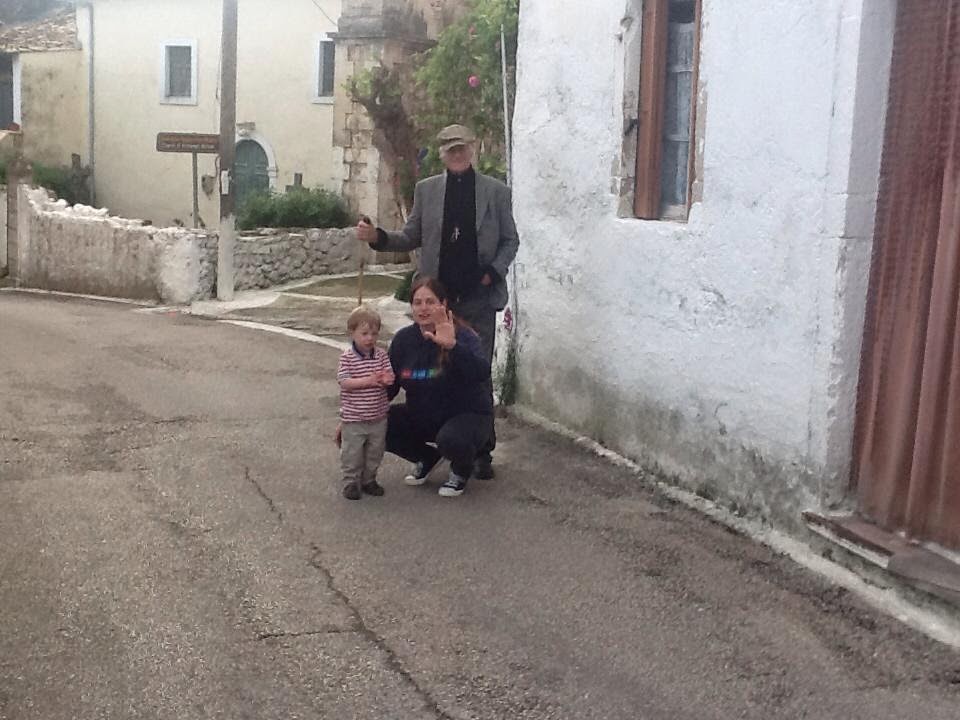
We left Ano Korakiana at 1030 after a rush of tidying. Vasiliki and Effi came out to kiss and hug us. I dropped in on Katerina to say 'goodbye'. All said the customary "Kalo taxidi, Καλό ταξίδι" as we loaded our bags into the car and I stood beside Adoni to say bye-bye to our house, our other beloved home.
With Adoni at the top of our steps onto Democracy Street
From Digbeth Coach Station, our taxi dropped us home just before seven; Oscar there to greet us. Before rain starts I must mow the grass - as green as the blue of the sea we've left behind - and get on with the in-tray waiting for us.
Greeting Oscar in the garden at Handsworth
*** ***
What of Summersong, now floating again at her fore and aft mooring in Ipsos?
Dave has done great work on her exterior. Now, he sets to on the interior!
Summersong's cabin roof
We've made lists of what more needs to to be done to have her sailing (and motoring). Two days ago I was inhaling a heady whiff of fibre glass and oily bilges. On hands and knees I was reaching through a small access trap to sponge away buckets of blackened water collected in the shallow space below the cabin floor - not a leak, not seawater, but rain that entered when, last year, the self-draining plug holes in the cockpit were blocked with old flaking paint.
From bilges up, every inch has to become shipshape; carpet, squabs, warps, cabin linings, curtains, sail inventory, compass, auto-pilot, main anchor chain, roller reefing and of course her jetty - rickety and slowly collapsing...
......Running and standing rigging are fine. The engine's working well but I'll only be confident after sea trials - for me as much as the boat - with wind and wave. 'I must go down to the sea again, to the lonely sea and the sky'...and as Spike wrote 'I left my shoes and socks there, I wonder if they're dry?' Lin even said "I\d like to visit the Mani" Is that possible? Could we really?
*** *** ***
“There’s the Sea of Tranquility”
Martin was gazing up at a gibbous moon, recalling how his Dad had built a reflecting telescope with which he’d shown his son places on the moon from their garden in Birmingham.
“I haven’t got my glasses or I could make out the crater of Copernicus”
“Over there, that one bright light, with darkness to the left, marks the border with Albania. The line of twinkling lights further south. That’s Sayada and then even further there’s Igoumenitsa”
We looked at the Plough overhead and subtended the angle of the last two stars on its front to see the North Star just above the edge of the crags above the village, dimly underlit by our street lights.
“The moon’s too bright to see the Milky Way”
We recalled wondering, on childhood nights, at the sight of the full starred heavens, the edge of our galaxy strewn from horizon to horizon, across the abyss of black space.
“There’s too much light pollution too”
Along the closer horizon of the island lay the glow of the city. I called to Lin and to Martin’s wife, Sandra, chatting downstairs, to come and join us on the balcony. A few days before we returned to Birmingham they, our best friends in England, were our guests in Ano Korakiana.
We listened to the sounds inside this space, stood on our balcony together; people talking below the village, a lot further off than the Skops owl calling to another among trees beyond the houses edging Democracy Street. There was a dog complaining in the distance.
“That’ll set off all the others” I said as barking spread closer. Cockerels do the same but they were quiet at midnight.
The blinking lights of a plane appeared silently over the hills between us and the city, turned towards us and became a sound droning swiftly over Trompetta.
Sandra and Linda at Piattsa on Democracy Street
While he’s been here Martin has drawn a plan for a new jetty for Summersong, helped show us how to arrange the frame and hinges for our bedroom wardrobe ....
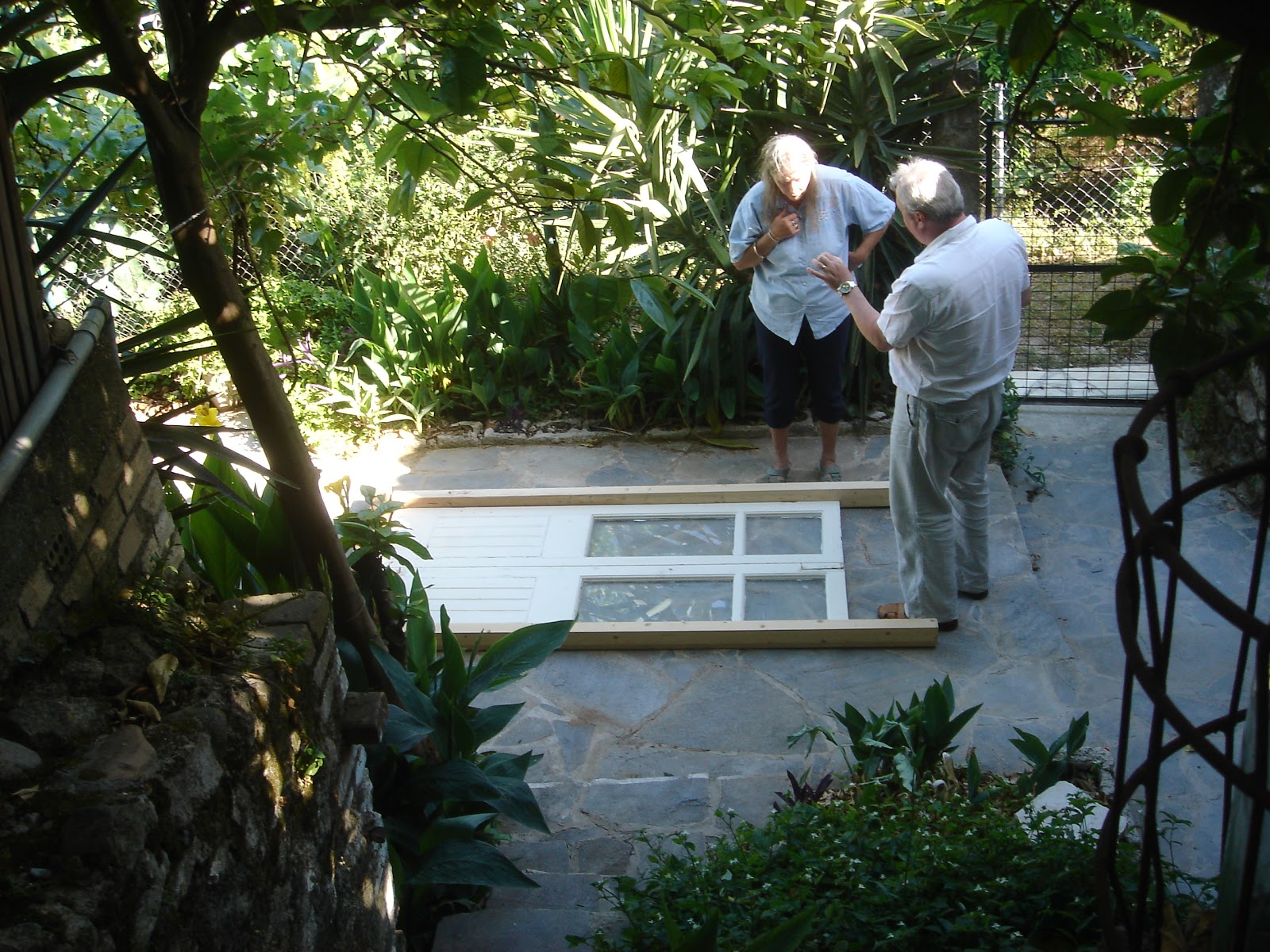
and, frustrated by its eccentric grating on the marble floor of the kitchen, re-hung the door between it and the dining room. A little packing on the old latch, longer screws in the hinges, a few millimetres planed off the bottom of the door...
...the job done in twenty minutes and years of minor irritation gone.
“So why didn’t you do that?” says Lin.
“I tried but I didn’t know how and it sort of worked with the chain and the hooks”
We’ve been go-betweens for house improvement for Steve in England who wanted the walls of his house, next to the café, rendered. All work had stopped after his regular builder had to go to Ioannina for heart surgery. We’ve got a local builder to start rendering, sending Steve pictures as the work proceeds.
Dear Steve. Before talking to A, our friend Martin, a builder/architect, currently staying with us, inspected your rear wall. He noticed that your wall ends in an uncovered section that is part of X’s property. In Martin’s opinion, X's strip of wall, if not rendered at the same time as yours, would let damp into any new render on your property. X, as you'd expect, says he’s no money to make this strip good…We tend to agree with Martin that this extra cost would represent a saving for you in the long run….Do you want the short iron bars sticking out of the wall, that were used to support a vine, removed? Let us know what you think. Best, Simon
Well I'm like a spoilt kid at Christmas, I can't stop getting the picture up and looking at it… After so many years of neglect the little house is finally getting some TLC, which its deserved after standing so many years. Wish you could see the smile on my face. many thanks for organising and overseeing the work on my behalf. Steve
While they were here we showed a little of the island to Martin and Sandra, walking, driving, swimming, eating out and eating in, enjoying drinks at Stamatti's café Piattsa, seeing the city and the country, ascending to the top of Pantokrator and down to the sea at Paleokastritsa.
Our friend Sandra on Angelokastro
Picnicing below the oak tree on the top of Angelokastro we saw, at first cleverly camouflaged in its deep serrated bark, a host of moth caterpillars - indeed several colonies attached to different parts of the tree.
*** *** ***
From the Ano Korakiana website - our neighbour's daughter Dimitra, flutist, is first left:
Λιτανεία της εικόνας της Αναστάσεως σήμερα το απόγευμα (Κυριακή 26 Μαΐου 2013), στην Αλεπού. Από τις Κουλίνες, βήμα-βήμα τον επαρχιακό δρόμο, στους ήχους της Μπάντας και με τις «φωνές» της Χορωδίας της Φιλαρμονικής Κορακιάνας, ίσαμε δύο χιλιόμετρα απόσταση. Ανά διαστήματα «συστάδες» κόσμου στο δρόμο, για να παρακολουθήσουν την πομπή να περνάει. Κάθε τόσο και κάποιος ιερέας πύκνωνε τις τάξεις του ψαλτηρίου, μέχρι και τα τελευταία μέτρα της πορείας. Στην άλλη λωρίδα του δρόμου η κυκλοφορία των οχημάτων συνεχιζόταν περίπου ανενόχλητη, συνθέτοντας ένα περίεργο ηχητικό κράμα θορύβου, μελωδίας και ψαλμών. Στην εκκλησία της Θεοτόκου, στο στενό της ενορίας, όπου κατέληξε η πομπή, ευλογήθηκαν και μοιράστηκαν άρτοι. Είχε πια νυχτώσει, όταν χορωδοί και μουσικοί πήραν το δρόμο της επιστροφής για το χωριό…
Υ.Γ.: Απαραίτητος συντελεστής της Λιτανείας, αποδείχτηκε το Ι.Χ. φορτηγάκι, που, αφού μετέφερε τα «έπιπλα», κουβάλησε και αρκετούς Χορωδούς, από το χώρο στάθμευσης μέχρι το σημείο εκκίνησης. *** *** *** *My colleague Chris Game has written in the Birmingham Post about the recent ESRCreport on poverty in Britain. 'This is the fifth scientifically conducted independent study of poverty since 1983' he says 'and the situation is worse today than it has been for the past 30 years.' He summarises findings from the report titled The Impoverishment of the UK - officially published tomorrow:
* Over 30 million people (almost half the population) are suffering to some degree from financial insecurity * Almost 18 million cannot afford adequate housing conditions * Roughly 14 million (almost 1 in 4) cannot afford one or more essential household goods * Almost 12 million are too poor to engage in common social activities considered necessary by the majority of the population * About 5.5 million adults (1 in 11) go without essential clothing * Around 4 million children and adults are not properly fed by today’s standards * Almost 4 million children go without at least two of the things they need * Around 2.7 million households (1 in 10) live in homes that are damp.* 11 per cent of children over 10 living in households without enough bedrooms for every child aged 10 or over of a different sex to have their own room * 4 per cent of children (well over half a million) living in families who cannot afford to feed them properly * 9 per cent of children going without one or more items of basic clothing * 9 per cent of working-age adults (3 million), 12 per cent of 18 to 25 year olds and 21 per cent of those unemployed and looking for work unable to afford appropriate clothes for a job interview * 33 per cent of adults (16.5 million) unable to pay unexpected costs of £500 * 30 per cent of working-age adults (about 11 million) unable to afford regular payments into a pension.
[...and in America] *** *** Involved early in the development of Aftab Rahman'sLozells and East Handsworth Heritage Trail I was still in Ano Korakiana when the trail had its launch on 25 May.
Dear Sir/MadamLaunch of Lozells and Handsworth Heritage Trail – 25th May 10am – 1pm We would like to invite you to the launch of our heritage trail for Lozells and Handsworth. This has been a very exciting journey for us, we have learned so much about this amazing area and its heritage and we would like to share it with you. The area is home to Soho House which is Matthew Boulton’s former home, St Mary’s Convent designed by Pugin, St Mary’s Church where Matthew Boulton, James Watts and William Murdoch are buried and there are several other historically significant buildings and places. The registration will start at 9:30am at Soho House (Soho Avenue – off Soho Road, B18 5LB) and the tour will commence at 10am. It is likely to take two hours approximately. We have a reception at 1pm at South and City College – Soho Campus, on the Soho Road. You will be able to hear from key note speakers and our tour guides – this will include a networking lunch.We have been working with South and City College to train 20 passionate people to become ‘tour guides’. They will be your guides on the tour and will share their knowledge of the area with you on the walk. Yours sincerely, Aftab Rahman, Director, Legacy WM
Aftab circulated the trail guide with maps and photos and profiles of guides.
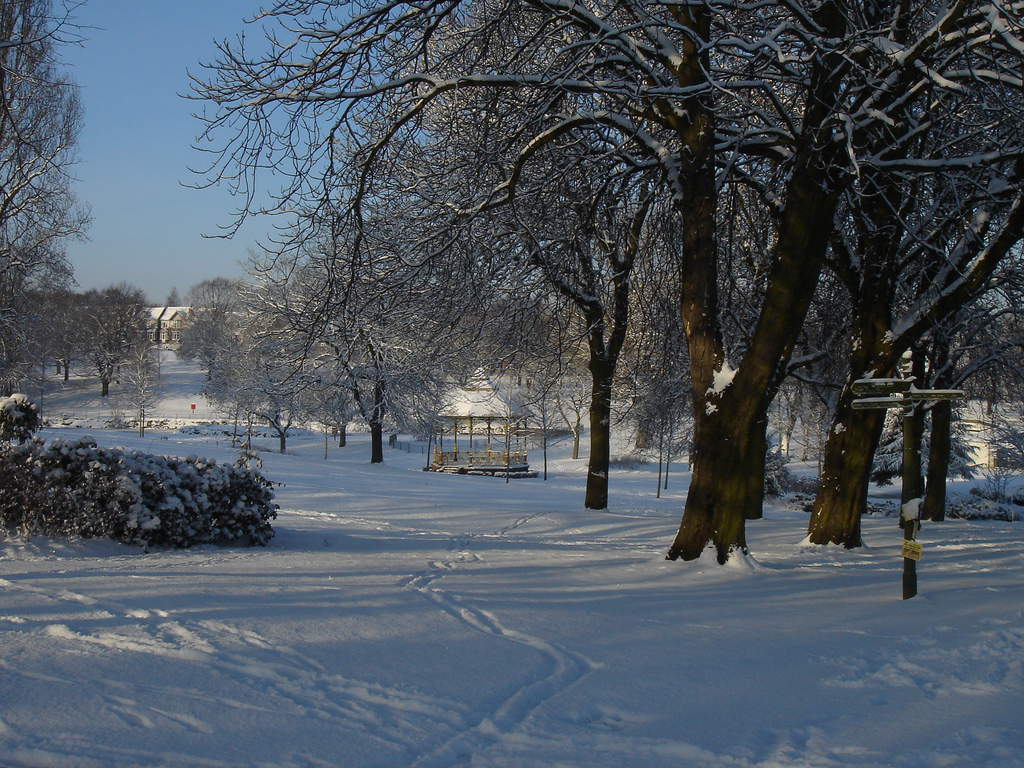
Handsworth Park on a Saturday afternoon in early summer
Had a meeting on campus and then took the train into New Street from where I cycled home in increasing rain. The towpath was a succession of puddles through which I splashed - the waveless surface of Birmingham Mainline corrugated and curved by gusting wind and sheeting rain. Back on the road gutters were awash. A motorist swerved from one long brown pond into another throwing up a bow-wave that broke behind me. I and my pannier were waterproofed but for my shoes and socks. Then came thunder. Water fell perpendicular from the overcast, bouncing off the tarmac, squirting from gutterpipes, weighing down trees, soaking foliage so thoroughly it could give no shelter, and increased until I was cycling through curtains of water. I travelled through the unslakeable urban landscape like a spaniel in a marsh - almost happy. It rained like this in Corfu one day last September. Poured for 10 hours as we lived on Summer Song while Corfu Yacht Yard cleaned and painted her hull.
* * *
e-mail from my friend in the Middle East:
Dear Simon
Since I was a secondary school student, I was dreaming of the heavy rain of London. I like rain very much, especially when it mixes with the odour of soil. It reminds me of my childhood, my dreams, and my early mature ideas about the universe, the other sex and the unseen. Rain in London must be special, but so it used to be in Iraq. Now I am afraid that rain is only reminiscent of God's wrath, and the deterioration of the quality of our environment.
My heart was beating and my feeling of the approach of the date when Birmingham will send me the offer was mixed with a devastating disappointment by the recent incidents that took place in Glasgow and London. My wife and I condemned the awful attempts of the terrorists to disturb the life in UK even before we were thinking of going there. Now our condemnation must be doubled. I really hate such ungrateful people who bite the hands that extend support, peace and love to them. Islam has nothing to do with those people. Political, cultural or religious positions must find more human and peaceful means to express themselves.
Please, accept my apology on behalf of my culture and religion. I am aware that these incidents may complicate matters for me but this is not new to me. When I graduated from the Department of English in 1992, I ranked first among my colleagues. There was a cultural exchange programme running between Iraq and the UK at that time and all first rated students were awarded scholarships to the UK. My name was at the top of the list. But the UK diplomatic relations were suspended with Iraq when Saddam ordered the execution of a UK citizen from an Iranian origin who was accused of being a spy for the UK. The whole programme was cancelled and I lost the chance of studying in the UK. See how I am accustomed to mishaps.
Today, I received a welcome note (brochure) sent by Birmingham University. Does this mean any progress in my application?
Please, again accept my sincere apology and condemnation of what is happening in the UK these days.
Best Regards ****
Dear xxxx
I appreciate your generous intentions in offering apologies on behalf of your culture and religion but I simply cannot accept them. I could only consider accepting apologies for what has been happening if I felt there were some measure of blame or culpability that could be attached to you, your culture or your religion. I do not.
My only concern was the possibility that the net of suspicion, being cast wider, would hinder your plans to study here after local circumstances have made it impossible, because of present dangers to you and your family, of continuing to serve your countrymen as an educationalist and academic.
This is a misfortune that is outside my experience and anything I will continue to do as much as I can to mitigate and ease your transition to an academic position here.
I don’t know if the welcome brochure means anything more than that you are in a queue whose existence is known to the university. On that score you should question xx xx. (I will ask him myself as well).
Here the rain continues though we hear there is some probability of improvement by the weekend.
My 90 year old mother in the Highlands of Scotland is in the middle of moving her possessions to a new house a few miles from the larger house that she decided to sell. I am impressed with the energy she’s bringing to this transition from a home she occupied for 40 years to a smaller bungalow. Luckily she has various loyal helpers to deal with the carrying and the storing and we will be going up to Scotland shortly to visit and see her settling in her new house.
Tomorrow we have our annual “Classroom in the Park”
http://www.flickr.com/photos/sibadd/336656503/
The above URL is of an earlier event before our local park was improved. Many schools arrive with hundreds of children to perform songs and dances and recitals and I am in charge of a stand which displays a history of the park, available to answer questions from teachers and children. I hope the rain is not too strong! Kind regards, Simon
Flood response efforts 'magnificent' says Benn
Hilary Benn, the Environment Secretary, today reiterated the Government’s commitment to supporting communities affected by flooding in many parts of England.
In a statement to Parliament Mr Benn paid tribute to the heroic efforts of the emergency services, local authorities, voluntary sector, military, and Environment Agency, describing their collective response as magnificent. With more heavy rain forecast for the coming weekend he encouraged householders and businesses to make use of the Environment Agency’s Floodline telephone number and website for advice.
Mr Benn also took the opportunity to confirm an increased flood defence settlement in the Comprehensive Spending Review 2007...
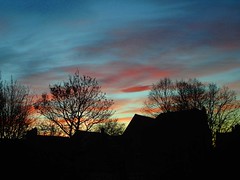
Richard, my son, took this picture of the view from the back of our home in Handsworth, Birmingham. Ours is a detached cautiously Tudorbethan house built in 1935. It has a bell box in the kitchen with little signal numbers for Bedrooms 1 and 2, Front Rm, Dining Rm and Lounge, so that a servant could be summoned from each place. Today this system, if it worked, should allow whoever is in the enlarged kitchen (it was originally a rather mean scullery and small morning room) to call people in the rest of the house, though now it's more likely I will use a mobile phone to call the attic. The darkened houses across the garden are of larger Victorian houses converted to flats by social landlords. Many are semi-occupied, providing transient homes for people who haven't quite made up their minds where they are, in contrast to the more decided residents of Beaudesert Road.
* * *
There are various arrivals, passages or departures that bring emotions to my fairly stiff upper lip:
As the train heads south from the Highlands it speeds down a long gradient through Drumochter Pass between the Sow of Atholl and the Boar of Badenoch. This is part of a journey I’ve been making regularly since Christmas 1950. Until the 1960s a second steam engines was put on the sleeper at Perth to make the gradient when going north – these two mountains – small by Greek standards – have marked leaving or arriving in Scotland, even though Dalwhinnie Station, at the head of the pass is over a 150 miles north of the border. I've been making the journey - on and off - all my life. As a small child with my sister in the care of the guard, as an uncomprehending adult-youth looking for an unknown career, as a happy father of small children and then, in a new millenium, of my teenage children and their friends and the beloved dog Oscar
Arriving by train after being absent for a while, through the scruffy remains of Victorian Birmingham - our city – to arrive at the ugly busy station beneath a low concrete roof below the city centre.
Discerning the Ionian coast from the deck of a ship through a morning haze. I recall, also, flying into Athens after not seeing Greece for 25 years and being able - as one still could before 11 September 2001 - to go with Richard and Amy to the cockpit of the Airbus (the one that doesn’t have a steering lever and is flown by buttons) and seeing the mainland laid out in dark marked by the glow of Thessaloniki to the east, the moonlight on the Ionian to our west, tiny jewel-like clusters of villages thousands of feet below and far ahead the loom of Athens (Photo: Amy, Lin and Richard on their first visit to Greece in June 1996)
It’s a swift transition from heart warming feelings to the noisy modern reality of an airport or port – an antidote to involuntary uncritical sentiments, in the form of a cut to another land with which I feel familiar, despite my ignorance.