Total Pageviews

Showing posts sorted by date for query "sea and olives". Sort by relevance Show all posts

Friday, 1 January 2021

Greece from far away

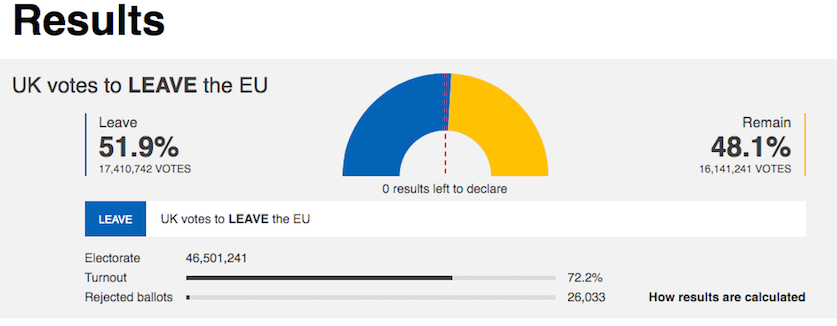
My blood pressure as measured soon after the June 2016 Referendum on leaving the EU


On a day in June 2016 I was the subject of one of many research projects into healthy ageing at QE Hospital 
"Your blood pressure's a little high" said one of the researchers.
"Seriously?"
She showed me her readings; in the hypertension range.
"That's odd. That's never been a problem for me"
"Well I need to point it out. Check with your GP"
"Gosh Emma, do you think I'm stressed by the Referendum result?"
"Could be." she said "We'll see how your blood pressure looks on your next visit next week"
Sunday lunch with the family - Oliver, Amy, Guy, Hannah and Linda. - weekend after the June 2016 Referendum. New potatoes from our allotment in Handsworth 

Three and a half years after the Referendum vote to leave the EU,  a friend posted on her Facebook page:

1st January 2021. MM: I wanted to write a Happy New Year message but ended up writing this instead. If you hate doom and gloom please scroll by. This is an X-rated post.
And so it comes to pass (weeping emoji's). We have woken up today no longer able to call ourselves EU citizens. And I am unspeakably sad. I don't know whether, in the long run the UK, will be better off in or out. I don't know whether there will be queues in Kent or food shortages in Tescos. But I do know that all of us who value that delicious sense of tumbling into a new culture, a new language, a new landscape have been left immeasurably poorer by the UK's decision to leave the EU. 
I speak for all of us in here who one fine day, wearing but a pair of skimpy shorts and an old T-shirt, clambered onto a charter at Gatwick to some random destination in Greece and drank so deeply of the delights of this beautiful country that we mysteriously find ourselves decades later sharing our (zoomed) βασιλόπιτα with children who speak two languages, in-laws who have never set foot on the green shores of Britain and Greek friends and colleagues who we hold dear in our hearts. 
We are heartbroken that the next generations will not know this. Those who already made it out of the gate will have their rights protected. The (richer) retirees will retire. The well-heeled will inevitably find a way. Some of our young will no doubt make it through the portcullis even after it clangs shut. But please allow us to shed a tear on this inauspicious day for all those who won't, and will never come to know what we know.

SB: Happy New Year, M. In your eloquent lament you write "But I do know that all of us who value that delicious sense of tumbling into a new culture, a new language ..." I know so well what you mean. I didn't so much 'tumble', given that my Dad - divorced post-war, then married to Maria in the lovely little church of Panagia Kapnikarea off Syntagma in Athens in 1949 - first invited me to beloved Greece when I was 16, during Easter 1957, and I, on my occasional stays with the 'Greek' side of the family in England was used to hearing my dad and Maria speaking Greek. I never looked forward to those brief childhood visits on which my mum insisted. Too much shouting and disorder and kissing and hugging among unruly half-siblings, though I liked being entrusted with a glass of wine now and then. It took four days, travelling alone on the Simplon-Orient from London, turning Balkan-wards after Venice, to get to Larissa where in the middle of the night this callow English youth, with a compartment to himself, was interrupted by a wedding party bursting in, joyfully noisy. I - a foreigner had the nerve to glare at them and ask them to be quiet. Instead of taking justified offence they laughed uproariously "Oh Englishman!" and had the effrontery to offer me a drink which I turned away. A few hours later I arrived in Athens…There, at dawn, on a low platform, the Greek side of my family awaited with joyous greetings and many disturbing hugs and kisses. Through a tiny window from the loo of Yia-yia's flat in Kolonaki I saw the Parthenon - no longer the familiar schoolbook illustration, the real place!.. ... ... Well! ... Two weeks later, when I departed from Greece, all had changed; changed utterly and forever, but that's another story, a good one. That first visit over 60 years ago was the start of an affair that I will take to my grave. You could say that 'some enchanted Easter' long ago, I saw Greece 'across a crowded room.' Even now, in dear Ano K, strolling or cycling on a small back road I hear a family, perhaps on a Sunday afternoon, laughing and talking under their veranda, and I'm possessed by an impish impulse to stroll over "Excuse me! Με συγχωρείς. Θα μπορούσατε να είστε λίγο πιο ήσυχοι!" They will laugh indulgently, even ask me to join them. I know that the UK leaving the EU can never efface - nor portcullis block - that 'delicious sense of tumbling' you describe so beautifully and which I still feel over and over when my old feet touch the soil of mother Greece.

James S, neighbour on National Opposition Street below our Democracy Street in Ano Korakiana: it’s exactly that Simon! The total mind opening of travel that Brexit seems so ignorant of!

Hi James. For people who have learned - or, in my case, taught against my will - to be happy the new border bureaucracies may bring temporary impatience, frustration and even misery, but love finds a way. I 'tumbled' (M's good word) into Greece long before the UK joined the EU, when post-war restrictions enveloped all Europe, customs examined our cases spilling out our belonging, transfers of cash were strictly limited. Through Yugoslavia I saw how the communist guards abused their own citizens, fellow passengers trying to cross their border (they were scowlingly deferential to me on my dad's diplomatic visa stamped in my dark blue passport). I was alerted by my father about the dreadful psychic scars of occupation and civil war in Greece - things that could not be spoken of, better forgotten. I've learned to accept - or, at least, to live with - queues, rationing, paperwork, inconvenience. I've been abused by immigration on arriving in New York, waited hours to enter Canada and Australia. I suspect from now - COVID restrictions notwithstanding - there'll be a couple of years of 'pain' as this bizarre event is sorting in the wash, but far worse pains have been surmounted in the past. I voted Remain, but I know other people voted to Leave the EU. who enjoy other lands beyond the English Channel as much as I.
The mainland of Greece across the Sea of Kerkyra from our home in Ano Korakiana 

I know about inventing paradise. Byron, Μπαϊρον, who came first in 1809 called her 'the wondrous land'; sailed to Greece in the brig Hercules in 1823, arrived at Kefalonia on the 4th August, to die at Mesolóngi eight months later. I first came to Greece, to Athens, by train via a three day stop in Venice - walking for hours, entranced, along damp paved alleys - in 1957, but in 1962 I sailed to Greece from England with a friend, my skipper Chris Jameson. In July we left Messina in Sicily. The first morning of our two day crossing on Danica ...
Danica
...bouncing and swaying on a swift etesian reach; came on our reverse, a sleek Greek frigate cutting smoothly through the cresting waves, heading west. In return to our salute, we saw a young sailor in perfect whites, almost sprinting to the fantail to dip her flag to us. My chest swells at the memory of seeing that lovely ensign falling and rising again in the seconds of her passing as though official Greece was saying "yasus" - just to us. 
That was 59 years ago. After that swift reach from Sicily. sunrise on the third day, the good wind abandoned our small vessel on a limpid mirror. The moment remains as dreamlike as at the time; glimpsing the forms of land melded to white sky and coppery sea - a way to the mainland of Greece between Kefalonia and Zakynthos into the Gulf of Patras. Next morning we made Byron's landfall. Shapes - north and south - that appeared and disappeared and might have been no more than dawn shadows - though we knew otherwise - lay before us. All day, in zephyrs, we sailed towards them, passed between, and anchored off Killini in Ilia where we rowed ashore to be sat at a table (my memory is flawed by so many photos of Greek tables and chairs), offered ouzikis and welcoming curiosity, before a polite policeman - reproached by our hosts - "po, po, po" - told us we were supposed to clear at Patras, but "please finish your conversation." 
170 miles from Piraeus and the city to which I’d determined to return.

I spent, as I recall, my first twenty five years in a fog of schooled and inherited insensibility, almost impervious to the wisdom of generous parents – English and Greek - who probably knew that, as perhaps for them, only time would tell me. 
In 1968 I was with the Greek side of my family again. They’d flown on to Greece. My dad wanted a car while we were there. Over four days I drove his small Hillman through Belgium, Germany, Austria, Italy and by ferry to Greece, sleeping one night in a field above the sea, a few yards from a winding road through olives. From Piraeus I took another ferry to join the family in Aegina. We returned to Athens for a day, where, with my diplomatic family, I attended a house party somewhere near Vouliagmeni, hosted by a man whose bald head I glimpsed for a few seconds, Colonel Stylianos Pattakos.
It was only in Detroit, married a year later, meeting American Greeks - and Greek exiles from the Junta - that I grasped the discomforting notion of ‘sides’;  of Greece as a polity, of animosities and moral positions, words and facts and opinions that left the paper-fragranced sentences of my superlative education – in one ear as others' thoughts, out of my mouth as words for conversation and essays, and out of the other ear, unedited. Though it seems so in memory, I could not have been quite that one-dimensional, except perhaps at my mother’s breast. My CV, by the time I was thirty, was enough to ease me into academia where, mostly fuddled, time did begin at last to tell and I began to listen.

It was 25 years before I came to Greece again.
After many years, return to Greece in 1995 with Amy, Linda and Richard

Standing in the cockpit of our Airbus (full of screens and no joystick) where passengers could – pre-9/11 – still be invited for a pilot’s glimpse of the world ahead, I stood behind my family, as with Linda, Richard and Amy, we flew high over the border of Greece; able to see, to port, the glow of Thessaloniki; ahead the greater glow of Athens; to starboard a moonlit Ionian Sea and far below, in inky blackness, clusters of tiny glittering diamonds - villages in the foothills of the Pindos.
“Children! There’s Greece”
In the dim cabin tears welled from my eyes with the delight – and the idea – of sharing ‘my’ Greece with my wife and children. I could not speak for a moment, and Linda, more English than I, was irritated at me. 

A third generation in Greece - our Amy with her cousins Natasha and Anna at sandy Pylos in 1995

*** *** ***
A decade later we spend months in Ano Korakiana on Corfu. Πέρα δόθε:

Winter 2009: The sun came up into a cloudless sky. It’s so bright and hazy, but for the crackle of awakened logs I’d mistake this winter morning for summer. Yesterday as we pottered on tasks I became so chilled I began to sniffle. By evening I was squeezing fresh lemons to mix with honey to warm in a glass. We’d been down to CJs Bingo Quiz in the evening, me in two under vests and long johns, to struggle with questions that were almost entirely about things in films and TV series. Our friend Trish, in CJs after cold day’s work cleaning charter boats at Gouvia, won. She was playing with Sally who runs CJs for Chrissie and John, also there - the latter cursing merrily to the delight of all. Trish is married to Dave, met at Ipsos Harbour in the first hour of our arrival in September 2006, who first raised our spirits as we surveyed Summer Song’s worn and musty interior, wondering if we’d been sensible buying her on ebay, sight unseen. “We’ll make a list” he said “Norman and Pauline loved that boat and she’s worth it”. And so she was and is. Dave keeps an eye on Summer Song – not only on the boat but also on the harbour politics that allow us to keep her safely berthed there. C remarked from far away on the Pacific coast. “Enjoy Corfu. Greece, no matter what, is a beautiful place to wake up in the morning" but I’m as superstitious as any atheist about reflections on the rewards of fortunae. 
'Greece, no matter what, is a beautiful place to wake up in the morning'
The names of people who rejoice in their luck are selected by a divine factotum and placed face-down on a gilded dish that passes around the table on timeless Olympus. Amid merriment, each God selects the human whose card is to be their post-prandial plaything. Here a brilliant climber says “There’s a window for the summit at dawn”; there a mother says “Our child is so perfect”; and over there a father says “There are police officers, a man and a woman, at the door. Must be about those parking fines”; and here a wife who says “no need to hold the ladder darling. Go and make us a cup of tea”; and there, in the deep ocean, an exhausted sailor says “We’re through the worst” but see this one, here’s a gem “The war will be over by Christmas”, but what about that popinjay Confederate General who said “They couldn’t hit an elephant at this dist…” Far below a fisherman on the Peneios and a woman waiting for a train at Litochoro know they hear, not the rumble of endless thunder reverberating among the peaks of Olympus, but laughter.
Good Friday picnic on a shore in Corfu. A fourth generation in Greece
In England in early January 2021 Greece seems remote - for all the continued contact via the social web. Here in the inner suburbs of Birmingham Lin and I are locked down under Tier 4. I am not to go further from our front door than our front garden. Linda - under 70 - can shop. Our neighbour, J, 'allowed to meet one other person outside', sat for a chat with me by our porch and passed the time of day. He works for Fareshare, one of the neighbours who've offered to shop for us if necessary.
Covid Tier 4. Restrictions from 00.01 Thur 31 Dec 2020
The weather is intrusively grey, wet, creating a world of pervasive sogginess that sticks to shoes hands and sleeves; which I can't avoid trailing into the house when I bring in logs, damp and stuck with rotting leaves, slimy too. I dry the wood in front of the stove before we can enjoy their warmth. Kindling I've even put in the oven for 30 minutes to get things burning in the mornings. 
Before the latest lockdown was announced I could cycle in and out of town, visit the rag market, buying a baked potato mashed with butter, salt and pepper plus a cup of tea, or a butter croissant and filter coffee eaten stood warily in on New Street. Wednesday morning I called in at the Birmingham Donor Centre in New Street to give blood. The first drop during the preliminary test for sufficient iron wouldn't dawdle down the green liquid filled test tube as it's meant, but Sarah - name off her tag - tried an alternative test. ""Yup, that's fine" "Phew". I lie in the plastic chair arm pierced skilfully almost painlessly to extract my very common 0 positive blood, but after a few minutes I'm being ministered to by three, no, four, nurses, urging me to squeeze my fist and wiggle my toes, as my blood's not coming out. "Oh no!" I think, but then "There we go! Fine now" says Margaret cheerfully. Privately I suspect the needle wasn't accurately placed in the vein.  After 10 minutes, I'm on my way, exiting through a world of masked donors and masked extractors, making another appointment in March - if I'm not breaking rules. Once home I get a text message thanking me for my blood. 
From Greece we've brought a lemon from one of our citrus trees, which, after two years barren, has fruit - - a generous load - following scale insect infestation affecting citrus, and now, other shrubs and trees, all Corfu. 
Perhaps our treatments have begun to work, as recommended by Sophia and Niko, neighbours, and Evangelina at the new Tzoulou garden shop. She recommended we spray a mix of Sivanto (2.5 m/l to 5l water) and Electro pesticide (ditto mix), to kill, and by resting on the leaves, break the life cycle of what she calls the ‘black spiny insects’.   
A lemon from Corfu back in Brum
Checking lemon leaves for citrus scale insects

*** *** ***
With some poignancy I travel 10 years back in my time machine to Ano Korakiana in February, when the village celebrated its annual Carnival ... February Carnivali, brightening the greyest chilliest and wettest day of the year. Part of the band in motley, military, priest and police, made 'oompa oompa' with drum and fife. The king enthroned, priapic with crown on his heart-covered float, accompanied by courtiers, male as female and other reversals of carnival, paraded upwards preceded and trailed by bouncing umbrellas, a phalanx of pink parasols, women in silvery wigs dancing up to the start of Democracy Street, twirling round a ribboned pole amid whistles, bangers and music.
Stopping and starting the procession gathered more people – some in masks, a long nosed Pinocchio, some as they were; streamers and confetti thrown from windows, hugging and greeting, planned and spontaneous, impossible not to smile and laugh in the chill wet. Up we went to the bandstand, round the carpark and back down the street in rain that poured from low cloud obscuring views to the sea. Nico and Sophia, standing by their front door, invited us in from the cold and wet for coffee and rich chocolates to meet their family.
“All the news is bad”
“Indeed it is” we smiled.
At 7.00 two hundred or so were gathered in the upper room of the Farmers' Co-op on the lower road to watch a demonstrably hilarious dialogue between two women we didn’t understand but clapped with everyone else. Then a formal reading by a top hatted master of ceremonies naming people in the village to theirs and everyone else’s amusement and applause.
Then a more disposable carnival king was carried out to the road and burned, with a bit of diesel to overcome the rain. Everyone began moving through a small door down short steps to the lower room to sit at long tables under a beamed roof. We were ushered to Leftheris’ family where dishes had been brought to pass with village wine in jugs, water and cola – lamb, pork, salad, cheese pies, olives, bread in chunks. As we tucked in along with every age, the dancing started with a band that created the mood of the evening, responded to people as they danced and sang – dances for couples became threesomes, foursomes until chains of us were stepping forward six steps one way, two back in that way that can’t help look elegant because the clumpers like me are carried hands held in the ring, six right, left two, unpausing until well after midnight the band made up of two guitarists, lead singer, keyboard and lighting mixer – played unceasingly. The dancing space was seldom empty. If not filled with pairs and chains, it was taken by men and women dancing solo amid clapping support, nimble and beautiful. I danced with Lin and in the circles – like Scottish reels.
“We all drank a lot of wine” said Katya when I saw her at the shop a couple of days later. As at a family wedding, wine added to the enjoyment; none crass. There was a break in the music around one in the morning. I thought we were going home, but after a few minutes, the room filled with lively chatter, the band came back with renewed energy. It wasn’t only the young on tables, though one couple danced with especial virtuosity, the young man - minutes previously in ballet skirt, tights and pigtails now entwined with a young woman who’d begun alone shivering her hips in the Arabian style. This duet had others joining in. The whole room floated on the music and swayed with the singing, happiness making us all even more good looking, and some especially handsome and beautiful. As the band said its goodbyes, an older lady led the Ano Korakiana song singing two line verses, unaccompanied, the chorus picked up by the moving circle. We walked home just before three-o-clock. “I’ve so enjoyed myself” I said “Me too” said Lin.
The song to the dance is a paeon to Corfu "Kerkyra, overflowing with greenery and beauty...into each and every corner and the seashore..." a list of all the green island's attributes 

Saturday, 4 June 2016

"Worth waiting for"

As I set out

I set out on a sunny morning to visit the road above Liapades – a village on the gentle side of Corfu’s western cliffs, a kilometre off the Corfu-Paleokastritsa road.
Riding and then wheeling my bicycle, I’d found the secret road before. I’d picnicked in a vineyard from where I saw a blue V of sea where the steep coast breaks into Paleokastritsa – the only harbour on the west coast of the island. In the car, she driving of course, I tried to guide Lin there. Stumped, after struggling to negotiate a succession of steep alleys out of the top of the village, we argued for an hour.
“There’s no such road. What a waste of time!”
This time I cycled from Ano Korakiana to where one of the five roads from our village leads west to the busy route between Corfu town and Sidari in the north. Until the lights that restrict traffic to single file through Skripero. Trucks and coaches scared me as they always do, despite years of cycling. One mistake, a wobble in the back draft, I’m a crushed beetle. Mark asked me in the bar why I don’t wear a helmet.
“You think it’d make a difference?”
A kilometre beyond Skipero I turned left onto a small road, escaping the rush of the traffic. The road wound through woods and meadows levelling towards Dukades, its rooftops seeming to nestle under the cliff that hangs over Liapades Bay.

In lowest gear I peddle up to and through the square where people – villagers and visitors – are sitting happily over drinks, shaded by vines. I continue down again to the Paleo Road, a short ride to its junction with the Ropa Valley road which climbs past a disused taverna proclaiming itself “always open” – probable casualty of the unending 'loop of doom'; downhill again for half a kilometre to a side road that leads to Liapades.

I peddle up to the plaka’d platea, across it  into a narrow exit heading steeply upwards. I dismount and push. The village slips behind. I see Ano Korakiana in the distance, through olive trees.

Now I’m on the narrow metalled road I was seeking. This time I follow it further, until it levels among olive groves and vineyards with fleeting views towards high Angelokastro and the roof of the monastery of Paleokastritsa...

...A file of two-stick ramblers comes by, descending. I cycle on a kilometre or so to a breeze block apothiki where the metal road stops and the route divides into three.
Hm? I select the track that leads down hill curving inland. It's hotter, hardly a cloud in the sky. The path becomes unrideable. I walk. This walk-pedal combination suits me, as though I were travelling with a horse. Down the track goes; yet circling, without obvious direction, between hollyoak, broom and oak – land that seems without obvious ownership; forestry. Now and then it levels and is smooth enough to cycle but then it rises again becomes more rubbled before sloping down again. I wonder where this is going, but hope for a useful destination. I stop to sip water.
After an hour the path has been going up, still winding. Without views I’m losing my direction. I’m sure I’m about to join another path or road that will get me downhill. Instead I come to one final slope before the track ends at a levelled space....
Dead-end with a view

...affording magnificent views across the island to the mainland between Parga in the south and the tail of Albania to the north.

I’m in the company of two big diggers, recently used, sweating oil and diesel. They’ve carved out a flat space between boulders tugged out of the red ground.
“So! Having colonised the coast, the property business is driving into the interior, preparing foundations for two ‘desirable’ retreats with lengthy drives”


For all the view, I’m angered by a path that’s led me to a building site. Another sip of water in the heat. I’m walking back the way I came. I see a small side track I’d passed on the way up. Ah-ha! It leads steeply down to a small building sprouting pipes – a pumping station. I can see the Ropa Valley road over the trees below. Clusters of Meadow Brown butterflies rise as I wade through high grass and wild flowers. I’m surrounded by bird song, pigeons cooing, muting the sound of distant traffic on the road I’m trying to reach.

I rest the bike and prospect. Here's another apparent cul-de-sac - a pile of bull-dozed stones...

...but just beyond it is an abandoned olive grove, but I still can find no downward path. I think I’ll try the end of the grove. I retrieve my bike; wheel it through the grass, heave it over a low dry stone wall...


...walking further into the grove. Surely there’ll be a way out at the end of this. The ground is flat, covered in twigs and crisped olive leaves. The boundaries are impermeable – banks, dry stone walls and thick undergrowth.
But for the heat and the olives this reminds me of explorations in the Highlands, hemmed in at times by near impenetrable forestry tracts. I retrace, wheeling back up the steep and overgrown side track. Another kilometre’s walking. I see another road – green and shaded, looking as if made longer ago...

Parking the bike, I scout this for half a kilometre. It leads straight down through overhanging trees and shrubs with no compromising curves and rises. Surely this way will get me to the valley floor. Back to my bike and I’m free-wheeling swiftly beyond the point explored; steadily down, sun sparks flashing through the passing greenery. At last I’m heading somewhere. But – oh-oh - around a slight bend and I arrive at another olive grove quite surrounded by forested banks;...

...a secret space, choice location for a coven; no way out except the way I came. Do people cherish such places; choose them for their isolation?
Finishing my bottle of water I begin to relish the idea of a very cold beer – recalling the well-known scene from Ice Cold in Alex, when John Mill’s, runs his finger down the condensation on the outside of a fluted tumbler of just-poured beer, looks at it for a second, drinks it in one and declares to his three companions, “Worth waiting for”.
I trudge back up the green lane to the rogue track I shouldn’t have chosen. The remaining two I'll explore another day. No more diversions now. I open the ginger beer I’d reserved. Loosening the cap I lose a third of the sweet drink in released bubbles. Back, after three hours wander, at the point where the road divided I cycle smoothly back to Liapades; chastened. It had been like one of my dreams of being inescapably enmeshed in obstacles to my intended destination. I didn’t stop on the way for that beer, but headed down the Sidari road, fast down hill. At Doctor’s Bridge I turned north again for a gentle two kilometre pedal up to the Ano Korakiana turn, and another two to home, parking the bike and strolling down to Piatsa.
‘Mia Megali, please, Stamati” Mark joined me.
 “Lovely ride!” I said “I’ve been exploring the woods above Liapades”

Friday, 31 October 2014

Late October in the village

Dawn over the mainland - an October morning in Ano Korakiana

As the time to leave the village and return to the distant city grows closer I find myself playing down here; playing up there. It’s the same for those long departed swallows. As they assembled on village power lines beside their fledglings, emptied nests growing stale under tiled eaves of a village in Greece, twitching for the flight south; reversing the excitement of Easter’s arrival, fretting for a village in Africa.
 “You’ll like it”
 “Are we there yet?”
I’m balancing regret and anticipation; a slight time vacuum that matches this weather; poised between late summer and gentle autumn; sounds and smells evoking life as a planet in a universe of parents, their story my sun, sensations and images evoked by wood smoke, slight chill, misty evenings, lit windows into glimpsed interiors; the quiet of this village strewn along a mile of mountainside with its wide precise focus on the scrubbed mainland hills of Epirus. Here is a warmed space in which to be absorbed uninterrupted by clues to the present; so the click of burning wood in the stove is both now, and long ago, a reminder to feed the fire. I roam in time, occupied by beloved presences long gone from the earth, places past, still ineffaceable. So will we be for our children I hope - an indelible frieze. I’ve been employing my imagination on the recovery of Rock Cottage, assisted by Martin’s regularly forwarded pictures from Gloucestershire. He and Sandra and Adam have been travelling down to the Forest of Dean at weekends from their home near Worcester - equipped with first aid for our first second home, plus Jack and other helpers – ‘Team Ward’ Martin calls them. I’m nearly ready to imagine us being able to stay again in the Forest of Dean – but there’s tiling, painting, carpeting yet, and the hope that the problem of upstairs damp will be solved, by adding gutters, burning logs, clearing drains, living there…
Hi Simon. Paul examined the heating system today, re-filled and charged the system, and got it all up-and-running. The boiler has withstood the ravages of time and lack of use quite well. There is only one issue and this is some corrosion on the diverter valve and pipework.
He estimates the boiler is ten years old, and has a lifespan of 15 years. He estimates this corrosion will last the life of the boiler, and messing about with it at this stage in its life would only cause more problems.
I have been discussing the damp problems with Paul, and he has had similar problems with a cottage in Wales. After many surveys and so-call expert advice - most of the problems turned out to be condensation. I note the new windows have no trickle vents, and other than the chimney flue upstairs - there is no ventilation at all. When we got there this morning, the windows were steamed up on the inside !
I've opened all the windows one tiny gap, and left the heating on for the week, turned down to 15°C - so it will only come on at night. I'll see how it goes for just this week, and note any improvements. Talk more about this when I see you both next. Regards, Martin X
Adam mending the guttering
Sandra on the windows 
Martin's lit the fire to help dry the house ~ 'Team Ward' at work
There’s the allotment, plot 14 on the Victoria Jubilee, from which I’ve pledged these last years, I’ll supply vegetables for our next Christmas lunch. Winnie’s been sending reassuring pictures of well prepared soil, sprouting winter onions…
Plot 14 England (photo: Winnie Hall)


There’s walking and cycling on the canals with dog Oscar, who, while we’ve been away, has been shared between our neighbours and Amy. There’s a host of work to be done on the house in Handsworth; continuing work on the Jack Hargreaves archive sat in that slatternly lock-up on the Tyburn Road; see what Francis in London has done by way of further digitising film and tape, synchronising sound and image. Second day home – Monday after next – I’m giving an evening talk about the history of Handsworth Park to Barr and Aston Local History Society in Great Barr Memorial Hall. And there’ll be seeing the grandchildren again; familiar after an interval of just a fortnight since they were with us in Corfu...
Lin, Hannah, Amy, Oliver at Ipsos

... a fortnight since Guy and I went out on Summer Song; Dave our guardian.
“Let’s go to Lazaretto Λαζαρέτο”
“Where?”
“Gouvinon Island”
He was still puzzled.
“Execution Island”
I’m averse to the name. A cloud shadowed the mountains. We motored out of Ipsos into a calm sunlight sea. No chance to sail…
”Unless those two big clouds come together, then we might need Gouvia as a bolt hole” said Dave as we passed close by Cape Kommeno.
But the sun shone on us between them. The island came closer.

We slowed near the old jetty, took a second pass to avoid shallows, and went in nose first, Dave mooring us with a knot shoved into a slot between a pair of rough stones, our bow covered in fenders touching the water. The clouds moved across the sun.

I’d been here a over four years ago, expecting now to see the museum announced in 2007 completed; a place to tell the story behind the walls scarred by the impact of many bullets; serried ranks of crosses a few yards up a slope from the jetty; memorials for young men and women shot during the Civil War - bearing dates between 1947 and 1949.
A Museum of Medical History and National Reconciliation is to be built on the historic islet of Lazaretto, Corfu. The old leprosy hospital, which has been listed for preservation, is set for restoration and the surrounding area will be refurbished and made fully accessible to the public, according to a Corfu Municipality architectural study that has the approval of Deputy Environment Minister Stavros Kaloyiannis.[Long history of Corfu isle honoured with a Museum February 24, 2007]
But someone and something doesn’t want the history yet. Can’t tell it. Won't tell it. The Occupation executions perhaps yes, but not the fratricidal killings that came after. When I was here in May 2009, the new building looked smart, ready to be used for visits, lectures, exhibitions. The older buildings including the old and perfectly shaped small church, were readied for restoration, scaffolding erected, walls being stripped, some re-plastered. Now the whole place lay besmirched with neglect, mossed, mildewed, rusting, streaked with gutter dripping. In a clearing was a large stack of hardened sacks of cement, paper peeled.


“There’s a €1000 of cement gone to waste there” said Dave.
"It could have been stored under cover surely?"
The notice I’d seen before showed the starred Euro-symbol and the amount dedicated to creating this memorial - €314,000
“That’s gone somewhere else” we muttered.
 “There’s some rain” I said, feeling speckles between the pines. Someone had been strimming and lopping recently or all would have been disappearing into the shrubs, saplings and trees decorating the rest of the island. There were also roughly squared boards bearing more names, listed without dates or other identification. We'd been going to sit and eat our sandwiches. Instead we headed back to Summer Song, passing another notice, the only one that speaks a little of what happened here.

“What a great place for a taverna!” said Dave “A proper jetty. You could have a to-and-fro ferryboat from Gouvia”
“Yes. An open air grill. Souvlaki  lamb, pork, kokoretsi, chicken breasts and legs and beer and wine” “It would be a cracker of a place”
"Singing, dancing..."
Remembering. Someone told us an old man they knew saw soldiers with rifles bringing prisoners to the harbour.
“Young men and women from the prison marched to the old port to board a boat to the island. They were shouting and singing as they walked!”
We got back on Summer Song and motored around the island before heading back to Gouvia Bay. Guy had phoned Amy.
“They’ll meet us at the jetty there in an hour”
The clouds passed as we closed the shore by the old Venetian shipyard, tied up beside the caïque moored there and strolled ashore as Lin drove up with Amy, Liz, Sophia, Hannah and Oliver. Dave had brought small life jackets, and fitted one to Oliver.
“We’ll meet you at Ipsos” said Amy.
Liz and Oliver came with us on Summer Song, clambering over the decks of the caïque to board the old yacht.
Summer Song leaving Gouvia Pier (photo: Linda Baddeley)


Oliver with his dad "What's that noise?"
With Oliver aboard the 'Boyhood of Raleigh' flashed in my mind...an image nursed in imagination since I was a boy, lived in my youth...the model ship, the arm pointing to the Spanish Main, so so long before I was - with thousands of others who need to know their history - grappling with post-colonialism.

A breeze got up off Kommeno again. For a quiet half hour, before calm returned, we sailed under the foresail, Liz at the helm. Moored again in Ipsos, tidying the boat, turning the handle that pumps grease into the stern gland, I thanked Dave
 “That was such good outing. Your reassurance made it so”
Oliver had spent most of our return journey exploring inside the cabin, observing as we approached Ipsos “Look at the lovely water” A boy's memory of the sea.
Meeting up at the harbour in Ipsos

*** *** ***
The Co-op is gearing up for this winter's olives. On a walk with the family, we dropped in on Sebastiano Metallinos, and his helper Harry, overseeing the oil processing machinery. Sebastiano gave Amy and Liz a tour of the plant from the delivery of olives, twigs and leaves, to the cleaning washing hopper, to the oil tap at the other end
One of the two olive oil centrifuges in the village co-op

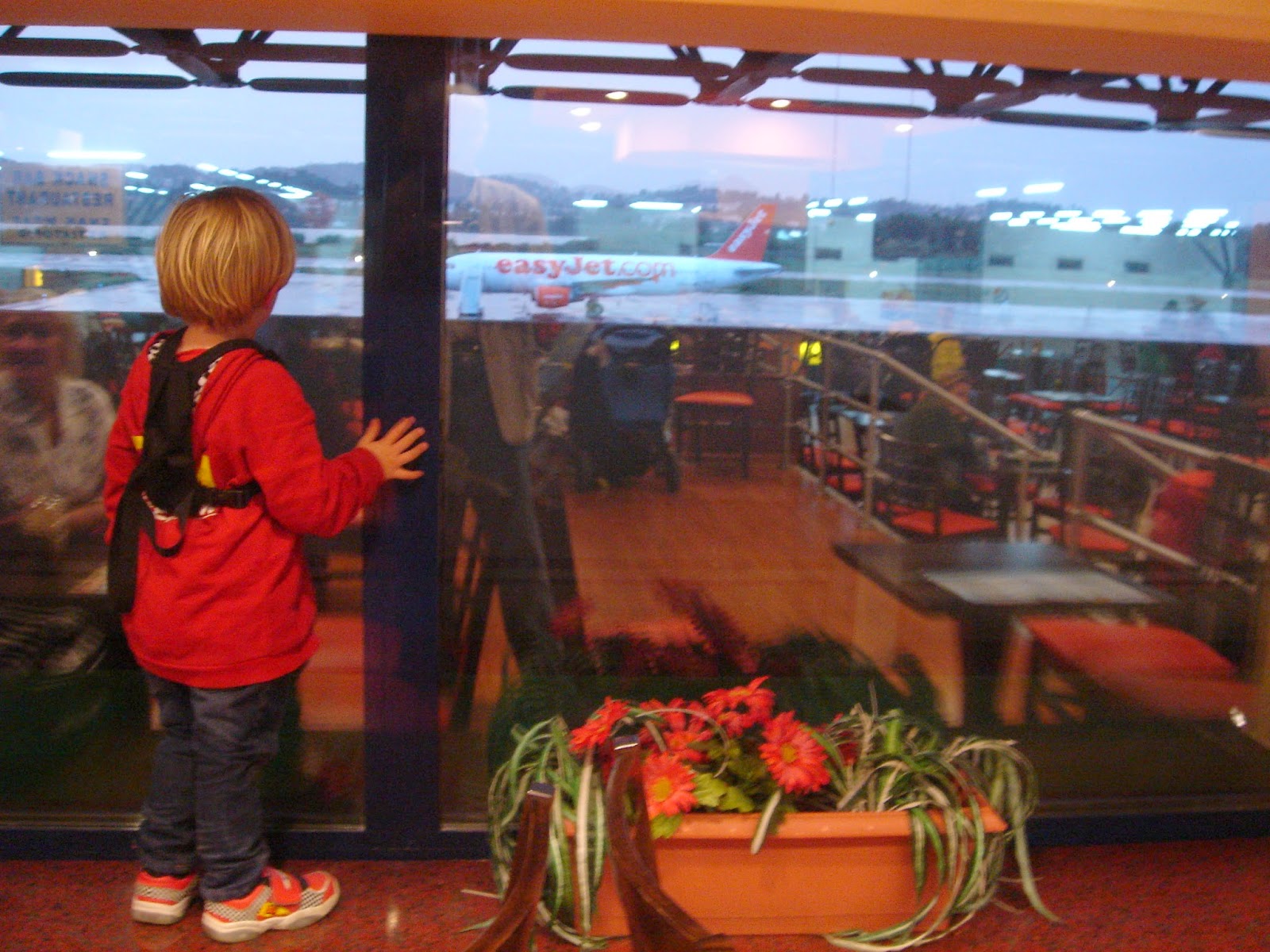
Douglas Adams would have used the name of a town, Roget might have a clue for me, and the Germans, a suitable compound adjective to describe the bitter-sweet experience of having the house to ourselves, now Liz, Sophia, Guy, Amy, Oliver and little Hannah have flown back to England. They left - eventually - in wet grey weather, which is always better, except the plane that should have taken them home was struck by lightning somewhere on its approach to Kapodistria. It landed with everyone safe, but sat on the runway effectively unusable, while Easyjet announced they were sending a replacement jet, which would mean everyone waiting in the airport for the rest of the day. (Other travellers fared worse). I was grandpa childminder helping with the children until at last they trooped into security just before nine in the evening and I headed back to Ano Korakiana in the dark.

"I don't see how they can get any compensation" said Lin later, reading the cancellation and delay leaflet everyone had been been given at the airport "It's hardly Easyjet's fault if they get struck by lightning"
“When we get home…”
“Home?” I’m of two minds on this, at least two, thinking of a way to return in January when the internet – outside the popular months for travel - becomes useless and Lin and I rely on local knowledge.
“Do you know anyone who knows about travelling to and from Albania?” I asked Pastor Miltiades at the Lighthouse.
“I do”
“Wow! We’d like to go to Dubrovnik, perhaps Split and on to Albania without having to go back to Italy first”
The crow flight from the bottom of Croatia to the top of Albania is hardly 100 kilometres. No coach or ferry is promoted between the countries…
“Not that we can see”
“From Dubrovnik there is a coach or ferry to Durrës. From Durrës - in Greek we call it Dyrrhachion Δυρράχιον - you take a coach to Saranda” said Pastor Militiades
“Right opposite us!”
“From Saranda you take a ferry direct to Corfu. I will give you some places to stay in Albania next Saturday”
So then I’m trying to work out how to get to Dubrovnik for under the ridiculous £1000 price three change 12 hour flights thrown up by flightscanners.
“They’re useless for economy flights in Europe.” says Lin “They’re for cheap tickets to Thailand, Hawaii, Australia…I’ll do some searching on Ryanair, Easyjet, Whizzair”
Meantime I’m phoning Viamare in London for their access to winter ferry routes to Croatia from Italy.
Says Alina “Bari-Dubrovnik? Wait a mo’…checks her computer...they start in April”
“Anything in January?”
“Wait a mo’…Ancona-Split. I’ll email details”
Dear Mr Baddeley. Further to our telephone conversation with regards to a ferry crossing from Italy to Croatia or Albania. Please note that I can offer a ferry crossing from Ancona – Split , Jan 2015 however time table is still not available, it should be available in mid/end November 2014. At the moment I can offer: Bari-Durrës – 10 Jan 15 – 23:00 arrives 08:00
2 passengers in seats = €116
2 passengers in 2 bed inside cabin with shower and wc = €168
Please note the ferry runs every day at 23.00
Best regards. Alina. Viamare Ltd. Reservations Dept.
***** *****
Kobanê...Just when the politicians and military of the West have learned about fighting assymetric war they find themselves confronting a force claiming aspirations to fighting symmetrically in the style of the warrior prophet. Kobani  an undoubted place, a concept avoided in asymmetric conflict, is being fought over these last weeks. I suspect the 'West', working the old military option of patience - if only they'd done this after 9/11 - will, with the learning of the last 10 years, out-manoeuvre this unwieldy occupation of ravaged middle eastern deserts. As for the Kurdish diaspora - this must be a moment in history.
*** ***
By incomparable Tolstoy’s first line in Anna Karenina, his response to Madame Bovary perhaps, we ought, in order to be interesting, to be less than fully happy. Yet to avoid too much derivative plotting, clichés even, I wouldn’t want to paint a picture of enviable harmony masking an emerging tale of depravity…(from the prompt box – frantic rotations of fingers and a finger slashing the throat)
No no, seriously tho’, don’t bloody do those fake gaping yawns, you know how real writers can compress time; painters define foliage with hardly two deft strokes or composers hit a three note phrase that says it all…
The trouble with all this is that I try to agree with my stepfather, a master of the television anecdote. He didn’t think you should ever take your audience behind the proscenium; “Don’t share the tricks of the trade”…
I suspect that these last few weeks will show up on our tree rings, or whatever Lysenko projected was the physiological medium by which experience attached itself to genes, as a time of richly harvested joys. Yet didn’t Tolstoy also show that his hero Levin – same novel – in even his happiest moments contemplated suicide. It’s something about mixing; an alchemy in which grown-up joy is the more real through being spiced with homoeopathic dilutions of misery, depravity, despair, extinction and failure. These are dreams I have, waking to find myself among my children, beside my wife, in my home bed. Koestler implied it with the image of a walled cottage garden orchestrating an array of gentle perfumes and colours, sounds and lovely things to touch and taste, surrounded, if you lift your gaze, by a panorama of barbed wire, where Homer’s rosy fingered dawn is become a blood streamed firmament.  Wasn’t I right to cry out with revulsion when Uncle Mac on Children’s Hour sang about the bells with that finale...
Here comes a chopper to chop off your head
Chip chop chip chop - the last man's dead.
...or Strewwelpeter’s to little Conrad suck-a-thumb … ‘he comes he comes’ –  the big red scissor man.
Snip! Snap! Snip! the scissors go;
And Conrad cries out - Oh! Oh! Oh!
Snip! Snap! Snip! They go so fast;
That both his thumbs are off at last.


...just little red stumps - in that famous cautionary children’s book.
“Oh! The crying and the wailing of children!” I smiled in mock despair to our neighbours Vasiliki and Lefteri and family around their table for Sunday lunch. Foti smiled at me
“You need King Herod” he muttered with a grin.
I missed his meaning for a moment
“Massacre of the Innocents!” said Natasha to cries of horrified laughter. Ah yes indeed.
The children in Corfu 
*** ***
A new shop - for goods, coffee and drinks - has opened in the village's last kafeneon καφενείου Κεφαλλωνίτη. Crescendo run by Spiro and his brother Dimitri Vlachos, opened with the blessing of Pappa Kostas last week...
Εγκαίνια στο "Κρεσεντο" - 26/10/14
Χθες, παραμονή του Αγίου Δημητρίου, το σούρουπο, πραγματοποιήθηκαν τα εγκαίνια ενός νέου καταστήματος στο χωριό, από δύο νέους ανθρώπους, τα αδέλφια Σπύρο και Δημήτρη Βλάχο. Το κατάστημα άνοιξε στο χώρο του πρώην «καφενείου Κεφαλλωνίτη» επί του κεντρικού δρόμου, έναντι του Δημοτικού Σχολείου του χωριού και είναι πλέον πανέτοιμο να προσφέρει τρόφιμα, καφέ και γλυκά, στον ειδικά διαρρυθμισμένο χώρο του.
crecendo102014a.jpg

Τα εγκαίνια έγιναν με τον συνηθισμένο για την περίσταση αγιασμό από τον παπα-Κώστα, με την παρουσία της οικογένειας των ιδιοκτητών, φιλικών τους προσώπων και αρκετών χωριανών, ενώ μπροστά από την είσοδο υπήρχε μπουφές με κεράσματα.

Ευχόμαστε καλές δουλειές…και προπάντων με «κρεσέντο»!!!

Back numbers

Simon Baddeley