Total Pageviews

Showing posts with label Richard Baddeley. Show all posts

Saturday, 29 August 2015

'...στοιχεία ερωτικά, σκωπτικά και πολιτικά ανατρεπτικά...'

The laic sculptor of Ano Korakiana at work by Jan Bowman

A catalogue on the internet for Aristeidis Metallinos` Ο Αριστείδης Μεταλληνός I left Ano Korakiana in June telling Angeliki, his grand-daughter, that by September I would bring her a rough draft - on paper.
Back in England, talking to several curators of art galleries, I came away convinced that what was needed was not a hard copy - yet. I asked my son, Richard, to design a website. Yesterday he showed me his draft for a front page...

...but to get it right "You have to have high quality photo's of each sculpture.
 "Can you come to Corfu?"
"Yeah"
Richard will bring his camera to the museum in October. I hope he can work through the works not already photographed by Rob Groove who may be able to do more.
The artist creating his work - 1984, cat 190, stone 74 x 69cm (photo: Rob Groove)
"I need speed lights and a roll of white paper"
"Hm? Can you bring your own lights?"
"Maybe. Can't you find some in Corfu?"
"Maybe. I can let you know."
"I guess we'll need to photograph about 50 to 60 pieces a day. Can they be moved?"
I imagine doing this vital process the same way Angeliki, Lin and I with help from her parents worked up the draft catalogue we made in May, listing and numbering each piece with measurements and whether it's stone or marble.
Lin and Angeliki working on the catalogue
Every on of Aristeidis' pieces has been photographed by the artist's nephew Anastasios Nikolouzos, Tassos - an invaluable record, basic to the project.
A sample of Tassos' images of the carvings

There are the lists made 10 years ago by Angeliki M, in Greek and English, recording the inscriptions on each work. Now all pieces in the collection are renumbered - chronologically - these words need to be digitised and linked to each new picture, bot for their explanatory value and to ensure identification.
Letter to Angeliki M: Αγαπητοί Αγγελική. Linda and I send love and best wishes to your family and hope you are all well. I have attached letters to me from Eurydice Antzoulatou-Retsila who knows as much as anyone outside Ano Korakiana about your grandfather. She is happy to write another article for the ‘catalogue’ we are working on about Aristeidis Metallinos. She retires from her university in the Peloponnese this month and she will be coming to Corfu, where she also worked, to visit friends and, she hopes, to visit you, your family and the museum when she is here.  My son Richard Baddeley is working on a website about the sculptor. This website will record all the works with photographs of each carving. My son says that he needs high quality photographs like those created by our friend Rob Groove from Ipsos who visited the museum this May to make an image of ‘The Saint of Preveza’ for Richard Pine’s book about Greece which will be published in October. Our son will be coming to Corfu for a week in order - with yours and your family’s permission - to take high quality photographs for the Aristeidis Metallinos catalogue which he will be putting on the website catalogue he has started to design. After we returned to England in June I asked several museum and art gallery curators about our plan to publish a catalogue. They confidently advised me that it would be far better to have a web-based catalogue containing the artist’s work and articles about him.  The advantage of this is that we can have swift free access across the world to Aristeidis’ works. The website can include texts including ones by Eurydice Antzοulatοu-Retsila, by your father and by me and you. We can also include video clips and sound recordings in English and Greek that can be accessed with a click of a computer key. People with smart phones can find out about the sculptor. A web-based catalogue has the additional advantage that it can be easily re-edited as new knowledge about your grandfather or more detailed images become available.  I hope you will not be disappointed that I am not coming back to Corfu with a ‘book’, but I am now convinced that an Aristeidis Metallinos website is the best way forward in bringing the artist to a larger audience, and certainly does not preclude a book type catalogue. If a ‘hard-copy’ catalogue is wanted for a particular exhibition of the sculptor’s work at some time in the future, this can be constructed from data in pictures and words from the internet. We are looking forward so much to being back in the village and to seeing our friends again. I don’t know exactly when Eurydice arrives on the island but as you see – in the attached letters - I have given her details of how to contact you. I hope she will be welcome in Ano Korakiana.  The work I am currently involved with is writing the English and Greek words on each of the sculptures....
First page of 15 pages - spaces await recording of transcriptions and, where needed, explanatory notes

The Scops owl Metallinos carved on a stone plaque fixed to the front of his house, displaying his initials, and holding a builder's trowel and a sculptor's hammer, is dated the year he made the transition from builder to sculptor, depicting in stone and marble a unique record of a fast changing pastoral economy, emphasising the primacy of the family, village institutions and traditional customs, yet mingling with this account of Greek folklore, works that are στοιχεία ερωτικά, σκωπτικά και πολιτικά ανατρεπτικά...erotic, ribald and subversively political.

*** *** ***
I planted parsnip seedlings, germinated in March on a wet kitchen towel at home then planted them out on the plot inside cardboard tubes to help them stay straight and not divide. Since July I've been enjoying them as soup, roasted and boiled. Late August, my friend Winnie gets my grandson's help pulling up another crop for the pot.
One of the most robust sources of happiness these last 9 months has been the fecundity of our allotment. Various actions define a turning point. For s start I did what just about anyone living in Handsworth starting with raw soil has to do - one way or another. I invested in several builders bags of black gold compost which I gradually mixed with the 'messy' soil I've been trying to work since mid-2010.
Andy of Valley Contractors delivering black gold compost to Plot 14 - July 2014

What is 'messy' soil? There's a question. This plot and others on the Victoria Jubilee are confusing in this respect. It presented itself to my spade, fork and mattock, as neither sandy, nor peat, nor clay nor chalky.
The soil as it presented itself in December 2013


This kind of rubble still being dug out of the plot in 2014
It might have the character of silt soil. Where compost has been mixed in, it might be loam. Loam and silt contain elements of the others. Why is it tricky to define?
To go way back; in Triassic times all Britain was in the tropics, our area a vast shallow lake. Far more recently - between 100,000 and 12,000 years ago...
Birmingham is about where ''e' is at the end of 'Northern Ice'
... the land was buried beneath 3000 metres of ice. The climate was like that at the North Pole now. Slow-moving sheets of ice ground the tops from the Welsh Mountains. Glaciers pushed great masses of earth and broken stone south eastwards across the clay plain.
...huge glaciers pushed millions of tonnes of sand, gravel and pebbles from Wales and from the north of Britain to the Midlands. Glacial drifts with different mixtures of sand and gravel, pebbles and clay are found in many places on top of other rocks... 
Across great lakes, blocked in by mile high ice barriers, gales blew the water into mighty waves, which, breaking, pounded fallen rocks into smooth rounded gravel. When the great thaw came, glacial drift had left rubble strewn over the landscape forming an uneven layer of water-worn pebbles mixed with sand, clay with a few larger boulders...
Winnie's stone garden - 'water-worn pebbles'  ground by glacial drift
So Handsworth and its surroundings was 'covered by glacial drift deposits 150 feet thick'. Glaciers ground the high peaks of Wales and drifted their stones all over the Midlands.  The ground stones are attractive, but  they're mixed with recent remains from activity on private allotments that were here up to the start of this century
A typical collection of glacier and water-worn stones mixed with more recent rubble dug from the plot


The account of local geology goes on to say that the local 'topsoil is porous and acidic, unsuitable for agriculture...its natural cover was light woodland and heath.'
This suggests that anyone who's used this land for growing vegetables has needed to improve their soil. I'm confident that the soil on the original Victoria Jubilee Allotments (VJA) - private land - had been undergoing steady improvement for near a century, from the time working men started using land given them by the church at the end of the 19th century. Much of the VJA had been thoroughly dug, manured and composted for decades.
The Victoria Jubilee Allotments, sold by their owners to a developer, who got planning permission to build in 2004


The old Victoria Jubilee Allotments were accessed by country lanes (photo: Luke Unsworth 2004)
Would that those of us who took up plots on the 'new' Victoria Jubilee Allotments - 80 plots on a third of the original site - in June 2010 had inherited this well prepared soil. What actually happened was that the whole site...
Google map now - the unfinished playing fields and the new housing around Victoriana Way were once all allotments
...from which Birmingham City Council eventually won the new plots and space for playing fields - still not delivered after eleven years - was first graded and built on and driven over with heavy machinery during the housebuilding that went on between 2004-2009. There were major man-made ground upheavals. First, old sheds, shrubs, trees, hedges and anything remaining on the old plots was bulldozed into several big heaps...
In 2005 the old VJA was being prepared for new allotments, playing fields and houses (photo: Luke Unsworth)


...then a large cavity was dug in the ground beneath the smaller area reserved under a S106A. It was deep enough to almost hide the diggers involved...
Landscaping on the VJA in 2005 reveals glacial drift  - pebbles, sand, clay and occasional boulders...

...and show the start of the deep sandy muddy glacial drift deposit that runs so close to the surface. Why such a large hole? Why did the developer need to create such a space? Was some of the excavated earth trucked from the site? I suspect this was all about major re-landscaping of the whole site with earth from one part being moved to other part - including the laying out of level playing fields to the south where the land had sloped gently down to the park. The original geology is confused. I didn't see it happen but my guess is that this cavity - under my present plot - was refilled from gradings elsewhere on the VJA site over which earth mixed with all left on the surface of the original VJA site was re-spread across the new site...
The new plots being laid out on the VJA
...with, as I understand, a few inches of topsoil brought in from elsewhere. I'm unclear why this was necessary and most gardeners tell me it's not especially rich and may have brought in such perennial weeds as horsetail.
On 10th June applicants signed up for their plots. Linda and I chose one overlooking Handsworth Park.
Signing up for our plot (photo: Richard Baddeley)


I started work - innocent and ignorant - on preparing our new cherished hard-won plot.
Summer 2010


The earth was dry, dusty, full of weeds, pebbles, stones and odds-and-ends that had been part of the furnishings of the previous plots that had been here - worked wood, plastic, metal brackets, wire, fragments of fabric, many coloured pieces of broken glass, bricks, rubble...
It was a start. I was carried forward, as I am now, by interest, enthusiasm for learning, excitement at the prospect of growing things, getting a shed, making Plot 14 into a place.
July 2015 ((photo: Richard Baddeley)

*** *** ***
1. Making sense of the soil - from figuring the local geology; investing in topsoil and compost; knowing the history of the site to explain some of the objects brought up by the spade. Studying the book recommended by Barry Luckhurst - Gardener's Earth by Stanley B. Whitehead and beginning to learn the art of composting.
Palette composting bays laid out in March 2015


2. Making the improved soil accessible...by laying and widening paths to create beds I can get at without treading on worked soil.
My rough plan of Plot 14 in 2015

I used the HHH van (with a donation for time and fuel - all logged and transparent) to deliver hundreds of bricks recovered from skips and front yards, with permission. These are easily moved to change the shape of a bed as carpet tiles, collected in a discarded batch while clearing a Handsworth garden, can quickly create temporary paths as well as holding down the hem of netting. All paths on the plot have been  covered with permeable weed control membrane fixed with staples...

I've stocked up with plastic tubing to use as frames for nets, investing in veggiemesh and, for winter, bubble wrap to protect from frost.  I now set up a netted framework swiftly; a crowbar to make the holes, Each end of a cut-to-length plastic tube inserted in the holes; the hoops strengthened with bamboo fixed with plastic ties to the hoops. Then the mesh spread over the frame, staples inserted to hold it down and carpet tiles to cover any excess spreading on the surrounding path.
3. Winnie. She is my steward and farm hand and friend as interested in the plot as I and with a dad who also has an allotment, and a young son who works with her on the plot and plays with Oliver, my grandson, when he's here.
Winnie and Simon on 'our' plot this January


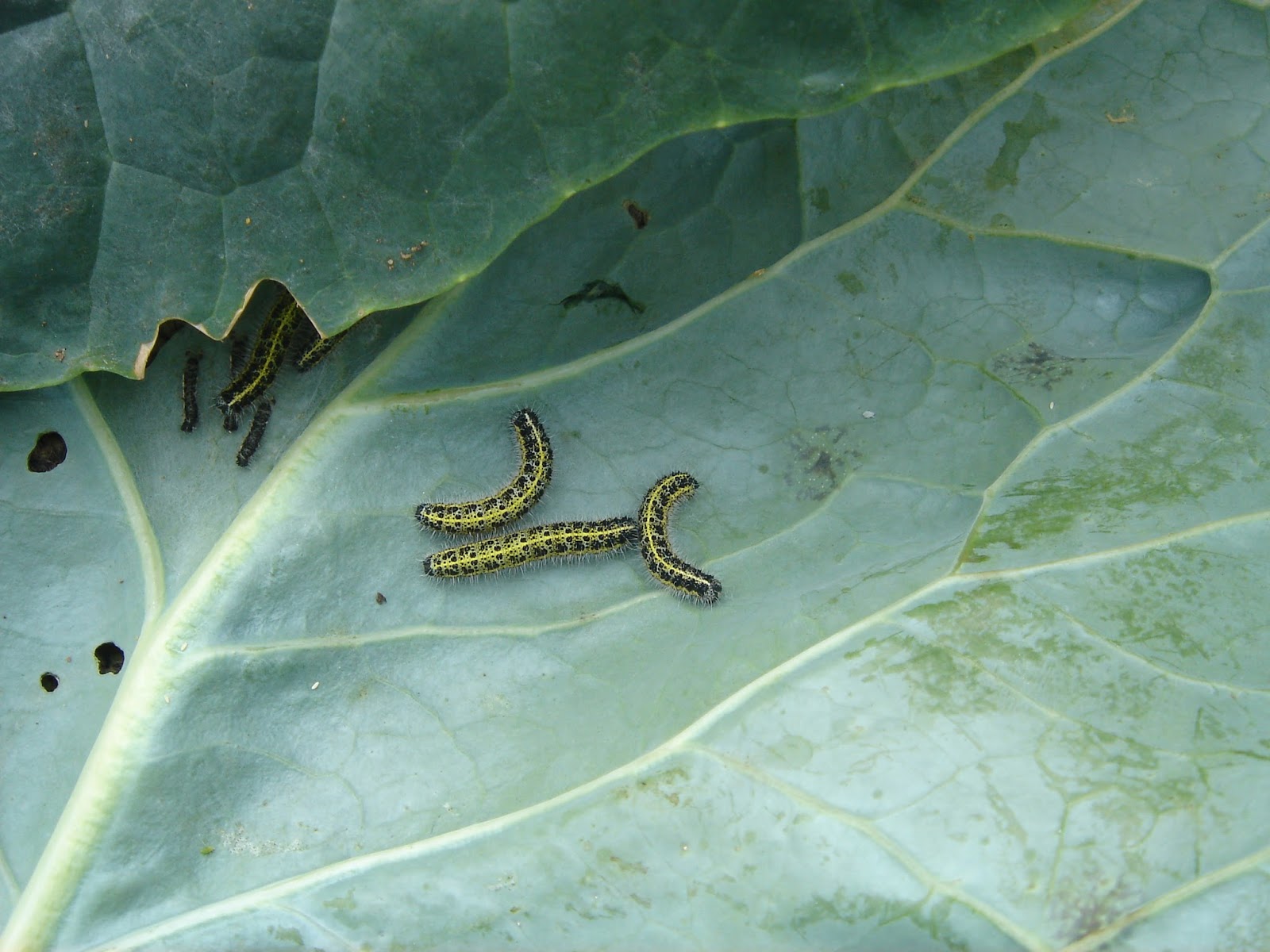
Cutting out cabbage buttterfly eggs and damaged leaves on Brussels Sprouts

Thursday, 13 November 2014

Richard's photography

Our son Richard; his recent work, on his blog and on Facebook - especially his sequence on The Imminent Threat of Islamic Extremism in Everyday Life ....
Photo: R.J.Baddeley


Photo: R.J.Baddeley

and Them...#1, English Defence League Rally, Centenary Square, Birmingham "What must ‘they’ be thinking?"
Photo: R.J.Baddeley


Photo: R.J.Baddeley

and The Incomprehensibility of Tragedy...'The day before we arrived, a tragedy befell the town of Soma. No person spoke of it to us.'
Photo: R.J.Baddeley

...and this of dear Emma...Eat, Drink, Repeat...which if I were her would vex me. or did she pose for these?
Photo: R.J.Baddeley

*** *** ***
Last week Mark emailed us photos of progress on the wood balcony in Ano Korakiana...
Hi Simon and Lin. Started work on balcony today. Have removed all old decking...what you see on the photos is free standing so i can move about up there, the old decking is now stacked down at the bottom of the garden and will be covered the next day or two before the rain
The wood order arrived and is now safely inside the house and apothiki , or should we call it your other house in the village .
Screws and brackets came too , only thing is the brackets are no good for the job as they are the same as the old ones which means they are too deep so when the wood sits on the base of bracket the decking will not touch the top side of wood.
I am not about to start cutting brackets down or cutting bits of wood to fit in to make them sit higher so I will take them back avrio and find the correct type .
As you can see from one of the pics some of the beams are pretty badly rotten on the top side ,hopefully they will be ok once treated and then turned 180.


All support beams removed for treatment (Photo: Εφη Χονδρογιαννπα‎)
Support beams before and after sanding (Photo: Mark Jacks)
The only other thing is we never allowed for an extra piece of 7x7 cm wood so as we could cut it into short sections and put it on the outer edge beam to bring the 7x7 cm up to decking level, so I either get another length or 2 depending on how much I need or I use the 2 outer end pieces once replaced with new ones and have them cut down to 7x7 cm from 14.5x7 length ways and obviously use the good side of them (bottom edge) to do that part of the job...regardless of what I use they will have to be held in place by screws of sorts along the outside beam bringing the 7x7 up to height. Hope you both got home safe and sound. Best wishes. Mark
Winter's wood from the balcony off Democracy Street
*** *** ***
I've swept up and bagged a goodly load of fallen leaves from the front of the house; even managed to mow the wet grass of the front lawn - compost for the allotment. The back lawn needs a haircut as much as I, for all that it'd pass as a paddock until Spring and a friend advised me to leave the grass long for winter nutrients, weed suppressant and resistance to frost and snow...
I've had the HHH van out collecting a load of hefty beech logs from the railways embankments of Handsworth, donated by a Network Rail maintenance team to Handsworth Park and stored in the compound...I suspect these logs are the product of a UK wide strategy to fell trees alongside railways...
A government-commissioned report on the resilience of the UK’s transport network to extreme weather events recommends that Network Rail develop a 10-year strategy to ‘significantly reduce the number of trees alongside railway lines, particularly those posing a risk to the railway and its users’.


Yesterday, with help from Winnie, and the receiving householder and her neighbours - Rifat, Hussain, Alvin - who'd earmarked this supply as fuel for a new wood-burner, we loaded and moved five van loads of logs to Thornhill Road; the supply added to by another pile of Network Rail logs up a cul-de-sac backing onto the cutting off Soho Road - a couple of hours work and a donation of £20 to HHH along with a box of chocolates for me and our committee who meet tonight to discuss future work.
Beech logs cut from the rail embankment - will need drying for a year before sawing and splitting


*** *** ***
Richard Pine's latest piece in The Irish Times
Town that finds right balance between tourism and quality of living 
Nov 10, 2014
A homebound Irish couple accosted me recently at Corfu airport.
“We came here because of what you wrote in The Irish Times . . . ”
I waited in trepidation. “We loved it!”
They are seasoned travellers. They found Corfu beautiful and affordable. It’s a relief to know that one can extol the beauty of a place and still tell the truth. Mission accomplished.
I’ve been travelling recently and I can now say that, whatever the charms of Corfu, those of Nafplion, in the southern Peloponnese, are their equal.
When I first visited Nafplion 50 years ago, it was merely a small town living on its reputation as the site of the first parliament of independent Greece up to 1834, when the government moved to Athens.
Nafplion is dominated by a Venetian castle, reached by 999 very steep steps, up which, at the vigorous age of 15, I ran in pursuit of a girl who could run faster than me. This time, pleading old age and lack of inducement, I stayed on the ground level.
Today Nafplion has expanded into “Nafplion New Town”, a series of suburbs. This is a welcome feature of many Greek towns of historical importance, such as Mycenae, Tiryns, Epidauros and Argos: the tourists are serviced on the prehistoric site while you live and shop in the new town. It brings a whole new meaning to “I got it in Argos”.
Tales of two cities
For tourist purposes, separating the old cities from the new towns is a clever strategy. Suburbs are generally unexciting but affordable and – unless exceptionally well-designed – unattractive social necessity.
Athens is the prime Greek example, with miles of low-rise suburbs lining the arterial exit roads, some of them very squalid, stretching in every direction from the ancient centre. It’s quite a shock, if you know your Greek mythology, to see a motorway exit sign for ‘Eleusis’. One might wonder what 21st-century mysteries it can offer, until you learn that it is home to Greece’s largest oil refinery.
Corfu has its quality shops, especially the jewellery for which it’s famous. But in Nafplion’s stylish streetscape the shops aimed at tourists display none of the tawdry, made-in-China tat that clogs up the narrow laneways of Corfu.
With so many hotels, tavernas and cafes winding down at the end of the season, it’s possible to walk streets that aren’t clogged with camera-toting visitors in order to appreciate the range of local produce, proudly offered in craft shops and delicatessens. Everything is tastefully displayed, perhaps so much so that it runs the danger of becoming twee. In the old town, there’s not a supermarket in sight. But in the “new town” on its outskirts, Cash & Carry rules.
Nafplion is still the centre of the manufacture of komboloi, the traditional Greek “worry beads” that resemble a rosary but are, in fact, an antidote to anxiety. Preferably (and expensively) made of amber, komboloi can also be had in coral, ivory, mother-of-pearl and (the cheapest) synthetic beads. Even if you don’t think you need them, the warmth of the amber in the palm of the hand is reassuring.
Nafplion is perhaps fortunate in that, unlike Corfu, it can’t accommodate cruise ships. The inmates of these behemoths normally spend next to nothing as they linger until departure time six or eight hours later. They are of almost zero economic value to their host towns, but they help spread the word: many travellers will return to savour at a more leisurely pace the beauty they have seen so briefly.
Greece, like any other country trying to expand its tourist potential, is torn between the needs of visitors and the needs of the local population. And, like any country with a rapidly expanding urban lifestyle, it is torn between modernisation and the preservation of the traditional and authentic.
In the past weeks we’ve seen ministerial announcements about this year’s record-breaking tourist influx (18 million, up 10 per cent on 2013) and about intentions to develop niche markets, especially cultural tourism. We hear this every year, but with the need to put Athens itself back on the tourist map after the disturbances of the past four years, it’s welcome.
Nafplion could give the National Tourism Organisation some valuable pointers: it has a very fine local history museum (one of the best I’ve ever seen) established by the Peloponnese Folklore Foundation. Local pride exudes from this and similar institutions (including an annexe of the National Gallery), not least because the Peloponnese was the principal site of the war of independence, which was nasty, brutish and long (1821 to 30). As a result, it has a significance for the rest of Greece, which Nafplion tastefully exploits.
Returning there after so long was a pleasant revelation.
I have just seen the most striking old poster for Corfu, posted it on Facebook. lots of 'likes'
This spot is right at the end of the airport runway; not quite as idyllically peaceful as the poster suggests, but I took a photo of Liz, and her daughter Sophia, in the shallow sea next to the taverna where we were having a happy lunch a few weeks ago. Well quite happy, but that the owner's wife was in a foul mood, looking the other way as we ordered....

...I popped into the restaurant and very deferentially asked her husband.
"Have we done something wrong? The waitress seems irritated with us"
I had in mind our casual re-arrangement of two shoreside tables so we could sit together
"Oh. No no no. She is my wife. Let me tell you. She is pregnant. It's very uncomfortable at the moment for her"
I apologised profusely, John Cleese style...
Later Amy politely asked our waitress, since her situation was obvious and I felt an idiot, when she was expecting. She beamed like the sun coming out
"In February. A girl"
Sophia, Liz, Guy, Hannah, Oliver. Amy and Linda late October


Back numbers

Simon Baddeley