Total Pageviews

Showing posts with label Maine. Show all posts

Monday, 19 August 2013

'Another soul'

Robin, my friend, and neighbouring plot-holder, on the Victoria Jubilee Allotments has just circulated an email to me, and others who might be interested, having persuaded me, who really wanted to stay out of it and first prove myself a gardener...  
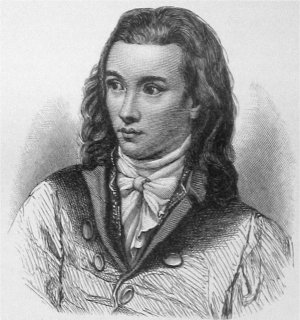
....of Novalis' quoted by Conrad on the start page of Lord Jim - which I did for 'A' level English Lit - 'It is certain my Conviction gains infinitely, the moment another soul will believe in it.'

Subject: Draft of: Motion on VJA information policy, for consideration at AGM
Date: 19 August 2013

Dear VJA Members,
I am copying below a draft of a motion that I am proposing for consideration at the next AGM.  Simon has agreed to second it. If anyone has any suggestions for improving on this draft then please let us know as soon as possible. Otherwise please consider it as being here submitted 'as is' for inclusion in the AGM's Agenda and for the Motion and its Rationale to be included in the notices of the AGM.
Thank you, Robin (Clarke)

Motion for consideration at AGM 2013

Rationale for the following motion: A number of Members have expressed concern about lack of informing and consulting about what the Committee are planning or deciding. Even non-committee Members have to pay their rent (which more and more are finding difficult) and have to invest time in working their plots (which some find burdensome), and their membership needs to be respected and encouraged. We need to be attracting more new members and not risking disenchanting existing members by not informing and consulting them. In order to alleviate the hard work of running the Association, more plotholders need to be involved, and that cannot be achieved without keeping the entire membership better informed and more involved.

Motion Proposed by Robin Clarke
Seconded by Simon Baddeley

"That the following Annex be attached to the Constitution of the Association."
Annex to Constitution

The important and key role of the Officers and Committee as volunteers enabling the effective functioning of the VJA is recognised.  However there is not any basis for some Members having greater or lesser access to information within the association.
 
Except where there is some consensually clearly accepted basis for making an exception: 
(a) All meetings shall be open to and notified to all Members.
(b) All meetings shall be minuted. 
(c) All meetings shall have as an opening item “Minutes of the last meeting”, at which draft previous Minutes will be corrected if necessary and then agreed. 
(d) All Minutes and Drafts of Minutes shall be posted on the Notice Board and circulated to all members as promptly as is practical. 
(e) (Subject to Clause (h) below,) Minutes of meetings shall avoid generalisations but instead make clear the specifics of what is being discussed and decided, such that the reader obtains the same knowledge as if they had been at the meeting themselves. 
(f) Minutes of decisions of any significance shall name the proposer and seconder and number of voters, along with statements of rationale concerning the decision. 
(g) Before any significant decision is taken the Committee and Officers shall endeavour to inform and consult with as many of the other members as possible, and take into account their views. 
(h) In the event that a Member asks for some matter of their personal circumstances to be treated as confidential to only some others, then that matter will be proceeded with as appropriate on a case-by-case basis which may include not being reported in the generally-circulated Minutes or in a generally open meeting.


*** ***
There is a door in the high privet at the bottom of their garden - Amy's and Guy's home on the edge of city. When we visit I'm strongly persuaded to fetch the key to the padlocked chain...
...and head over the fields with dog Oscar, my grandson and Cookie. In no time the rain, spattering at first, is teeming down but we run carefree across the wet mown meadow towards the wheat field beyond, divided from us by a shallow stream at the bottom of a defile, Cookie with her spaniel instinct, dashing to and fro and Oscar, getting old now, following with me in straighter lines, observing Oliver, in wet wear, who chases one dog then the other until by the unmown field verge we follow it round working our way back to the door in the hedge.


**** ****

  • Simon Baddeley Facebook!! What a waste of time, a bit like Marmite except Marmite is never a waste of time
  • Jill Darby I don't believe you mean that Simon.
  • Simon Baddeley FB is useful enough to stay subscribed, but I wouldn't miss it despite uts versatility 0 multimedia and hyperlinks. It gives the impression of mattering but it's superficial
  • Linda Baddeley So why do you spend so much time here???
    6 hours ago · Like · 1
  • Simon Baddeley In US alone Facebook has...
    • More than 64 million active users
    • An average of 250000 new users registered daily
    • More than 55000 regional, work-related, collegiate, and high school networks
    • More than 14 million photos uploaded daily
    • More than 65 billion page views per month
    • More than half of users outside formal education
    • The fastest growing demographic of 25 and older
    The USA has most users, followed by UK. with 8 million plus active users, and Canada with than 7 million.
    Portia in MoV 'These men are like moths, drawn to these boxes as if they were flames. This is how the candle burned the moth. Oh, these fools! When they choose, they only know how to lose.' If the world presents itself as chaotic there are three reactions (other than the wise one) - 'repression' (fall back on a simplistic world in which all is explained by astrology, God's will or a favourite newspaper), 'disassociation' (take up a nerdish preoccupation to get away from the buzzing blooming confusion beyond it) and 'superficiality' (like a moth to the nearest flame dart back and forth between immediate stimuli). Thus FB, but it's a brilliant invention and nothing's all bad, except perhaps the Stinking Bishop you make me keep outside the house. I am nearly a dinosaur grumbling about the telephone in its early days, or a 100 other world-changing innovations. Remember the man who said of railway trains that going over 30mph would suffocate passengers? I suspect that a globally connected population is still learning the best way to use this invention and early criticisms like mine will look quite absurd so little have I imagined the full possibilities of FB.

From Democracy Street at Christmas 2008:

I remain intrigued with the possibilities that I am observing this crisis through the distorting lens of the present. Throughout my career the ideas of Fred Emery, my boss at the Tavistock Institute, for a few years after I left university, have periodically recurred - especially his thoughts on understanding future possibilities in a paper he wrote for the ESRC in 1967:
From Section III Methodologies for predicting the future: …It is not simply foolhardy to think that we may enable ourselves more readily to recognize the future in its embryonic form. There are almost certain regularities about these emergent phases. Social processes which, in their maturity, are going to consume significant portions of men’s energies most likely have a lusty growth. They do not, by definition, command human resources at this stage, and hence their energy requirements must be met parasitically, i.e. they must in this phase appear to be something else (my italics). This is the major reason, we think, why the key emergents are typically unrecognized for what they are while other less demanding novel processes are quickly seen. A social process which passes for what it is not should theoretically be distinguishable both in its energy and informational aspects. Because it is a growing process, its energy requirements will be substantially greater (relative to what it appears to do) than the energy requirements of the maturer process which it apes. Because it is not what it appears to be, the process will stretch or distort the meanings and usage of the vocabulary which it has appropriated. F. E. Emery (1967) 'The Next Thirty Years: Concepts, Methods and Anticipations' (excluding FEM’s 1997 postscript – in the year of his death), Human Relations, 1967, 20, 199-237. p.15
This suggests we should assume that what is really happening lacks, for the moment, the characteristics of a whole or a gestalt, that can be named and analysed. What may be emerging may have a 'lusty growth' - but currently exists as a diversity of disconnected trends and events - unjoined dots - which may, with the benefit of hindsight, be seen as converging. Though this is the result of human actions, inevitably imperfect awareness of these possibilities can induce the false causality of millenarianism, cargo cults and conspiracism - paranoia made confusing for occasionally being nearly correct, as with astrology. Fred would suggest looking out for the debilitation caused by parasitic action on familiar institutions. From where is energy being sucked? Where is it going? Is language being stretched, distorted, 'appropriated'?

...and from Democracy Street in July 2011

Fred Emery: Policy - Appearance & Reality 1993
On Friday I gave a talk and led a discussion on 'The Politics of the New Order' to officers participating in a four day Summer School at the University. I spoke of what could be discerned and what could not, what might be certain and what might be a matter for speculation, developing my talk around the challenges of working in that space where politics, management and professionalism converged and overlapped. What of localism and the vision of devolved power? Is there a real willingness to place trust in the judgement of the demos; a serious pursuit of democracy - one that would dispense with Plato's guardians - the oligarchy essential to his ideal democracy? Should we be more sceptical, regarding democracy as just another form of government whose machinery requires constant maintenance by experts. This would be Maine's contention, with his convincing scepticism towards 'popular government'. Can't popular government be a root to tyranny, the return of the folkish? I used the idea of a temporal gestalt to describe the difficulty of being sure what was happening. How many words do you have to hear before you know the phrase? "To" I said. People looked expectant and puzzled; "to be..." I said, and everyone instantly recognised Hamlet's soliloquy"Never..." I said with lisping rhetoric and all knew I referred to Churchill's praise for 'The Few'. We inevitably struggle to recognise the form and direction of what is spoken of as 'localism'.  What gestalten - wholes - might be conjectured? Are these the culmination of an existing and recognised development in government? What might be something new evolving - unrecognised - inside the camouflage of the familiar? I spoke of paradigms, especially those competing for and against the idea of diffused power; how alien this was to a population historically steeped in hierarchy, unfamiliar with and distrustful of equality even though sentimentally attracted to the idea. At the end I slipped in a mention of Elinor Ostrom's Governing the Commons - and her idea that since neither states nor the market have been uniformly successful in solving 'common pool resource' problems, there might be other ways to govern public goods.
Tuesday, 13 September 2011

Gates of dawn

In the continuing heat, each room in the house gives off smells as though it were being slow cooked. In the dining room where we've drilled holes to start dealing with winter damp I can almost taste the stewing brick and stucco; in one of the lower kitchen cupboards an ancient mustiness mingles with the clinical smell of bleach where we've already washed and wiped. Shutters, under layers of old paint emanate baking wood, and the stones which in England only give off aromas when broken open, have identifying exhalations, tiles too - especially the trace whiff of cool marble caught and held on first entering a sheltered hallway from the hot street, remind me of my first visit to Athens fifty years ago, when heat like this was new. Despite the dryness Corfu remains deeply green; gardens are shaded by the large leaves of walnut, fig, orange and lemon, with exuberant vines cascading over balconies and alleyways, the aroma of jasmine caught in passing.
Working on the kitchen windows Lin and I had to climb on chairs to guide a large local Tiger Moth that had begun to flutter against the glass between it and the world a few inches away. 
*** ***
An email from Minoti Chakravarty-Kaul still in lowland Scotland:
Dear Simon... I am rushing to write this as I am in the midst of a jam most of which is now melting under the heat of rush but have to make decisions so I wrote to Sharon today as I need to be thinking of getting back in time for the 2nd round of presentations in India. Roughly she says Theodora gets tired with visitors if they stay for a long period and so no more than 2 nights which means 3 days. I will then try to be there by the 27th of September ... Let me know how you are. Cheers Minoti
Dear Minoti. We - Linda and I - are now at our home in Corfu until late October by which time I imagine you will have returned to India....Sharon is right. Mum loves the concentrated exchanges she has with you, but - yes - she does get tired. When I’m talking to her I tend to work in 30 minute sessions and then rest, go for a walk, go to my room or just sit quietly. Mum may sleep or go to her room. But when she’s in conversation she’s alert as ever. all the best, love, Simon
Dear Simon...Yes I have to be in India long before the 21st as that is the date for my first presentation in the India Habitat Centre on the issue of land acquisition and New Delhi.this will be, if I can pull it off, a great opportunity to challenge the GOI of today on inflicting a tragedy of the village commons. I intend inducing INTACH which is for conservation of India's heritage to consider the issue from the point of view of historic villages of Delhi. I realised too late that I would have liked you to see a book I had here on Delhi's heritage villages. But hope you come to India soon. My next one will be in November and they may webcast it. I will have to work very very hard to get that off the ground so to say as the maps will be exhibited and all that has to be prepared. I am writing all this to you for I have to struggle about this all by myself. I feel re-assured just telling you.   I thought over what you said about Theodora's getting tired -  you may not have considered that a lot of conversations one cannot carry on with one's family simply because they are the 'knowns' whereas she may have so much to share with an outsider;  also, she is alone for such a long time that there is a habit she may have developed to look inwards and looking back. Does she like music? I have a film which I would want her to see - would you know if she has seen it - 'Ladies in Lavender'- I can take it with me if she has not. besides I plan to cook a few things and I have already talked this over with Sharon - and she seems enthusiastic about it. What do you say? I am in awe about her attitude to life such that I think I will draw strength from her.  Besides I will be taking some of the copies of Maine's letters and show them to her. Any other ideas?  Minoti
Henry Maine at Cambridge
Dear Minoti. I think you may be right about the ‘knowns’ that can slow conversation between people in long connection with one other. I was inside my mother for 9 months and we've known one another for 69 years since. Even with Lin, we maintain long comfortable silences having been together since 1973, marrying in 1978, and having our two children in 1981 and 1985. We share an encyclopaedia of memories from which one of us may pick up a reference while the other - figuratively - peers over the other’s shoulder debating its accuracy, adding annotations that include additional details – debates and arguments. You and Theodora have - until last year - separate encyclopaedias which you are only starting to share. She and you can turn pages and pages that, were they being looked at within each other’s families, would be too well thumbed; not incidentally that I don’t like repeating happy memories, possibly gilding them with nostalgia.  What may interest you about both Theodora and me is that neither of us really knows very much about Sir Henry and his significance. We’ve always been aware of his fame and enduring reputation, but even after we read Feaver’s biography I felt little wiser about our ancestor.  It is only since you entered our lives that it has been possible for us, through your understanding and indeed reliance on his scholarship, that we have begun to gain insights into why this man is considered in a significant circle to be one of the great intellects of the last 150 years; only now as a result of your enthusiasm and generosity that I have begun to see links between Maine’s research into the governance of traditional Indian society, especially its villages, and his comparisons of these with village communities in the rest of Europe, and contemporary problems of governance and land usage; problems that I’ve so far viewed through different perspectives - environmentalism and sustainability. Much as I respected him in a general way, I hadn’t seen how Maine’s work might be so relevant to my enduring concerns about the urban environment, town and country relationships and new ways of organising the distribution of scare resources without resort to regulation by top-down government or exposure to the market. I know Theodora will be fascinated to see your copies of Maine’s letters. Neither of us have seen any of these, the only handwriting we’ve viewed being his signature. Indeed I feel very little sense of knowing this man as a human being, driven by the ambition of his intellect to excel among his peers at Cambridge, made a full professor at 25, well before the appearance of the books that made his name. He could have been arrogant, priggish and mean, but seems to have been none of these things, being regarded by those who new him as quite shy, generous, sweet mannered, always attentive. I still cannot imagine someone who writes with such originality and assurance and deals with such complex and difficult ideas in this light. I have not heard any more from Robin Peterson in distant Canada about the contents of those files she recovered from George Feaver’s estate. Except for the books Robin sent to Brin Croft in May, which I stacked on a lower shelf in my mum’s bedroom near her window, you now have all of the material my mother had on her great grandfather, - the obituary notices cut out by Jane in the late 1880s. I guess it’s just possible that new material will come to light but I suspect you are our unique link to Sir Henry, notwithstanding Karuna Mantena’s great talent as a scholar. She incidentally sent me a kind note a few months ago saying that she could not imagine a better person than you to help my mother and I to learn more about our ancestor. I read Village Communities - all 6 lectures - last time I was at Brin Croft in early August. I begin to see that what Maine was describing does not lend itself to any easy simplification; no idealistic paean for the simple and the traditional, no obvious opposition to the progress from status to contract.  I see considerable concern about the effects on village elites and more educated Indians of the day of offering uncompromised access to legal procedures that enabled them to draw on English law to detach themselves from the older forms of governance that had had traditionally determined the settlement of disputes within and between village communities. I suspect that in raising this issue and supporting it with evidence he drew attention to unforeseen side effects of British rule that had had more obvious and dire effects in that earlier insurrection we were taught at school to call The Indian Mutiny. The insensitivity that required Hindu’s to be in touch with beef fat and Muslims with pork was a notorious lesson that has curbed the arrogance of many an imperial governor over-confident about imposing what he took for granted as being the universal and superior benefits of ‘our' way of doing things. What strikes me about Maine’s writing are the careful conditions and limitation he places around any too obvious or simple assumptions about the motives, mores and logic of other cultures. I see now why when I was at Cambridge reading Anthropology, at Trinity Hall with Sir Henry’s portrait - not very good - on the wall of the dining room at whose High Table he, as Master, once presided, I was told by one of our lecturers, that Henry Maine was 'a father of Anthropology'. It was not until I met you and, on your second visit to Brin Croft earlier this year, you gave us that fascinating tutorial on Maine’s research base, missing in George Feaver’s biography of him, that I’ve begun to digest the full import of that conclusion. I still haven’t read any of your written work though I’ve seen reviews, and you showed me your village maps. I very much hope that when I do I can strengthen my understanding of Maine’s work enough to make a clear connection between it and my committed interest in the commons and their governance, allotments and urban green space.I realise from your words how urgent it is for you to prepare a challenge to the Government of India that may be instrumental in averting the infliction of a tragedy of the village commons. Linda and I are enjoying the dry heat of September in Corfu, grateful for the breezes that start in the afternoon and blow cooler air through our house on Democracy Street.
We’ve enjoyed eating ripe grapes clustered on vines enveloping deserted houses in the village, picking dates sticky and sweet from overhanging trees that grow so abundantly some treat them as weeds. We've even found a few blackberries where the bramble roots have worked through the walls of old wells giving them the moisture needed to ripen rather than shrivel in the rainless weather. Cats and kittens roam everywhere scratching a living from throwaway scraps, occasional lizards and crickets.
I hope you will have a good journey to the Highlands (which I always miss) and enjoy again seeing Theodora and imbibing with her the spirit of Sir Henry Maine in whom we all share such interest and in the case of my mother and I, similar genes and DNA if not brain cells (:)).
I forgot to add an answer to a couple of your questions. Yes, Mum loves music. We have a radio programme you may know on the BBC called Desert Island Discs, in which a well known person is asked what they’d miss if they were marooned on a desert island. They are allowed to choose eight favourite recordings; extracts from these are played during the conversation. At the end they are asked what book “other than the Bible and works of Shakespeare” which are taken as givens, and what object,  they would most like to have with them on their desert island. I think my mother’s book was The Wind in the Willows and she especially liked a small Rembrandt sketch of a child learning to walk…I did a home-made version of Desert Island Discs with Theodora about 18 months ago with these results:
Mum enjoys Jacqueline du Pré playing Elgar's Cello Concerto
She was entranced, listening avidly through earphones and watching the screen. She has a lot of interest in the potential of internet and was impressed at how easy it was to find not only the music or aria she wanted to hear, but versions by her favourite singers, musicans and conductors.I don’t know of she’s seen Ladies in Lavender but I suspect she would enjoy watching it with you and talking about it. Simon
In Venetia above Ano Korakiana

Back numbers

Simon Baddeley