Total Pageviews

Showing posts sorted by date for query killini. Sort by relevance Show all posts

Friday, 1 January 2021

Greece from far away

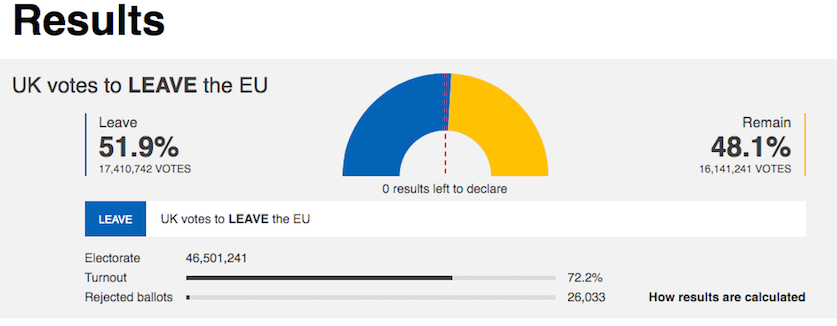
My blood pressure as measured soon after the June 2016 Referendum on leaving the EU


On a day in June 2016 I was the subject of one of many research projects into healthy ageing at QE Hospital 
"Your blood pressure's a little high" said one of the researchers.
"Seriously?"
She showed me her readings; in the hypertension range.
"That's odd. That's never been a problem for me"
"Well I need to point it out. Check with your GP"
"Gosh Emma, do you think I'm stressed by the Referendum result?"
"Could be." she said "We'll see how your blood pressure looks on your next visit next week"
Sunday lunch with the family - Oliver, Amy, Guy, Hannah and Linda. - weekend after the June 2016 Referendum. New potatoes from our allotment in Handsworth 

Three and a half years after the Referendum vote to leave the EU,  a friend posted on her Facebook page:

1st January 2021. MM: I wanted to write a Happy New Year message but ended up writing this instead. If you hate doom and gloom please scroll by. This is an X-rated post.
And so it comes to pass (weeping emoji's). We have woken up today no longer able to call ourselves EU citizens. And I am unspeakably sad. I don't know whether, in the long run the UK, will be better off in or out. I don't know whether there will be queues in Kent or food shortages in Tescos. But I do know that all of us who value that delicious sense of tumbling into a new culture, a new language, a new landscape have been left immeasurably poorer by the UK's decision to leave the EU. 
I speak for all of us in here who one fine day, wearing but a pair of skimpy shorts and an old T-shirt, clambered onto a charter at Gatwick to some random destination in Greece and drank so deeply of the delights of this beautiful country that we mysteriously find ourselves decades later sharing our (zoomed) βασιλόπιτα with children who speak two languages, in-laws who have never set foot on the green shores of Britain and Greek friends and colleagues who we hold dear in our hearts. 
We are heartbroken that the next generations will not know this. Those who already made it out of the gate will have their rights protected. The (richer) retirees will retire. The well-heeled will inevitably find a way. Some of our young will no doubt make it through the portcullis even after it clangs shut. But please allow us to shed a tear on this inauspicious day for all those who won't, and will never come to know what we know.

SB: Happy New Year, M. In your eloquent lament you write "But I do know that all of us who value that delicious sense of tumbling into a new culture, a new language ..." I know so well what you mean. I didn't so much 'tumble', given that my Dad - divorced post-war, then married to Maria in the lovely little church of Panagia Kapnikarea off Syntagma in Athens in 1949 - first invited me to beloved Greece when I was 16, during Easter 1957, and I, on my occasional stays with the 'Greek' side of the family in England was used to hearing my dad and Maria speaking Greek. I never looked forward to those brief childhood visits on which my mum insisted. Too much shouting and disorder and kissing and hugging among unruly half-siblings, though I liked being entrusted with a glass of wine now and then. It took four days, travelling alone on the Simplon-Orient from London, turning Balkan-wards after Venice, to get to Larissa where in the middle of the night this callow English youth, with a compartment to himself, was interrupted by a wedding party bursting in, joyfully noisy. I - a foreigner had the nerve to glare at them and ask them to be quiet. Instead of taking justified offence they laughed uproariously "Oh Englishman!" and had the effrontery to offer me a drink which I turned away. A few hours later I arrived in Athens…There, at dawn, on a low platform, the Greek side of my family awaited with joyous greetings and many disturbing hugs and kisses. Through a tiny window from the loo of Yia-yia's flat in Kolonaki I saw the Parthenon - no longer the familiar schoolbook illustration, the real place!.. ... ... Well! ... Two weeks later, when I departed from Greece, all had changed; changed utterly and forever, but that's another story, a good one. That first visit over 60 years ago was the start of an affair that I will take to my grave. You could say that 'some enchanted Easter' long ago, I saw Greece 'across a crowded room.' Even now, in dear Ano K, strolling or cycling on a small back road I hear a family, perhaps on a Sunday afternoon, laughing and talking under their veranda, and I'm possessed by an impish impulse to stroll over "Excuse me! Με συγχωρείς. Θα μπορούσατε να είστε λίγο πιο ήσυχοι!" They will laugh indulgently, even ask me to join them. I know that the UK leaving the EU can never efface - nor portcullis block - that 'delicious sense of tumbling' you describe so beautifully and which I still feel over and over when my old feet touch the soil of mother Greece.

James S, neighbour on National Opposition Street below our Democracy Street in Ano Korakiana: it’s exactly that Simon! The total mind opening of travel that Brexit seems so ignorant of!

Hi James. For people who have learned - or, in my case, taught against my will - to be happy the new border bureaucracies may bring temporary impatience, frustration and even misery, but love finds a way. I 'tumbled' (M's good word) into Greece long before the UK joined the EU, when post-war restrictions enveloped all Europe, customs examined our cases spilling out our belonging, transfers of cash were strictly limited. Through Yugoslavia I saw how the communist guards abused their own citizens, fellow passengers trying to cross their border (they were scowlingly deferential to me on my dad's diplomatic visa stamped in my dark blue passport). I was alerted by my father about the dreadful psychic scars of occupation and civil war in Greece - things that could not be spoken of, better forgotten. I've learned to accept - or, at least, to live with - queues, rationing, paperwork, inconvenience. I've been abused by immigration on arriving in New York, waited hours to enter Canada and Australia. I suspect from now - COVID restrictions notwithstanding - there'll be a couple of years of 'pain' as this bizarre event is sorting in the wash, but far worse pains have been surmounted in the past. I voted Remain, but I know other people voted to Leave the EU. who enjoy other lands beyond the English Channel as much as I.
The mainland of Greece across the Sea of Kerkyra from our home in Ano Korakiana 

I know about inventing paradise. Byron, Μπαϊρον, who came first in 1809 called her 'the wondrous land'; sailed to Greece in the brig Hercules in 1823, arrived at Kefalonia on the 4th August, to die at Mesolóngi eight months later. I first came to Greece, to Athens, by train via a three day stop in Venice - walking for hours, entranced, along damp paved alleys - in 1957, but in 1962 I sailed to Greece from England with a friend, my skipper Chris Jameson. In July we left Messina in Sicily. The first morning of our two day crossing on Danica ...
Danica
...bouncing and swaying on a swift etesian reach; came on our reverse, a sleek Greek frigate cutting smoothly through the cresting waves, heading west. In return to our salute, we saw a young sailor in perfect whites, almost sprinting to the fantail to dip her flag to us. My chest swells at the memory of seeing that lovely ensign falling and rising again in the seconds of her passing as though official Greece was saying "yasus" - just to us. 
That was 59 years ago. After that swift reach from Sicily. sunrise on the third day, the good wind abandoned our small vessel on a limpid mirror. The moment remains as dreamlike as at the time; glimpsing the forms of land melded to white sky and coppery sea - a way to the mainland of Greece between Kefalonia and Zakynthos into the Gulf of Patras. Next morning we made Byron's landfall. Shapes - north and south - that appeared and disappeared and might have been no more than dawn shadows - though we knew otherwise - lay before us. All day, in zephyrs, we sailed towards them, passed between, and anchored off Killini in Ilia where we rowed ashore to be sat at a table (my memory is flawed by so many photos of Greek tables and chairs), offered ouzikis and welcoming curiosity, before a polite policeman - reproached by our hosts - "po, po, po" - told us we were supposed to clear at Patras, but "please finish your conversation." 
170 miles from Piraeus and the city to which I’d determined to return.

I spent, as I recall, my first twenty five years in a fog of schooled and inherited insensibility, almost impervious to the wisdom of generous parents – English and Greek - who probably knew that, as perhaps for them, only time would tell me. 
In 1968 I was with the Greek side of my family again. They’d flown on to Greece. My dad wanted a car while we were there. Over four days I drove his small Hillman through Belgium, Germany, Austria, Italy and by ferry to Greece, sleeping one night in a field above the sea, a few yards from a winding road through olives. From Piraeus I took another ferry to join the family in Aegina. We returned to Athens for a day, where, with my diplomatic family, I attended a house party somewhere near Vouliagmeni, hosted by a man whose bald head I glimpsed for a few seconds, Colonel Stylianos Pattakos.
It was only in Detroit, married a year later, meeting American Greeks - and Greek exiles from the Junta - that I grasped the discomforting notion of ‘sides’;  of Greece as a polity, of animosities and moral positions, words and facts and opinions that left the paper-fragranced sentences of my superlative education – in one ear as others' thoughts, out of my mouth as words for conversation and essays, and out of the other ear, unedited. Though it seems so in memory, I could not have been quite that one-dimensional, except perhaps at my mother’s breast. My CV, by the time I was thirty, was enough to ease me into academia where, mostly fuddled, time did begin at last to tell and I began to listen.

It was 25 years before I came to Greece again.
After many years, return to Greece in 1995 with Amy, Linda and Richard

Standing in the cockpit of our Airbus (full of screens and no joystick) where passengers could – pre-9/11 – still be invited for a pilot’s glimpse of the world ahead, I stood behind my family, as with Linda, Richard and Amy, we flew high over the border of Greece; able to see, to port, the glow of Thessaloniki; ahead the greater glow of Athens; to starboard a moonlit Ionian Sea and far below, in inky blackness, clusters of tiny glittering diamonds - villages in the foothills of the Pindos.
“Children! There’s Greece”
In the dim cabin tears welled from my eyes with the delight – and the idea – of sharing ‘my’ Greece with my wife and children. I could not speak for a moment, and Linda, more English than I, was irritated at me. 

A third generation in Greece - our Amy with her cousins Natasha and Anna at sandy Pylos in 1995

*** *** ***
A decade later we spend months in Ano Korakiana on Corfu. Πέρα δόθε:

Winter 2009: The sun came up into a cloudless sky. It’s so bright and hazy, but for the crackle of awakened logs I’d mistake this winter morning for summer. Yesterday as we pottered on tasks I became so chilled I began to sniffle. By evening I was squeezing fresh lemons to mix with honey to warm in a glass. We’d been down to CJs Bingo Quiz in the evening, me in two under vests and long johns, to struggle with questions that were almost entirely about things in films and TV series. Our friend Trish, in CJs after cold day’s work cleaning charter boats at Gouvia, won. She was playing with Sally who runs CJs for Chrissie and John, also there - the latter cursing merrily to the delight of all. Trish is married to Dave, met at Ipsos Harbour in the first hour of our arrival in September 2006, who first raised our spirits as we surveyed Summer Song’s worn and musty interior, wondering if we’d been sensible buying her on ebay, sight unseen. “We’ll make a list” he said “Norman and Pauline loved that boat and she’s worth it”. And so she was and is. Dave keeps an eye on Summer Song – not only on the boat but also on the harbour politics that allow us to keep her safely berthed there. C remarked from far away on the Pacific coast. “Enjoy Corfu. Greece, no matter what, is a beautiful place to wake up in the morning" but I’m as superstitious as any atheist about reflections on the rewards of fortunae. 
'Greece, no matter what, is a beautiful place to wake up in the morning'
The names of people who rejoice in their luck are selected by a divine factotum and placed face-down on a gilded dish that passes around the table on timeless Olympus. Amid merriment, each God selects the human whose card is to be their post-prandial plaything. Here a brilliant climber says “There’s a window for the summit at dawn”; there a mother says “Our child is so perfect”; and over there a father says “There are police officers, a man and a woman, at the door. Must be about those parking fines”; and here a wife who says “no need to hold the ladder darling. Go and make us a cup of tea”; and there, in the deep ocean, an exhausted sailor says “We’re through the worst” but see this one, here’s a gem “The war will be over by Christmas”, but what about that popinjay Confederate General who said “They couldn’t hit an elephant at this dist…” Far below a fisherman on the Peneios and a woman waiting for a train at Litochoro know they hear, not the rumble of endless thunder reverberating among the peaks of Olympus, but laughter.
Good Friday picnic on a shore in Corfu. A fourth generation in Greece
In England in early January 2021 Greece seems remote - for all the continued contact via the social web. Here in the inner suburbs of Birmingham Lin and I are locked down under Tier 4. I am not to go further from our front door than our front garden. Linda - under 70 - can shop. Our neighbour, J, 'allowed to meet one other person outside', sat for a chat with me by our porch and passed the time of day. He works for Fareshare, one of the neighbours who've offered to shop for us if necessary.
Covid Tier 4. Restrictions from 00.01 Thur 31 Dec 2020
The weather is intrusively grey, wet, creating a world of pervasive sogginess that sticks to shoes hands and sleeves; which I can't avoid trailing into the house when I bring in logs, damp and stuck with rotting leaves, slimy too. I dry the wood in front of the stove before we can enjoy their warmth. Kindling I've even put in the oven for 30 minutes to get things burning in the mornings. 
Before the latest lockdown was announced I could cycle in and out of town, visit the rag market, buying a baked potato mashed with butter, salt and pepper plus a cup of tea, or a butter croissant and filter coffee eaten stood warily in on New Street. Wednesday morning I called in at the Birmingham Donor Centre in New Street to give blood. The first drop during the preliminary test for sufficient iron wouldn't dawdle down the green liquid filled test tube as it's meant, but Sarah - name off her tag - tried an alternative test. ""Yup, that's fine" "Phew". I lie in the plastic chair arm pierced skilfully almost painlessly to extract my very common 0 positive blood, but after a few minutes I'm being ministered to by three, no, four, nurses, urging me to squeeze my fist and wiggle my toes, as my blood's not coming out. "Oh no!" I think, but then "There we go! Fine now" says Margaret cheerfully. Privately I suspect the needle wasn't accurately placed in the vein.  After 10 minutes, I'm on my way, exiting through a world of masked donors and masked extractors, making another appointment in March - if I'm not breaking rules. Once home I get a text message thanking me for my blood. 
From Greece we've brought a lemon from one of our citrus trees, which, after two years barren, has fruit - - a generous load - following scale insect infestation affecting citrus, and now, other shrubs and trees, all Corfu. 
Perhaps our treatments have begun to work, as recommended by Sophia and Niko, neighbours, and Evangelina at the new Tzoulou garden shop. She recommended we spray a mix of Sivanto (2.5 m/l to 5l water) and Electro pesticide (ditto mix), to kill, and by resting on the leaves, break the life cycle of what she calls the ‘black spiny insects’.   
A lemon from Corfu back in Brum
Checking lemon leaves for citrus scale insects

*** *** ***
With some poignancy I travel 10 years back in my time machine to Ano Korakiana in February, when the village celebrated its annual Carnival ... February Carnivali, brightening the greyest chilliest and wettest day of the year. Part of the band in motley, military, priest and police, made 'oompa oompa' with drum and fife. The king enthroned, priapic with crown on his heart-covered float, accompanied by courtiers, male as female and other reversals of carnival, paraded upwards preceded and trailed by bouncing umbrellas, a phalanx of pink parasols, women in silvery wigs dancing up to the start of Democracy Street, twirling round a ribboned pole amid whistles, bangers and music.
Stopping and starting the procession gathered more people – some in masks, a long nosed Pinocchio, some as they were; streamers and confetti thrown from windows, hugging and greeting, planned and spontaneous, impossible not to smile and laugh in the chill wet. Up we went to the bandstand, round the carpark and back down the street in rain that poured from low cloud obscuring views to the sea. Nico and Sophia, standing by their front door, invited us in from the cold and wet for coffee and rich chocolates to meet their family.
“All the news is bad”
“Indeed it is” we smiled.
At 7.00 two hundred or so were gathered in the upper room of the Farmers' Co-op on the lower road to watch a demonstrably hilarious dialogue between two women we didn’t understand but clapped with everyone else. Then a formal reading by a top hatted master of ceremonies naming people in the village to theirs and everyone else’s amusement and applause.
Then a more disposable carnival king was carried out to the road and burned, with a bit of diesel to overcome the rain. Everyone began moving through a small door down short steps to the lower room to sit at long tables under a beamed roof. We were ushered to Leftheris’ family where dishes had been brought to pass with village wine in jugs, water and cola – lamb, pork, salad, cheese pies, olives, bread in chunks. As we tucked in along with every age, the dancing started with a band that created the mood of the evening, responded to people as they danced and sang – dances for couples became threesomes, foursomes until chains of us were stepping forward six steps one way, two back in that way that can’t help look elegant because the clumpers like me are carried hands held in the ring, six right, left two, unpausing until well after midnight the band made up of two guitarists, lead singer, keyboard and lighting mixer – played unceasingly. The dancing space was seldom empty. If not filled with pairs and chains, it was taken by men and women dancing solo amid clapping support, nimble and beautiful. I danced with Lin and in the circles – like Scottish reels.
“We all drank a lot of wine” said Katya when I saw her at the shop a couple of days later. As at a family wedding, wine added to the enjoyment; none crass. There was a break in the music around one in the morning. I thought we were going home, but after a few minutes, the room filled with lively chatter, the band came back with renewed energy. It wasn’t only the young on tables, though one couple danced with especial virtuosity, the young man - minutes previously in ballet skirt, tights and pigtails now entwined with a young woman who’d begun alone shivering her hips in the Arabian style. This duet had others joining in. The whole room floated on the music and swayed with the singing, happiness making us all even more good looking, and some especially handsome and beautiful. As the band said its goodbyes, an older lady led the Ano Korakiana song singing two line verses, unaccompanied, the chorus picked up by the moving circle. We walked home just before three-o-clock. “I’ve so enjoyed myself” I said “Me too” said Lin.
The song to the dance is a paeon to Corfu "Kerkyra, overflowing with greenery and beauty...into each and every corner and the seashore..." a list of all the green island's attributes 

Saturday, 17 August 2013

How depressing and incredibly awful...or is it?

The Irish Times, Tue, Aug 13, 2013 by a friend in Corfu - Richard Pine:
Lanziger's Hitler as Teutonic knight 1938
A report in these columns in July that an Italian senator had referred to the black Italian minister for integration as an “orangutan” should not give readers the impression that xenophobia is exclusively Italian. After all, it was the Greeks who, unwittingly perhaps, invented the word, even though up to now foreign guests (xenos) have been honoured and welcomed. But also last month, Nikos Michaloliakos, leader of Golden Dawn (GD), Greece’s neo-fascist party, referred to two Greek citizens, Giannis Antetokounpo and his brother Thanassis (sons of Nigerian immigrants), as 'chimpanzees'. Giannis is a rising star in basketball. Last year a member of the highly successful Greek national basketball team, Sophocles Schortsianitis (Greek father, Cameroon mother), was also denounced by another GD MP for being insufficiently Greek. “Greeks have never been black” the GD leader proclaimed. He should read Martin Bernal’s Black Athena, which argues that ancient Greece, probably including its genetic structure, derived much from Africa and the Middle East...But racism is not GD’s only policy. It also pursues anti-gay, anti-Semitic and anti-Muslim policies and activities, encouraging arson attacks on synagogues and mosques in an effort to purify Greece of all non-Greek elements. In doing so it has secured 18 of the 300 seats in parliament – 6% of the total vote, which in Ireland would give a neo-blueshirt party 10 Dáil seats. Golden Dawn is in direct political descent from the military junta of 1967-1974, which it reveres. Its symbol is a version of the swastika, members give the Nazi salute, deny the Holocaust, and at a recent rally they sang the Nazi marching song Horst-Wessel-Lied, which is banned in Germany. Hitleresque harangues against Jews have reached the point where Michaloliakos lays the blame for the world economic crisis at the doors of an alleged international Jewish conspiracy, calling Jews “the absolute evil”. Vigilante groups in the cities pick on immigrants such as Afghans for beatings, to which the police (many of whom are GD supporters) turn a blind eye. At the GD food kitchen for the needy, production of Greek identity papers is required – or a beating is likely to be administered. At a time of austerity, with everyone feeling the economic pinch, it’s not difficult to understand why Greeks should feel some resentment at the huge scale of legal and illegal immigration through Greece’s porous borders. But the idea that you should not be in Greece at all unless you have four Greek grandparents is untenable. Perhaps few in Greece would argue with a “Greece for the Greeks” slogan, but to suggest that all foreigners should be expelled does not sit well with the concepts of democracy or inclusivity, to say nothing of EU laws. If Antetokounpo had been white and of Finnish origin rather than Nigerian he might not have attracted the “chimpanzee” insult but he would, by GD’s standards, be ineligible to represent his country. It’s not all that long ago (1985) that the then bishop of Limerick stated that you could not be Irish unless you were Gaelic, Catholic and nationalist. If a neo-blueshirt party had the power to adopt GD-style policies, it would call for the expulsion of public figures such as Paul McGrath, Simon Zebo, Kevin Sharkey, and Seán Óg Ó hAilpín, while former TD Moosajee Bhamjee and current minister Leo Varadkar would also be on the next boat. Public support Under these rules, Éamon de Valera could not have made the cut for a place in “Irish-Ireland”. In Greece, former prime minister George Papandreou, with an American mother, would be out, despite an impeccable political ancestry. Before the 2012 election, Michaloliakos stated “we are outside the political system”, indicating his disaffection from current democratic processes. GD is no longer “outside the system”. Public support is increasing; the party, according to opinion polls, is on 10 per cent, which would give it 30 seats in parliament. One citizen echoed Michaloliakos when he pointed out that GD is “doing what the politicians should be doing. There’s a hole, and they fill it” – referring to GD’s vigilante presence on the streets. In a small village in Corfu, 44 people voted for GD...
May 2012 and June 2012 General Election poll in Ano Korakiana - the 5.78% for GD in May referred to 44 votes. Across Corfu, as a whole, votes for GD were even higher - 7.27% in May; 6.56% in June (turnout ave. 57%)
...far higher than the national average and an indication of local frustration. Subsequently, an English resident of the village was threatened by a neighbour. The fact that someone whose judgement one respected and whose friendship one cherished could give his support to an out-and-out fascist party is a measure of the disenchantment felt by many Greeks with mainstream politics.
My son was in the centre of Birmingham with his camera on 20 July and took pictures of the English Defence League (EDL) marching.
EDL march in Birmingham ~ 20 July 2013 (photo: Richard Baddeley)
"Most of them seemed to be very angry. Spoiling for a fight." he said
"The same people who get thrills being violent at football matches? England scares them"
"I saw them in their coaches when they were leaving. Fired up. Mouthing through the windows"
"They must see so much to hate. The present is confusing."

This from Democracy Street, September 2012
The news as I already knew is miserable. Samaras interviewed talking in circles about liquidity and Tsipras promising to unite the left against austerity and negotiate a new contract with the EU and the Justice Minister, in a small footnote story, ‘considering’ a tougher line against racism after men in Golden Dawn T-shirts meted out street justice to non-Greek market traders who couldn't or wouldn’t show permits in Rafina and Mesolonghi, posting pictures of themselves smashing stalls on YouTube. We had our own small hint of such futile xenophobia on a walk through Venetia the other evening. A dog snarled and barked at us through a porch gate near the last corner of the village as we strolled by. The owner in a yard opposite and just above hurled curses at us for “threatening my dog with a stick” – mine or Lin’s walking stick. “No” I said “Your dog always barks when people walk by” This produced a stream of invective - ‘ μαλάκα’ or ‘wanker’ being preferred. “So is that the name of your dog?” More cursing “Don’t make me come down” “Come down but how about a bit of filotimo?” “Fuck filotimo. Why don’t you go back where you come from?” “But we’re from here” I said daringly. We strolled on, man and dog snarling. Later in town Richard P observed “Hm. That’s probably identified one of your Chrysi Avgi voters in the village” Bad eggs in villages are everywhere - not just Greece. I used to be bothered by them at other times in other places. Now it's usually water off a duck's back. This is the first example of ill-manners I’ve come across in Ano Korakiana in the five years we’ve been here; less a sign of the times I suspect, than a kind of fixture in any community - like Jud Fry in Oklahoma (or George Crabbe's Peter Grimes in Aldeburgh) the 'lonely misfit in a cast filled with wholesomeness and charm.'

Blokko in Kokkinnia in Athens on 17 August 1944

Walt Disney's WW2 animated propaganda - Education for Death - for the US government on the making of a Nazi...
In the village Lin takes her paintbrush to a swastika and filthy eggvolk icons
Reading about the past is a small antidote to the maxim that those who are ignorant of history are condemned to repeat it. I'm chary about being too extrapolative as to the trajectory of Europe's dark history. I'm not sure that Golden Dawn for all their nostalgic uniforms, ugly songs and salutes and seats in the Hellenic Parliament are more than a despairing and desparate flash in the pan. I've not yet met an intelligent or decent person in Greece who's got time for Χρυσή Αυγή, even as some may casually complain about numbers of immigrants or more particularly, in Corfu, about 'Albanians'. Richard's wrong to write, in his Irish Times piece, that the rude man we encountered one evening in Ano Korakiana is someone whose judgement 'one respected and whose friendship one cherished' The man provokes head touching among our neighbours. We're sorry for his stir-crazy dog - made vicious by circumstance.

No-one knows the history of the present. It's easy to be confused by history written too soon. We're arguing in some quarters about Thucydides' account of the Peloponnesian Wars...whatever malign forces coil us - brain-rotting mass media fuelling global consumerism encouraged by modern merchants of doubt under the panoptic gaze of flaking America, counterpoised to the mafia state of Russia and its satellites and the uncontrollable growths of India, Brazil and China....the story of the Third Reich (I'm reading Michael Burleigh's history again and Jan D urges me to start upon Richard Evans mighty trilogy on the same subject) can teach, but only so much. Anyone who wants to try to understand the present is at conceptual risk. It's a start to embrace the fable of those chained men in Plato's Cave, mindful of the strangulation of Laocoön and sons. Burleigh says his book "deals with the progressive, and almost total, moral collapse of an advanced industrial society at the heart of Europe, many of whose citizens abandoned the burden of thinking for themselves, in favour of what George Orwell described as the tom-tom beat of a latter day tribalism"
The most depressing thing about Golden Dawn, but also a measure of the place where  the effects of austerity has had its highest profile, is that the most conspicuous and democratically successful of European neo-fascist groups has found a home in beloved Greece, as have many others on attempted journeys from wrecked war-torn economies further east. I'm well aware of Greece's reputation for corruption in the highest parts of its government and church. Like many who know and study the country where they spend much of their lives, I'm educated in that criticism. Quiz me on the history of modern Greece - on the Ελληνική Επανάσταση - the War of Independence, on the Big Idea - η Μεγάλη Ιδέα, on Ἡ Ἀνταλλαγή - the population exchange between Greece and Turkey in 1922, on the Great Division - Εθνικός Διχασμός - between Venizelos and King Constantine, on the terrible Greek Civil War - Ελληνικός Εμφύλιος Πόλεμος, the Stone Years - Πέτρινα χρόνια - and, on its own, the modern history of the Ionian islands, and Corfu in particular, during the British Protectorate.
Little can shock me about this land I love; a place whose countenance is part of me...as my g.g.grandfather said "except the blind forces of nature, nothing moves in this world which is not Greek in its origin" and Auden "had Greek civilisation never existed, we would never have become fully conscious" and Bertrand Russell "the legacy of Greece to Western philosophy is Western philosophy"and Shelley "her citizens rule the present from the past"
Yet oddly enough this enveloping legacy, once examined, can place a different light on my philhellenism; on the depth of my feelings for the wondrous land...
Byron wrote to friend in the year before he died in Greece: '...I did not come here to join a faction but a nation, and to deal with honest men and not with speculators or peculators, (charges bandied about daily by the Greeks of each other) it will require much circumspection to avoid the character of a partizan, and I perceive it to be the more difficult as I have already received invitations from more than one of the contending parties, always under the pretext that they are the ‘real Simon Pure’. After all, one should not despair, though all the foreigners that I have hitherto met with from amongst the Greeks are going or gone back disgusted. Whoever goes into Greece at present should do it as Mrs Fry went into Newgate - not in the expectation of meeting with any especial indication of existing probity, but in the hope that time and better treatment will reclaim the present burglarious and larcenous tendencies which have followed this General Gaol delivery..."
My love for Greece is charged with sentimental memories of my own connections, the adventures of a happy traveller who's been visiting the country since arriving there one spring morning as an impressionable 16 year old, but without the talent of a Henry Miller, a Durrell, a Kevin Andrews or Leigh-Fermor - but equally seduced by Greece and the Greeks I met and the places I saw, the sacred Acropolis, Olympia, high Delphi almost free, in 1957, of fellow visitors, Nauplion, Epidavros, Corinth; the things I did, Saturday Easter procession in Athens, meals that ran into hours where I'd normally have been long in bed, and with my cousins and Greek family in Kifissia for my first lamb roast, and five years later, in 1962, sailing from England to Greece...
On Danica in a calm off the southern Peloponnese
 ...via France and Italy, across the Ionian Sea to land at Killini, cruising slowly through the Gulfs of Patras and Corinth, threading the deep gorged Canal into the Saronic Gulf, arriving in sweltering Athens; visiting islands, sailing below the great capes of the Peloponnese - Malea and Tainaro and Akritas - and years later with the passing of the stone years returning to Athens with my closest family...

Amy with her mum in Athens
Richard at Venizelos on the way to Corfu
Amy with Natasha and Anna, her cousins, at Methoni
...to travel on a day long drive from Athens to Pylos crossing the ranges that divide the Peloponnese - Parnosas, Taygetus, and the lower mountains before the coast above Pylos and Navarino. Which islands? Cythera, Zakinthos, Cephalonia, Paxos in the Ionian Sea; in the Aegean, Aegina, Hydra, Kimolos, Mykonos and more...
Kymolos
With my brother George in the Aegean
Civil War - Nikos Engonopoulos 
My good fortune has been that my feelings for Greece have been shared by Linda, who might have decided the place was alright for one holiday but instead lives with me for months of the year on Democracy Street, but why should I juxtapose this rich almost lifelong experience with the contempt I have for the rise of the eggvolk and the shame I feel at this party's success in the assembly of Republic and on the streets of Athens and in too many other settlements across the country? Such a comparison is ridiculous. A proper one would be with the history of Greece, ancient and modern, with its great democracy that excluded women, with an economy driven by slavery, with its endless politicking, its ostracisms, its feuds, and many wars - civil and national - its massacres, murders, assassinations, executions, its betrayals, traitors, demagogues, tyrants and bullies, and that's just ancient Greece. Imagine too the hideous violence and atrocities of the War of Independence from the Turks, still almost impossible to describe to Greek schoolchildren, and the great population exchange and the bloody failure of the 'big idea' to recover Constantinople, capital of Byzantium, and the heartlands of Asia Minor, Cappadocia, Ionia, the Pontus and the former Russian province of Kars in the Caucasus and Bithynia, Nicomedia and Eastern Thrace - events still hardly mentionable. Then the occupation with its collaborators, informers and traitors and then, some say, even worse the Greek civil war of 1946-1949...and the coup of the Junta and their cruelties yet to come...
Picnic on Execution Island
POEM BY NIKOS ENGONOPOULOS 1948
this age
of civil strife
is no age
for poetry
and such like:
when something is about
to
be written
it's
as if
it were being written
on the other side
of death announcements
which is why
my poems
are so bitter
(and when - in any case - were they not?)
and are
- above all -
also
so
few
Being sad and fearful about contemporary Greece is understandable, what's foolish is to be blinded into thinking that what is happening here is out of the ordinary - for Greece. What's short-sighted is to assume that those wonders, with which old Greece illuminates our present, were not forged amid enduring proportions of good and evil.

*** *** ***
Me with Jim
I got a letter - a sort of a slightly dedicated form letter - from the Site Secretary of the Victoria Jubilee Allotments warning me to cultivate my plot...I hoped I'd never get one of these, having known others getting them prior to a council 'notice to quit'. It's a long drawn out process especially as allotment take-up has slowed right down as the urban middle classes (that includes me) collide with the reality of what's involved in running an allotment and growing their own vegetables.

Quick reply:
Dear Gill
I fully accept your ‘wake-up and get gardening' caution dated 12th August 2013 just received.
The state of the plot  on the Victoria Jubilee that I share with my wife has indeed been a cause of concern to us and obviously to the association committee..
It’s an explanation - not an excuse - but we have been preoccupied with the estate of my late mother who died recently.
Things are now becoming less busy on that front so there will be more time to get on with the important business of cultivating Plot 14.
We appreciate the warning and you and your colleagues' work on the site committee.
Kindest regards
Simon
I'm humiliated but rightly so. These sort of complaints run through my life. I first received them at school - reports, summons to the teacher - later it would be a friendly chat or a letter from somewhere; at university it would be a warning to get something published, expand my research or do more fee-earning work. By and large I've found these prods vexing but ultimately useful. I have a procrastinatory rather than a slothful temperament, too easily led away from the proper priorities. It's why I like Jackdaws.
Jackdaws enjoy playing with shiny objects and other small household items, which gives them a reputation as thieves. My impression is that they are actually always checking out whether this or that trifle might be suitable for a nest. Konrad Lorenz' sketches, in 'King Solomon's Ring', where he has a chapter on the birds, capture what I noted in Jim better than any photos I've seen. The Jackdaw mentality in humans refers to a tendency to collect trivia in the fruitless hope that all may come together to explain the meaning of life...24/5/07
So I'm working harder on the maelstrom plot, entangled in couch grass, covered in meadow grass and flowers, things my friend Robin - also served a notice - argues are benign and useful and libelled by those who demand 'cultivation'. He's right of course but talking rubbish.
Fighting on Plot 14
The other evening I was cycling through the allotments in dusk after three hours digging when I was stopped by Vanley on the edge of the beautifulest plot on the whole site. I'd heard sounds, possibly music, and twice clapping, but continued my labours.
"Come Simon" said Vanley leading me through the maze of paths that neatly divide his many vegetables, some burgeoning, some started, some already cropped.
"How do you get such a long stroll onto one plot, Vanley?"
We came to a pressed earth bower protected by a temporary piece of white tenting slung from uprights and part of the hedge, low benches around and a log fire smouldering and the remains of a meal of unleavened bread and cooked vegetables.
"Sit Simon"
"I regard this as a disgrace" I said "sitting round enjoying yourselves"
"Have some elderflower champagne I've made, picked in the Sandwell Valley" said Jeevan offering me a bottle which I prised open to a satisfying hiss
"Share?"
"Hmmmm. Not sure I want to"
The bottle passed around. A delicate fizzy drink, most pleasing after my digging
"Thank you so much for inviting me"
One of the other gardeners showed me a film on his smart phone of one of Scylla's young boys playing the fiddle magically - a little concert I'd missed, tho' catching the applause.
"He'll go far" said one.
As people tidied up I was asked more about the old campaign to save the allotments. I spoke of the country lanes that used to run through the site, with doors off them to people's gardens.
"I tried, we tried, to get the developer and the council to ensure they stayed but they were cleared"
On a path between two hedges on the old Victoria Jubilee Allotments


"So what's happening about the playing fields that are supposed to be laid out by the developer"
"There's a site meeting on 5 September with people from the council and Persimmon Homes. I'm asked to join that, so I'll learn more"
Discussion turned to difficult topsoil on the VJA
"Yes I know, lots of rubbish, plastic, metal, bricks"I said "but if Vanley and others can make plots like this, I can't make excuses"
"But I'm digging a plot over here" one pointed to the neighbouring piece of ground "and a spade's length down I'm hitting building rubble"
"I think the developer flattened the site and then when they'd finished levelling and completed the houses they bulldozed a pile of earth and rubble and all sorts including their works site, which you can see on Google maps, and called it topsoil."
"Don't get me wrong. Some of its good stuff but it needs a lot of work"
I made a pact with myself about more preparing of the earth on Plot 14.
"Do you think I need more manure?"
"Good idea and more compost"
 I was getting encouragement like Mole from Rattie and Badger and other characters circled around me from The Wind in the Willows. 
I cycled home happy in the dark with a bag of chard pressed on me by Vanley.
*** ***
Yesterday was the closing date for bids on the sale of Brin Croft, under a month since Lin and I cleared the house and tidied its grounds. Phiddy, our estate agent phoned to say that, out of several offers, one for both house and lochan was especially worth accepting.
Brin Croft in winter

*** *** ***
And tho' there may be trouble ahead let's face the music and dance...happy news from Jim and Maria Potts of a three day panygiri in Vitsa...and in Ano Korakiana...

"...μέχρι το Τσιρίγο"
Γράφει ο/η Κβκ   
18.08.13

17august2013c.jpg
17august2013b.jpgΑπό «το Καποσίδερο μέχρι το Τσιρίγο» μας ταξίδεψε χθες το βράδυ το Χορευτικό τμήμα της Φιλαρμονικής Κορακιάνας, σε μια όμορφη χορευτική παράσταση στην οποία τα τμήματα του χορευτικού εναλλάσσονταν, ταξιδεύοντάς μας από νησί σε νησί του Ιονίου, υπό την άοκνη καθοδήγηση της «δασκάλας» του τμήματος, Νίκης Κεντάρχου και με σημαντική τη βοήθεια, όπως αναφέρθηκε, της Ντίνας Σπίγγου. Από την Κέρκυρα λοιπόν, στη Λευκάδα και από εκεί έως την Κεφαλονιά, τη Ζάκυνθο και τα Κύθηρα, με χαρακτηριστικούς νησιώτικους χορούς και καντάδες, αλλά και μία αναφορά στην επτανησιακή μυθολογία από το παιδικό τμήμα, με φόντο ένα λιτό και όμορφο σκηνικό, που επιμελήθηκε η Κατερίνα Φακιολά.

Την εκδήλωση προλόγισαν ο Πρόεδρος της Φιλαρμονικής Σπύρος Σαββανής, η Δώρα Μεταλληνού που αναφέρθηκε στην ιστορία του χορευτικού τμήματος και η υπεύθυνη του τμήματος Ηλέκτρα Μαρτζούκου, που στο τέλος της εκδήλωσης απηύθυνε κάλεσμα για τη διάσωση της παλιάς κορακιανίτικης ενδυμασίας…
17august2013a.jpg

Σειρά έχει τώρα, την Κυριακή 18 Αυγούστου 2013 το βράδυ η Μπάντα…


17august2013d.jpgΥ.Γ. Όμως, από το σαββατόβραδο, δεν έλειψαν και άλλες «εκδηλώσεις», όπως τα γενέθλια της μικρούλας Κωνσταντίνας Μπόγδου και του Βασίλη Τσιριγώτη στις Μουργάδες, που έσβησαν ως είθισται τα κεράκια των χρόνων τους ή το πάρτυ που οργάνωσε για μια ακόμη φορά το «Καφέ Πιάτσα» στην Αρκούδενα, με ωραία «ζωντανή» μουσική, την οποία απήλαυσαν μικροί και μεγάλοι μέχρι τις πρώτες πρωϊνές ώρες (όπως προκύπτει και από τη φωτογραφία)…

Στα απρόοπτα της χθεσινής ημέρας καταγράφεται το «χάκινγκ» που υπέστη η ιστοσελίδας μας, από ινδονήσιους χάκερς, σε ανάμνηση της ημέρας της ανεξαρτησίας της χώρας τους από τους Ολλανδούς, στις 17/8/1945!!!

Saturday, 24 March 2012

"Please finish your conversation"

I love travel but απεχθάνομαι τον τουρισμό. Ελλάδα θέλω να τον εαυτό μου...but this is good.
In just 20 days, Up Greek Tourism surpassed its goal by raising $20,352 from private individuals to fund an advertisement for Greece. About 50% of the supporters were located outside Greece, including Australia, Belgium, Bulgaria, Cyprus, France Germany, Italy, Netherlands, Qatar, Russia, Singapore, Spain, Switzerland, UAE, UK and USA. The project - to make this film and display it on a billboard in Times Square, New York - was managed by Greeks around the world on a voluntary basis, with no budget or hired professionals, crowd-funded. Using LoudSauce as its platform, the campaign was mainly promoted via social media networks, such as Facebook and Twitter showing on Vimeo and Youtube
I know about inventing paradise. Byron, Μπαϊρον, who came first in 1809 called her 'the wondrous land'; sailed to Greece in the brig Hercules in 1823, arrived at Kefalonia on the 4th August, to die at Mesolóngi eight months later. I first came to Greece, to Athens, by train via Venice in 1957, but in 1962 I sailed to Greece from England with a friend. In July we left Messina in Sicily. The first morning of our two day crossing - on Danica ...
   ...bouncing and swaying on a swift etesian reach; came on our reverse, a sleek Greek frigate cutting smoothly through the cresting waves, heading west. In return to our salute she dipped her flag to us. My chest swells at the memory of seeing that lovely ensign falling and rising again in the seconds of her passing as though official Greece was saying "yasus" - just to us. Next morning we made Byron's landfall. Shapes - north and south - that appeared and disappeared and might have been no more than dawn shadows - though we knew otherwise - lay before us. All day, in zephyrs, we sailed towards them, passed between, and anchored off Killini in Ilia where we rowed ashore to be sat at a table (my memory is flawed by so many photos of Greek chairs), offered ouzikis and welcoming curiosity, before a polite policeman - reproached by our hosts - "po, po, po" - told us we were supposed to clear at Patras, but "please finish your conversation."
That was 50 years ago. My 70th birthday is next Thursday, we expect our first grandson in a few days, and for nearly half the year I wake to see Epirus in mother Greece from Ano Korakiana across the Sea of Kerkyra.

Saturday, 4 February 2012

Seeing Aleko

It’s so quiet indoors I can hear the inside of my ears. Outside thunder roams. It’s a dark grey watery day with a wind that’s almost warm gusting from the south, shaking things that don’t matter.
Poking my head out the front door the plaka’s dry but for wet blown in from the sides. Our efforts last October to cover our planked balcony – laid felt, builder’s polythene sheet, fibre blanket, battens around edges and extra patches carefully cut around railing uprights fixed and filled - works for the moment, despite friends’ scepticism.
Cycling along the corniche road to Nisaki to see Aleko yesterday, the sky cleared shining on waves marching against the coast on a sea that’s usually calm, dappled with mercurial breezes, scuffed nap on blue velvet, sliding down from Trompetta - zephrys that can turn into fierce katabatic squalls. Now the Kerkyra sea’s a dazzling wheatfield of regular waves, long rows of white caps marching north, breaking with a deep clunk as they strike the rocky shore, sliding back on tumbling gravel, releasing the iodine smell of sea, blowing incubi away – which is why someone who was a stranger to the English countryside, said long ago - as we rushed by it in a train -  of places where even Romans had been fearful
“The ghosts that walk by day are worse than those by night.”
On the road to Nisaki
The cypress trees twist, the leaves of the olives turn greyer in the wind. I’d checked gradients on an earlier bus ride and so cycled to Nisaki, thus a 15 minute car ride becomes a small expedition - why I like Elizabeth Bennett for her walks:
Caroline Bingley: Good Lord. Did you walk here?
Elizabeth: I did.... I'm so sorry. How is my sister?
Darcy: She's upstairs.
Elizabeth: Thank you
Caroline: My goodness, did you see her hem? Six inches deep in mud. She looked positively mediaeval.
I did the journey in under an hour, with a slow puncture that had me stopping three times to pump, passing through blighted Barbati, its serried empty rental villas and concrete skeletons, shopless in winter, views of the sea for hire and only honourable houses with dried up wooden shutters and finely carpentered doors, sans central heating, air-conditioning, modern plumbing, or a pool, clothed in climbers, overgrown gardens, flaking stucco, unstuck thigh tiles, derelict within and without. At Kafeneon Mitsou where there’s no plasma screen nor amplified beat box, just a small four pane window, between the bar and dexion shelves, through the thick western wall looking over the sea letting in a blast of sunlight, Aleko bought me a beer while I changed an inner tube and found the offending thorn I suspected had, despite earlier inspections, worked through the back tyre.
Καφενέων Μητσός
“Bloody acacia – διάβολος ακάνθινια” I said showing the tiny thorn inside the tyre to Aleko and his companions, halted on their way to Kassiopi, a philologist, a mathematician – like Aleko who lectured for many years at  Edinburgh - and an English teacher. It took me twenty minutes - not to replace the tube - but to fiddle the rear wheel axle back through the derailleur.
The cold water in the kafeneon WC had only a slight effect on my oily hands.
From the kafeneon I went with Aleko a few hundred yards to his home to meet his mum and sister and enjoy mezes in front of a warm stove and recount my memories of journeys to Greece, first by train via Venice and Yugoslavia and later by small boat:
 I sailed to Greece from Messina with a my friend Christopher Jameson as skipper of  a five ton sloop - Danica - in July 1962. We'd left Lymington seven weeks or so earlier. The first morning of our two day crossing of the southern Adriatic we were bouncing and swaying on a swift etesian reach. A sleek Greek frigate cut smoothly through the cresting waves heading west. In return to our salute she dipped her flag to us. I get a lump even now at that gesture - seeing that lovely ensign falling and rising again in the seconds of her passing as though official Greece was saying "yasus" just to us. Next morning we made Byron's landfall. Shapes - north and south - that appeared and disappeared and might have been no more than dawn shadows - though we knew otherwise - lay before us. All day, in zephyrs, we sailed towards them, passed between, and anchored off Killini where we rowed ashore and were sat down at a table and offered ouzos...
 ...and how I came, after not seeing Greece for 25 years, with my family:
...being able to go - as one still could before 11 September 2001 - with Richard and Amy to the cockpit of the Airbus (the one that doesn’t have a steering lever and is flown by buttons) and seeing the mainland laid out in dark marked by the glow of Thessaloniki to the east, the moonlight on the Ionian to our west, tiny jewel-like clusters of villages thousands of feet below and far ahead the loom of Athens. Saying to my children to whom it mattered far less than me "There's Greece"...
...how Lin and I came to be in Corfu. Earlier Aleko had recounted a tale of being on the shore near Lake Korrision where the waves have made long sandy beaches and there, heaving dangerously in the shallows, in waist-deep sea was a container, one of the great boxes that sit on trucks to be transferred via moving gantrys to the decks of modern vessels.
"It must have fallen off the back of a container ship" I said
"I waded out to it and opened the door. Guess what was in it?"
"Whisky?"
"No no that's been done. Whisky Galore."
I made more useless tries. Stationary? Coffins?
"Fridges - two hundred of them"
"We" - he was with a friend - "managed to get hold of one. I cut my hand on an edge. We got it ashore. I was bloody. A kilometre to the nearest road"
"Where were the police?"
"They didn't get there until the next day. Meantime people - there must have been two hundred gathered on the beach - the ones who couldn't carry a fridge were taking trays, drawers - anything they could prise out of them." He told me to ask Cinty as she was on the beach with Aleko as a girl. I wonder how many of those fridges are still around.
*** ***
I wrote to a friend yesterday and included in my letter a summary of my  focus:
Values, whether a means or ends, usually a mix of both, are seldom avowed directly. They may be mentioned, usually not convincingly, for effect; a little like actually saying “you can trust me”. They are skilfully or messily embroidered - verbally and (where film is useful) non-verbally and (where sound is) para-linguistically (tone, emphasis etc) into conversations about what’s technically, legally and financially workable. Film more than transcript especially with current A/V technologies allows pretty minute examination of the dynamics with stills, slow motion, repeats, without sound, sound only. I don’t pretend that filming such exchanges is a guarantee of some unique authenticity (the first question asked). If I can claim credit it would be for a methodology refined over quite a time which determines a contract between researcher and between participants and their future audience which frames, for further investigation, an exchange between them that is always going to be a performance. I don’t talk on these films as I did when first making them - an imitation TV interview soon abandoned. Goffmann helps on this - that we perform even to ourselves facing each morning. Some of the most rewarding episodes I’ve had entailed going over the film with the people in it - fine-tuning their working relationship. I’m asked if I record relationships that don’t work - that aren’t relationships. Apart from the fact that in government no political-management relationship is ever secure, I’m not trying to collect evidence for divorce. The analogy with marriage is not so far out. You can learn, I argue, a great deal from a good marriage, if you can get access but I’d expect to be told - effectively - to piss off. There are vital differences between a private relationship of marriage and a public relationship of government. If there isn’t you have corruption.
*** ***
I've been writing letters and postcards. They take around 6 days to get to England or Scotland but if I keep up a fairly steady stream they will be dropping through letter boxes in a regular stream. I like the routine writing, of addressing an envelope, of going down to the post office - at Tzavros or in Alexandros Street in town - getting a stamp and posting. I'm assured none of the mailboxes in other places get collections in winter.
I imagine explaining this to my grand child, when he might be interested. Of course there are emails or phone for emergency but letters! You ‘write’ with a ‘pen' on ‘paper'. Put it in an ‘envelope'. Stick a ‘stamp' on the envelope ("Blimey grandpa, what do you do then?"). You lick the envelope and take it to a post box and…("a postbox?") Yes yes and then the same piece of paper with the writing you put on it with the same lick on the envelope arrives at the home of the person you sent it to - about two weeks later. Lin’s letters to me arrive at the local shop and are handed me by Stammatis with groceries.
Mother Greece from Corfu: on my way to the main post office

Back numbers

Simon Baddeley