Total Pageviews

Showing posts sorted by date for query "parents of greece". Sort by relevance Show all posts

Friday, 1 January 2021

Greece from far away

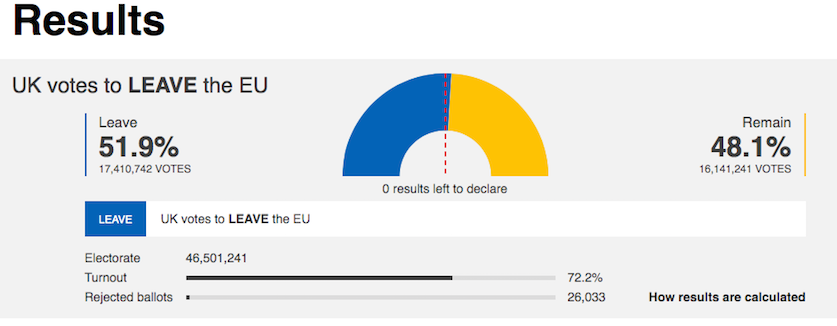
My blood pressure as measured soon after the June 2016 Referendum on leaving the EU


On a day in June 2016 I was the subject of one of many research projects into healthy ageing at QE Hospital 
"Your blood pressure's a little high" said one of the researchers.
"Seriously?"
She showed me her readings; in the hypertension range.
"That's odd. That's never been a problem for me"
"Well I need to point it out. Check with your GP"
"Gosh Emma, do you think I'm stressed by the Referendum result?"
"Could be." she said "We'll see how your blood pressure looks on your next visit next week"
Sunday lunch with the family - Oliver, Amy, Guy, Hannah and Linda. - weekend after the June 2016 Referendum. New potatoes from our allotment in Handsworth 

Three and a half years after the Referendum vote to leave the EU,  a friend posted on her Facebook page:

1st January 2021. MM: I wanted to write a Happy New Year message but ended up writing this instead. If you hate doom and gloom please scroll by. This is an X-rated post.
And so it comes to pass (weeping emoji's). We have woken up today no longer able to call ourselves EU citizens. And I am unspeakably sad. I don't know whether, in the long run the UK, will be better off in or out. I don't know whether there will be queues in Kent or food shortages in Tescos. But I do know that all of us who value that delicious sense of tumbling into a new culture, a new language, a new landscape have been left immeasurably poorer by the UK's decision to leave the EU. 
I speak for all of us in here who one fine day, wearing but a pair of skimpy shorts and an old T-shirt, clambered onto a charter at Gatwick to some random destination in Greece and drank so deeply of the delights of this beautiful country that we mysteriously find ourselves decades later sharing our (zoomed) βασιλόπιτα with children who speak two languages, in-laws who have never set foot on the green shores of Britain and Greek friends and colleagues who we hold dear in our hearts. 
We are heartbroken that the next generations will not know this. Those who already made it out of the gate will have their rights protected. The (richer) retirees will retire. The well-heeled will inevitably find a way. Some of our young will no doubt make it through the portcullis even after it clangs shut. But please allow us to shed a tear on this inauspicious day for all those who won't, and will never come to know what we know.

SB: Happy New Year, M. In your eloquent lament you write "But I do know that all of us who value that delicious sense of tumbling into a new culture, a new language ..." I know so well what you mean. I didn't so much 'tumble', given that my Dad - divorced post-war, then married to Maria in the lovely little church of Panagia Kapnikarea off Syntagma in Athens in 1949 - first invited me to beloved Greece when I was 16, during Easter 1957, and I, on my occasional stays with the 'Greek' side of the family in England was used to hearing my dad and Maria speaking Greek. I never looked forward to those brief childhood visits on which my mum insisted. Too much shouting and disorder and kissing and hugging among unruly half-siblings, though I liked being entrusted with a glass of wine now and then. It took four days, travelling alone on the Simplon-Orient from London, turning Balkan-wards after Venice, to get to Larissa where in the middle of the night this callow English youth, with a compartment to himself, was interrupted by a wedding party bursting in, joyfully noisy. I - a foreigner had the nerve to glare at them and ask them to be quiet. Instead of taking justified offence they laughed uproariously "Oh Englishman!" and had the effrontery to offer me a drink which I turned away. A few hours later I arrived in Athens…There, at dawn, on a low platform, the Greek side of my family awaited with joyous greetings and many disturbing hugs and kisses. Through a tiny window from the loo of Yia-yia's flat in Kolonaki I saw the Parthenon - no longer the familiar schoolbook illustration, the real place!.. ... ... Well! ... Two weeks later, when I departed from Greece, all had changed; changed utterly and forever, but that's another story, a good one. That first visit over 60 years ago was the start of an affair that I will take to my grave. You could say that 'some enchanted Easter' long ago, I saw Greece 'across a crowded room.' Even now, in dear Ano K, strolling or cycling on a small back road I hear a family, perhaps on a Sunday afternoon, laughing and talking under their veranda, and I'm possessed by an impish impulse to stroll over "Excuse me! Με συγχωρείς. Θα μπορούσατε να είστε λίγο πιο ήσυχοι!" They will laugh indulgently, even ask me to join them. I know that the UK leaving the EU can never efface - nor portcullis block - that 'delicious sense of tumbling' you describe so beautifully and which I still feel over and over when my old feet touch the soil of mother Greece.

James S, neighbour on National Opposition Street below our Democracy Street in Ano Korakiana: it’s exactly that Simon! The total mind opening of travel that Brexit seems so ignorant of!

Hi James. For people who have learned - or, in my case, taught against my will - to be happy the new border bureaucracies may bring temporary impatience, frustration and even misery, but love finds a way. I 'tumbled' (M's good word) into Greece long before the UK joined the EU, when post-war restrictions enveloped all Europe, customs examined our cases spilling out our belonging, transfers of cash were strictly limited. Through Yugoslavia I saw how the communist guards abused their own citizens, fellow passengers trying to cross their border (they were scowlingly deferential to me on my dad's diplomatic visa stamped in my dark blue passport). I was alerted by my father about the dreadful psychic scars of occupation and civil war in Greece - things that could not be spoken of, better forgotten. I've learned to accept - or, at least, to live with - queues, rationing, paperwork, inconvenience. I've been abused by immigration on arriving in New York, waited hours to enter Canada and Australia. I suspect from now - COVID restrictions notwithstanding - there'll be a couple of years of 'pain' as this bizarre event is sorting in the wash, but far worse pains have been surmounted in the past. I voted Remain, but I know other people voted to Leave the EU. who enjoy other lands beyond the English Channel as much as I.
The mainland of Greece across the Sea of Kerkyra from our home in Ano Korakiana 

I know about inventing paradise. Byron, Μπαϊρον, who came first in 1809 called her 'the wondrous land'; sailed to Greece in the brig Hercules in 1823, arrived at Kefalonia on the 4th August, to die at Mesolóngi eight months later. I first came to Greece, to Athens, by train via a three day stop in Venice - walking for hours, entranced, along damp paved alleys - in 1957, but in 1962 I sailed to Greece from England with a friend, my skipper Chris Jameson. In July we left Messina in Sicily. The first morning of our two day crossing on Danica ...
Danica
...bouncing and swaying on a swift etesian reach; came on our reverse, a sleek Greek frigate cutting smoothly through the cresting waves, heading west. In return to our salute, we saw a young sailor in perfect whites, almost sprinting to the fantail to dip her flag to us. My chest swells at the memory of seeing that lovely ensign falling and rising again in the seconds of her passing as though official Greece was saying "yasus" - just to us. 
That was 59 years ago. After that swift reach from Sicily. sunrise on the third day, the good wind abandoned our small vessel on a limpid mirror. The moment remains as dreamlike as at the time; glimpsing the forms of land melded to white sky and coppery sea - a way to the mainland of Greece between Kefalonia and Zakynthos into the Gulf of Patras. Next morning we made Byron's landfall. Shapes - north and south - that appeared and disappeared and might have been no more than dawn shadows - though we knew otherwise - lay before us. All day, in zephyrs, we sailed towards them, passed between, and anchored off Killini in Ilia where we rowed ashore to be sat at a table (my memory is flawed by so many photos of Greek tables and chairs), offered ouzikis and welcoming curiosity, before a polite policeman - reproached by our hosts - "po, po, po" - told us we were supposed to clear at Patras, but "please finish your conversation." 
170 miles from Piraeus and the city to which I’d determined to return.

I spent, as I recall, my first twenty five years in a fog of schooled and inherited insensibility, almost impervious to the wisdom of generous parents – English and Greek - who probably knew that, as perhaps for them, only time would tell me. 
In 1968 I was with the Greek side of my family again. They’d flown on to Greece. My dad wanted a car while we were there. Over four days I drove his small Hillman through Belgium, Germany, Austria, Italy and by ferry to Greece, sleeping one night in a field above the sea, a few yards from a winding road through olives. From Piraeus I took another ferry to join the family in Aegina. We returned to Athens for a day, where, with my diplomatic family, I attended a house party somewhere near Vouliagmeni, hosted by a man whose bald head I glimpsed for a few seconds, Colonel Stylianos Pattakos.
It was only in Detroit, married a year later, meeting American Greeks - and Greek exiles from the Junta - that I grasped the discomforting notion of ‘sides’;  of Greece as a polity, of animosities and moral positions, words and facts and opinions that left the paper-fragranced sentences of my superlative education – in one ear as others' thoughts, out of my mouth as words for conversation and essays, and out of the other ear, unedited. Though it seems so in memory, I could not have been quite that one-dimensional, except perhaps at my mother’s breast. My CV, by the time I was thirty, was enough to ease me into academia where, mostly fuddled, time did begin at last to tell and I began to listen.

It was 25 years before I came to Greece again.
After many years, return to Greece in 1995 with Amy, Linda and Richard

Standing in the cockpit of our Airbus (full of screens and no joystick) where passengers could – pre-9/11 – still be invited for a pilot’s glimpse of the world ahead, I stood behind my family, as with Linda, Richard and Amy, we flew high over the border of Greece; able to see, to port, the glow of Thessaloniki; ahead the greater glow of Athens; to starboard a moonlit Ionian Sea and far below, in inky blackness, clusters of tiny glittering diamonds - villages in the foothills of the Pindos.
“Children! There’s Greece”
In the dim cabin tears welled from my eyes with the delight – and the idea – of sharing ‘my’ Greece with my wife and children. I could not speak for a moment, and Linda, more English than I, was irritated at me. 

A third generation in Greece - our Amy with her cousins Natasha and Anna at sandy Pylos in 1995

*** *** ***
A decade later we spend months in Ano Korakiana on Corfu. Πέρα δόθε:

Winter 2009: The sun came up into a cloudless sky. It’s so bright and hazy, but for the crackle of awakened logs I’d mistake this winter morning for summer. Yesterday as we pottered on tasks I became so chilled I began to sniffle. By evening I was squeezing fresh lemons to mix with honey to warm in a glass. We’d been down to CJs Bingo Quiz in the evening, me in two under vests and long johns, to struggle with questions that were almost entirely about things in films and TV series. Our friend Trish, in CJs after cold day’s work cleaning charter boats at Gouvia, won. She was playing with Sally who runs CJs for Chrissie and John, also there - the latter cursing merrily to the delight of all. Trish is married to Dave, met at Ipsos Harbour in the first hour of our arrival in September 2006, who first raised our spirits as we surveyed Summer Song’s worn and musty interior, wondering if we’d been sensible buying her on ebay, sight unseen. “We’ll make a list” he said “Norman and Pauline loved that boat and she’s worth it”. And so she was and is. Dave keeps an eye on Summer Song – not only on the boat but also on the harbour politics that allow us to keep her safely berthed there. C remarked from far away on the Pacific coast. “Enjoy Corfu. Greece, no matter what, is a beautiful place to wake up in the morning" but I’m as superstitious as any atheist about reflections on the rewards of fortunae. 
'Greece, no matter what, is a beautiful place to wake up in the morning'
The names of people who rejoice in their luck are selected by a divine factotum and placed face-down on a gilded dish that passes around the table on timeless Olympus. Amid merriment, each God selects the human whose card is to be their post-prandial plaything. Here a brilliant climber says “There’s a window for the summit at dawn”; there a mother says “Our child is so perfect”; and over there a father says “There are police officers, a man and a woman, at the door. Must be about those parking fines”; and here a wife who says “no need to hold the ladder darling. Go and make us a cup of tea”; and there, in the deep ocean, an exhausted sailor says “We’re through the worst” but see this one, here’s a gem “The war will be over by Christmas”, but what about that popinjay Confederate General who said “They couldn’t hit an elephant at this dist…” Far below a fisherman on the Peneios and a woman waiting for a train at Litochoro know they hear, not the rumble of endless thunder reverberating among the peaks of Olympus, but laughter.
Good Friday picnic on a shore in Corfu. A fourth generation in Greece
In England in early January 2021 Greece seems remote - for all the continued contact via the social web. Here in the inner suburbs of Birmingham Lin and I are locked down under Tier 4. I am not to go further from our front door than our front garden. Linda - under 70 - can shop. Our neighbour, J, 'allowed to meet one other person outside', sat for a chat with me by our porch and passed the time of day. He works for Fareshare, one of the neighbours who've offered to shop for us if necessary.
Covid Tier 4. Restrictions from 00.01 Thur 31 Dec 2020
The weather is intrusively grey, wet, creating a world of pervasive sogginess that sticks to shoes hands and sleeves; which I can't avoid trailing into the house when I bring in logs, damp and stuck with rotting leaves, slimy too. I dry the wood in front of the stove before we can enjoy their warmth. Kindling I've even put in the oven for 30 minutes to get things burning in the mornings. 
Before the latest lockdown was announced I could cycle in and out of town, visit the rag market, buying a baked potato mashed with butter, salt and pepper plus a cup of tea, or a butter croissant and filter coffee eaten stood warily in on New Street. Wednesday morning I called in at the Birmingham Donor Centre in New Street to give blood. The first drop during the preliminary test for sufficient iron wouldn't dawdle down the green liquid filled test tube as it's meant, but Sarah - name off her tag - tried an alternative test. ""Yup, that's fine" "Phew". I lie in the plastic chair arm pierced skilfully almost painlessly to extract my very common 0 positive blood, but after a few minutes I'm being ministered to by three, no, four, nurses, urging me to squeeze my fist and wiggle my toes, as my blood's not coming out. "Oh no!" I think, but then "There we go! Fine now" says Margaret cheerfully. Privately I suspect the needle wasn't accurately placed in the vein.  After 10 minutes, I'm on my way, exiting through a world of masked donors and masked extractors, making another appointment in March - if I'm not breaking rules. Once home I get a text message thanking me for my blood. 
From Greece we've brought a lemon from one of our citrus trees, which, after two years barren, has fruit - - a generous load - following scale insect infestation affecting citrus, and now, other shrubs and trees, all Corfu. 
Perhaps our treatments have begun to work, as recommended by Sophia and Niko, neighbours, and Evangelina at the new Tzoulou garden shop. She recommended we spray a mix of Sivanto (2.5 m/l to 5l water) and Electro pesticide (ditto mix), to kill, and by resting on the leaves, break the life cycle of what she calls the ‘black spiny insects’.   
A lemon from Corfu back in Brum
Checking lemon leaves for citrus scale insects

*** *** ***
With some poignancy I travel 10 years back in my time machine to Ano Korakiana in February, when the village celebrated its annual Carnival ... February Carnivali, brightening the greyest chilliest and wettest day of the year. Part of the band in motley, military, priest and police, made 'oompa oompa' with drum and fife. The king enthroned, priapic with crown on his heart-covered float, accompanied by courtiers, male as female and other reversals of carnival, paraded upwards preceded and trailed by bouncing umbrellas, a phalanx of pink parasols, women in silvery wigs dancing up to the start of Democracy Street, twirling round a ribboned pole amid whistles, bangers and music.
Stopping and starting the procession gathered more people – some in masks, a long nosed Pinocchio, some as they were; streamers and confetti thrown from windows, hugging and greeting, planned and spontaneous, impossible not to smile and laugh in the chill wet. Up we went to the bandstand, round the carpark and back down the street in rain that poured from low cloud obscuring views to the sea. Nico and Sophia, standing by their front door, invited us in from the cold and wet for coffee and rich chocolates to meet their family.
“All the news is bad”
“Indeed it is” we smiled.
At 7.00 two hundred or so were gathered in the upper room of the Farmers' Co-op on the lower road to watch a demonstrably hilarious dialogue between two women we didn’t understand but clapped with everyone else. Then a formal reading by a top hatted master of ceremonies naming people in the village to theirs and everyone else’s amusement and applause.
Then a more disposable carnival king was carried out to the road and burned, with a bit of diesel to overcome the rain. Everyone began moving through a small door down short steps to the lower room to sit at long tables under a beamed roof. We were ushered to Leftheris’ family where dishes had been brought to pass with village wine in jugs, water and cola – lamb, pork, salad, cheese pies, olives, bread in chunks. As we tucked in along with every age, the dancing started with a band that created the mood of the evening, responded to people as they danced and sang – dances for couples became threesomes, foursomes until chains of us were stepping forward six steps one way, two back in that way that can’t help look elegant because the clumpers like me are carried hands held in the ring, six right, left two, unpausing until well after midnight the band made up of two guitarists, lead singer, keyboard and lighting mixer – played unceasingly. The dancing space was seldom empty. If not filled with pairs and chains, it was taken by men and women dancing solo amid clapping support, nimble and beautiful. I danced with Lin and in the circles – like Scottish reels.
“We all drank a lot of wine” said Katya when I saw her at the shop a couple of days later. As at a family wedding, wine added to the enjoyment; none crass. There was a break in the music around one in the morning. I thought we were going home, but after a few minutes, the room filled with lively chatter, the band came back with renewed energy. It wasn’t only the young on tables, though one couple danced with especial virtuosity, the young man - minutes previously in ballet skirt, tights and pigtails now entwined with a young woman who’d begun alone shivering her hips in the Arabian style. This duet had others joining in. The whole room floated on the music and swayed with the singing, happiness making us all even more good looking, and some especially handsome and beautiful. As the band said its goodbyes, an older lady led the Ano Korakiana song singing two line verses, unaccompanied, the chorus picked up by the moving circle. We walked home just before three-o-clock. “I’ve so enjoyed myself” I said “Me too” said Lin.
The song to the dance is a paeon to Corfu "Kerkyra, overflowing with greenery and beauty...into each and every corner and the seashore..." a list of all the green island's attributes 

Tuesday, 15 December 2020

Self-isolating for 10 days in Birmingham after returning from Greece

Waiting at Corfu Kapodistria Airport for a flight to Athens
At Corfu Kapodistria waiting for a flight to Athens

Over the better part of 2020 I've been able to access more information about the COVID-19 pandemic than has ever been available to any but experts about a pandemic.  Making sense of this information, that comes on the internet via tweets, emails, facebook, podcasts, radio, scheduled TV (remember that?), vlogs and many websites with access to a plethora of peer-reviewed research, is informative, fascinating, vexing and confusing. T S Eliot suggested in the 1930s - 'we are too conscious and conscious of too much'. Lin and I talk to each other, to friends and strangers and of course we experience directly the effects of government policy - in our case in the UK, in Italy and Greece and back in the UK where, having completed our Passenger Location Form, we are confined to our Birmingham home for 14 days, reduced a few days later to 10
Self-isolating at home in England warmed by wood I sawed and split in the summer

For my records I've selected two open letters sent, two and half months ago, to our Chief Medical Officers (CMOs) and, in one case, also to the Prime Minister and the Chancellor - though they've no doubt been advised on both. I can envisage presenting these letters to students of government policy-making and asking them to brief an imagined cabinet on the weight to be placed on either, or neither. I'd also remind the students of the global salad of impugned motives and ad hominem rudery directed at the signatories of these letters and their recipients. Scientific debate was ever thus. I was taught that long ago. I thought science revealed the truth. No. Scientists arrive at the best hypotheses to fit the available data. They defend these hypotheses against other scientists, themselves included. COVID-19 and the world wide web has allowed the scientific process to occur on a global stage with limitless audience participation.

Here's the first letter:

Covid-19: An open letter to the UK’s chief medical officers expressing 'concern about a second wave of covid-19'

Professor Chris Whitty; CMO, England
Dr Frank Atherton; CMO, WalesDr Gregor Ian Smith; CMO, Scotland
Dr Michael McBride; CMO, Northern Ireland
Professor Patrick Vallance; Chief Scientific Adviser

21st September 2020

Dear CMOs 

We write to express our grave concern about the emerging second wave of covid-19. Based on our public health experience and our understanding of the SARS-CoV-2 virus, we ask you to note the following: 

1. We strongly support your continuing efforts to suppress the virus across the entire population, rather than adopt a policy of segmentation or shielding the vulnerable until “herd immunity” has developed. This is because:

a) While covid-19 has different incidence and outcome in different groups, deaths have occurred in all age, gender and racial/ethnic groups and in people with no pre-existing medical conditions. Long Covid (symptoms extending for weeks or months after covid-19) is a debilitating disease affecting tens of thousands of people in UK, and can occur in previously young and healthy individuals.

b) Society is an open system. To cut a cohort of “vulnerable” people off from “non-vulnerable” or “less vulnerable” is likely to prove practically impossible, especially for disadvantaged groups (e.g. those living in cramped housing and multi-generational households). Many grandparents are looking after children sent home from school while parents are at work.

c) The goal of “herd immunity” rests on the unproven assumption that re-infection will not occur. We simply do not know whether immunity will wane over months or years in those who have had covid-19.

d) Despite claims to the contrary from some quarters, there are no examples of a segmentation-and-shielding policy having worked in any country. Notwithstanding our opposition to a policy of segmentation-and-shielding, we strongly support measures that will provide additional protection to those in care homes and other vulnerable groups.

2. We share the desire of many citizens to return to “normality”. However, we believe that the pandemic is following complex system dynamics and will be best controlled by adaptive measures which respond to the day-to-day and week-to-week changes in cases. “Normality” is likely to be a compromise for some time to come. We will need to balance suppressing the virus with minimising restrictions and impacts on economy and society. This is the balance that every country is trying to find—and every country is having to make trade-offs. This might mean moving flexibly between (say) 90% normality and 60% normality. We believe that rather than absolute measures (lockdown or release), we should take a more relativistic approach of more relaxation/more stringency depending on control of the virus.

3. Controlling the virus and re-starting the economy are linked objectives; achieving the former will catalyse the latter.  Conversely, even if policies to promote economic recovery which cut across public health objectives appear successful in the short term, they may be detrimental in the long term.

4. As evidence accumulates for airborne transmission of the SARS-CoV-2 virus, measures which would help control the virus while also promoting economic recovery include mandating face coverings in crowded indoor spaces, improving ventilation (especially of schools and workplaces), continuing to require social distancing, and continuing to discourage large indoor gatherings, especially when vocalisation is involved. With measures like these, much of society will be able to function effectively while keeping the risk of transmission relatively low.

5. As we move beyond the acute phase of the pandemic, it is important to restore routine medical appointments (e.g. for long-term condition review and patient concerns that may indicate new cancers). We believe that a combination of remote appointments (online, phone and video) plus face-to-face appointments with appropriate personal protective equipment will allow this to happen safely. We recommend a communication campaign to inform the public that the NHS is now open for most routine business.

6. In a complex system, we should not expect to see a simple, linear and statistically significant relationship between any specific policy intervention and a particular desired outcome. Rather, several different policy measures may each contribute to controlling the virus in ways that require complex analytic tools and rich case explanations to elucidate.

7. While it is always helpful to have more data and more evidence, we caution that in this complex and fast-moving pandemic, certainty is likely to remain elusive. “Facts” will be differently valued and differently interpreted by different experts and different interest groups. A research finding that is declared “best evidence” or “robust evidence” by one expert will be considered marginal or flawed by another expert. It is more important than ever to consider multiple perspectives on the issues and encourage interdisciplinary debate and peer review. While government must continue to support research, some decisions—as you will be well aware—will need to be made pragmatically in the face of uncertainty.  

We thank you for your continuing efforts to get us through the pandemic. 

Trisha Greenhalgh, Professor of Primary Care Health Sciences, Nuffield Department of Primary Care Health Sciences, University of Oxford, Oxford, UK.
Dr Nisreen A Alwan, Associate Professor in Public Health, University of Southampton.
Professor Debby Bogaert, Professor of Paediatric University of Edinburgh.
Professor Sir Harry Burns KBE, University of Strathclyde and Past Chief Medical Officer, Scotland.
Professor KK Cheng, Professor of Public Health and Primary Care, University of Birmingham.
Dr Tim Colbourn, Associate Professor of Global Health Epidemiology and Evaluation, UCL Institute for Global Health.
Dr Gwenetta Curry, Lecturer of Race, Ethnicity, and Health, College of Medicine and Veterinary Medicine, University of Edinburgh.
Dr Genevie Fernandes, Research Fellow, University of Edinburgh and Action Team Member, Royal Society's DELVE Initiative.
Dr Ines Hassan, Senior Policy Researcher, Global Health Governance Programme, University of Edinburgh.
Professor David Hunter, Richard Doll Professor of Epidemiology and Medicine, University of Oxford.
Professor Martin McKee, Professor of European Public Health, London School of Hygiene and Tropical Medicine; Past President, European Public Health Association; Research Director, European Observatory on Health Systems & Policies.
Professor Susan Michie, Director of UCL Centre for Behaviour Change, University College London.
Professor Melinda Mills, Director, Leverhulme Centre for Demographic Science, University of Oxford; Member of Royal Society’s SET-C (Science in Emergencies Tasking – COVID) committee; Member of ESRC/UKRI COVID Social Science Advisory group.
Professor Neil Pearce, Professor of Epidemiology and Biostatistics, London School of Hygiene and Tropical Medicine
Professor Christina Pagel PhD MSc MSc MA MA (Professor of Operational Research & Director of the Clinical Operational Research Unit, University College London.
Professor Maggie Rae, President, Faculty of Public Health.
Professor Stephen Reicher, Professor of Psychology, University of St Andrews.
Prof Harry Rutter, Professor of Global Public Health, University of Bath.
Prof Gabriel Scally, Visiting Professor of Public Health, University of Bristol.
Professor Devi Sridhar, Chair of Global Public Health, Edinburgh Medical School.
Dr Charles Tannock, Consultant psychiatrist.
Prof Yee Whye, Professor of Statistics, University of Oxford.

Arriving over Athens

...and here's the second letter, dated the same day

An open letter to the PM, Chancellor and UK CMOs and the Government’s Chief Scientific Adviser, 'calling for a targeted and evidence-based approach to the COVID-19 response' 

The Rt Hon Boris Johnson MP, Prime Minister
The Rt Hon Rishi Sunak, Chancellor of the Exchequer
Professor Chris Whitty, CMO, England
Dr Frank Atherton, CMO, Wales
Dr Gregor Ian Smith, CMO, Scotland
Dr Michael McBride, CMO, NorthernIreland
Sir Patrick Vallance, Government Chief Scientific Advise

21st Sept 2020

Dear Prime Minister, Chancellor, CMOs, and Chief Scientific Adviser,

We are writing with the intention of providing constructive input into the choices with respect to the Covid-19 policy response. We also have several concerns regarding aspects of the existing policy choices that we wish to draw attention to.

In summary, our view is that the existing policy path is inconsistent with the known risk-profile of Covid-19 and should be reconsidered. The unstated objective currently appears to be one of suppression of the virus, until such a time that a vaccine can be deployed. This objective is increasingly unfeasible (notwithstanding our more specific concerns regarding existing policies) and is leading to significant harm across all age groups, which likely offsets any benefits.

Instead, more targeted measures that protect the most vulnerable from Covid, whilst not adversely impacting those not at risk, are more supportable. Given the high proportion of Covid deaths in care homes, these should be a priority. Such targeted measures should be explored as a matter of urgency, as the logical cornerstone of our future strategy.

In addition to this overarching point, we append a set of concerns regarding the existing policy choices, which we hope will be received in the spirit in which they are intended. We are mindful that the current circumstances are challenging, and that all policy decisions are difficult ones. Moreover, many people have sadly lost loved ones to Covid-19 throughout the UK. Nonetheless, the current debate appears unhelpfully polarised around views that Covid is extremely deadly to all (and that large-scale policy interventions are effective); and on the other hand, those who believe Covid poses no risk at all. In light of this, and in order to make choices that increase our prospects of achieving better outcomes in future, we think now is the right time to ‘step back’ and fundamentally reconsider the path forward.

Yours sincerely,

Professor Sunetra Gupta; Professor of theoretical epidemiology, the University of Oxford
Professor Carl Heneghan; Director, Centre for Evidence Based Medicine, the University of Oxford
Professor Karol Sikora; Consultant oncologist and Professor of medicine, University of Buckingham
Sam Williams; Director and co-founder of Economic Insight

Signatories
Professor Louise Allan (Exeter)
Professor Francois Balloux (UCL)
Professor Sucharit Bhakdi (JG University of Main)
Dr Julii Brainard (U. of East Anglia)
Professor Anthony Brookes (Leicester)
Professor Nick Colegrave (Edinburgh)
Dr Ron Daniels (UK Sepsis Trust)
Professor Robert Dingwall (Nottingham Trent)
Professor Fionn Dunne (Imperial Coll.)
Professor Kim Fox (Imperial Coll.)
Professor Anthony Glass (Sheffield)
Dr Andy Gaya (Consultant oncologist)
Dr Peter Grove (Former Dept Health)
Professor Matt Hickman (Bristol)
Professor Elizabeth Hughes (Leeds)
Dr Tom Jefferson (Oxford)
Professor Syma Khalid (Southampton)
Professor David Miles (Imperial Coll.)
Professor Paul Ormerod (UCL)
Professor Andrew Oswald (Warwick)
Professor David Paton (Nottingham)
Professor Hugh Pennington (Aberdeen)
Professor Barbara Pierscionek (Staffordshire)
Professor Eve Roman (York)
Professor Justin Stebbing (Imperial)
Professor Ellen Townsend (Nottingham)
Steve Westaby (Retired heart surgeon)
Professor Simon Wood (Edinburgh)

Appendix: Specific comments on the existing policy path

Any objective should be framed more broadly than Covid itself. To place all weight on reducing deaths from Covid fails to consider the complex trade-offs that occur: (i) within any healthcare system; and (ii) between healthcare, society and the economy.

Individual policy choices within the strategy should be informed by an evidence base. The absence of similar policy interventions to those now being implemented in the past, coupled with the novel nature of the virus, means there is limited existing empirical evidence to inform the effectiveness of said measures. This means most weight should be placed on: (i) analysing what is actually occurring in relation to the outcomes we are targeting; (ii) metrics that can be most accurately measured and reported; and (iii) robust evaluations of interventions imposed, to ensure they deliver actual benefits. We are therefore concerned about the sole reliance on ‘case numbers’ and the ‘R’ to inform national and local policies, as these metrics are subject to significant measurement and interpretation challenges (and further, neither is an outcome that matters to society).

The most pertinent epidemiological feature of Covid-19 is a greatly varying mortality risk by demographic. Mortality risk is highly age variant, with 89 per cent of Covid mortalities in the over 65s. Mortality risk is also concentrated in those with pre-existing medical conditions (95 per cent of Covid deaths). This large variation in risk by age and health status suggests that the harm caused by uniform policies (that apply to all persons) will outweigh the benefits.

Blanket Covid policy interventions likely have large costs, because any adverse effects impact the entire population. These include: (i) short and long-term physical and mental health impacts; and (ii) social and economic impacts.

In relation to health, the impact on cancer is especially acute. ‘2-week-wait’ cancer referrals decreased 84 per cent during lockdown. The impact of this alone has been estimated to be up to an additional 1,200 cancer deaths over 10 years (23,000 life-years lost). Cancer Research UK estimated there are 2 million delayed or missed cancer screenings, tests or treatments. The impact of this broader disruption is uncertain. However, estimates indicate it could be as high as 60,000 lives lost.

In terms of the economy, the OBR’s forecasts are for unemployment to reach 11.9 per cent by Q4 2020. As of July 2020, net debt had risen to £2 trillion for the first time, and public sector net debt is expected to be 106.4 per cent of GDP at the end of the year.

Set against the high costs of these policies, their effectiveness in reducing Covid deaths remains unclear. Focusing on the UK, there is no readily observable pattern between the policy measures implemented to date and the profile of Covid deaths. Caution should therefore be exercised in any presumption that such policy measures will successfully lower future Covid mortalities.

In light of the above, our strategy should therefore target interventions to protect those most at risk. For example, Germany’s case fatality rate among patients over 70 is the same as most European countries. However, its effective reduction in deaths is based around a successful strategy of limiting infections in those older than 70.

Finally, behavioural interventions that seek to increase the personal threat perception of Covid should be reconsidered, as they likely contribute to adverse physical and mental health impacts beyond Covid. Consideration should also be given to whether policies that are intended to ‘reassure’, may in fact reinforce a heightened perception of risk. Providing the public with objective information on the actual risk they face from Covid-19, by age and health status, would be preferable.

Athens Venizelos Airport - walking to departure for England

"So what's your opinion, Simon?"
"My very humble opinion?"
"Yes"
"I am as confused and uninformed - for all my listening and reading - as a serf aware of the growing spread of the great pestilence in the middle of the 14th century. And, you know, historians are still arguing about the Black Death!'
"How about a more arrogant opinion?"
"I'm glad I don't have to have one"
"Oh go on!"
"I thought I had a reasonably appreciation of what was going on with this strange virus in the middle of the year. Now I am confounded. Don't get me wrong. I still have opinions but I have less confidence in them."
"So how would you judge that exercise you were suggesting, asking students to do a briefing to government, on the basis of those two letters?"
"I'd love to try it out. It's not much help but I am tending to go along with the words in that first letter:" 

In a complex system, we should not expect to see a simple, linear and statistically significant relationship between any specific policy intervention and a particular desired outcome. Rather, several different policy measures may each contribute to controlling the virus in ways that require complex analytic tools and rich case explanations to elucidate. While it is always helpful to have more data and more evidence, we caution that in this complex and fast-moving pandemic, certainty is likely to remain elusive. “Facts” will be differently valued and differently interpreted by different experts and different interest groups. A research finding that is declared “best evidence” or “robust evidence” by one expert will be considered marginal or flawed by another expert. It is more important than ever to consider multiple perspectives on the issues and encourage interdisciplinary debate and peer review. While government must continue to support research, some decisions—as you will be well aware—will need to be made pragmatically in the face of uncertainty.  

Linda: "So, basically, that involves governments doing whatever they like" 

"What puzzles me is that I can discern no plausible connection between governments' policies on Covid-19 and their effects, other than to cause delays in the progress of the pandemic ... A puzzlement that confirms my sense of being like a serf in the century of the great pestilence*" (continued on p.94)

23/12/20. An old friend, Ian Coghill (once an environmental health professional) commented: Delaying the progress of the pandemic has been the only outcome of the government's policies. It was probably the only practical one in a free country. Nor has it been a waste of time. It has largely prevented the acute care system being overwhelmed and has allowed time for potential vaccines to be produced and deployed.

29/12/20. We are not only 'locked down', but 'locked in' to a situation that has no end. The Black Death lasted 7 years. Other bubonic epidemics involved slightly shorter ordeals. The 'Spanish' flu lasted three years. CD-19 will last longer, with reverberating collateral damage in other sectors and to many other people. I can't see how any government can moderate lockdown. The virus can recur in those who've had it, Vaccination - touted as the light at the end of tunnel - does not reliably stop people getting the disease or transmitting it. Restrictions on social end economic activity are widely supported among electorates and by opposition parties in government. Many complain that present and suggested restrictions are not stringent enough and too late. 

5/01/2021. Listening to the radio last night I thought I heard .... "I am speaking to you from the cabinet room at 10 Downing Street. This evening guided by every sensible scientist in Europe I handed the Coronavirus and its mutations a final note stating that, unless we heard from them in the near future, that they were prepared, at once, to withdraw themselves from everywhere by 11 o’clock, a state of war would exist between us. I have to tell you now that no such undertaking has been received, and that consequently this country is now in a state of lockdown forever." 

Our daughter reports our grandchildren delighted in proportion to their parents' dismay 


*The Black Death


Saturday, 26 September 2020

Getting to Greece

Our afternoon plane from Birmingham, first booked before Christmas for travel in April then changed to September, arrived in Verona at dusk. A 25 minute bus took us to the railway station. Checking a map on my laptop we walked to 1 Via Mura San Bernardino. A texted 5 digit door code let us in. A foreign river, whose name I’d never heard, winds through the city, flowing with striking speed, audible from the walled banks. Beam to its torrent, a sturdy rowing boat could overturn or be swirled against a bridge buttress. After reading instructions and drinking mugs of green tea, Lin and I strolled up Via Mura to an unaggressive castle with arched geometric battlements. Through its centre a cobbled footway led over a sociable bridge with side walls and niches on which you can stand to look over the swirl of the milky coffee coloured river. 

River Adige from Castelvecchio bridge

“One of these bridges would be great for poo sticks … but you’d have to dash across dodging traffic to see who’s won”

“On this one, you’d need only dodge roller bladers, bicycles and electric scooters”

There was a bar at the end of the bridge. We sat under plane trees sipping generous Campari Spritz with ice and a slice of orange. The helpings of bitter Campari were generous, so I bought a soda water to top up.

I was glad to be ‘abroad’ at last, on our way to Greece. Lin and I boarded a train at dawn, trailing our bags from our lodging in time for coffees at Porta Nuova Station. Men in army uniforms and boots, pistols holstered, stood at the station entrance to say ‘Preggo’, reminding travellers to cover their lower faces. 

Our April tickets had been shifted by Trenitalia without the April concession. Lin dug out €60 extra for tickets to Bari. The day before we’d taken a 45 minute bus to Lazise on Lake Garda. Old and new money seemed to have prevented the usual mess that commercial free-for-all can make of a popular resort. From the bus stop, a paved path sloped gently to the water’s edge between affable houses wreathed in bougainvillea, via the stalls of a market where Lin bought me sandals and she some jeans. The summery haze made the further shore of the lake remote but for a smattering of trees, the water glassy calm, now and then ruffled by small breezes. We sat on a bench beside the blue water. A line of sturdy pines lined the promenade, their surface roots, knuckled webs, enclosed by marble frames. I watched a small triple decked ferry. Distant passengers in silhouette enjoying the leisure of the lake. Minutes later small waves smacked the shore. It could have been the sea. We enjoyed a meal – pizza, mozzarella salad, chips, wine. “Romans sojourned here and discussed the state of the world looking over the water”

Lazise beside Lake Garda

An hour’s wait for a change of trains at Bologna, and time for coffee and butter croissant across from the station. Platform 12, via a broad tunnel, then, as timely as usual, an intercity train; we, in comfortable cushioned seats, reserved in one of the first carriages, ‘socially distanced’.  For six hours we sped down the length of Italy. Oddly the train was diverted from the main line, somewhere by a hamlet surrounded by a sandy wood - an Italian Adelstrop. We waited in silence, mildly anxious lest the delay became longer. Starting again the train ate up lost time, at one interval of the journey, rushing through a landscape of grassy dunes – “like in that film of the kidnapped child” we agreed simultaneously - on past miles of holiday apartments and beaches, sparsely populated, coated in ranks of parasols, arriving a few minutes late at Bari Centrali. 

The hourly bus to the port would take too long if there should be boarding ‘complications’. A taxi costing €15 took us to the quay for ‘Grecia’. I could see the familiar top works of our Superfast ferry above parked trucks. 

We had to prove to the woman at the check-in desk that we’d received an email confirming we had completed and submitted a Greek government pre-boarding health declaration questionnaire – a Passenger Location Form. The screen shot of the email (not quite the full page, as the whole thing didn’t fit on the screen, but at the bottom it showed the important bit – the applicant’s name, date of birth and passport number), was not accepted.

“I must have an email with both names,” she insisted. Lin said the email only mentioned ‘the applicant’s’ name. “No, I need both names on the email. Forward it to me.” 

Having told her we had no internet – no smartphone, now the norm - she directed us to the on-site Wi-Fi café a few metres away. Sat there with cold drinks, Lin opened the email and confirmed that, as she -  ‘the applicant’ - was the only name that appeared, though the on-line form had had to be completed for ‘all  family members’. Indeed, when filling out the form, Lin had to sign to confirm that only one form was being submitted for us both.

“So what are we supposed to do?” I said

Before forwarding the email to the check-in, Lin typed my name, DOB and passport number below hers. When we returned to the desk, this unofficial addition had done the trick. 

“OK. Have a good journey.” 

On board the ferry, with relief, we sat among truck drivers looking down on a cargo deck wrapped by engine roar, an undecipherable cacophony of welcoming warnings and instructions over the PA, as below us international lorries were skillfully reversed into their parking for the crossing to Greece. The sun went down. Imperceptibly at first our ship moved off, gathering speed. Later, having bought WiFi time, we received, as promised but not entirely expected, our ‘quick response code’ “to be sent after midnight on the day of scheduled arrival in Greece”. 

Later in the night, we chatted on HouseParty to Amy in Gloucestershire.

Amy, who’d spoken of the challenges of parenting in competition with the tempting, sometimes bizarre depravities available to children, mentioned that “Someone thinks it’s a laugh to make a version of Peppa Pig that turns into an imitation of the stabbing scene in Psycho” We retailed other example of sad things that pop up on smartphones, caught in time by a vigilant parent who must then explain the idiotic naughtiness of teenage fellow pupils circulating naked pictures of themselves thinking it’s smart, or a friend’s son, Asian dad long disappeared, suborned on his phone by an EDL member seeking friendship and the recital of hate for ‘Pakis’. She told him he might well be proud of his background ‘which can save you a lot of trouble in life’ and confiscated his phone.  Amy suggested that as parents struggled, and some failed, with the raising of their children, so our government seems to be struggling with running the country. "It’s got too complicated."  

We snoozed a while on bar settees. I woke to see lights passing on the shores of the Corfu Channel, quite close, either side. No moon. A little later the ferry backed up to the jetty at Igoumenitsa. The vast concrete apron has little protection or guidance for the few foot passengers. We trudged in the warm night towards the reception buildings where we were directed to walk yet further to a pair of busy women in full PPE – face masks, plastic aprons, who were testing new arrivals, though not truck drivers or a man on foot who came “from a different country”, with swabs for the virus. They bustled as we shuffled, checked our QR code.

“All done” 

“Thanks. What’s your name?” 

“Eleni Vasiliki” 

“By by Eleni” 

We set out again across the apron.  “I don’t believe in it. This isn't real. It's all a big waste of time” said the affable, slightly jaded, official who’d pointed us to the testing place, and looked after our cases the while. Half a mile along the port road – a familiar trudge bumping over the edges of pavements and potholes with our bags – we came to the smaller Corfu ferry, climbed up steps to sit on Nanti’s top deck to enjoy the sun rise and feel a gentle breeze over the Ionian Sea as our island approached. 

A quick shop, in our hire car from ValuePlus – all employees in masks – and Lin’s driving the familiar roads to home in Ano Korakiana. Vasiliki, tending her plants, saw us as we came down the steps from Democracy Street. We all knew we could neither hug nor kiss in the usual way. We held our arms out in greeting before getting into the house, carrying in groceries, turning things on, putting stuff in the fridge and making cups of tea and coffee. 

“Blimey! We made it”

208 Democracy Street, Ano Korakiana


Tuesday, 5 June 2018

A day in Sarandë, Albania - 'Faleminderit'

Democracy Place in Saranda, Albania

I shall view the town of Saranda as less distant, less foreign, having just been there for the day. Lin and I passed through there once before - during a guided tour to Butrint. We were a lightly shepherded group; an unpatronising guide, coaches, laid on food and drink; an enjoyable and fascinating day to visit this old Roman resort – reward for favoured veterans of the empire. This time, in the afternoon before my trip, I bought a return ticket for €33 from Katerina at Sarris Lines in a corner office on a small road leading out of Mandouki onto Xenophoros Stratigou.
The next morning I was waiting before 9.00am in a cheerful crowd of mainly ‘all-inclusives’ by the doors of the Corfu New Harbour Customs House, my cycle folded, my bag provided with folded jacket, passport and money
“They will take euro’s. Ask for change in euros”.
Arriving at Sarandë on a ferry from Corfu

At the dock in Saranda, I and two others are beckoned by an immigration officer away from other passengers heading towards coaches, their paperwork pre-handled. I’d heard one officer on the quay shout to a waiting colleague that we were ‘from kerkyra’, which sorted me out. Passport swiftly inspected, I was directed through a pristine office with a mirrored lift to take me and my bike up to the street - Rruga Mitat Hoxha.
Close to at last, I missed a sense of direction. Our previous guided visit had spared thinking on the arrangement of places. I wheeled to the modest church just over the road that Father Militiades had told me about.
“It is just where you come out from the harbour”.
Kisha Ungilore Evangelical Church of Saranda

It was closed. I would have visited to see a copy of an Albanian Holy Bible that Father Militiades (our friend at the Lighthouse in Kontokali) had a part in getting translated and spread at the end of the Communist era, so some old people without communion for over 70 years, he told me, could take bread and wine from a priest.
As I do on a bicycle, I sought higher ground, walking up a steepish street I left the city’s more polished frontage. I was soon cycling on a level road between modernist tower blocks – Saranda’s principal architecture. The feeling of freedom was almost palpable. This street was one-way. On a bicycle with little traffic I edged where I wanted. The towers were not, as is often the modernist scheme, in rows, but, probably in line with the rising form of their hard stone footings, placed where foundations best fitted the curve of the hill on which the town is built, and still rising.
No tourist guide on places to see in Saranda points to where I was cycling on a smooth road with frequent speed bumps, winding between pavements dotted with small trees.
The internet, as I read it, tells us of places outside the city, with passing reference to tenuous classical ruins inside. I’d like to know the story of the city as it developed from the 1950s through to the end of the reign of Enver Hoxha, when Saranda in Albania and Cassiopi on Corfu faced across the last vestiges of the post-war iron curtain, and people died at the hands of their own people, shot swimming the straits, as East Germans died trying to clamber through the wires and over the concrete of the Berlin Wall.
I roamed between small fruit and veg shops gathering a picnic. From a bakery I bought a poppy seed baguette, cut in half to fit my bag. I tried to recall the Albanian for ‘thank you’ but despite courteous tutoring I forgot it again at the next shop.

Under shade in the foyers of tower blocks were people having soft drinks and coffees. The alphabet of signs was all Latin – momentarily exotic when I’m so used to Greek signs. Change for my Euros was given in Leks. The sums were so small, it seemed ungracious, since they welcomed my foreign money, to ask shopkeepers to return me change in Euros. I bought a dried sausage, a bottle of chilled Tirana Beer and a chunk of feta picked from a floating pool in a freezer and cut to my choice with the help of sign language, wrapped in nearly grease proof paper.
I cycled further towards the northern skirts and came to a cemetery, graves strewn in terraces across the back of a hill above the sea. Besides and opposite the cemetery wall were flower shops – stocked with brightly coloured artificial bouquets. In the distance on an elevation was a mosque with minaret. I had not lost height, and as is the delightful way with cycling where pain, in the end, brings gain, I continued up a new minted road that turned back towards the town, tarmac glistening and smelly.

Between and beyond the widening panorama of tower blocks was the sparkling blue sea, the coast winding down to the Greek border, and, over the way, in haze, Corfu and the coned summit of Pantokrator from which I’ve often gazed down on Saranda’s clustered blocks.
Mount Pantokrator from Saranda. My view is usually the other way around

My new road joined a grander carriageway with a smooth surface on which I coasted gently back into what I could now recognise as the centre of town. There was little other traffic and what there was did not hurtle by in the way that can worry me on a bicycle.

The city is climbing upwards. From afar you can see the form of new access roads for new building carving up toward the city’s scrubby ridge.
As I descended streets became more inhabited, even in the heat of the early afternoon. There were coffee shops, fast-food places, people, cars, scooters, even bicycles, but none of the exotic clothes I see daily in Birmingham. I was searching for a bus station. There isn’t one. Travellers are offered various bus stops and perhaps an office like the one on Rruga Onhezmi – a street crossing my gentle descent. There I could buy a ticket to Tirana – the right stop “just over there” on Rruga Vangjel Andi.
“You buy your ticket here”

Tickets for Tiranë from here

“And how for Durrës, Vlorë, Gjirokastër (birthplace of Enver Hoxha, and the great writer Ismael Kadari of Broken April whose peace with the dictator is sometimes queried but probably produced the artist's most subversive work) and Himara?”
“Buy your ticket on the bus”
Now feeling hungry I strolled a few yards from where Rruga Onhezmi crossed Rruga Vangjel Andi where I entered a square grassed space full of trees, paths, a shallow pool, shrubs, flowers and wooden benches - Parku Miqësia.

I laid out my picnic on a empty shaded bench, applied my bottle opener to the cold lager and cut a slice of beef tomato, bread and a piece of astringent feta. The cheese and tomato combined in my mouth, followed by a bite of bread, a slice of sausage and a swig of lager.  I repeated this combination. Birds sang, and across the park, small children with cries of delight and occasional shrieks, played on swings and roundabouts to familiar cautions from parents. There was an amplified call to prayer, on a pleasant pitch, from a mosque near the park. Later I heard a church bell ringing on one note. I finished my picnic with an orange, juicy but not as sweet as in Corfu. Bottle and peel went in a convenient litter bin.
Leaving the park I came upon a pavement shoe cleaner whose invitation I didn’t ignore. I sat and placed my feet on a stand as he ran his duster over my brogues. He picked up a small bottle of black polish, and poured it into a small container which spilled onto the pavement. He opened a bottle of water to clean it up, which sent a black delta of liquid polish over the rest of the pavement. His companion lounging on the low park wall was holding his hand to his mouth, snickering. With great care the shoe polisher applied black polish to the edge of the soles of my shoes, leaving a rough plimsoll line along the light brown leather.
“Ah!” I thought “an authentic Albanian way of polishing shoes”.
After a few seconds I saw that he had no brown polish. His companion’s suppressed sniggering continued. The polisher made a few more lavishly futile strokes on both my shoes with his rag, and clapped his hands
“Voilà, mister!”
“Your name?” I asked
“Kiku!”
I held out what was now a medley of small change from Corfu and Saranda and let him take his pick. 100 leks and – after hesitation – 2 euros; this sum, the cost of my entertainment, which the polisher’s mate had gratis.
Well eaten, I headed in the heat of the afternoon to the road that passes the Customs House, Mitat Hoxha, running just above the sea behind a series of new hotels. I’d heard gossip that these are financed from money of uncertain provenance around Cassiopi, opposite Saranda, 7 nautical miles away on Corfu. These hotels encroach on what was once a more public shoreline from which people from the town behind could go to enjoy the seaside via dirt roads leading to the beach. I wheeled my bicycle down a finely abraded concrete drive between two smart hotels to a beach where families and couples were splashing in the sea or lying under sunshades beside new laid decking.

These were no more hotel guests than I. A limpid sea, before a warm north west wind, sloshed and surged small waves against white pebbles. I put my specs and hat on the wood beside my bicycle, and stumbled into the inviting water in shoes and the rest of my clothes. Frolicking in the sea, I slid under, tasting salt, floating and swimming in and out of my depth.
Where I swam - facing Corfu

Ashore and cycling again, wind and sun dried my clothes in the hour. On Rruga Jonianët – a short walk from the arrival quay - I identified a bus stop for return journeys via Ksamil to Butrint – every hour on the half hour; an hour’s ride to Butrint.
Further along the same road, paralleling the seafront, is a discrete market, shaded stalls stretching inward from the street. Here I bought some honey, with a comb in the same jar, and a melon with its stalk attached - a present for John and Karen to whom I’d been complaining about irradiated melons that never ripen. They’d already brought me one to try from a stall on the road by Dassia.
By the harbour 

At the Customs House in Sarandë

At 17.00 (18.00 Albanian time) I passed simply through immigration and boarded my ferry. Shepherded passengers arrived in an organised rush and we were on our way back, skirting the Albanian coast, threading the narrows opposite Agni, crossing the wide bay off mid-Corfu to Vido and the new harbour where we crowded in an easy queue for Greek immigration. Katerina from Sarris Lines saw me standing by my bike and ushered me to the passport desk seeing me through without a glance
“You need to catch a bus, Mr Simon” she said, audible enough to save my embarrassment at the queue-jump.
“I could give you a lift to Dassia”
“That’s so kind, but the 20.30 Green Bus will get higher up to the village. Thanks so much, Katerina. I will buy my next ticket from you”
I cycled through town to the Green Bus terminal with 20 minutes wait for the last bus towards Sidari.
Sat up front on the bus to Sidari

It was Saturday evening. Among the passengers were young women dressed for parties and dancing. It pleased me that the infamous male gaze was kept in respectful check, these girls free to enjoy their spaces on the bus, absorbed in happy chat, my libidinous drifting diverted by a love affair of forty years. As requested I was dropped off at the junction of the Sidari Road with the 2 kilometre road to the village. I cycled and walked in the cooler evening, pinging my bell as I freewheeled down Democracy Street to join friends sitting outside Piatsa.
*** ***
Now the summer heat of Greece begins to require the preparatory caution required for winter’s arrival in England. Where I would be remembering to close doors, muffle chills that may enter and keep warmth that may escape, here I guard against heat – pulling in shutters to separate sun from the hope of breeze, opening windows so curtains can stir, prizing shade; walking charily in light clothes, prudent with exertion, careful when gripping metal railing or crossing scorching plaka in bare feet. What pleasure when the village, placed between slower cooling sea and faster heating mountains, is visited by one of Corfu’s local katabatic tempests, squalling like an express train along the village frontage, slamming untended doors and casements, gusting through shaded rooms, flinging up curtains, stirring loose papers.
Before cycling I apply sun cream to face, arms and neck. There’s a slope on the way into Skripero that requires work to ascend. It’s unshaded, with heat from above and off the tarmac. Sweat starts at my temples and seeps into my eyes – salty, stinging. Now I take care to stop and towel the sides of my face. I know my resting places. I know routes that have the kindest climbs and the best descents. For several weekends now I’ve cycled over to Dukades – about 5 kilometres – well prepared, enjoying the draught of my pace. Stopping now and then in shade; walking the last 100 metres up to the platea to rest the bike and myself and sip chill white wine at a table on the dappled plaka of the village square with John and Karen. Later they drive to their house below Ano Korakiana. I follow, cycling down the steep hill south from Dukades onto the Paleo road before turning left onto the country lane that leads through meadows, fences, high hedges, olive groves and vineyards back to Skripero. On the main Corfu-Sidari road I cycle gently down hill to the gravel track that leads to my friends’ home, on a rise among trees with views towards the village a mile away and the mountains above.
A barbecue will be starting. We sit where the shade is best, near the garden’s lower fence, against a grazing where the neighbour keeps sheep and goats. Their bells ring as they wander on their tethers. Now and then a ewe or nanny goat baas in protest as their growing young resist weaning, burrowing at their parents’ udders with wagging tails. Yianni’s a farmer. The village mayor has made an arrangement by which on Friday and Monday evenings Yianni and his wife will pass through the village driving his ‘Mad Max’ pick-up collecting bagged waste from named villagers - we’re on the list - who, being without cars, cannot take their household waste to the designated line of wheelie bins a mile from Democracy Street.
With the spreading aroma of meat on the BBQ, Mark arrives, from working. This Sunday there was another guest - his craft, once electronics - a neighbour from Flanders, who has entertaining prejudices against digitisation. He has, at home, a collection of old working radios. He believes in the recovery of analogue; the grander quality of music on vinyl and pictures on celluloid. He has a low opinion of Walloons - views delivered with a wry disarming smile. I wish we could pore over a larger map of the Low Countries, exploring pre-Belgian boundaries and adjoining nations, to extract in detail the topography of Jos’ discriminations; perhaps even down to villages. There are intellectuals who call this psycho-geography. What can you sense on a vinyl LP of Mozart, Leonard Cohen, Fauré or Freddie Mercury that you cannot on an ipod? What imprints itself in light on celluloid that doesn't on a digital camera? What's Jos' beef with Walloons? The anthropologist in me warms to understanding tribalism and the impulse to prejudice – in myself as much as in others - and isn't this encouraged; even stimulated post-analogue
NYRB 5th April 2018 Beware the Big Five


Back numbers

Simon Baddeley