 "... green and incredibly exciting!"
Originally uploaded by Sibad.
"... green and incredibly exciting!"
Originally uploaded by Sibad. And of course my road is 'a long one'.
"... green and incredibly exciting!"
Originally uploaded by Sibad.  In the Riksdagshuset in Stockholm hangs a vast tapestry in 200 shades of grey called Memories of a Landscape - a Swedish take on making policy in a Parliamentary democracy; so today’s landscape from Ano Korakiana. I woke to rolling barrages of thunder; the sound of rain from our roof gutter drumming on the polythene tent that protects the clothes drying on Mrs L’s washing lines. The sun, whose dazzling light leaks through the tiniest gaps, projecting sharp interior shadows, was warming other places, leaving us low grey clouds sifting through files of grey cypress wending up the ravines of grey Trompetta.
Black is no colour; white reflects the spectrum, “So Is grey a colour?” “It’s a combination of what reflects everything and what reflects nothing. So you tell me,” murmurs Lin, concentrating on applying white undercoat to a window frame, I’ve stripped to wood and existing paint. Doing such jobs some humans must ponder the conundrums of light and colour. I need the shifting grandeur of this Ionian landscape to see what a nun, closeted in her cell, could discern in reflections and refractions around a glass of water; my son gazing across the backs of Handsworth and preferring black and white for a finished image – with illusions of grey created by variations of black pixel density; what a craftsman decorator intuits combining paint, fabrics, glazes, glass, skirting, stucco, and plaster. Thus a morning row disperses from dark vexatious squabbling as Lin, just up, admonishes me - to shift to something other than my favourite Messiah pieces – “I’ve had enough of them” – and points irate at the stove - “Have you seen this? Have you?” “What, what, what?” “This, this for god’s sake!” - to the dripping leak of resinous water from a crack in the stove pipe that has sprayed up her immaculate skirting and white wall adding to the smoky greying spreading on the ceiling she’d painted coming from the same problematic chimney. I clout the pipe to close the offending gap and bend to start wiping up the mess. “No no no! Not like that. Go away. I’ll do it, you idiot”, “Be more English” I say calculatingly provocative. “Just say ‘Oh dear’. Don’t make such a thing of it. It’s not genocide.” Last night we’d watched a film of Waugh’s bitter tragi-farce A Handful of Dust in which, amid imperial class, infidelity and death of the first born, the worst anyone says amounts to “oh dear” – impeccably re-enacted in a more expressive age. I used to be like that; learned from six years old, at prep then public school, to be Spartan about showing feelings, buttoning up like a Samurai. I found visiting the Greek side of my family troubling to say the least ("They shout at table so much!"). “Thank god we can have rows now” I said “that I can curse and call you things – and you, me”, “Yes. Well”. If Dad hadn't invited me to Athens in April 1957, to meet my Greek family in their own land. They met me at Athens station off a four day train journey from London; whisked me off to be pampered in a little flat in Kolonaki, from whose tiny WC window I caught my first glimpse of the Parthenon.
In the Riksdagshuset in Stockholm hangs a vast tapestry in 200 shades of grey called Memories of a Landscape - a Swedish take on making policy in a Parliamentary democracy; so today’s landscape from Ano Korakiana. I woke to rolling barrages of thunder; the sound of rain from our roof gutter drumming on the polythene tent that protects the clothes drying on Mrs L’s washing lines. The sun, whose dazzling light leaks through the tiniest gaps, projecting sharp interior shadows, was warming other places, leaving us low grey clouds sifting through files of grey cypress wending up the ravines of grey Trompetta.
Black is no colour; white reflects the spectrum, “So Is grey a colour?” “It’s a combination of what reflects everything and what reflects nothing. So you tell me,” murmurs Lin, concentrating on applying white undercoat to a window frame, I’ve stripped to wood and existing paint. Doing such jobs some humans must ponder the conundrums of light and colour. I need the shifting grandeur of this Ionian landscape to see what a nun, closeted in her cell, could discern in reflections and refractions around a glass of water; my son gazing across the backs of Handsworth and preferring black and white for a finished image – with illusions of grey created by variations of black pixel density; what a craftsman decorator intuits combining paint, fabrics, glazes, glass, skirting, stucco, and plaster. Thus a morning row disperses from dark vexatious squabbling as Lin, just up, admonishes me - to shift to something other than my favourite Messiah pieces – “I’ve had enough of them” – and points irate at the stove - “Have you seen this? Have you?” “What, what, what?” “This, this for god’s sake!” - to the dripping leak of resinous water from a crack in the stove pipe that has sprayed up her immaculate skirting and white wall adding to the smoky greying spreading on the ceiling she’d painted coming from the same problematic chimney. I clout the pipe to close the offending gap and bend to start wiping up the mess. “No no no! Not like that. Go away. I’ll do it, you idiot”, “Be more English” I say calculatingly provocative. “Just say ‘Oh dear’. Don’t make such a thing of it. It’s not genocide.” Last night we’d watched a film of Waugh’s bitter tragi-farce A Handful of Dust in which, amid imperial class, infidelity and death of the first born, the worst anyone says amounts to “oh dear” – impeccably re-enacted in a more expressive age. I used to be like that; learned from six years old, at prep then public school, to be Spartan about showing feelings, buttoning up like a Samurai. I found visiting the Greek side of my family troubling to say the least ("They shout at table so much!"). “Thank god we can have rows now” I said “that I can curse and call you things – and you, me”, “Yes. Well”. If Dad hadn't invited me to Athens in April 1957, to meet my Greek family in their own land. They met me at Athens station off a four day train journey from London; whisked me off to be pampered in a little flat in Kolonaki, from whose tiny WC window I caught my first glimpse of the Parthenon. Tuesday morning I rose earlier than usual to stem the chill by feeding the fire, down to small embers. Over a cup of tea I watched sunlight surging briefly across the mainland mountains, before vanishing behind clouds over a slate sea. The village lies in palpable quiet, wood smoke drifting languidly over the familiar landscape. Over roofs to the west comes the sporadic rev of a chain saw. Fran and Dave drop round and rouse Lin who stayed up last night reading by the quietening fire. She fell asleep, her book in her lap, coming to bed very late. “Nothing like a wood fire for snoozing by” said Fran. I popped to the shop for milk. On the way back Katerina grimaced “frio!” “ne, frio” “ti kanis?” “cala”. Later, on the unfinished hard soccer pitch below the village - a project started before we came – a figure in a modern Bruegel, spurts back and forth on his motorbike doing wheelies on the yellow gravel. A fish vendor followed by a greengrocer drive their vans along Democracy Street crying their wares over loudspeakers.
Lin continued work on the garden. I collected and hand sawed firewood fallen from a long abandoned house on the lower path.
Tuesday morning I rose earlier than usual to stem the chill by feeding the fire, down to small embers. Over a cup of tea I watched sunlight surging briefly across the mainland mountains, before vanishing behind clouds over a slate sea. The village lies in palpable quiet, wood smoke drifting languidly over the familiar landscape. Over roofs to the west comes the sporadic rev of a chain saw. Fran and Dave drop round and rouse Lin who stayed up last night reading by the quietening fire. She fell asleep, her book in her lap, coming to bed very late. “Nothing like a wood fire for snoozing by” said Fran. I popped to the shop for milk. On the way back Katerina grimaced “frio!” “ne, frio” “ti kanis?” “cala”. Later, on the unfinished hard soccer pitch below the village - a project started before we came – a figure in a modern Bruegel, spurts back and forth on his motorbike doing wheelies on the yellow gravel. A fish vendor followed by a greengrocer drive their vans along Democracy Street crying their wares over loudspeakers.
Lin continued work on the garden. I collected and hand sawed firewood fallen from a long abandoned house on the lower path. Later the skies cleared and we made up a picnic, drove via the thirty hairpins to the edge of Sokraki, the village directly above us, parked and walked along a green lane running just inside the crags that tower over Ano. A man with a donkey carrying olives passed. The lip of the precipice was hidden by dense banks of hollyoak and myrtle but from landmarks far below we guessed when were above our house.
* * *
Later the skies cleared and we made up a picnic, drove via the thirty hairpins to the edge of Sokraki, the village directly above us, parked and walked along a green lane running just inside the crags that tower over Ano. A man with a donkey carrying olives passed. The lip of the precipice was hidden by dense banks of hollyoak and myrtle but from landmarks far below we guessed when were above our house.
* * *
 We put together a composter from wire netting and lino and cleared weeds from the garden. Yesterday, bright, dry and chilly with snow on high land over the strait. We’ve spread rubble where the garden’s still to be plaka’d, Lin finding a level to lay a sheet of sturdy wire mesh with a hole cut for one of the two lemon trees sawn down so the previous owners could find space for a two metre satellite dish. I barrowed pieces of mortar and broken tiles removed from our old roof to spread under the mesh. Larger pieces of rubble crumbled under the lump hammer to mix with tile shards.
  After a tea break – fresh bread, cheese, pork pie, home made Branston pickle – we went back to the garden. One of Lin’s nightdresses, also pillowcases were missing from the clothes line; a sheet dragged on the ground. The nightdress was lying near the garden gate – ripped; a pillowslip lay on the path to the lower road and even further down I found the culprit red-pawed chewing over the second pillow case amid purloined washing – an old off-white dog who stumps on stiff legs shacks up in an abandoned house below us. I confiscated a blanket from his collection of warm furnishings and we had a playful tug-o-war with it back to the house where he wagged his tail happily through a telling off from Lin. I left the blanket for him to drag home.
* * *
We like to read or in Lin’s case do puzzles in the WC. At intervals I’m reading – not Conundrums for the Khazi but John Reed’s account of the Soviet Revolution – Ten Days that shook the World. Despite an Introduction by V.I.Lenin, this riveting commentary published in 1919 was banned by Stalin, because it recorded the vital role of Lev Trotsky who’s red guards seized power in the name of the Soviet proletariat in Petrograd on 7/8 November 1917 (The pigs, Napoleon and Snowball are Stalin and Trotsky in Animal Farm, George Orwell’s fable of how the Bolshevik revolution went sour). In Reed’s account I came across the extract my stepfather had used years ago to explain to me how events, later recognised as historic, can seem ordinary, irrelevant, even invisible when they are actually happening, unless placed in the frame of an intermediary narrative. On the momentous evening of Wednesday 7 November 1917 strolling along the Nevsky from the Winter Palace in Petrograd, Reed wrote:
After a tea break – fresh bread, cheese, pork pie, home made Branston pickle – we went back to the garden. One of Lin’s nightdresses, also pillowcases were missing from the clothes line; a sheet dragged on the ground. The nightdress was lying near the garden gate – ripped; a pillowslip lay on the path to the lower road and even further down I found the culprit red-pawed chewing over the second pillow case amid purloined washing – an old off-white dog who stumps on stiff legs shacks up in an abandoned house below us. I confiscated a blanket from his collection of warm furnishings and we had a playful tug-o-war with it back to the house where he wagged his tail happily through a telling off from Lin. I left the blanket for him to drag home.
* * *
We like to read or in Lin’s case do puzzles in the WC. At intervals I’m reading – not Conundrums for the Khazi but John Reed’s account of the Soviet Revolution – Ten Days that shook the World. Despite an Introduction by V.I.Lenin, this riveting commentary published in 1919 was banned by Stalin, because it recorded the vital role of Lev Trotsky who’s red guards seized power in the name of the Soviet proletariat in Petrograd on 7/8 November 1917 (The pigs, Napoleon and Snowball are Stalin and Trotsky in Animal Farm, George Orwell’s fable of how the Bolshevik revolution went sour). In Reed’s account I came across the extract my stepfather had used years ago to explain to me how events, later recognised as historic, can seem ordinary, irrelevant, even invisible when they are actually happening, unless placed in the frame of an intermediary narrative. On the momentous evening of Wednesday 7 November 1917 strolling along the Nevsky from the Winter Palace in Petrograd, Reed wrote:
Here the street cars had stopped running, few people passed, and there were no lights; but a few blocks away we could see the trams, the crowds, the lighted shop-windows and the electric signs of the moving-picture shows – life going on as usual. We had tickets to the Ballet at the Marinsky Theatre – all the theatres were open – but it was too exciting out of doors….I suspect that our ‘interesting times’ will find us participating in a great deal of normal activity, trying to focus on ‘business as usual’, with the emergent signs of catastrophe grasped only vicariously or not at all, until their effects become too intrusive to ignore. An e-mail exchange with a friend in LA. I wrote to Richard Risemberg on 5.2.09:
It’s not as if individuals are clueless. It’s as though people collectively are fixed in some sort of amber. Perhaps we’ve been spectators for so long now that the view through the window doesn’t seem as real as the one through the television.R replies:
Simon, it's sad to say but many of them here in the US are indeed clueless. The old American habit that's come to be called "exceptionalism" nurtures that the view that "we" are exempt from the rules we believe others should follow, and even from the laws of physics. It's an endemic disease, though more people are healing themselves of it, it still afflicts the majority. Bike culture here (and urban bike culture is relatively new) is one of the bright spots. Too many traditional enviros are still driving around forests in SUVs to save them, when it's not driving in cities that will do more in that regard.From me:
I’ve submitted a proposal to our city council regarding urban agriculture – something that I’ve been campaigning on for quite a while. I’ve attached it for your interest.From R:
Very good. Urban agriculture is an absolute necessity for the survival of human culture. Any chance you'd have time ot rewrite it in more general terms for pubbing in New Colonist?From me:
It may be that in drib and drabs the embroidery of an alternative way of living is beginning to emerge.From R:
Yes...many people are choosing now to live in parallel with the dominant culture, but partaking of it little as possible. Live around it, and let it wither away as something new grows from the debris. The curves will eventually cross, one hopes. Regards, Rick [Richard Risemberg]* * *
 Finding
 a car parking space near the old town centre in Corfu can be notoriously time wasting. I park further out, using a folding bicycle that fits easily in the back of the car, to thread swiftly and pleasurably through log jams of motorised traffic, and, because I can step off and become a pedestrian to stroll my bicycle over red lights or walk it against a one-way, as well as able to stop anywhere and fold to go indoors, I’m better adapted to the narrowest of Corfu’s alleys than even a moped rider. If Lin’s with me, she can get out of our car near the town centre, leaving me to drive back out to park, get the folder from the boot and rejoin her. My folder’s also good for the local buses; easily stored with luggage for a tiny extra fare, often not charged.
* * *
There was a comment on one of the political-management conversations I'd filmed and posted on YouTube with permission for moderated comments. Someone had commented on an exchange exploring how a manager relates to an opposition politician "What a lot of rubbish-bit like a chat over the garden fence. Do some work for the people you represent." I rejected it - with regret. I don't think I can get into a dialogue on this; one of my reasons for being so careful about posting this material on YouTube. What I would have wanted to say had I not felt too much distrust for the anonymous person's grasp of shades of grey; more specifically, their obtuseness in using the familiar 'chat over the garden fence' as a form of denigration, when the garden fence between neighbours is one of the primary sites of political activity, where to be politic in starting and maintaining conversation 'over the garden fence' is the basis of neighbourliness, including what I've called 'responsible gossip' - a much maligned social glue. If you lack the skill and inclination to anticipate or resolve possible tension between you and your neighbour, how can you hope to address the conflicts that arise across larger borders? But then it's partly to challenge some people's wilful lack of respect for political acumen that I was posting these in the first place, as a supplement to my teaching on the subject. On this occasion I failed and I'm sorry for it. I was thinking of the Frost poem just then, with his thoughts on fences and walls and neighbours - 'Something there is that doesn't love a wall'
[Back to the future 15 March 09: I'm grateful to Stavros on My Greek Odyssey for introducing me to the word koinonia ~ 'rich in meaning ... used extensively in the New Testament. It can be translated as community, communion, joint participation, sharing and intimacy. All of which I believe go far beyond the mere description of a "close knit village." There is an excellent article on the concept in Wikipedia which I recommend.']
* * *
a car parking space near the old town centre in Corfu can be notoriously time wasting. I park further out, using a folding bicycle that fits easily in the back of the car, to thread swiftly and pleasurably through log jams of motorised traffic, and, because I can step off and become a pedestrian to stroll my bicycle over red lights or walk it against a one-way, as well as able to stop anywhere and fold to go indoors, I’m better adapted to the narrowest of Corfu’s alleys than even a moped rider. If Lin’s with me, she can get out of our car near the town centre, leaving me to drive back out to park, get the folder from the boot and rejoin her. My folder’s also good for the local buses; easily stored with luggage for a tiny extra fare, often not charged.
* * *
There was a comment on one of the political-management conversations I'd filmed and posted on YouTube with permission for moderated comments. Someone had commented on an exchange exploring how a manager relates to an opposition politician "What a lot of rubbish-bit like a chat over the garden fence. Do some work for the people you represent." I rejected it - with regret. I don't think I can get into a dialogue on this; one of my reasons for being so careful about posting this material on YouTube. What I would have wanted to say had I not felt too much distrust for the anonymous person's grasp of shades of grey; more specifically, their obtuseness in using the familiar 'chat over the garden fence' as a form of denigration, when the garden fence between neighbours is one of the primary sites of political activity, where to be politic in starting and maintaining conversation 'over the garden fence' is the basis of neighbourliness, including what I've called 'responsible gossip' - a much maligned social glue. If you lack the skill and inclination to anticipate or resolve possible tension between you and your neighbour, how can you hope to address the conflicts that arise across larger borders? But then it's partly to challenge some people's wilful lack of respect for political acumen that I was posting these in the first place, as a supplement to my teaching on the subject. On this occasion I failed and I'm sorry for it. I was thinking of the Frost poem just then, with his thoughts on fences and walls and neighbours - 'Something there is that doesn't love a wall'
[Back to the future 15 March 09: I'm grateful to Stavros on My Greek Odyssey for introducing me to the word koinonia ~ 'rich in meaning ... used extensively in the New Testament. It can be translated as community, communion, joint participation, sharing and intimacy. All of which I believe go far beyond the mere description of a "close knit village." There is an excellent article on the concept in Wikipedia which I recommend.']
* * *
 At the back of the Apothiki, where we keep wood, and things taken from the house and garden - a ceiling made of flattened olive oil tins which we probably won't use, and rolled iron bars - part of a frame for a vine - taken down to make space for the previous residents' satellite dish, shutters, old paint, and different sizes of timber, which we will. At the back, I found - in shop condition - an electric garden vacuum and blower, missed by the previous owners. I assembled it from its scuffed box, attaching a bag that hung awkwardly beneath the two part plastic tube and, glancing at my watch to ensure we were outside siesta, I switched it on. The vacuum cleared the dust under the veranda in a trice, but I was surprised by my waning enthusiasm for it, compared to a brush and dustpan - cheap, light, easily handled and stored, silent with no cable to an electric supply, and with its sibling handbrush, getting dust from about anywhere. Brushing allows sorting - twigs that can go in a separate bin for kindling, leaves or sawdust for the compost or in a bag to damp the stove fire at night, insects that can be examined and allowed to go their way rather than be sucked into oblivion, small items like nails, screws and washers mislaid when working on the veranda which might be reusable and shouldn't go in the compost or into the vacuum bag, a button lost, a piece of crust for the birds. Brushing is soothing, giving time for reflection, letting me notice the details of the floor. It takes longer to brush - but given my profligacy with time I don't miss what I'd make up by using the gadget - half a chapter read, a couple of cups of tea, and what about the chatting time gained. The noise of the vacuum makes conversation impossible, blocking the sounds of the village.

 |
| Past the watershed, the river's flowing south |
 |
| Waiting for Linda at New Street Station |

 |
| Colin and Simon |
 |
| L-R: Colin Simms, Rajinder Rattu, Cllr Waseem Zaffar, Amirul Hussain, Aftab Rahman and Johur Uddin |


 |
| Lin and Denise doing voluntary work in Putney Avenue |
Hello Simon, as I'm just back from Corfu I did a search on Maitland and the first thing on Google was your photo page! You mention research on the protectorate - have you written anything on this issue? Thanks, joanne

Hullo joanne. Thanks for your interest in my interest. I gave a talk a few years ago at the Durrell School on the different British High Commissioners and some of the circumstances around their time in office. This starts with Sir Thomas Maitland (1816-23), though the first Commissoner (Maitland, typically, added the 'High') was Sir James Campbell).
You may already have seen my references to Maitland and to Ionian Lord High Commissioners on flickr and also on my blog Democracy Street:
Apart from my interest in this subject my search for more history was spurred by a request from a neighbour and local historian in the village of Ano Korakiana, asking if I could find a particular letter in the UK archives about the Ionian Protectorate (my help in this was the fine scholar who I mention often - Eleni Calligas*). Here is a reference tho' to that 'letter' or 'petition' which several years later I've still not found tho' the search for it has taken me to interesting places.
Search around in my blog for further references to Maitland - an unnattractive fellow; an ill-mannered manipulative bully who, despite being the governor of a protectorate, tried to treat the ionian islands as a British colony**. Best wishes, Simon
 |
| Colonel De Bosset |
In the ball-room Maitland pointedly and deliberately approached the colonel; and the other guests fell away out of respect and left His Excellency and his victim face to face, with no one within earshot. Hence we have only De Bosset's word for what followed. But there are such volumes of evidence on the whole case, and De Bosset's word was so continually and fully substantiated, that we cannot avoid noticing his account of this short interview, and indeed it is only too likely a story.De Bosset recovered his reputation though the sense of grievance he had experienced in his encounters with Maitland runs through his book - Parga, and the Jonian Islands comprehending a refutation of the various Mistatements on the Subject: with a report of the Trial between Lieut. Sir Thos. Maitland ... and the Author. Maitland was discredited in ways that would probably not have bothered him. The Ionians lost a road builder.
"Colonel De Bosset,'" said the great man, "I am very glad to welcome you to Corfu, and to say that I think you had much better go away. You have many enemies here, and you would do better if you went away as soon as possible."
The unhappy man could only stammer incoherently in reply to so fierce an assault ; whereupon Maitland, smilingly and ingratiatingly, with every possible mark of affectionate attention, repeated his menace. De Bosset could only bow, and leave the ball. Next morning he called on the military secretary and asked what it all meant. After so broad a hint, he said, there was nothing to do except to go. Perhaps the Lord High Commissioner had some plan to that end that he might fall in with. But Hankey*** would not help him.
"There was nothing in it all" he said; everybody had noticed how drunk His Excellency was, no doubt he had forgotten all about it by now. But no man in De Bosset's position could rest satisfied with such an answer.
"It may be," he replied, "that His Excellency was drunk, although personally I cannot think it. His speech was quite plain, startlingly plain, and no drunken man could so command his features as to threaten me with ruin while apparently he was overwhelming me with compliments."
But Hankey stood by his chief. Sir Thomas was drunk, and there was an end of it.
"Granted, then," said De Bosset, "since you will have it, that His Excellency was drunk, there still remains a proverb that you will be acquainted with, and that I take leave to remind you of, in vino veritas : and there is the question to which I have received no answer — How am I to go away?"
It is to be presumed that the military secretary had his cue, for he would say nothing. It was not Maitland's intention that De Bosset should be honourably retired; he meant to expel him ignominiously. When this had been achieved, and the quarrel thus artistically rounded off, the unhappy man made his way to England and waited on the Duke of York.
"Nobody," said His Royal Highness, "could take away an officer's commission except His Majesty, and the colonel might rely upon his assurance as commander-in-chief that this would not be done without the fullest investigation."

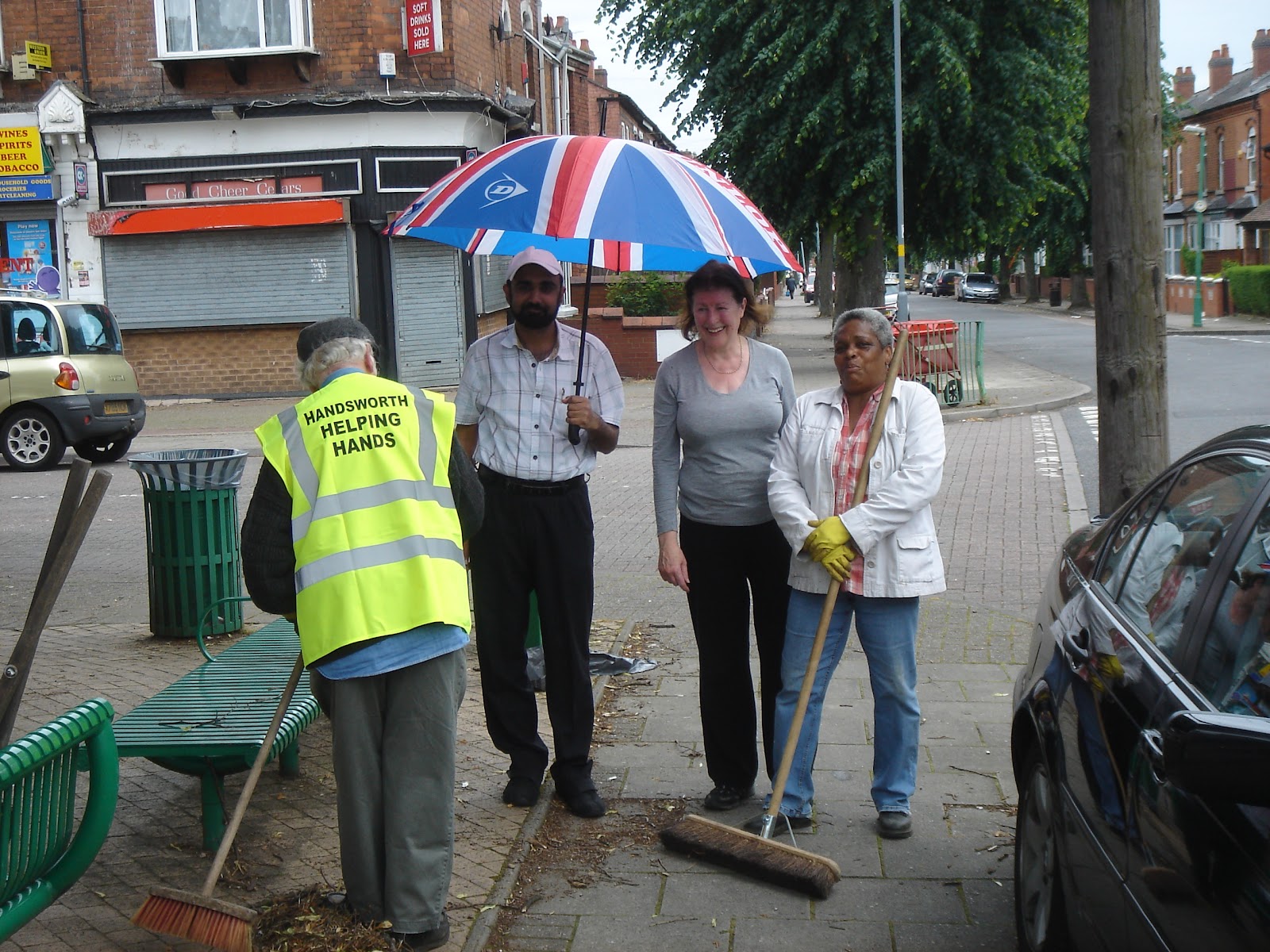 |
| Mike, a passing supporter, Denise and Lurleen - helping tidy Church Vale |
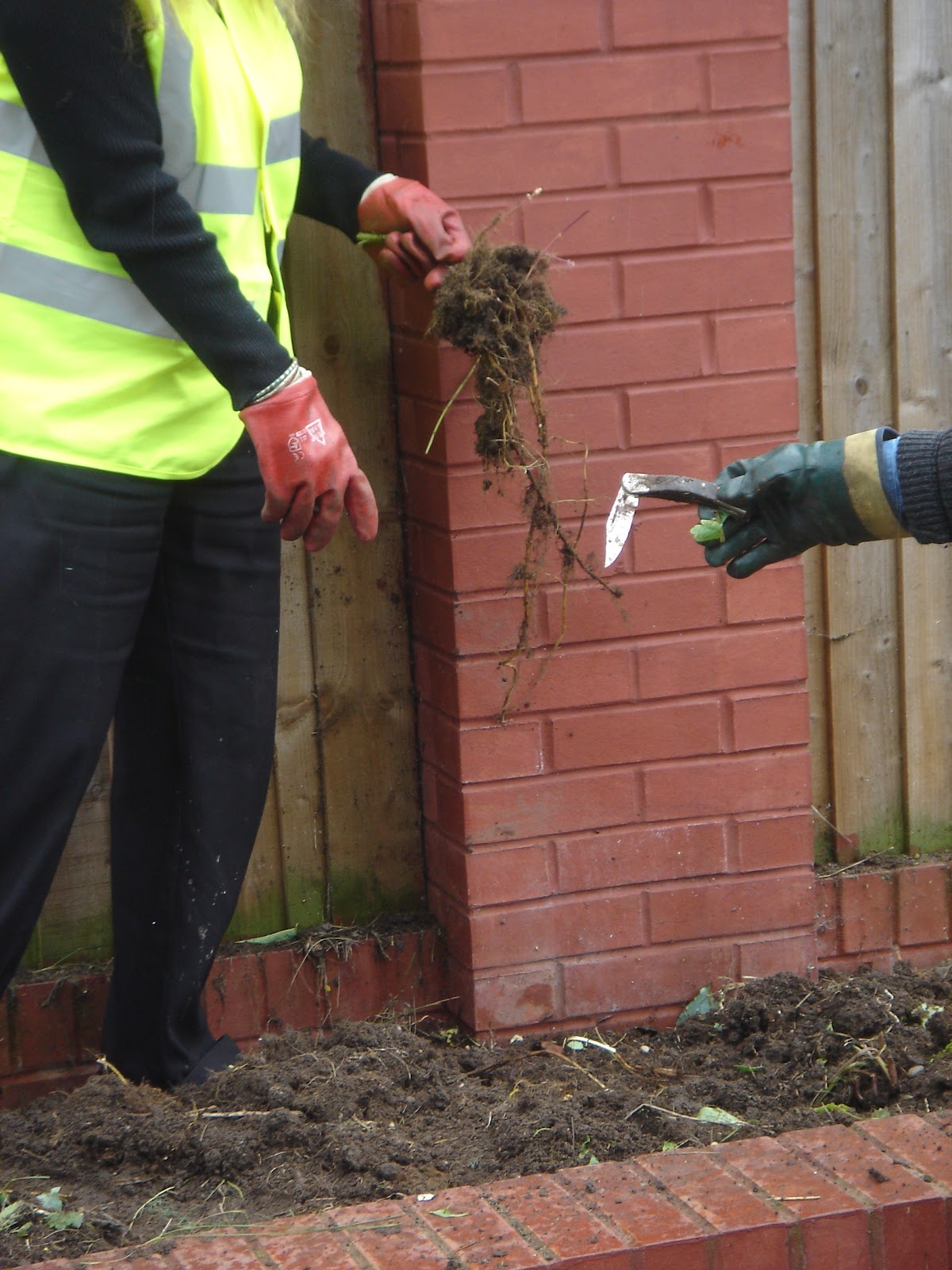 |
| Knife in the nettles - bagged and handed in to the police |
 |
| Mike, Rajinder, Oscar, Simon, Lin, Waseem, and John in Church Vale, Handsworth |
 |
| Cleared of litter and nettles, prepared for replanting |
 |
| Dropping off 40 kilos in-grey sacks at Holford Drive Waste Collection Centre |
...nothing can be so mean,
which with this tincture, "for thy sake,"
will not grow bright and clean.
A servant with this clause
makes drudgery divine:
who sweeps a room, as for thy laws,
makes that and the action fine.

...work with young people from the Bangladeshi Youth Forum and older people from B,ham Asian Resource Centre to demonstrate what can be done in people’s gardens and how food can be prepared. We will host two cooking days in the Victoria Jubilee Allotments and raise awareness of the benefits or eating organic food and encourage people to take similar initiatives in their own homes. It will also look at the negative impact of fast food on health....Jo went over Legacy WM's eligibility - charity number and account details for instance. Aftab will bring cooking and catering kit to the Victoria Jubilee Allotments. I'm liaising with the Allotments' Association and plotholders to arrange a day in August and another in September for Aftab to visit the VJA site and prepare meals from crops brought him by gardeners. After the meeting I took Jo, Aftab and Ashok (manager of BARC) for a walk around the VJA, to see where a table could be set up for cooking, to meet a couple of gardeners on the busiest plots and check the range of vegetables growing there as well as to show them over my plot - which at least had about seven different things (other than weeds) growing on it - onions, potatoes, cabbages, sprouts, broad beans, runner beans, with seeds of parsnip, tomato and spinach and several young fruit trees, blue berry shrubs, a vine and a clematis and the flowers Lin has planted in narrow beds at the top of the plot.
Dear Aftab
HERITAGE TRAIL IN LOZELLS AND EAST HANDSWORTH
My family and I have lived in Handsworth since 1979. I’ve worked at Birmingham University since 1973, where I remain a part-time visiting lecturer attached to the Institute of Local Government Studies. Outside my university work, I’ve been involved in voluntary work over many years, starting the Handsworth Allotments Information Group, campaigning to save urban growing space, submitting evidence to the Parliamentary sub-committee on ‘The Future for Allotments’. I am a supporter of Living Streets, previously the Pedestrian Association, and of campaigns for improved transport and safer conditions for walkers and cyclists. I have written a history of the founding of Handsworth Park, co-founded Handsworth Park Association in 1992, given evidence to the Environment Sub-committee on ‘Town and Country Parks’ and featured in BBC documentaries about allotments.
I am enthusiastic about your proposal to develop a Heritage Trail in Lozells and East Handsworth. There are many layers of history in this area – past and in the making. It is important for people’s sense of identity and place, and therefore community, that they should have opportunities to align the trajectories of their own journey to this area with those of the people who have preceded them.
We recognize the importance of signs, maps and landmarks for navigating the present - whatever our means of getting about. A Heritage Trail, designed as you intend, will transform an ordinary journey into time travel.
In the hands of enthusiastic and knowledgeable guides, such as the ones you plan to train, those fortunate enough to participate will be able to enrich their sense of place, gaining sensitivity to their own part in its rich history.
For participants, from inside and outside Handsworth and East Lozells, a trail of the kind you have in mind – one that can be followed by everyone in ways that include access for those with limited mobility - offers an opportunity to re-create, in a defined area of the city, an account of the industrial revolution, the connections forged here to a novel global economy, life endured through the ordeals of war, fascinating changes in the composition of the area’s inhabitants as this inner suburb became the one we know today.
In recent decades the narrative of this, and other inner suburbs of Birmingham, has too often been recounted as urban pathology. We who live here know its ‘notoriety’ is grossly exaggerated, even groundless; that this place is rich in good surprises. A Heritage Trail through its places and spaces – of which you had space to mention just a few - will be a means of imparting a truer and deeper picture of the area, embedding, in the course of an entertaining tour, wonderful stories about ourselves and our neighbours; our ancestors and theirs.
I am happy to support this initiative, willing to join any steering group that might help the project into fruition, and willing to offer my voluntary support as you develop your proposal. Yours sincerely, Simon Baddeley


Simon/Sted. I have met with Ghaz this afternoon to discuss a number of things including the section 106 money for developing the Victoria Jubilee Playing Fields. Ghaz is as disappointed as us that this project hasn't been completed. I can assure you that he is on the case and is working on the implementation of this project. I suggest we give Ghaz 3-4 weeks before we all meet to determine progress with this as I think Ghaz will be in a position by then to report a lot more than if we met in the next week. What do you think? Many thanks, Waseem Zaffar Waseem,
This is very good news, that Ghaz is going to try and get some answers and hopefully we can make some progress after several years Simon , myself and others have said the developer must deliver on what was agreed. The developper has already starved our community of a much need asset and we must not only get them to deliver but pay the required compensations...take full responsibility for failing to deliver on the conditions of the planning application which allowed them to build their houses. I am please that finally we may get some answers...and hopefully our playing fields and associated facilities. Many thanks and look forward to our meeting with yourselves in 3 weeks or so. Regards, Sted
Dear Waseem. Thanks for this. I agree. Unless there’s anything you or Ghaz would want to share about reasons for the delay but which should remain private I will assume i can continue to report ‘progress’ on my blog. My anxiety is that there is some legal clause hidden in the 2004 S106A that lets Persimmon off the hook on delivering the full contract, and that part of the ‘hook’ is that its existence has to be kept confidential. We came across something like a decade after, in connection with a flawed grounds maintenance contract for Handsworth Park in the early 1990s. The previous grounds maintenance contractor’s lawyers had BCC over a barrel when it came to enforcing the terms of a contract with too many loop holes for exceptions. I only learned about this because one of my graduate students writing an essay on compulsory competitive tendering (CCT) and by then working for another council explained the flaws in Brum's original grounds maintenance contract, so that during those years local people here who complained vehemently about problems in Handsworth Park were blanked by members and officers legally forbidden to reveal the real reasons why work that should have been done was not being done. Best wishes, Simon
 |
| Victoria Jubilee playing fields site off Crick Lane, Handsworth~ 28 June 2012 |


Hi, Simon. Did you ever find out what became of Young Tiger after this post? (28 July 2011) Sue is a dear friend, and I'm a young American sailor myself (though in Wales at the moment)... If no one is looking after the boat, I'd love to beg someone to let me buy her. Very best, Whitney
28 Aug 20i6: Dear Whitney...I send you details of the family of the man - John Coyle - who had put Young Tiger on that flatbed trailer hoping - though it sounds an old man’s dream - to sail her off the New England coast. This email address may well be out of date by now. The old man in my record is down as:
John Coyle (son-in-law Sean, daughter Sara) ** Roland Place, N.W.,
Washington, D.C., 20008 USA. Phone: 001 (202) *** **** owner of Young Tiger, Frederick Maryland. Source of this info: Gordon Gemeny PO Box ***, Dowell, Maryland, 20629, US It’s all gone a little historical now, but I’d be fascinated to know more, as I am sure would Sue. Best wishes and good luck, Simon
28 Aug: Dear Simon. I was delighted to hear from you. I’ve sent an email to Sean and Sarah straightaway. I’m in Wales at the moment, but back to the US in early October and quite serious about finding YT if I can. I’m based in South Carolina, but I work in the DC area regularly and expect I might be up that way again in the autumn. I won’t get my hopes up too high, but buying a soggy 1960s boat that would need huge amounts of restoration has really caught my imagination, I confess. I’m a builder of sorts by trade (very good dry-stone waller, sort of rubbishy carpenter, etc), so I hope I could do a bit of it myself.
I was with Sue just last week, and she mentioned you and that very Merry Wives reunion as we drove along the A470 together!
 |
| Miriam, Sue and I in London at a 50 year reunion of another adventure ~ 14 Nov 2015 |
She is an extraordinary woman - one of my very favorites. She and Phil were the first to take me sailing some years ago...
 |
| Sue, Phil and Whitney aboard Vicki at Aberaeron |
...and I’m so grateful to them for it. I’ve gone on to do a few RYA courses since then (currently sitting comfortably at Day Skipper level after a week in St Lucia last February), and I’ve sailed newer, bigger French boats as well as older, creakier wooden boats like a Bristol Channel Pilot Cutter, but it’s the little Westerly I love best. They’re so approachable. Sometime a few years ago Sue and I were sitting on her front lawn having a gin and catching up after I’d returned from my first big sail when suddenly she disappeared into the house for a few minutes with no explanation … She returned holding one of the charts from your voyage. “I found this the other day while I was clearing up,” she said. I can’t recall if it was Barbados or the Grenadines she had in her hands, but we talked for a long time about the sea that afternoon. It was a lovely moment. Wish me luck, and thanks again for the quick response! I’ll let you know if I hear anything back. Very best, Whitney

28th Aug 2016: Dear Sean and Sarah. Please forgive this email out of the blue. I’m trying to find the whereabouts of a little Westerly 22 called Young Tiger. I think you know Simon Baddeley - at least electronically. His companion on Young Tiger's big Atlantic crossing, Sue Pulford (now Best), is a very dear friend of mine and the reason I began sailing just a few years ago.
 |
| Sue Pulford 1966 |
I linked up with Simon via his blog just a few days ago, and he’s very kindly pointed me to you. I’m sorry to bother, but I thought it might be worth a shot to email you. I hope you don’t mind.
I’m in Wales at the moment, which is where Sue lives and where I’ve trained and still work sometimes as a dry-stone waller, but I’m American. I’m from South Carolina (don’t hold that against me!), but I spend much of the year on the road for work, leaving a trail of beautiful stone wherever I go. I even built on the National Mall earlier this summer as part of the Smithsonian Folklife Festival, though the bulk of my work is down in the mountains of southwestern Virginia and here in the wild hills of mid-Wales. Here I am, if you’re curious: www.whitneybrownstone.com Anyway, I’d love to know what’s happened to the boat these last few years. The last photos I saw showed her in quite a sad state. I don’t want to be too forward here since we don’t know each other at all, but I’d be so eager to rescue her if she needed it. I’m 33 and perhaps a bit foolish, but I think she’s quite a special little boat - not to mention quite special to someone I love - and I’m not afraid of a project. Even if she’s found a good home by now, I’d love to know how’s she’s faring out in the world if you have a few minutes to write.
Sue still sails a Westerly 22 after all these years. Vickie, moored in Aberaeron in Cardigan Bay, was the first boat I ever sailed on, and I fell quickly in love. I’ve gone on to sail bigger, newer boats here in Wales and down in St Lucia, gradually working my way up to skipper, but none have ever been as charming as the little Westerly.
Thanks very much for your time. Best wishes, Whitney Brown
Email to Whitney 29 Aug: Hello, This is Sean, the son in law of the John P. Coyle. JPC is the gentleman who owned the Young Tiger before it came to be where it is at now. She is still in the same spot in a field in Adamstown Maryland. It is most likely that she could be had for free to someone willing to take on such a project in ernest. If you are interested, I would be happy to inquire/make arrangements. Let me know .... would love to see her sail and crew with her. Call or write us, Sean and Sarah
29th Aug: Simon, can you believe it? More soon. Pleasantly in shock at the moment! Very best, and THANK YOU, Whitney. Sent from my iPhone
29 Aug to Whitney, copied to Susanna Best (Sue Pulford): No I do NOT believe it (:)) After hardly half a week’s checking - that’s almost disappointing - except it’s not! I too am in shock at the continuity in emails in these times of transient addresses. And so good to feel goodwill from Sean. I wonder how YT's fared on her flatbed through those Maryland seasons. I can only imagine YT wanted to be found, old timer that she is. Here are tales to tell of adventure and perhaps more to come. Best, Simon
 |
| A friend in a field |
23 Jan 2017: Hi Simon. I hope this finds you happy and well. I’m sorry to be out of touch so long. The autumn just seemed to slip away with one thing and another ... And a very nasty election. (I was marching in Washington on Saturday, rest assured)

I’ve just finished an email to Sue updating her on my morning’s adventure, so I thought I’d better check in with you as well. Finally, in horrendous weather, I went to see Young Tiger in her field in rural Maryland. She is just as Sean described her to me in his email: in a bit of a sad state, but not beyond repair. I was disappointed to see that her spars are all rotted, but I do think the hull will be just fine with some TLC. Then there’s the matter of, oh, ALL of the equipment: sails, radio, battery, engine, loo, cooker, lights, etc! It will take me a bit to get sorted so that I can begin the restoration process, but I am keen to do so. I want her to be beautiful again, and while I probably won’t sail her across an ocean, I’d love to get her down to Admiralty Bay in Bequia once more ... Best,
Whitney
 |
| Young Tiger in Admiralty Bay, Bequia 1966 |
23 Jan 2017: Dear Whitney. We are well and I’m the happier for seeing that striking image of you and Young Tiger. It was easier to see you in the crowd on Independence Avenue, because it was so small compared to the previous day’s inauguration where the crowd was many times larger than at the 'nasty women’s' march. I have access to 'alternative facts’, as will we all for the next few years.So she's 3570 miles away as the crow flies, far further by other means, and - so it feels - in time. Last Wednesday, Whitney and I met in London, and over a long lunch at the Lighterman in Granary Square, ran through what I remembered about the boat she is taking under her capable wings. I gave her a copy of the plans - inside and out of the W22, and ran through the gunter rig, the reasoning behind bilge ballast keels, the evolution of YT's design in the mind of Ben Rayner and the boat's aesthetic, the reason Denys preferred outboard motors, 'Blondie' Hasler's self-steering gear as its inventor had explained it to me, the simplicity of Mary Blewitt's guide to taking noon sights - whch I reckoned W had begun to learn on her Day Skipper course and would hardly need in the days of SatNav. I am inspired by this continuity; not a revisit, a relay. Whitney Brown is a true grafter. I cannot imagine anyone more qualified in character, knowledge and craft to take on the challenge of taking Young Tiger back to the sea where she should be.
What a really lovely picture. So you traced Young Tiger to a field under autumn trees in Maryland; Denys Rayner’s small boat that looked after us along the coasts of Spain and Africa, the Canaries, the Caribbean Islands, the Bahamas and on the deep ocean between those magic shores.
The woods are lovely, dark, and deep,Sue phoned me, seconds before I opened your email. You have stirred dream memories of an adventure long ago. Your journey to a field in Maryland seems destined, and you are to windward of us in age, energy and enthusiasm. I’m not surprised those spruce spas have rotted - through neglect rather than use. I am excited at your plans for restoration and am sure, as is Sue, that you can make ‘our' little ship whole again. Make her yours. She’s not been properly owned for decades. If you want a rough ground plan of the boat from the original brochure that came with each model including YT, just ask. I have it in my files and can easily get it copied. All the very best, Simon
But I have promises to keep,
And miles to go before I sleep,
And miles to go before I sleep.
 |
| Landfall on Barbados - 5 Jan 1966 "Clouds collected during the night, obscuring the bright moon, and at dawn it was blowing hard with rain everywhere and haze ahead. We stared ahead until our eyes ached. Suddenly a break in the cloud let through a sunbeam which shone on the land about 10 miles off - green and incredibly exciting."*(painting: SB) |

 |
| With Whitney in London |


